
Table of Contents >> Show >> Hide
- The “kitchen workshop” idea, explained like you’re hungry
- So what exactly is a Bulthaup workbench?
- Materials that behave like tools, not décor
- Storage that acts like a tool chest (because that’s the point)
- Why designers keep putting it in the middle of the room
- Planning a Bulthaup workbench kitchen without losing your mind
- The honest pros and cons
- How to keep it warm (so it doesn’t feel like a surgical suite)
- Experiences: what it’s like to live with a Bulthaup workbench (and why it’s weirdly addictive)
- Conclusion
Kitchen islands get all the glory. They’re photographed, staged, and decorated with exactly three lemons and a cookbook no one’s allowed to open. A Bulthaup workbench, on the other hand, doesn’t want to be admired. It wants to be used. Hard. It’s the difference between a “show kitchen” and a “let’s actually cook dinner” kitchenexcept the Bulthaup version still looks like it belongs in an art gallery.
If you’ve ever wished your kitchen felt less like a hallway of cabinets and more like a purposeful workspaceclear, efficient, and strangely calmingthis is the rabbit hole you’ll enjoy falling into. Let’s talk about what the Bulthaup workbench is, why designers keep circling back to it, and how it changes the way a kitchen functions (and, yes, how it changes the way you behave in it).
The “kitchen workshop” idea, explained like you’re hungry
Bulthaup’s workbench philosophy is simple: a kitchen should support the core acts of cooking without forcing you into a corner to face the wall like you’re being punished. Instead, the essential actionswashing, prepping, cooking, and clearingare consolidated into a freestanding centerpiece that can sit confidently in the room.
In the bulthaup b2 approach, the kitchen is reduced to a few sculptural elementsmost notably the workbench, often paired with cabinet “boxes” that open to reveal storage for tools, ingredients, and appliances. When closed, the space reads less like “kitchen” and more like “beautiful furniture that happens to feed you.”
So what exactly is a Bulthaup workbench?
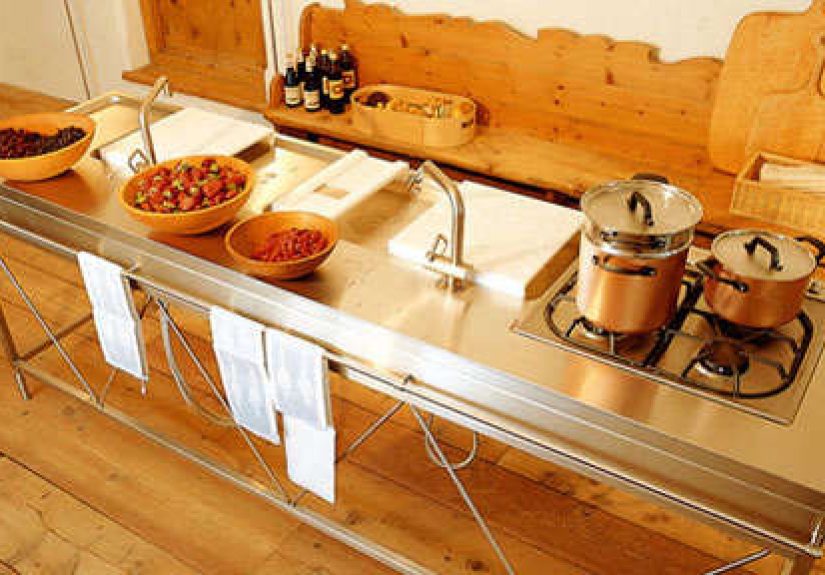
Think of the Bulthaup workbench as a freestanding kitchen workstationa modern island with the focus and logic of a professional prep table. It’s designed to bring multiple zones into one compact footprint: a work surface for cutting and assembling, a water point, and a cooking area.
Depending on configuration, a workbench can integrate a sink (or more than one), a cooktop, smart waste handling, and tool/utensil storage. The overall effect is a kitchen that feels organized by defaultnot because it magically cleans itself, but because it’s built around a clear “everything has a home” principle.
Fire + water + prep: the functional trifecta
Bulthaup treats the workbench like the command center of the kitchen: you wash, you prep, you cook, you plate, you reset. Many descriptions of the workbench emphasize how the key work areas are concentrated into a single element, with an ergonomic surface that supports cooking, food prep, and cleanup.
A particularly smart detail that gets mentioned often is the use of a flat basin for prep work (think rinsing, draining, staging) alongside a deeper sink that can handle the messier side of cooking. Instead of “one sink to rule them all,” it becomes “one sink to prep, one sink to recover from your choices.”
Modularity: built to adapt (and to outlast trends)
One of the reasons the Bulthaup workbench has such a devoted following is that it’s not locked into a single, fixed layout. In the b2 system in particular, modules are designed to be arranged to match how you cookwhere you want the cooktop, where you want the water point, how much uninterrupted counter space you need.
This matters because real life changes. You might move, remodel, switch from gas to induction, or decide you’re a “prep space maximalist.” A modular workbench concept is essentially a kitchen that’s less afraid of your future self.
Materials that behave like tools, not décor
Bulthaup workbenches are frequently associated with stainless steel, which isn’t just a style moveit’s a performance decision. Stainless is resilient, hygienic, and easy to wipe down without having to negotiate with it like it’s a delicate marble countertop that “doesn’t do acids.”
Bulthaup pairs that “serious workspace” surface language with warmthoften through solid wood cabinetry (commonly oak or walnut in the b2 world). The contrast is part of the charm: cool precision meets tactile comfort. It reads clean, but not coldespecially when the surrounding space brings in softer lighting and lived-in objects.
Storage that acts like a tool chest (because that’s the point)
The workbench alone is powerful, but Bulthaup’s broader workshop mindset becomes obvious when you look at its companion storage pieces. Many write-ups describe cabinet units that open like a modern tool cabinetlayers of shelves, drawers, and compartments calibrated to keep cookware, pantry items, and appliances accessible and organized.
This approach isn’t about hiding everything for the sake of minimalism. It’s about access: what you use most often should be easy to reach, and what you don’t use can stop living rent-free on your countertops.
- Quick access: utensils, knives, oils, salts, spicesyour daily drivers.
- Purposeful storage: cookware, appliances, and dishware sorted by frequency of use.
- Close-down calm: when everything is put away, the kitchen looks like composed furniture, not a permanent cooking scene.
Why designers keep putting it in the middle of the room
A Bulthaup workbench is practically allergic to being shoved against a wall. It thrives in open-plan layouts where the cook can face outward, move around freely, and interact with other humans (instead of speaking to a backsplash).
This isn’t just socialit’s ergonomic. A freestanding workstation naturally creates better circulation, clearer zones, and a less cluttered perimeter. It also helps kitchens feel like part of the living space, not a separate utility room where joy goes to die.
Planning a Bulthaup workbench kitchen without losing your mind
The workbench looks minimal, but it demands thoughtful planning. The good news: if you plan it well, it rewards you every day. The bad news: you can’t fake it by “figuring it out later” like you might with a random rolling cart from a big-box store.
1) Start with the movement, not the mood board
Ask a practical question first: What do you do most in your kitchen? If you prep heavily, you’ll want more uninterrupted surface near the water point. If you cook elaborate meals, you’ll want the cooking zone positioned so you can pivot easily between heat and prep. If you mostly assemble snacks with theatrical confidenceno judgmentyou may prioritize clear counter space and storage.
2) Respect the clearances
Workbenches encourage circulation, so don’t choke them with tight pathways. The whole point is freedom of movement. Give yourself room to open adjacent cabinetry (if used), pass behind someone chopping, and still access appliances without playing kitchen Twister.
3) Decide how “invisible” you want the kitchen to be
If you love the idea of closing everything away, pair the workbench with storage that can shut like furnitureso the kitchen visually recedes when not in use. This is especially appealing in lofts, open-plan apartments, and homes where the kitchen shares space with dining and living areas.
The honest pros and cons
Pros
- Clarity and order: the system is built around keeping tools close, organized, and easy to access.
- Freestanding flexibility: great for open plans and for kitchens that shouldn’t look like a corridor of cabinets.
- Material durability: stainless and well-engineered components hold up to real cooking.
- Timeless design language: it avoids trend gimmicks and focuses on function-driven aesthetics.
Cons
- It’s premium: Bulthaup is an investment category, and the workbench is not a “budget-friendly centerpiece.”
- It rewards discipline: the clean look is easiest to maintain if you embrace the “put it back where it lives” mentality.
- Not for maximalist storage needs: if you want miles of upper cabinets, this philosophy may feel too restrained.
How to keep it warm (so it doesn’t feel like a surgical suite)
Stainless steel can read “professional” fastsometimes too professional. To keep the workbench inviting:
- Use warm lighting (pendants with a softer glow rather than harsh spotlights).
- Bring in wood or textured materials nearbystools, shelving, or adjacent cabinetry.
- Let a few beautiful daily objects live out: a cutting board, a ceramic bowl, a pepper mill you actually love.
- Keep countertop décor minimal and functionalif it doesn’t help you cook, it’s auditioning to become clutter.
Experiences: what it’s like to live with a Bulthaup workbench (and why it’s weirdly addictive)
People who choose a Bulthaup workbench often think they’re buying a kitchen object. What they’re really buying is a new set of habits. The workbench quietly pressures you to cook with intentionbecause everything about it signals purpose. You don’t wander around looking for a spoon. You don’t stack mail next to your cutting board “just for a second.” The bench has the vibe of a workspace that says, “Hey, friend. We’re doing a task now. Let’s not spiral.”
The most noticeable day-to-day change is movement. A freestanding workbench encourages you to circle around it as you prep, rinse, chop, and cook. That sounds small, but it’s huge in practice: you stop feeling pinned to a single spot. If someone is in the kitchen with you, you can share the space without shoulder-checking each other like you’re competing for the last open drawer. Even casual cooking starts to feel smoother because the work zones are consolidated and reachable.
Then there’s the surface experience. Stainless steel is honest: it shows you what happened, and it lets you fix it quickly. You can wipe it down fast, reset the area, and start again without babying the countertop. It invites a “clean as you go” rhythm, not because you suddenly became a better person, but because the space makes tidying feel like part of the workflow. And when a design includes both a flatter prep basin and a deeper sink, you get a surprisingly efficient division of labor: rinse produce here, dump the messy stuff there, keep the main surface clear.
The storage philosophy is where the workbench becomes lifestyle. When paired with tool-cabinet-style storage, you discover what you actually use. The organization isn’t decorative; it’s functional calibration. The frequently used items earn the best real estate. The rarely used items get demoted (as they should). Over time, a lot of people end up owning fewer duplicates because the system makes redundancy obvious. If you have three whisks, you’ll know. The kitchen will tell on you.
Another common experience is the way the workbench changes the social dynamic. Because it sits in the room like furniture, guests naturally drift toward itlike it’s a table, a bar, and a stage all at once. You can cook while still being part of the conversation, and the kitchen reads less like a back-of-house utility zone and more like a shared space. That’s one reason designers love placing it centrally: it supports cooking as a communal activity instead of a solitary chore.
Finally, there’s the slightly funny psychological effect of living with something that looks so composed. A Bulthaup workbench can make you want to earn it. You start buying better tools because the kitchen makes cheap ones feel out of place. You become more selective about countertop clutter because the bench looks happiest when it’s doing its job, not holding random objects. And if you’re the kind of person who loves the calm of a cleared workspace, the workbench can become the most satisfying “reset button” in the house: wipe, put away, close up, breathe. Dinner was chaotic. The kitchen doesn’t have to be.
Conclusion
The Bulthaup workbench isn’t just a luxury kitchen centerpieceit’s a design argument. It argues for the kitchen as a workshop: clear, efficient, and built around essentials. It’s freestanding, flexible, and purposeful, with a materials-and-storage strategy that supports real cooking, not just real estate photos. If you want a kitchen that feels like calm competence (with just enough drama to look incredible), the workbench approach is one of the most compelling ways to get there.







 Close
Close