
Table of Contents >> Show >> Hide
- What Is the Lampe de Marseille Wall Lamp?
- The Le Corbusier Connection
- Design Details That Make It Special
- Full-Size vs. Mini Lampe de Marseille
- Where to Use the Lampe de Marseille Wall Lamp
- How to Style the Lampe de Marseille
- Installation and Practical Considerations
- Is the Lampe de Marseille Worth It?
- Buying Tips for the Lampe de Marseille Wall Lamp
- Experiences With the Lampe de Marseille Wall Lamp
- Conclusion
The Lampe de Marseille Wall Lamp is not the kind of light fixture that quietly apologizes for taking up space. It reaches, pivots, stretches, and announces itself with the confidence of a small architectural crane that also happens to make your reading chair look wildly sophisticated. Designed by Le Corbusier and produced today by Nemo Lighting, this sculptural wall lamp blends modernist history, practical task lighting, and a dash of French intellectual swagger.
At first glance, the Lampe de Marseille looks simple: a wall-mounted arm, a bold double-cone shade, a few precise joints, and a cord switch. But that simplicity is deceptive in the best possible way. The lamp is really a lesson in how form, function, and atmosphere can share the same dinner table without anyone spilling wine on the rug. It is a wall lamp, yes, but it is also a design statement, a reading companion, a space-saving solution, and a subtle tribute to one of the most influential architects of the 20th century.
For homeowners, interior designers, collectors, and modern lighting enthusiasts, the Lampe de Marseille Wall Lamp offers something rare: a fixture that feels historic without feeling dusty. It belongs in a minimalist apartment, a warm modern bedroom, a creative studio, a boutique hotel suite, or a living room where the books are actually read instead of arranged by spine color. Although, to be fair, it also looks excellent next to color-coordinated books.
What Is the Lampe de Marseille Wall Lamp?
The Lampe de Marseille is an adjustable wall sconce created in the spirit of Le Corbusier’s architectural work for the Unité d’Habitation in Marseille, France. The name directly references that famous residential project, a landmark of postwar modernism and Brutalist architecture. Today, Nemo Lighting manufactures the lamp in full-size and Mini versions, with finishes such as whitewash, grey, and black.
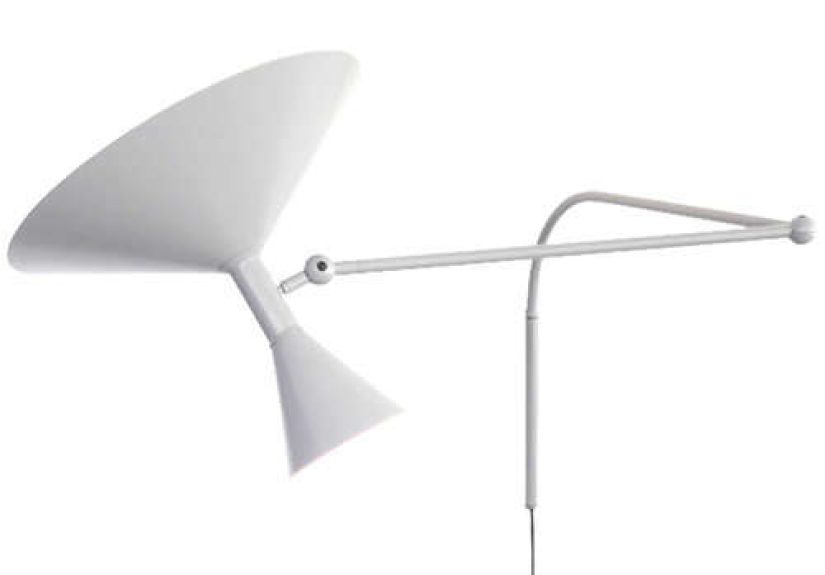
Its most recognizable feature is the hourglass-like shade made from two cone-shaped diffusers. This design allows the lamp to cast light in two directions: downward for focused task lighting and upward for softer ambient illumination. That dual output is one of the reasons the Lampe de Marseille wall sconce works so well in real homes. It can help you read, write, work, relax, and stare dramatically into the middle distance after checking your electricity bill.
The lamp is built from aluminum and steel, giving it the crisp industrial character associated with modernist design. Its adjustable arm includes joints and a rotating wall mount, making it much more flexible than a decorative sconce that simply sits there looking pretty. In practical terms, the Lampe de Marseille can swing over a desk, hover beside a bed, stretch toward a sofa, or tuck back toward the wall when not in use.
The Le Corbusier Connection
Le Corbusier, born Charles-Édouard Jeanneret, was one of the defining figures of modern architecture. His work combined functional planning, sculptural form, and a belief that design should improve daily life. He was not simply interested in buildings as decorative shells; he thought about how people moved, lived, worked, slept, cooked, and gathered inside them. Lighting, furniture, color, proportion, and storage all mattered.
The Unité d’Habitation in Marseille was a major expression of that thinking. Designed in the postwar period, the building was conceived as a “vertical city,” with apartments, shared facilities, and communal spaces arranged within a massive concrete structure. It became a powerful symbol of Brutalist architecture and modern housing experimentation. The Lampe de Marseille Wall Lamp carries that same design DNA: honest materials, useful geometry, and a refusal to decorate when structure can do the talking.
This is why the lamp feels architectural rather than merely decorative. Its arm resembles a structural element. Its shade feels like a pair of engineered volumes. Its movement is purposeful. It does not twinkle, frill, or flirt. It performs. And somehow, by performing well, it becomes beautiful.
Design Details That Make It Special
1. The Double-Cone Shade
The shade is the visual signature of the Lampe de Marseille. Instead of one simple shade pointing in one direction, the fixture uses two opposed cones. The lower cone directs light toward a task area, while the upper cone sends light upward to create atmosphere. This makes the lamp surprisingly versatile. You can use it as a reading light, accent light, bedside lamp, home office fixture, or living room statement piece.
2. Direct and Indirect Lighting
Good lighting is rarely about one harsh beam blasting your face like an interrogation room. The Lampe de Marseille offers both direct and indirect illumination, allowing it to support layered lighting. Downward light helps with practical tasks, while upward light softens the room. That balance is especially useful in bedrooms, lounges, and workspaces where you want function without sacrificing mood.
3. Adjustable Arm and Rotating Mount
The adjustable wall-mounted arm is one of the lamp’s most valuable features. Full-size versions offer a generous reach, making the fixture ideal for rooms where floor space is limited. Instead of adding a floor lamp beside a sofa or a table lamp on a crowded nightstand, you can mount the Lampe de Marseille on the wall and pull light exactly where you need it.
This flexibility is also helpful in multipurpose rooms. A home office may need strong task lighting during the day and soft evening light after hours. A bedroom may need a reading lamp that does not swallow the entire nightstand. A living room may need light over a sectional without placing a cord in the walking path. The Lampe de Marseille solves these problems with elegance and a little mechanical drama.
4. Industrial Materials With Refined Presence
The lamp’s aluminum and steel construction gives it a clean, durable, industrial quality. Yet it does not feel cold when placed well. The white interior of the diffuser helps bounce light pleasantly, while the matte exterior finishes allow the lamp to blend into different palettes. Whitewash feels airy and gallery-like. Grey leans architectural and concrete-friendly. Black looks sharp, graphic, and slightly more dramatic.
Full-Size vs. Mini Lampe de Marseille
One of the most important buying decisions is whether to choose the full-size Lampe de Marseille or the Mini version. The full-size model is big, bold, and unapologetically sculptural. In U.S. specifications, it uses E26 bulbs and measures approximately 65.4 inches wide with a shade diameter of about 19.7 inches and a height of about 31.5 inches. This is not a tiny accent light. It is a design feature that needs breathing room.
The Mini Lampe de Marseille is more compact and easier to place in smaller rooms. U.S. specifications list the Mini with E12 bulbs, a width of about 33.5 inches, a diameter of about 11.8 inches, and a height of about 19.7 inches. It keeps the same visual language but reduces the scale, making it better for bedside use, reading corners, compact offices, and apartments.
Choose the full-size version if you want maximum visual impact, a longer reach, and a lamp that can anchor a wall. Choose the Mini if you want the iconic look without letting the fixture dominate the room. In other words, the full-size model is the main character; the Mini is the stylish supporting actor who still gets excellent reviews.
Where to Use the Lampe de Marseille Wall Lamp
Bedroom
Mounted beside a bed, the Lampe de Marseille can replace a traditional table lamp and free up nightstand space. The adjustable arm makes it easy to bring light closer for reading and push it away when the book starts reading you back. The Mini version is often the more practical bedroom choice, especially if the bed is close to a corner or the ceiling is low.
Living Room
In a living room, the lamp works beautifully beside a sofa, lounge chair, or built-in shelving. The full-size version can create a dramatic design moment, especially on a large blank wall. It pairs well with modern sofas, vintage leather chairs, modular shelving, concrete fireplaces, and warm wood furniture. The trick is to let it breathe. Do not crowd it with too many small frames or decorative objects.
Home Office
A home office is one of the most practical places for the Lampe de Marseille Wall Lamp. Its reach and adjustability make it ideal for illuminating a desk without taking up surface space. If your desk is already covered with a laptop, notebook, coffee mug, cables, receipts, and one mysterious pen that no longer works, wall-mounted lighting can feel like a minor miracle.
Hallway or Reading Nook
The lamp can also create a striking moment in a hallway, library corner, or reading nook. In these spaces, it functions as both sculpture and utility. A black finish can add graphic contrast against white walls, while grey can connect nicely with concrete, stone, or muted paint colors. Whitewash is excellent for softer, brighter interiors where the goal is quiet elegance rather than visual punctuation.
How to Style the Lampe de Marseille
Because the Lampe de Marseille Wall Lamp has such a strong silhouette, the surrounding decor should support it rather than compete with it. Think clean lines, intentional textures, and confident spacing. It works especially well with modern, mid-century, Scandinavian, industrial, minimalist, and warm contemporary interiors.
For a classic modernist look, pair the lamp with a low-profile sofa, a wool rug, a simple side table, and art with strong geometry. For a warmer room, soften it with linen bedding, oak furniture, plaster walls, or a textured throw. For a dramatic office, mount the black version above a walnut desk and let the lamp create a sharp contrast against a pale wall.
The key is proportion. The full-size Lampe de Marseille needs a large enough surface and enough surrounding negative space. The Mini can fit into tighter compositions, but it still deserves respect. This is not a shy little sconce from the bargain aisle. It has a passport, a design pedigree, and probably strong opinions about urban planning.
Installation and Practical Considerations
Before buying, check the electrical version, bulb base, plug configuration, and installation method. U.S. versions of the full-size lamp typically use E26 bulbs, while the Mini uses E12 bulbs. Some versions can be installed with or without a plug, and dimming may depend on the bulb and whether the fixture is hardwired. The lamp is generally intended for indoor dry locations, so it is not the right choice for outdoor patios, wet bathrooms, or steamy spaces.
Because the full-size model has a long adjustable reach, placement matters. Mounting too close to a doorway, cabinet, or ceiling fan can create awkward movement. Measure the wall, the swing area, the height from the floor, and the relationship to furniture. A beautiful lamp becomes less charming when it bonks someone on the shoulder every time they reach for a book.
For bedrooms, mount the lamp so the lower shade can angle toward the reading position without shining directly into your eyes. For desks, consider the dominant hand of the user and the location of monitors. For living rooms, test the arm’s extended position relative to the sofa or chair. Good lighting is part design, part math, and part not wanting to rearrange your entire room after installation.
Is the Lampe de Marseille Worth It?
The Lampe de Marseille is not an impulse-buy wall sconce. It sits in the design-classic category, where price reflects authorship, manufacturing, materials, brand heritage, and sculptural presence. If you only need a basic wall light, there are cheaper options. If you want a functional piece of modern design history that can change the personality of a room, the Lampe de Marseille earns its attention.
Its value comes from more than illumination. It gives a room structure. It adds a focal point. It saves floor or table space. It offers flexible light. It connects your home to a major chapter in architectural history. And unlike trend-driven lighting that looks dated after two seasons, this lamp has already survived decades of changing taste. That is a pretty strong résumé for something that also helps you find your glasses.
Buying Tips for the Lampe de Marseille Wall Lamp
- Measure first: The full-size version has a significant reach and needs enough wall space.
- Pick the right scale: Choose the Mini for bedrooms and compact areas; choose full-size for drama and reach.
- Check electrical specs: Confirm bulb base, voltage, plug type, dimming compatibility, and hardwiring options.
- Choose finish carefully: Whitewash feels light, grey feels architectural, and black feels bold.
- Plan the light direction: Think about where the downward beam and upward glow will land.
- Use quality bulbs: Warm LED bulbs can enhance comfort and reduce energy use.
- Respect the swing area: Leave enough clearance around doors, shelves, and seating.
Experiences With the Lampe de Marseille Wall Lamp
Living with the Lampe de Marseille Wall Lamp is different from living with an ordinary sconce. A basic sconce is usually fixed, predictable, and polite. It turns on, lights a small area, and then quietly disappears into the background. The Lampe de Marseille behaves more like a design tool. You interact with it. You pull it closer, push it back, angle it upward, aim it downward, and gradually learn how much the mood of a room can change when light is placed with intention.
In a bedroom, the experience is especially satisfying. Instead of crowding the nightstand with a lamp base, the fixture frees up valuable surface space for books, a phone, a glass of water, or the small mountain of items that somehow gathers beside every bed. The adjustable arm means the light can move toward the page when reading and return toward the wall when it is time to sleep. The upward glow also prevents the room from feeling flat or harsh. It is practical, but it has atmosphere.
In a living room, the Lampe de Marseille becomes a conversation starter. Guests notice it because it does not look like the usual wall light. Its shape has confidence. Its reach creates motion. Its double shade feels both vintage and futuristic, like something from a very stylish architect’s studio where everyone drinks espresso and discusses concrete with suspicious enthusiasm. Yet the lamp does not need a museum-like room to work. It can soften into a warm interior when paired with natural fabrics, wood tones, and layered textures.
In a home office, the experience is more functional but no less enjoyable. The lamp makes it easier to light the desk without sacrificing workspace. A well-placed Lampe de Marseille can reduce the need for a bulky desk lamp, especially in compact apartments or creative studios. When aimed correctly, it supports focused work while the indirect light keeps the room from feeling like a spreadsheet cave. That balance matters more than people think, especially for anyone who spends long hours reading, sketching, editing, studying, or pretending not to check social media.
There are also a few real-life lessons. The full-size lamp is visually powerful, so it should not be squeezed into a tiny corner unless that corner is ready for a personality transplant. The Mini version is easier for most homes, especially bedrooms and smaller offices. Bulb choice matters too. A warm color temperature often feels more flattering and relaxed, while overly cool bulbs can make the lamp look severe. Installation height is another detail worth planning carefully. Too high, and the task light becomes less useful. Too low, and the fixture may feel intrusive.
The best experience comes when the lamp is treated as both lighting and architecture. It is not just there to brighten a wall. It shapes the room. It adds rhythm, shadow, proportion, and purpose. That is why the Lampe de Marseille Wall Lamp continues to appeal to designers and homeowners who want more than decoration. It brings the precision of modernism into daily life, but it does so in a way that still feels usable, warm, and surprisingly fun.
Conclusion
The Lampe de Marseille Wall Lamp is a rare lighting design that manages to be historic, useful, and visually exciting at the same time. Its Le Corbusier heritage gives it cultural weight, but its adjustable arm, direct and indirect lighting, durable materials, and strong silhouette make it practical for modern interiors. Whether used beside a bed, above a desk, near a sofa, or in a reading corner, it brings clarity and character to the room.
If you want a small, invisible fixture, this is not it. If you want a wall lamp with architectural presence, flexible function, and a story worth telling, the Lampe de Marseille deserves a serious look. It is a lamp for people who believe lighting should do more than help you see. It should help a room feel designed.
Note: This publish-ready article is original content based on real product, retailer, and design-history information. Always verify final electrical specifications, dimensions, availability, and installation requirements with the seller or manufacturer before purchasing.







 Close
Close