
Table of Contents >> Show >> Hide
- What is Sybil, exactly?
- Why lung cancer screening still needs help
- What Sybil may be able to change
- What Sybil cannot doat least not yet
- What patients and families should take away right now
- The bigger picture: why this story matters
- Real-world experiences related to Sybil, lung cancer risk, and screening
- Conclusion
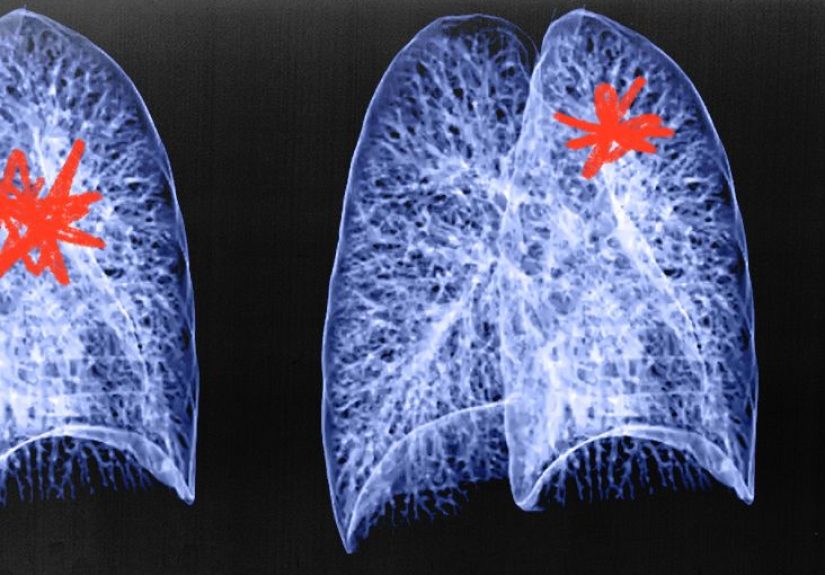
Lung cancer has a nasty habit of showing up late, ruining everyone’s plans, and acting like it owns the place. That is exactly why researchers keep chasing better ways to spot danger earlierbefore a tumor becomes obvious, before symptoms start shouting, and before treatment gets much harder. One of the most talked-about ideas in this space is Sybil, an artificial intelligence tool trained to analyze a single low-dose CT scan and estimate a person’s lung cancer risk for as long as six years.
That headline sounds almost science-fiction-ish, like your CT scanner quietly picked up a crystal ball. But let’s pump the brakes just enough to stay useful. Sybil is not a fortune teller, not a diagnosis, and not a replacement for doctors, radiologists, or current lung cancer screening guidelines. What it may become, however, is a powerful risk prediction toolone that helps clinicians decide who needs closer follow-up, who may benefit from more personalized screening, and where today’s rules might be missing people at risk.
That matters because lung cancer screening is helpful, but it is still far from perfect. In the United States, screening eligibility largely depends on age and smoking history. That catches many high-risk people, but not all. Some people develop lung cancer after quitting long ago. Others never smoked at all. And in real life, too many people who do qualify for screening still never get it. So when an AI lung cancer tool like Sybil enters the chat, the medical world pays attentionand for good reason.
What is Sybil, exactly?
Sybil is a deep-learning model developed by researchers at MIT and Massachusetts General Hospital to analyze low-dose chest CT images and estimate the likelihood that a person will develop lung cancer over the next one to six years. The standout feature is that the model was designed to work from the scan itself, without needing a giant stack of manual annotations or a long checklist of clinical variables.
In plain English, Sybil studies patterns in the scan that may be too subtle for the human eye to spot or too spread out across the lungs to fit traditional “find the one suspicious nodule” thinking. That is a big deal. For years, lung cancer screening has often focused on visible nodules and obvious abnormalities. Sybil tries to look more broadly at the lungs and ask a more forward-looking question: What is this person’s future risk?
Why researchers got excited
The early findings made people in oncology, radiology, and AI sit up a little straighter. In the original research, Sybil showed strong performance for short-term prediction and solid performance over a six-year window across different validation datasets. That does not mean the model is perfect. It does mean it performed well enough to move the conversation from “interesting lab project” to “possible clinical tool.” In medicine, that is the difference between a clever demo and something hospitals might someday actually use.
Researchers also liked that Sybil was not built to be overly dependent on smoking history. That opens the door to future use cases in people who may fall outside traditional screening criteria, including some never-smokers and former smokers who no longer qualify under current U.S. rules. For a disease that still surprises people who say, “But I never smoked,” that is not a minor detail. That is the plot twist.
Why lung cancer screening still needs help
The current screening standard in the U.S. is annual low-dose CT for certain adults at high risk, mainly based on age and smoking exposure. These guidelines have saved lives and represent real progress. Low-dose CT screening has been shown to reduce deaths from lung cancer compared with older screening methods like chest X-rays. So let’s give credit where it is due: this is not a broken system. It is a useful system with blind spots.
One blind spot is access. Another is awareness. Another is the uncomfortable fact that some people who eventually get lung cancer were never eligible for screening in the first place. That includes people exposed to radon, secondhand smoke, air pollution, workplace toxins, family history, or a complicated mix of biology and environment that does not fit neatly into a pack-year formula.
And then there is the uptake problem. Even among people who are eligible for LDCT screening, many do not get screened. Some do not know they qualify. Some worry about cost, logistics, or radiation. Some avoid it because they feel judged for smoking. Some healthcare systems simply do a poor job finding and guiding the right patients. In other words, the best screening test in the world cannot help much if it remains a “you should probably ask about that someday” situation.
The never-smoker problem
Lung cancer in never-smokers is one of the reasons Sybil attracts so much interest. Smoking remains the biggest risk factor by far, but it is not the only route to disease. Radon exposure, air pollution, secondhand smoke, genetics, and workplace exposures can all play a role. Lung cancer in people who never smoked is also not some bizarre medical unicorn. It is a meaningful public health issue, and it often gets diagnosed late because suspicion is lower.
That is why the idea behind Sybil is so compelling. If a model can identify future risk based on what is already present in imaging data, it could potentially help flag risk in people who are otherwise overlooked. Not tomorrow morning in every clinic, but eventually, after enough validation and careful implementation.
What Sybil may be able to change
The most realistic promise of Sybil is not that it will magically “find all lung cancer early.” Medicine does not work like that, and headlines that pretend otherwise usually deserve a timeout. The real promise is more practical: better risk stratification.
1. More personalized screening
Right now, screening is largely one-size-fits-most. If you meet the criteria, you are generally screened yearly. But risk is not evenly distributed even among people who qualify. One patient may have a relatively lower near-term risk, while another may be walking around with a much higher probability of developing cancer despite looking similar on paper. A tool like Sybil could help doctors tailor follow-up more intelligently.
That does not necessarily mean more scans for everyone. In an ideal future, it could mean smarter screening intervals, more targeted attention, and fewer people falling through the cracks because their risk was underestimated.
2. Better use of scans already being done
Hospitals perform a huge number of chest CT scans for all kinds of reasonsscreening, follow-up, other medical complaints, even incidental findings. If an AI model can pull meaningful long-term lung cancer risk prediction from a scan that already exists, that is an appealing idea. It turns imaging into more than a snapshot. It starts to act like a warning system.
That could be especially useful in busy health systems where radiologists are already balancing speed, accuracy, and about fourteen thousand tabs open in their brains at once.
3. A chance to reduce missed opportunities
Some people get scans, get told nothing urgent is visible, and then return later with a cancer diagnosis that feels sudden but was likely brewing quietly. If Sybil or similar tools can identify higher-risk patients earlier, clinicians may be able to intervene sooner with additional monitoring, counseling, or workup. That is where the technology gets truly interestingnot as a robot doctor, but as a second set of eyes that does not blink.
What Sybil cannot doat least not yet
Now for the part that keeps this article from sounding like a startup pitch deck with too much espresso.
It does not diagnose lung cancer
Sybil estimates risk. It does not tell a patient, “You have lung cancer.” That difference matters. A high-risk score is not the same thing as a confirmed tumor. A low-risk score is not permission to ignore symptoms, skip screenings, or throw your healthcare plan into a bonfire.
It still needs broad real-world validation
AI models often look great in research settings, then meet the glorious chaos of real-world medicine and discover that hospitals are messy, patient populations differ, imaging practices vary, and humans stubbornly refuse to behave like neat data points. That is why external validation matters so much.
Newer studies and implementation efforts are encouraging because they suggest Sybil may perform well in broader populations, including more diverse patient groups and some cohorts that include never-smokers. Even so, that is not the same as saying the model is fully ready for universal clinical use. Researchers still need prospective trials, workflow studies, and practical answers about how the tool fits into real screening programs.
Bias and equity still matter
Every medical AI tool raises an obvious question: Who was in the training data, and who was not? If a model is trained mostly on one type of patient population, it may not generalize equally well to everyone else. That is not a Sybil-only problem. It is an AI-in-healthcare problem. The good news is that later studies have focused on validating Sybil in more racially and socioeconomically diverse populations. The less-good news is that equity work is never “done.” It needs ongoing scrutiny.
Screening itself still has harms
Even standard low-dose CT screening comes with tradeoffs. There can be false positives, additional imaging, biopsies, anxiety, overdiagnosis, and radiation exposure. That means any AI tool layered into screening must improve care in a meaningful way, not just add more alerts, more confusion, and more expensive chaos. In healthcare, “cool” is not a clinical outcome.
What patients and families should take away right now
If you are a patient, the practical takeaway is not “ask for Sybil immediately and refuse to leave until the algorithm speaks.” The more useful takeaway is this:
- If you meet current lung cancer screening guidelines, talk to your clinician about getting screened with annual low-dose CT.
- If you used to smoke but quit years ago, do not assume your risk is zero.
- If you never smoked but have risk factors like radon exposure, secondhand smoke, family history, or concerning symptoms, speak up.
- If you have had a chest CT for another reason, it is fair to ask what was seen and whether any follow-up is recommended.
- And yes, smoking cessation still matters enormously. AI is fancy, but prevention remains undefeated.
For clinicians and health systems, Sybil represents something slightly different: a preview of where AI in radiology and cancer prevention may be heading. The future may involve more nuanced risk models, smarter screening pathways, and fewer missed patients who do not fit today’s standard boxes.
The bigger picture: why this story matters
Lung cancer is still one of the deadliest cancers in America, but it is also a field where earlier detection can make a meaningful difference. That is why tools like Sybil matter even before they become standard practice. They push the field to ask better questions. Can imaging reveal long-term cancer risk before a radiologist sees a clear malignancy? Can screening become more personalized? Can we find more at-risk people without overwhelming the system or increasing harm?
Those are smart questions. Necessary questions. And in an era when healthcare AI is often oversold with the subtle grace of a late-night infomercial, Sybil stands out because its potential use is grounded in a real clinical problem: lung cancer is often found too late, and current screening criteria miss too many people.
So no, Sybil is not magic. But it may be useful, and in medicine, useful is glorious.
Real-world experiences related to Sybil, lung cancer risk, and screening
The experiences below are composite, true-to-life scenarios based on common themes reported by clinicians, patients, and screening programs. They are included to reflect how this topic plays out in real life.
One of the most common experiences around lung cancer risk is surprise. A person feels mostly fine, maybe a little winded, maybe a little tired, but nothing dramatic enough to set off alarm bells. Then a scan done for another reason reveals a nodule, a shadow, or something “that should probably be checked.” In those moments, people often realize how little they knew about lung cancer screening in the first place. Many assumed screening was only for heavy smokers, only for older men, or only for people already feeling sick. The emotional whiplash is real: from “I’m probably okay” to “Why didn’t anyone mention this sooner?”
Former smokers often describe a different tension. They quit years ago and worked hard to move on from that chapter. Then lung cancer enters the conversation, and it feels like the past has barged back through the front door without knocking. Some feel guilty. Others feel angry. Many feel stigmatized. Screening discussions can become emotionally loaded because people hear a medical recommendation but experience it as a moral judgment. That is one reason a tool like Sybil is intriguing. If future AI risk prediction relies more on what the lungs actually show than on a patient’s identity as a “smoker” or “nonsmoker,” the conversation may become more precise and less blame-soaked.
Never-smokers often tell a different story entirely: disbelief. They delayed follow-up because lung cancer simply did not seem plausible. Their friends did not suspect it. Sometimes even their clinicians did not strongly suspect it at first. When researchers talk about better ways to detect risk in never-smokers, they are responding to a very human reality. People who do not fit the stereotype are easier to overlook, and diseases love stereotypes because stereotypes make excellent camouflage.
Clinicians working in screening programs talk about another challenge: missed opportunities. Patients qualify for low-dose CT screening but never hear about it. Busy primary care visits focus on blood pressure, diabetes, refills, and the three other fires burning that day. Screening falls to the bottom of the list. Then someone is diagnosed later, and the team is left thinking, “They were eligible. We had a chance.” That is part of the appeal of tools like Sybil. Not because they erase human error, but because they may help healthcare systems notice risk more consistently.
There is also a practical experience that families know well: uncertainty fatigue. A scan finds something small. Follow-up is recommended. Months pass. Another scan happens. The wording changes from “probably benign” to “indeterminate” to “let’s keep watching.” It is medically appropriate, but emotionally exhausting. If AI tools eventually improve lung cancer screening decisions, one major benefit may be clearer triageidentifying who truly needs urgent attention and who can safely avoid extra stress and unnecessary procedures.
That is why this topic matters beyond the technology headline. At the center of every algorithm discussion is a person trying to understand risk, a clinician trying not to miss something important, and a family hoping that “we caught it early” becomes the ending more often than “we wish we had known sooner.”
Conclusion
Sybil may not be ready to rule the world of lung cancer screening, but it has already done something important: it has changed the conversation. Instead of asking only whether a suspicious nodule is visible today, researchers are asking whether a single low-dose CT scan can reveal who is likely to face trouble years down the road. That is a bold shift, and one with serious clinical potential.
For now, the safest and smartest view is balanced optimism. Sybil looks promising. It could eventually help personalize screening, improve follow-up decisions, and shine a light on patients who current criteria miss. But current guidelines still matter, screening still has tradeoffs, and AI still needs rigorous testing in real-world practice. In other words, this is not the end of the lung cancer story. It is the beginning of a smarter chapter.






 Close
Close