
Table of Contents >> Show >> Hide
- What Is Pour Over Coffee?
- Essential Gear for Making Pour Over Coffee At Home
- The Best Pour Over Coffee Ratio
- Best Grind Size for Pour Over Coffee
- Ideal Water Temperature for Pour Over Coffee
- Step-by-Step: How to Make Pour Over Coffee At Home
- Common Pour Over Mistakes to Avoid
- How Different Pour Over Brewers Affect Flavor
- How to Dial In Your Perfect Cup
- Best Coffee Beans for Pour Over
- Cleaning and Maintenance Tips
- Extra Experience: What Making Pour Over Coffee At Home Really Teaches You
- Conclusion
Making pour over coffee at home sounds like something that requires a tiny apron, a notebook full of tasting notes, and the ability to say “mouthfeel” without smirking. Good news: it does not. At its heart, pour over coffee is beautifully simple. You put ground coffee in a filter, pour hot water over it, and let gravity do the work. The magic comes from controlling the details: grind size, water temperature, pouring style, brew ratio, and timing.
Unlike an automatic drip machine, pour over brewing puts you in the driver’s seat. That can feel intimidating at first, but it is also why people love it. You get a cleaner, brighter cup, more control over flavor, and the quiet satisfaction of making your kitchen smell like a respectable neighborhood café. Whether you are using a Hario V60, Chemex, Kalita Wave, Bee House, or a basic cone dripper, the same core principles apply.
This guide breaks down how to make pour over coffee at home without turning breakfast into a chemistry exam. We will cover the gear, the best coffee-to-water ratio, grind size, water temperature, pouring technique, common mistakes, and real-life experience tips that make the difference between “pretty good” and “why did I ever pay seven dollars for this?”
What Is Pour Over Coffee?
Pour over coffee is a manual brewing method where hot water is poured over ground coffee in a filter. The water passes through the coffee bed, extracts flavor compounds, and drips into a mug or carafe below. Because the method uses a paper or metal filter, the finished cup is usually clean, aromatic, and lighter in body than French press coffee.
The appeal is control. You decide how much coffee to use, how finely to grind it, how hot the water should be, how quickly to pour, and how long the brewing process takes. Small changes can make noticeable differences. A slightly finer grind may bring out sweetness. A cooler water temperature may soften bitterness in a dark roast. A better pouring pattern can turn a thin cup into a balanced one.
Essential Gear for Making Pour Over Coffee At Home
You do not need to buy every shiny coffee gadget on the internet. That said, a few tools make home pour over much easier and more consistent.
1. A Pour Over Dripper
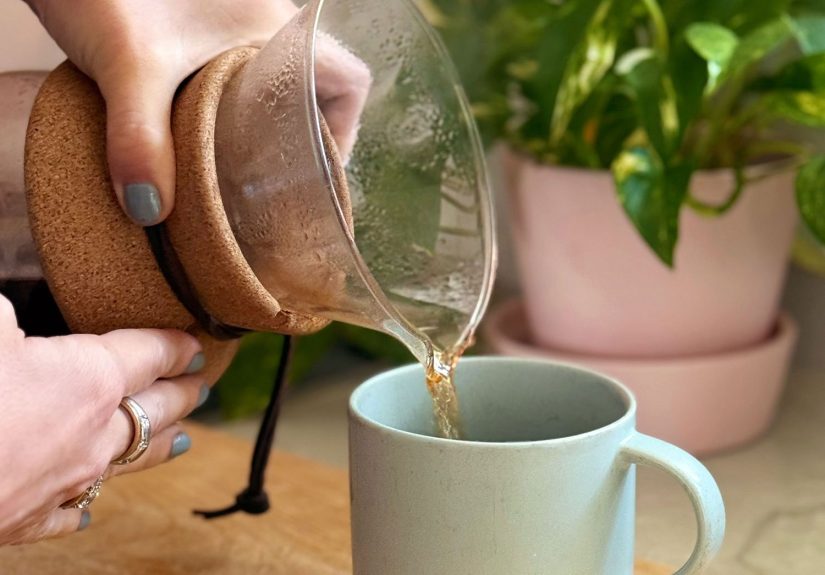
The dripper holds the filter and coffee grounds. Popular options include the Hario V60, Chemex, Kalita Wave, Bee House, and flat-bottom drippers. A cone-shaped dripper like the V60 tends to brew quickly and rewards careful pouring. A flat-bottom dripper like the Kalita Wave is often more forgiving because it encourages even extraction. Chemex brewers use thicker filters, producing a very clean cup with less sediment and oil.
2. Paper Filters
Use filters designed for your brewer. Before brewing, rinse the paper filter with hot water. This helps remove papery flavors and warms the dripper or carafe. Just remember to discard the rinse water before brewing. Forgetting this step once is normal. Forgetting it twice means your coffee is now a diluted life lesson.
3. A Burr Grinder
A burr grinder is one of the best upgrades for home coffee. Blade grinders chop beans unevenly, creating dust and boulders in the same batch. That leads to uneven extraction: some particles become bitter while others stay sour and underdeveloped. A burr grinder produces more uniform grounds, making your pour over taste cleaner and more predictable.
4. A Digital Scale
Measuring coffee and water by weight is more accurate than using scoops. Coffee beans vary in size and density, so “two tablespoons” can mean different things depending on the roast and grind. A simple kitchen scale lets you repeat a recipe when it tastes great and troubleshoot when it tastes like toasted disappointment.
5. A Gooseneck Kettle
A gooseneck kettle gives you better control over the flow and direction of water. You can make pour over coffee with a regular kettle, but a gooseneck makes it easier to pour slowly and evenly. If your kettle has temperature control, even better. If not, bring water to a boil and let it sit briefly before brewing.
The Best Pour Over Coffee Ratio
A reliable starting ratio for pour over coffee is 1:16, meaning 1 gram of coffee for every 16 grams of water. For one generous mug, try:
- 20 grams coffee
- 320 grams water
If you want a stronger cup, use a 1:15 ratio. If you prefer something lighter and more tea-like, try 1:17 or 1:18. Many specialty coffee guides recommend a range between 1:14 and 1:20 depending on taste, roast level, and brewer style. The point is not to worship the number. The point is to begin with a dependable recipe, taste the result, then adjust.
For beginners, 1:16 is the sweet middle seat: not too intense, not too watery, and unlikely to start a family argument before 8 a.m.
Best Grind Size for Pour Over Coffee
For most pour over brewers, start with a medium to medium-fine grind. The texture should look somewhat like table salt or slightly finer than sea salt, depending on the brewer. Cone-shaped drippers often work well with a medium-fine grind, while Chemex usually needs a medium-coarse grind because its thicker filter slows the drawdown.
Grind size controls how quickly water moves through the coffee and how much flavor it extracts. If the grind is too fine, water drains slowly and the coffee may taste bitter, dry, or harsh. If the grind is too coarse, water drains too quickly and the coffee may taste sour, weak, or hollow.
Simple Grind Troubleshooting
- Coffee tastes sour: Grind a little finer or use hotter water.
- Coffee tastes bitter: Grind a little coarser or use slightly cooler water.
- Coffee tastes weak: Use more coffee, grind finer, or pour more slowly.
- Coffee tastes muddy: Grind coarser or check whether your grinder produces too many fines.
Ideal Water Temperature for Pour Over Coffee
The ideal water temperature for pour over coffee is generally between 195°F and 205°F. This range is hot enough to extract sweetness, aroma, acidity, and body without scorching the grounds or pulling out too many bitter compounds. Lighter roasts often benefit from water near the hotter end of the range, while darker roasts may taste smoother when brewed slightly cooler.
If you do not own a temperature-controlled kettle, boil the water and let it rest for about 30 seconds before pouring. That simple pause usually gets you close enough for excellent home brewing.
Step-by-Step: How to Make Pour Over Coffee At Home
Here is a beginner-friendly recipe using 20 grams of coffee and 320 grams of water. Adjust the numbers later, but start here for a balanced cup.
Step 1: Heat the Water
Heat at least 400 grams of filtered water to around 200°F. You need extra water to rinse the filter and warm your brewer. Filtered water is useful because bad-tasting tap water will still taste bad after it becomes coffee. Coffee is powerful, but it is not a magician.
Step 2: Rinse the Filter
Place the paper filter in your dripper and rinse it thoroughly with hot water. This removes paper taste and preheats the brewing device. Empty the rinse water from your mug or carafe.
Step 3: Grind the Coffee
Weigh 20 grams of whole-bean coffee and grind it medium to medium-fine. Grind right before brewing for the freshest aroma and flavor. Once coffee is ground, it loses freshness quickly because more surface area is exposed to air.
Step 4: Add Coffee and Level the Bed
Add the grounds to the filter. Gently shake the dripper to level the coffee bed. A flat bed helps water flow evenly through the grounds instead of rushing down one side like it is late for work.
Step 5: Start the Bloom
Start your timer and pour about 40 to 60 grams of hot water over the grounds, making sure all the coffee is saturated. Wait 30 to 45 seconds. This stage is called the bloom. Fresh coffee releases carbon dioxide when hot water hits it, and the bloom helps prepare the grounds for more even extraction.
Step 6: Continue Pouring Slowly
After the bloom, pour in slow circles from the center outward, then back toward the center. Avoid pouring directly onto the paper filter because that sends water around the coffee instead of through it. Add water in pulses until you reach 320 grams total.
Step 7: Let It Drain
Allow the water to finish dripping through the coffee bed. Total brew time should usually land around 2:30 to 4:00 minutes, depending on your brewer, grind size, and dose. If it finishes much faster, grind finer next time. If it takes forever, grind coarser.
Step 8: Swirl and Sip
Remove the dripper, give the finished coffee a gentle swirl, and taste it after it cools slightly. Extremely hot coffee can hide flavor. As the cup cools, sweetness, acidity, fruit notes, chocolate notes, and roast character become easier to notice.
Common Pour Over Mistakes to Avoid
Using Old Coffee Beans
Old beans make flat coffee. For the best flavor, buy freshly roasted whole-bean coffee and store it in an airtight container away from heat, light, and moisture. You do not need to be dramatic and whisper encouragement to the beans, but freshness matters.
Skipping the Scale
Eyeballing coffee and water works until it does not. A scale helps you stay consistent. When your cup tastes great, you can repeat it. When it tastes off, you can adjust one variable at a time instead of blaming Mercury retrograde.
Pouring Too Aggressively
A violent pour can disturb the coffee bed, cause channeling, and lead to uneven extraction. Pour steadily and calmly. Think garden hose, not fire hydrant.
Ignoring the Drawdown Time
Drawdown time tells you whether the grind and flow are in the right zone. If water drains too quickly, the grounds may be too coarse. If it drains too slowly, the grind may be too fine or the filter may be clogged with fines.
Changing Everything at Once
When troubleshooting, change only one variable at a time. Adjust grind size first, then water temperature, then ratio or pouring technique. If you change all four at once, you are no longer brewing coffee. You are conducting a tiny kitchen mystery with no suspects.
How Different Pour Over Brewers Affect Flavor
Different brewers can create different cup profiles. A Hario V60 has a cone shape and large bottom opening, so flow rate depends heavily on grind size and pouring skill. It can produce bright, complex coffee but may punish sloppy technique. A Kalita Wave has a flat bottom and multiple small holes, encouraging a more even extraction. It is often friendly for beginners. Chemex uses thick filters that remove more oils and sediment, creating a crisp, elegant cup with a lighter body.
There is no single “best” pour over coffee maker for everyone. If you enjoy delicate, tea-like coffee, Chemex may be your new countertop sculpture. If you want control and clarity, try a V60. If you want a forgiving daily brewer, a flat-bottom dripper is a smart choice.
How to Dial In Your Perfect Cup
The best pour over coffee recipe is the one that tastes best to you. Start with 20 grams of coffee, 320 grams of water, a medium-fine grind, and water around 200°F. Then taste and adjust.
- For more sweetness: Try grinding slightly finer or extending brew time.
- For less bitterness: Grind coarser, lower the water temperature, or shorten brew time.
- For more body: Use a slightly stronger ratio, such as 1:15.
- For more clarity: Use a clean paper filter and avoid over-agitating the grounds.
Keep short notes for a week. Write down the coffee, dose, water amount, grind setting, brew time, and taste. This sounds fussy until you realize it saves you from repeating bad cups. Coffee notes are basically breadcrumbs, except they lead to happiness instead of a suspicious forest cabin.
Best Coffee Beans for Pour Over
Pour over brewing is excellent for highlighting flavor detail, so it works especially well with fresh, high-quality beans. Light and medium roasts often shine because the method brings out floral, citrus, berry, caramel, honey, and chocolate notes. Dark roasts can also work beautifully, especially when brewed with slightly cooler water and a coarser grind to reduce bitterness.
Single-origin coffees are popular for pour over because they showcase the characteristics of a specific region, farm, or processing method. Blends can be just as enjoyable, particularly if you want a balanced everyday cup with dependable sweetness and body.
Cleaning and Maintenance Tips
Clean gear makes better coffee. Rinse your dripper after each use, wash your carafe or mug regularly, and clean your grinder according to the manufacturer’s instructions. Coffee oils build up over time and can turn rancid, adding stale or bitter flavors to fresh brews.
If you use a kettle, descale it occasionally, especially if you live in an area with hard water. Mineral buildup can affect heating performance and may influence taste. Your coffee should taste like coffee, not like it had a long meeting with a limestone driveway.
Extra Experience: What Making Pour Over Coffee At Home Really Teaches You
The first thing you learn when making pour over coffee at home is humility. You can follow every step, stand there with your kettle like a calm professional, and still make a cup that tastes slightly confused. That is normal. Pour over is simple, but it rewards repetition. After a few mornings, your hands learn the rhythm: rinse, grind, bloom, pour, wait, sip. It becomes less like a recipe and more like a ritual.
One of the most useful experiences is learning how much grind size matters. At first, many beginners blame the beans. The coffee is sour? Bad beans. Bitter? Bad beans. Weak? Definitely bad beans. But often, the grinder setting is the real culprit. A small adjustment can completely change the cup. Moving one or two clicks finer may turn thin, sharp coffee into something sweet and juicy. Going slightly coarser may rescue a dark roast from tasting like it has unresolved anger.
Another lesson is that pouring technique does not need to be perfect, but it does need to be consistent. You do not have to draw flawless circles like a coffee monk. You simply need to pour evenly, avoid flooding the filter walls, and keep the coffee bed from becoming a cratered moon surface. A steady hand improves with practice. Even if your first pours are wobbly, the coffee will still be drinkable. Probably. Unless you sneeze during the bloom, in which case all bets are off.
Making pour over at home also changes how you taste coffee. You begin to notice when a cup is brighter, heavier, sweeter, cleaner, or more bitter. You may discover that you love light roasts from Ethiopia, medium roasts from Colombia, or chocolatey blends that taste like breakfast and emotional stability. You may also learn that some coffees taste better as they cool. That first scorching sip may seem ordinary, but five minutes later the cup opens up with fruit, caramel, or floral notes.
The most practical experience tip is to build a repeatable morning setup. Keep your filters, scale, grinder, and brewer in one place. Use the same mug or carafe. Write your favorite recipe on a sticky note or save it on your phone. When your brain is still loading, you do not want to search three drawers for filters while the kettle boils like it has somewhere important to be.
Another real-world tip: do not chase perfection every morning. Some days, you want to experiment with pulse pours, water temperature, and extraction theory. Other days, you just want coffee before answering emails written by people who use “circling back” as a personality. On those days, use your standard recipe and enjoy the process.
Over time, pour over coffee becomes less about being fancy and more about paying attention. You learn what fresh coffee smells like when it blooms. You learn how water changes the shape of the coffee bed. You learn that a slow morning can fit into four minutes. And eventually, you make a cup that tastes so good you pause after the first sip. That pause is the whole point.
Conclusion
Making pour over coffee at home is one of the easiest ways to upgrade your daily cup without buying a commercial espresso machine or developing a barista alter ego named Chad. Start with fresh beans, a burr grinder, filtered water, a scale, and a simple recipe: 20 grams of coffee to 320 grams of water, brewed around 200°F in about three minutes.
From there, adjust based on taste. Sour coffee usually needs finer grounds or more extraction. Bitter coffee often needs a coarser grind, cooler water, or a shorter brew. Weak coffee may need a stronger ratio or a slower pour. The more you practice, the more confident you become.
Pour over coffee is not about perfection. It is about control, flavor, and creating a small daily ritual that makes your kitchen feel like a place where good things happen. With a little patience and a few smart adjustments, you can make coffee at home that is clean, balanced, aromatic, and far better than anything that came from a dusty office machine named “Brew Station 3000.”






 Close
Close