
Table of Contents >> Show >> Hide
- What Are Migraine Pressure Points?
- Can Pressure Points Actually Help Migraines?
- How to Use Pressure Points Safely
- Pressure Points on the Hand for Migraine
- Pressure Points on the Ear for Migraine
- Pressure Points on the Foot for Migraine
- Other Common Migraine Pressure Point Locations
- What a Pressure-Point Routine Might Look Like
- When Pressure Points Are Most Likely to Help
- What Else Can Help Alongside Pressure Points?
- When to See a Doctor About Migraine
- Real-Life Experiences With Migraine Pressure Points
- Final Thoughts
Migraines have a special talent for showing up at the worst possible time. Big meeting? Migraine. Long flight? Migraine. Finally relaxing on a Saturday? Surprise, your brain has chosen drama. That’s why so many people search for quick, low-risk ways to feel better, including migraine pressure points on the ear, hand, foot, face, and neck.
Pressure points, often discussed in acupressure and traditional Chinese medicine, are specific spots people press, massage, or stimulate in hopes of easing pain, tension, nausea, and stress. Some migraine sufferers swear by them. Others try them once, shrug, and reach for a dark room and an ice pack. The truth sits somewhere in the middle: pressure points may help some people feel relief, especially as a complementary tool, but they are not a guaranteed cure and they should not replace medical care when symptoms are severe, new, or alarming.
In this guide, we’ll walk through the most talked-about migraine pressure points, how to try them safely, what they may and may not do, and when your headache deserves more than a thumb pressed into your hand. Consider this your practical, no-nonsense, slightly less mystical guide to migraine pressure points.
What Are Migraine Pressure Points?
Migraine pressure points are body locations that people press with their fingers, knuckles, a massage tool, or sometimes products like ear seeds in an attempt to reduce migraine symptoms. These spots are often found near areas where people already instinctively rub when they feel miserable, such as the temples, the base of the skull, the bridge of the nose, or the fleshy web between the thumb and index finger.
There’s an important distinction here. Acupressure uses finger pressure on specific points. Acupuncture uses thin needles placed by a trained professional. Research on acupuncture for migraine prevention is more developed than research on DIY acupressure. That means some people may experience relief from pressure points, but the evidence is mixed, and the effect can vary a lot from one person to another.
Still, if gentle pressure helps you relax, loosen muscle tension, or feel slightly more human during a migraine attack, that can be worthwhile. Relief does not have to arrive with fireworks.
Can Pressure Points Actually Help Migraines?
The honest answer: maybe, for some people, some of the time.
Pressure points may help in a few indirect but useful ways. First, they can encourage relaxation, which matters because stress is a common migraine trigger. Second, massaging certain areas may reduce muscle tightness in the jaw, neck, scalp, or shoulders, which can make head pain feel worse. Third, some points are traditionally used for nausea, sinus pressure, or tension-related discomfort, symptoms that often tag along with migraine like unwanted party guests.
But let’s keep our feet on the ground. Pressure points are not magic buttons. They do not “switch off” every migraine, and they are not a replacement for a diagnosis, preventive treatment, prescription medication, hydration, sleep, or trigger management. Think of them as one tool in a larger migraine toolbox, not the whole hardware store.
How to Use Pressure Points Safely
Before you start poking around like you’re defusing a headache bomb, a few basic rules:
Use gentle, steady pressure
Press firmly enough to feel the spot, but not so hard that you cause sharp pain or bruising. “More pressure” is not always “more effective.” Your migraine does not need a wrestling match.
Breathe while you do it
Take slow breaths for 30 seconds to 2 minutes while pressing the area. If you hold your breath and tense every muscle in your body, you are not exactly helping the relaxation part.
Stop if it makes symptoms worse
If pressing a point increases pain, dizziness, or nausea, stop. Your body is sending feedback, not submitting a suggestion box.
Avoid broken or irritated skin
Do not press on cuts, rashes, infections, or recently injured areas.
Get urgent care for red flags
A sudden, severe headache, new neurological symptoms, weakness, confusion, trouble speaking, vision changes you’ve never had before, fever with stiff neck, or headache after head injury are not “maybe I should try my hand pressure point” situations. They are “get medical help now” situations.
Pressure Points on the Hand for Migraine
LI-4 (Hegu): The Famous Hand Point
This is probably the celebrity of migraine pressure points. It’s located in the fleshy webbing between your thumb and index finger.
How to find it: Bring your thumb and index finger close together. You’ll see a bulge of muscle in the webbing. Press the highest point of that bulge on the opposite hand.
How to use it: Apply firm, circular pressure for about 30 seconds to 1 minute, then switch hands. Some people repeat this a few times.
Why people use it: It’s commonly used in acupressure for headache pain, facial pain, and stress. Some migraine sufferers say it helps take the edge off an attack or complements rest and medication.
Important note: This point is traditionally avoided during pregnancy unless a qualified clinician advises otherwise.
Pressure Points on the Ear for Migraine
Auricular Points
Ear pressure points come from auriculotherapy, a practice that treats the ear as a map of the body. Some people use finger pressure, tiny ear seeds, or professional acupuncture on these points.
How to find them: Ear points vary depending on the system used, but common migraine-related areas may be found around the outer ear cartilage or inner curves of the ear.
How to use them: Gently massage the outer ear using circular motions, or lightly press a tender area for 15 to 30 seconds. Some people work with a licensed practitioner for more targeted ear-based treatment.
Why people use them: Ear points are often discussed for pain, stress, and nausea. They’re especially appealing because they’re discreet. You can rub your ear in public without attracting too much attention. Rub your foot at a dinner table, though, and suddenly everyone has questions.
What not to do: Don’t confuse ear pressure points with internet claims that a piercing, such as a daith piercing, is a proven migraine treatment. That idea is popular online, but evidence is lacking.
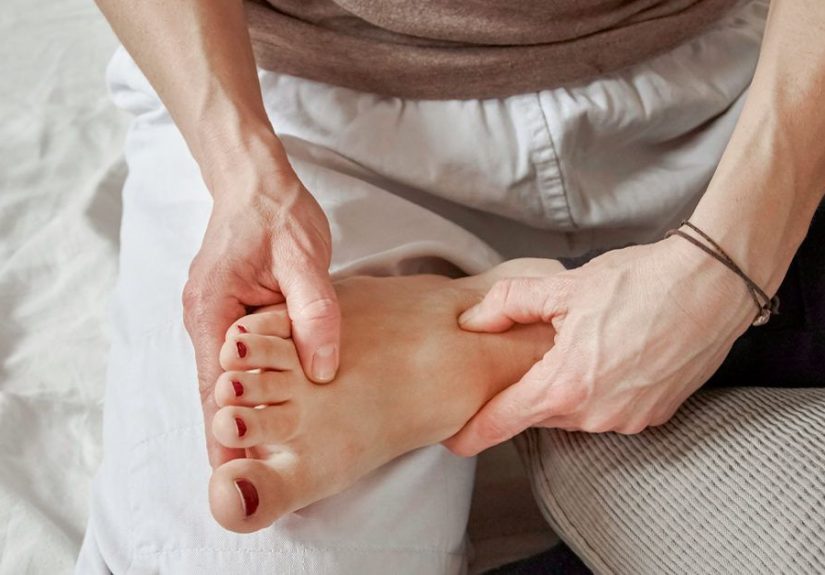
Pressure Points on the Foot for Migraine
Liver 3 (Tai Chong)
This point is often mentioned for stress, tension, and headaches. It’s located on the top of the foot, in the space between the big toe and second toe.
How to find it: Start between the big toe and second toe and slide your finger upward about an inch or two until you find a tender depression.
How to use it: Press gently but steadily for 30 seconds to 2 minutes, then switch feet.
Why people use it: It’s a common go-to point in acupressure for headache-related discomfort and body tension.
Bubbling Spring (Kidney 1)
This point sits on the sole of the foot, roughly in the upper third of the foot, below the ball.
How to use it: Massage it with your thumb while seated, ideally when you can actually relax and not while balancing on one leg like a confused flamingo.
Why people use it: Some people say it feels grounding and calming during stress-related headache symptoms.
Other Common Migraine Pressure Point Locations
The Temples
The temples are not always listed as formal acupressure points in every system, but they are one of the first places people rub during a headache.
How to use them: Use two fingers and make small circles on both temples. Keep the pressure light to moderate.
Best for: Tension around the sides of the head, stress headaches, and that “my skull is wearing a too-small hat” sensation.
Between the Eyebrows
This point, sometimes called Yin Tang, sits between the eyebrows.
How to use it: Press or massage gently for 30 seconds to 1 minute while taking slow breaths.
Best for: Frontal pressure, stress, and helping yourself calm down when your brain is staging a rebellion.
Base of the Skull / Neck Points
These points sit in the hollows on either side of the spine where the neck muscles attach near the base of the skull.
How to use them: Place your thumbs there and apply upward, gentle pressure. You can also use a tennis ball against a wall or lie on a supportive massage tool if that feels better.
Best for: Neck tension, headaches linked with muscle tightness, and postural strain from staring at screens for approximately your entire adult life.
Bridge of the Nose
The area near the top of the nose, where it meets the brow line, is another commonly discussed point.
How to use it: Press lightly with your thumb and index finger or one finger for 20 to 30 seconds.
Best for: Sinus pressure, frontal headache sensations, or migraine attacks that come with a clogged, heavy feeling in the face.
What a Pressure-Point Routine Might Look Like
If you want to try migraine pressure points, keep the routine simple:
Step 1: Change your environment
Move to a quiet, dark room if possible. Bright light and noise are terrible roommates during a migraine.
Step 2: Hydrate
Drink water if you’re able. Dehydration can make headaches worse.
Step 3: Try 2 to 4 points
Start with LI-4 on the hand, then temples, the point between the eyebrows, and the base of the skull. If you prefer, swap in foot or ear points.
Step 4: Add slow breathing
Inhale for four counts, exhale for six. Repeat for a few minutes.
Step 5: Use your proven migraine plan
If your clinician has recommended medication or other acute treatment, use it as directed. Pressure points are a sidekick, not the superhero.
When Pressure Points Are Most Likely to Help
Pressure points may be more useful when your migraine attack overlaps with stress, jaw tension, neck tightness, or mild nausea. They may also help as part of a prevention-minded wellness routine that includes regular sleep, balanced meals, exercise, and trigger awareness.
They are probably less useful if your migraine is severe, rapidly escalating, or accompanied by symptoms that usually require medical treatment. In other words, finger pressure can be supportive, but it cannot out-negotiate every nervous system uprising.
What Else Can Help Alongside Pressure Points?
Track your triggers
Common triggers include poor sleep, skipped meals, dehydration, stress, alcohol, hormonal shifts, and certain foods. A migraine diary can help you spot patterns.
Protect your routine
Consistent sleep, meals, hydration, and movement often matter more than people expect. Migraine brains tend to prefer stability over chaos.
Use evidence-based treatment
If migraines are frequent, disabling, or changing, talk to a healthcare professional. Acute medications, preventive medications, behavioral therapy, and clinician-guided complementary treatments may all have a role.
Consider professional acupuncture
If self-acupressure helps even a little, you may want to ask your healthcare provider whether professional acupuncture is reasonable for you. The research there is stronger than for at-home pressure-point massage alone.
When to See a Doctor About Migraine
See a healthcare professional if migraines are happening often, interfering with work or sleep, getting worse, or causing you to rely on pain medication too often. Also get checked if your symptoms have changed or you’re not sure whether what you’re having is actually migraine.
Get emergency care right away for:
- A sudden, explosive, or worst-ever headache
- New weakness, numbness, confusion, or trouble speaking
- New vision loss or dramatic vision changes
- Fever, stiff neck, or seizures
- Headache after a fall or head injury
- Symptoms lasting unusually long or feeling completely unlike your usual migraine
Real-Life Experiences With Migraine Pressure Points
People’s experiences with migraine pressure points tend to fall into a few familiar categories.
First, there’s the “it helps me calm down” group. These are people who say hand, temple, or eyebrow pressure doesn’t erase the migraine, but it helps take the panic level down from a 9 to a 5. For them, pressing specific points becomes part of a ritual: lights off, cold compress on, slow breathing, hand pressure, and maybe a cup of tea waiting nearby for later. The pain may still be there, but the whole situation feels less chaotic.
Then there’s the “my neck was the real villain” group. Some migraine sufferers discover that pressure at the base of the skull or into tight shoulder muscles helps because their attacks come wrapped in muscle tension. They may not be responding to some mysterious hidden switch. They may simply be easing a layer of tightness that is making the migraine feel worse.
Another common experience is trial and error fatigue. A person reads about ear points, foot points, face points, hand points, and maybe a point that allegedly lives on the moon. They try all of them, feel nothing dramatic, and conclude that pressure points are nonsense. That reaction is understandable. Migraine is highly individual, and what soothes one person can do absolutely nothing for another.
Some people describe partial relief with nausea more than pain relief. They may still have head pain, but ear massage or hand pressure gives them a slight sense of steadiness, enough to get through the next hour without feeling like they’re on a boat in a thunderstorm. Small wins count.
There are also people who use pressure points preventively. Maybe not as a formal migraine treatment, but as part of a stress-reduction routine. They notice that when they do evening stretching, scalp massage, neck release, and a few minutes of acupressure, they feel less wound up overall. Since stress and irregular routines can trigger attacks, that sort of habit may help indirectly.
And of course, some people truly do report “this is the first thing I do when I feel one coming on” results. They might press LI-4, rub their temples, apply a cold pack, and rest immediately. The migraine still arrives, but sometimes it lands softer. Whether that’s from acupressure itself, rapid self-care, nervous system calming, or a combination of all three, the end result is what matters to them.
What stands out across these experiences is that pressure points are rarely described as a miracle. More often, they’re described as helpful, soothing, grounding, or worth trying. That may not sound glamorous, but anyone who has spent a day hiding from sunlight under a blanket can appreciate the value of “helpful.”
If you want to test pressure points for yourself, the best approach is to be observant rather than dramatic. Try the same points during a few separate migraine episodes. Notice whether they reduce pain intensity, nausea, tension, or anxiety. Track what else was happening, including sleep, hydration, food, stress, and medication timing. Over time, you may find that certain points are useful, some are pointless, and a few are only effective when combined with other habits.
In short, experiences with migraine pressure points are real, varied, and deeply personal. For some, they’re a comfort measure. For others, they’re part of a broader migraine strategy. And for a few, they’re just one more thing they tried before deciding their best pressure point is the button that turns off the overhead lights.
Final Thoughts
Migraine pressure points on the ear, hand, foot, face, and neck can be a reasonable complementary strategy for some people. They are easy to try, low cost, and generally safe when used gently. The best-known points include the hand web between the thumb and index finger, areas on the ear, the top of the foot, the temples, the spot between the eyebrows, and the base of the skull.
Still, pressure points work best when they’re treated as part of a bigger migraine management plan. That plan may include trigger tracking, better sleep, hydration, stress reduction, medication, and professional care. If migraines are frequent or disabling, don’t settle for white-knuckling your way through them. There are better options than suffering heroically while pressing your foot in the dark.





 Close
Close