
Table of Contents >> Show >> Hide
- What Is a Modern Industrial Remodel?
- Why Modern Industrial Style Works So Well
- Start With the Bones of the Space
- The Modern Industrial Color Palette
- Materials That Define the Look
- Modern Industrial Kitchen Remodel Ideas
- Modern Industrial Living Room Ideas
- Modern Industrial Bathroom Remodel Ideas
- Lighting: The Secret Weapon
- Open Layouts and Zoning
- Furniture That Fits the Style
- Budget-Friendly Modern Industrial Remodel Tips
- Common Mistakes to Avoid
- Experience Notes: What Living Through a Modern Industrial Remodel Teaches You
- Conclusion
- SEO Tags
A modern industrial remodel is what happens when a home stops pretending it was born wearing crown molding and starts showing off its bones. Exposed brick? Leave it. Concrete floors? Polish them. Steel beams? Celebrate them like they just won an architecture award. The style is bold, honest, practical, and surprisingly warm when done well. It borrows from warehouses, factories, urban lofts, and adaptive-reuse spaces, then softens the look with wood, textiles, smart lighting, and a floor plan that actually works for daily life.
The magic of modern industrial design is contrast. It loves old and new, rough and refined, matte and polished, heavy and airy. A room might pair black steel-framed doors with white oak floors, concrete counters with soft linen curtains, or exposed ductwork with a plush sectional big enough to host a movie night and three snack-related regrets. The goal is not to make your house look like an abandoned machine shop. The goal is to create a space that feels architectural, durable, stylish, and lived-in.
What Is a Modern Industrial Remodel?
A modern industrial remodel updates a home using materials and design cues associated with old factories, workshops, warehouses, and loft apartments. Common features include exposed brick walls, concrete floors, metal stair railings, black-framed windows, open shelving, visible beams, reclaimed wood, ductwork, high ceilings, and a neutral color palette. The modern part comes from clean lines, better lighting, improved layouts, energy-efficient upgrades, and a more comfortable approach to furniture and finishes.
Traditional industrial interiors could sometimes feel cold, dark, or overly masculine. Today’s modern industrial remodel is more balanced. It keeps the raw texture but adds warmth. Instead of filling a room with nothing but metal stools and Edison bulbs, designers now mix in natural wood, soft rugs, sculptural lighting, plants, curved furniture, warm leather, handmade tile, and layered textiles. In other words, the space still has attitude, but it no longer looks like it might ask you to clock in for a night shift.
Why Modern Industrial Style Works So Well
Modern industrial remodeling works because it turns structural details into design features. Instead of hiding every pipe, beam, brick line, and surface imperfection, the style uses them as character. That makes it especially useful in lofts, older homes, converted buildings, basements, kitchens, and open-plan spaces where standard “pretty” finishes may feel too polished or predictable.
The style is also practical. Concrete, metal, brick, and hardwood can handle real life. They age well, clean up well, and often look better with a little patina. A scratch on a glossy white cabinet looks like a tragedy. A scratch on a reclaimed wood island looks like a backstory. That durability makes industrial interiors ideal for busy households, creative studios, home offices, and kitchens that see more action than a cooking show finale.
Start With the Bones of the Space
The first step in a modern industrial remodel is evaluating what your home already has. Look for architectural features worth exposing or emphasizing. Brick walls, ceiling joists, concrete slabs, original wood beams, steel columns, old windows, and tall ceilings can become the foundation of the design. Even if your home is not a converted warehouse, you can still create an industrial feel by choosing materials that suggest structure and craftsmanship.
If you do have original brick, treat it carefully. Cleaning, sealing, or lightly repairing brick can preserve its texture without making it look fake. Painting brick white or charcoal can give it a cleaner modern edge, but once painted, it is difficult to reverse. For concrete floors, polishing or staining can create a sleek surface that feels intentional rather than unfinished. For ceilings, exposed joists or black-painted ductwork can add depth, especially in basements or open-plan living areas.
The Modern Industrial Color Palette
The classic modern industrial color palette starts with black, white, gray, charcoal, warm brown, and natural wood tones. These colors work because they highlight texture rather than compete with it. A brick wall already has movement. Concrete already has variation. Metal already brings shine or shadow. The palette should support those materials, not fight them like a toddler refusing bedtime.
For a softer version, use warm neutrals: creamy white walls, light oak floors, taupe upholstery, cognac leather, and matte black accents. For a moodier version, try charcoal cabinets, black window trim, dark soapstone-style counters, walnut shelving, and aged brass fixtures. A few deep accent colors can also work beautifully. Navy, olive green, rust, oxblood, and deep brown all fit the industrial mood without making the room feel like a theme restaurant.
Materials That Define the Look
Brick
Exposed brick is one of the most recognizable industrial design elements. It adds instant texture, history, and warmth. In a remodel, brick can be original, reclaimed, or installed as a veneer. The best results usually come from keeping the finish slightly imperfect. Brick should not look too shiny or too uniform. Its charm lives in the chips, color shifts, and mortar lines.
Concrete
Concrete is the workhorse of industrial remodeling. It can appear as flooring, countertops, fireplace surrounds, bathroom walls, planters, or accent panels. Polished concrete floors feel sleek and urban, while matte concrete counters add weight and texture to a kitchen. To keep concrete from feeling cold, pair it with wood cabinets, warm lighting, rugs, and comfortable furniture.
Metal
Steel, iron, aluminum, stainless steel, and blackened metal are central to the industrial look. Use metal in stair railings, cabinet hardware, lighting, shelving frames, range hoods, table bases, and interior doors. Matte black is the most common finish, but brushed nickel, aged brass, oil-rubbed bronze, and gunmetal can add depth. Mixing metals is allowed, but keep the combinations intentional so the room feels designed, not assembled from a clearance bin at midnight.
Wood
Wood is what keeps a modern industrial remodel from feeling like a very stylish parking garage. Reclaimed beams, wide-plank floors, butcher block counters, floating shelves, and oak cabinetry all soften the hard surfaces. Lighter woods make the style feel Scandinavian and airy. Darker woods create a richer, moodier loft atmosphere.
Modern Industrial Kitchen Remodel Ideas
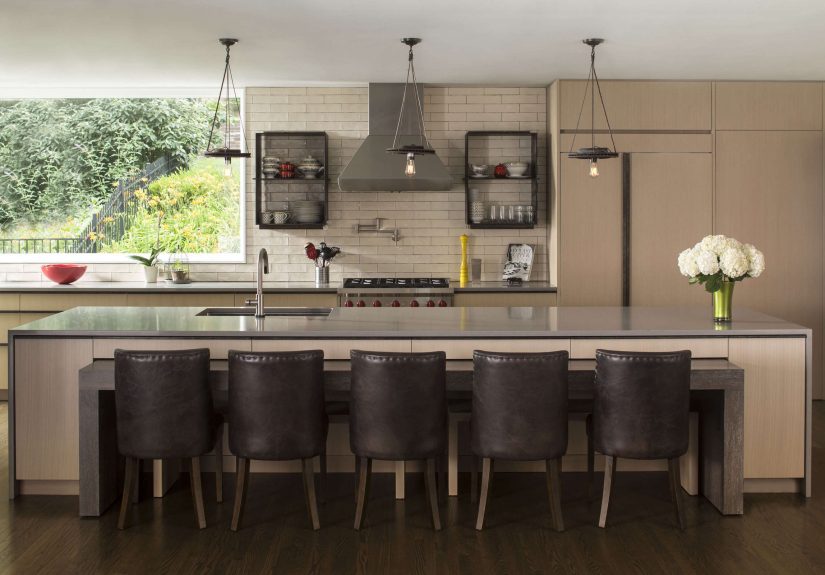
The kitchen is often the star of a modern industrial remodel because it naturally combines function and materials. Stainless steel appliances, concrete counters, black fixtures, exposed shelving, subway tile, slab-front cabinets, and large islands all fit the style. A kitchen with brick walls and a dark ceiling can feel dramatic, while one with white walls, black accents, and wood cabinets feels cleaner and more family-friendly.
For a strong industrial kitchen, consider a large island with a waterfall concrete-look counter, black metal pendant lights, open wood shelving, and a simple tile backsplash. If the room is small, use industrial details in a lighter way. Try black cabinet pulls, a stainless-steel range hood, slim metal shelves, and a warm wood dining table. Not every industrial kitchen needs to look like it could host a blacksmithing competition.
Storage is especially important. Open shelving looks great in photos, but real kitchens contain cereal boxes, mismatched mugs, and at least one mysterious lid with no container. Mix open shelves with closed cabinets so the pretty items can shine and the chaotic items can quietly live behind doors.
Modern Industrial Living Room Ideas
A modern industrial living room should feel open, relaxed, and grounded. Start with one strong architectural feature, such as a brick wall, concrete fireplace, black-framed windows, or exposed ceiling beams. Then layer in comfortable seating, a large rug, warm wood tables, and soft lighting. The biggest mistake is making the room too hard. A metal coffee table, leather sofa, concrete floor, and bare windows can look cool for five minutes, then feel like a waiting area for a very expensive motorcycle repair shop.
Balance is everything. If your room has concrete floors, use a thick rug. If the walls are dark, bring in light upholstery. If you have lots of metal, add plants, woven baskets, books, and fabric. Oversized sofas, curved chairs, and soft curtains can make a large industrial space feel more human. A few vintage pieces also help, especially old factory carts, reclaimed wood benches, or antique cabinets used as media storage.
Modern Industrial Bathroom Remodel Ideas
Industrial bathrooms work beautifully when they combine clean function with tactile materials. Think concrete-look tile, black shower frames, wall-mounted faucets, exposed plumbing-style fixtures, wood vanities, vessel sinks, and simple mirrors. A glass shower with black grid framing can create an instant industrial statement. Pair it with warm lighting and natural wood so the bathroom feels spa-like rather than basement-like.
For small bathrooms, keep the palette simple. White or gray tile, matte black fixtures, a floating vanity, and one textured feature wall can be enough. For larger bathrooms, add a freestanding tub, oversized mirror, stone flooring, or a custom steel-and-glass shower enclosure. Good lighting matters here. Industrial bathrooms can become gloomy quickly if you rely on one sad ceiling bulb doing its best.
Lighting: The Secret Weapon
Lighting can make or break a modern industrial remodel. The style often uses darker materials, so you need multiple light sources. Combine overhead fixtures, pendant lights, wall sconces, under-cabinet lighting, and floor lamps. Large metal pendants work well over islands and dining tables. Track lighting can suit lofts and studios. Wall sconces with black or brass finishes add atmosphere beside mirrors, beds, and reading corners.
Edison bulbs were once the unofficial mascot of industrial design, but use them carefully. A few warm exposed bulbs can look charming. Too many can make your home feel like a craft cocktail bar that charges extra for ice. Modern LED bulbs, dimmers, and warmer color temperatures can give you the glow without sacrificing comfort or efficiency.
Open Layouts and Zoning
Industrial spaces often have open floor plans, but open does not mean empty. The key is zoning. Use rugs, lighting, furniture placement, ceiling treatments, shelving, and partial glass walls to define areas. A black steel-and-glass divider can separate a home office from a living room while keeping light moving through the space. A large dining table can anchor the transition between kitchen and lounge. A sectional can create a living zone without adding walls.
In remodels, removing unnecessary walls can make a home feel more industrial and modern, but structure should always lead the decision. Some walls contain plumbing, electrical work, or load-bearing support. Before you start swinging a sledgehammer like a renovation-show hero, bring in a qualified professional. Real remodeling is less “dramatic reveal” and more “let’s not accidentally meet the upstairs bathroom.”
Furniture That Fits the Style
Modern industrial furniture should be simple, sturdy, and comfortable. Look for leather sofas, metal-framed chairs, wood dining tables, low-profile sectionals, open bookcases, and pieces with clean silhouettes. Avoid furniture that is too delicate or overly ornate. Industrial rooms need pieces with enough visual weight to stand up to brick, concrete, and steel.
That said, do not overdo the theme. A room filled with gear-shaped clocks, pipe shelves, metal stools, and factory signs can feel more like a stage set than a home. Choose a few industrial pieces and mix them with modern, vintage, or organic elements. The best spaces look collected, not costume-designed.
Budget-Friendly Modern Industrial Remodel Tips
You do not need a converted loft or a millionaire’s renovation budget to get the look. Start with high-impact updates. Paint interior doors black. Replace basic light fixtures with metal pendants or sconces. Add open wood shelves with black brackets. Install matte black hardware. Use concrete-look porcelain tile in a bathroom or laundry room. Bring in a reclaimed wood coffee table or a steel-framed mirror.
For kitchens, consider a stainless-steel backsplash, butcher block counter, black faucet, or industrial-style bar stools. For living rooms, add a large textured rug, leather accent chair, metal floor lamp, and a gallery wall with black frames. For bedrooms, use warm wood, linen bedding, black reading lights, and a simple platform bed. Small changes can create the mood without requiring you to refinance your life.
Common Mistakes to Avoid
The first mistake is making the space too cold. Industrial materials need softness. Add rugs, curtains, cushions, plants, art, and warm lighting. The second mistake is using fake distressing everywhere. One reclaimed wood table is charming. Ten artificially rusted objects can look like your decor caught tetanus.
The third mistake is ignoring acoustics. Concrete, brick, glass, and metal bounce sound around. In open industrial spaces, add fabric panels, upholstered furniture, rugs, bookshelves, curtains, and acoustic-friendly materials. The fourth mistake is choosing style over comfort. Industrial design should support daily life. If a chair looks amazing but feels like punishment, it belongs in a showroom, not your breakfast nook.
Experience Notes: What Living Through a Modern Industrial Remodel Teaches You
A modern industrial remodel teaches patience faster than almost any design project. The style looks simple from the outside, but simple does not mean easy. Exposing a brick wall sounds straightforward until you discover the wall has old repairs, uneven mortar, mystery stains, and one section that appears to have been patched by someone using optimism instead of technique. The lesson is clear: raw materials are beautiful, but they are also honest. They show everything.
One of the best experiences in this kind of remodel is learning to edit. At first, it is tempting to add every industrial detail you love: black windows, pipe shelves, concrete counters, metal stools, steel doors, exposed bulbs, brick walls, leather furniture, and maybe a giant clock large enough to be seen from another zip code. But the rooms that feel best are usually restrained. They choose a few bold elements and let them breathe.
Another lesson is that warmth must be planned, not added as an apology at the end. If the remodel begins with concrete floors, black metal, and gray walls, the space may look impressive but feel chilly. Adding wood tones early makes a huge difference. So does lighting. A warm pendant over a dining table, under-shelf lighting in a kitchen, or a soft floor lamp near a sofa can shift the entire mood. Industrial style is not just about what surfaces look like in daylight. It is about how the home feels at 8 p.m. when everyone is tired, hungry, and emotionally dependent on good lighting.
Function also becomes more important than expected. Open shelving is a perfect example. It looks fantastic when styled with handmade bowls and three attractive cookbooks. It looks less fantastic when loaded with plastic cups, vitamin bottles, and a bag of chips nobody wants to admit they opened. The practical compromise is using open shelving for display and closed storage for the daily mess. Industrial design can be honest, but it does not need to be brutally honest about your snack habits.
During a remodel, homeowners often discover that industrial style works best when it respects the building. If a home has original wood floors, old brick, or unusual ceiling lines, those features should guide the design. If the home is newer, the industrial character can come through fixtures, finishes, furniture, and layout instead of fake history. A modern industrial remodel should feel authentic to the house, not like a warehouse costume placed over a suburban floor plan.
The final experience is realizing how flexible the style can be. Modern industrial can lean rustic with reclaimed wood and leather. It can lean minimalist with smooth concrete and black steel. It can lean luxury with marble, brass, and dramatic lighting. It can even become family-friendly with soft rugs, washable fabrics, rounded furniture, and smart storage. The best version is the one that supports real life. After all, a remodel is not successful because it photographs well. It is successful because you enjoy walking into it every day.
Conclusion
A modern industrial remodel is more than a design trend. It is a way of making a home feel strong, useful, expressive, and deeply personal. By combining exposed brick, concrete, metal, wood, open layouts, layered lighting, and comfortable furnishings, you can create a space that feels both urban and welcoming. The secret is balance. Let the raw materials shine, but give them warmth. Keep the lines clean, but make the rooms livable. Add character, but avoid turning the home into a themed attraction called “Factory Chic: The Musical.”
Whether you are remodeling a loft, updating a kitchen, redesigning a bathroom, or simply adding industrial touches to a standard home, this style offers plenty of room for creativity. Start with the architecture, choose honest materials, soften the hard edges, and design for the way you actually live. Done right, a modern industrial remodel does not just look cool. It feels confident, practical, timeless, and unmistakably yours.





 Close
Close