
Table of Contents >> Show >> Hide
- The Bored Panda story in plain English: a safety decision that looked shocking on paper
- What is a “medical tattoo,” really?
- Why twin mix-ups become a medical-safety issue (not just a sitcom plot)
- The arguments in favor: why some families see a tiny identifier as reasonable
- The arguments against: why people (including the MIL) can panic
- So… was this “medical tattoo” a smart move or a bridge too far?
- If a family is considering something similar, what are safer alternatives?
- How to handle family backlash without turning Thanksgiving into a courtroom drama
- The bigger takeaway: parenting is risk management with love and snacks
- Experiences related to the topic: what families say actually happens (and what they wish they’d done sooner)
Parenting twins is like running a tiny, adorable air-traffic-control towerexcept the planes are toddlers, the radios are sticky, and the pilots occasionally eat crayons. Most days, the chaos is harmless. But when one child needs a specific medical routine and the other does not, the “Wait… which one is which?” problem stops being funny fast.
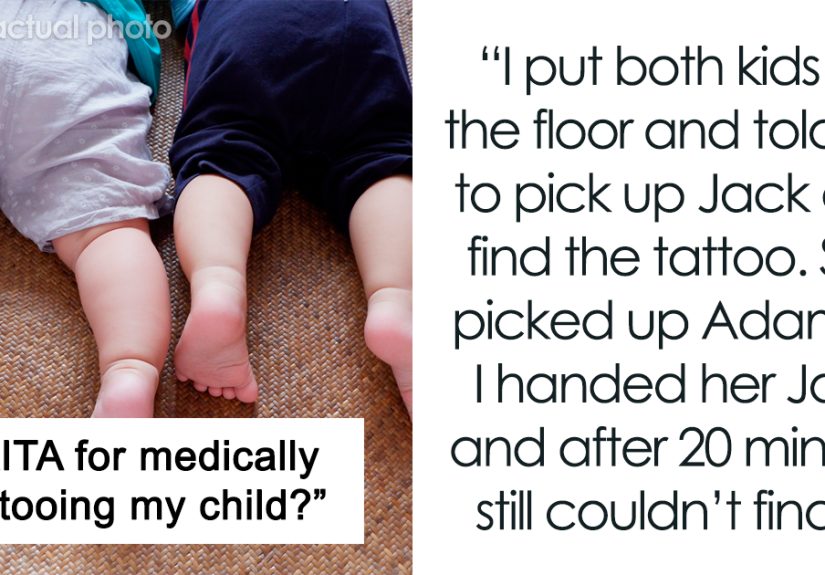
That’s the tension at the heart of a viral Bored Panda story: a mom of twin boys described “medically tattooing” one childon a doctor’s recommendationto make sure the right twin received a weekly injection. Her mother-in-law (MIL) reportedly reacted like the family had joined a pirate crew. The internet, as usual, formed lines. Some people saw a smart safety solution; others saw a parenting choice that felt too permanent for someone too small.
This article unpacks the story, the real-world medical context behind “medical tattoos,” and the practical questions families should considerespecially when safety, identity, and extended-family opinions collide.
The Bored Panda story in plain English: a safety decision that looked shocking on paper
In the Bored Panda recap, the mom explains that one twin (she used pseudonyms like “Jack” and “Adam”) needed a weekly injection due to a medical condition. Like many parents of multiples, she worried about mixing them upparticularly when sleep-deprived, rushing, or delegating care to others. According to the story, a doctor recommended a tiny “freckle” tattooabout two millimeterson one child’s earlobe to provide a consistent visual identifier. The goal wasn’t decoration; it was preventing a medication error.
The MIL’s strong reaction became the conflict point. She objected to the idea of tattooing a baby/young child, even if the mark was small and medically motivated. The parents, on the other hand, framed it as a precaution to avoid giving the wrong child the wrong treatmentan error that can range from “wasted dose” to “serious harm,” depending on the medication and condition.
Whether you find this solution brilliant or alarming, it raises a deeper, very modern question: When does “medical information on skin” count as healthcare, and when does it feel like a permanent decision made too early?
What is a “medical tattoo,” really?
The phrase medical tattoo can mean a few different things, and this is where people often talk past each other:
1) Clinical positioning tattoos (common in radiation therapy)
In cancer care, tiny tattoo dots are sometimes used to help clinicians align treatment accuratelyoften described as pinpoint or freckle-sized marks. Multiple major medical and cancer organizations explain that these marks help position a patient consistently over repeated treatments, and they can be permanent depending on the method used.
This matters because it gives context: tiny, medically purposed tattoo marks are already a known tool in healthcare. They’re not a trendy invention from social media; they’re a practical solution used in specific clinical settings.
2) Medical alert tattoos (used to communicate conditions like diabetes or allergies)
Some adults choose tattoos that say things like “Type 1 Diabetes,” “Epilepsy,” or “Severe Penicillin Allergy.” EMS and emergency clinicians may notice them, but they can also be missed, misunderstood, outdated, or hard to verify. The medical literature discussing medical alert tattoos emphasizes both their potential usefulness and their real-world limitationsespecially around accuracy, standardization, and how providers should interpret them in urgent situations.
3) Identification tattoos (the “don’t mix up the twins” category)
This is the category the Bored Panda story fits into. It’s not meant for strangers in an ER to read as a medical directive. It’s meant for caregiversparents, babysitters, daycare staffto reduce the risk of giving the wrong child medication or performing the wrong routine.
In other words: the “medical” part here is the safety outcome (right child, right intervention), not a tattoo acting as a medical order.
Why twin mix-ups become a medical-safety issue (not just a sitcom plot)
Most parents of twins have a story about mistaken identitymatching outfits, identical hairstyles, and that one relative who swears they “can totally tell them apart” and then immediately cannot. Usually, it’s harmless. But when a medical routine is involved, mix-ups can turn into legitimate safety hazards:
- Medication errors: giving a medicine to the wrong child, giving two doses to one child, or skipping the child who needs it.
- Condition-specific care: one twin might have an allergy, a heart condition, or a treatment schedule the other doesn’t share.
- Caregiver handoffs: the more people involved (parents, grandparents, daycare, babysitters), the more “certainty tools” matter.
From a safety standpoint, the parents’ underlying logic is easy to understand: remove ambiguity. When stakes are medical, “I think that’s Jack” is not the level of confidence you want.
The arguments in favor: why some families see a tiny identifier as reasonable
It’s always there (unlike bracelets, labels, or memory)
Temporary solutions can fail: bracelets get removed, socks get swapped, marker lines fade, daycare labels peel off in the dishwasher, and “we’ll remember” collapses at 3 a.m. next to a screaming baby and a cold cup of coffee. A tiny, consistent identifier is the ultimate low-tech backup.
It supports a “right patient, right treatment” mindset
In healthcare settings, patient identity checks are standard for a reason. One major cancer center patient education resource explicitly describes repeated ID checks and wristbands as part of safety culture. Families managing home care are basically running a mini version of that systemand they need their own safeguards.
It may reduce the risk of a higher-harm mistake
If the alternative is a preventable medication error, some parents will accept a tiny, controlled mark as the lesser risk. The key question becomes: Is the benefit concrete and ongoing, or hypothetical and occasional?
The arguments against: why people (including the MIL) can panic
Consent and permanence feel different with children
A permanent mark on a child’s body triggers a strong emotional response for many people, even when the mark is small. That’s not automatically irrationalit’s a values reaction. Some families feel that anything permanent should wait until the child can participate in the choice.
Infection and complication concerns are real
Any procedure that breaks the skin has riskespecially if it’s done outside a medical setting or by someone not trained for pediatrics. Even when done professionally, parents may worry about healing, infection, allergic reactions, or scarring.
“Medical tattoo” can sound bigger than what it is
Language matters. “We tattooed the baby” hits people differently than “we made a tiny freckle mark recommended by our physician to prevent medication errors.” Same action, completely different emotional impact.
Tattoos can be misunderstood in medical contexts
Separate from the twin-identification issue, emergency medicine has long debated how to interpret tattoos as medical wishes. Cases like “DNR” (Do Not Resuscitate) tattoos have created ethical and legal confusion in hospitalspartly because tattoos aren’t standardized medical documents, and the meaning may not reflect current wishes. The broader lesson: ink is not automatically a medically binding instruction.
So… was this “medical tattoo” a smart move or a bridge too far?
The most honest answer is also the most annoying: it depends. But it depends on specific, practical factorsnot on whether the internet thinks tattoos are “cool” or “bad.”
Questions that actually matter
- How high are the consequences of a mix-up? A weekly injection suggests ongoing, repeated risk if identity is uncertain.
- How similar are the twins right now? Some babies are nearly indistinguishable for months.
- How many caregivers are involved? More handoffs = more need for reliable identifiers.
- Is there a truly non-permanent solution that’s equally reliable? If yes, that may be the better first step.
- What did the clinician actually recommendand why? The “why” should be documented and understood, not just repeated.
In the Bored Panda case, the detail that stands out is the reported size and placement: a tiny dot on an earlobe. That suggests the parents (and clinician) were trying to minimize the “tattoo-ness” while maximizing the identifier functionmore like a medical marking than body art.
If a family is considering something similar, what are safer alternatives?
Most parents want the lowest-permanence solution that still works. Here are common approaches families use before considering anything lasting:
Low-tech, reversible identifiers
- Color systems: consistent colors for clothing, socks, or hair clips (and yes, the system must be consistent to work).
- Non-toxic nail polish: a dot on one toenail can be surprisingly effective (and less visible in daily life).
- Temporary skin markers: useful short-term, but requires maintenance and can fade or transfer.
- Photo references: a quick phone album with labeled close-ups (ear shape, freckles, birthmarks).
Medical ID tools (especially for allergies or conditions)
For conditions where third parties (like emergency responders) may need quick information, medical ID jewelry remains a common recommendation. Some medical ID organizations state that first responders are trained to look for bracelets and then necklaces, and public health travel guidance also encourages travelers with severe allergies to consider medical alert identification.
For twins, a medical ID bracelet isn’t primarily about EMS; it’s about caregiver clarity. But it can still help if one twin has a condition the other doesn’t.
How to handle family backlash without turning Thanksgiving into a courtroom drama
In the story, the MIL’s reaction is the spark, but the fuel is something many families recognize: medical choices can become identity choices. People hear “tattoo” and assume it’s about aesthetics or rebellion, not risk reduction.
Strategies that reduce conflict (and actually improve safety)
- Lead with the safety rationale: “This prevents medication errors” is clearer than “the doctor said it was okay.”
- Describe the scale accurately: “a tiny freckle-dot” helps people picture reality.
- Invite questions, not votes: family can ask; parents decide.
- Document the care plan: a written routine (which twin, which day, which dose) protects everyone.
It’s also worth naming the emotional truth: grandparents sometimes react strongly because they feel protectiveand powerless. That doesn’t make them right, but it can explain why they go from “concern” to “panic” in under three seconds.
The bigger takeaway: parenting is risk management with love and snacks
This Bored Panda story went viral because it sits at the intersection of three hot-button topics: children, medical decisions, and tattoos. Add twins (a guaranteed audience magnet), and you have perfect internet weather.
But behind the debate is a fairly universal parenting moment: choosing between imperfect options. The parents weren’t choosing “tattoo vs. no tattoo.” They were choosing “strong identifier vs. possibility of a dangerous mix-up.” Reasonable people can disagree on where the line should be, especially when permanence and consent are involved.
If you’re reading this as a parent or caregiver, the most useful conclusion is practical: whatever system you use, make it consistent, make it easy for tired humans, and make it hard to mess up. Because the real enemy here isn’t a MIL’s opinionit’s a preventable mistake.
Experiences related to the topic: what families say actually happens (and what they wish they’d done sooner)
Parents of multiples often describe the early months as a blur of feeding schedules, diaper logistics, and the kind of sleep deprivation that makes you stare into the fridge like it’s going to explain itself. In that stage, “I can tell them apart” can be true at noon and completely false at midnight. Many families say the mix-ups don’t happen because they don’t carethey happen because human brains are not built for high-stakes decision-making on four hours of broken sleep.
One common experience: families create an identifier system that works perfectly until it doesn’t. For example, a color system can be greatuntil laundry day when both babies end up in the “neutral pile,” or until a well-meaning relative decides it’s “cuter” to dress them the same. Parents often say the system needs two parts: a visual cue and a rule that everyone follows. If the rule isn’t respected, the system becomes decorative instead of functional.
Another shared reality: daycare and babysitter handoffs change everything. At home, parents learn tiny differencesear shape, eyebrow expression, which baby kicks like they’re training for a UFC match. But caregivers outside the home don’t have that mental database. Families sometimes describe the first week of childcare as the moment they realized they needed a clearer method: labels, a photo sheet, a “Twin A / Twin B” routine posted on the fridge, and instructions that feel almost comically obvious (“If you’re unsure, stop and check.”).
When a medical routine is addedan injection, a topical medication, a special formulaparents say the emotional pressure spikes. The fear isn’t just “I’ll feel guilty.” The fear is “I could harm my child by doing the wrong thing.” That’s why some parents become extremely systematic: a written log, a phone reminder, a checkmark chart, and a clear identifier so they’re not relying on memory. In families where one twin needs a recurring treatment, caregivers often report that reducing uncertainty lowers household anxietynot because they’re trying to be controlling, but because they’re trying to be safe.
Extended-family reactions can be the wild card. Some grandparents are instantly supportive; others interpret “medical decision” as “parenting decision I should influence.” Families commonly say that conflict eases when the conversation shifts away from the word “tattoo” and toward the real goal: preventing an error. When relatives understand that the decision is about medication safetynot stylethey may not love it, but they stop treating it like a scandal.
Finally, many parents say they wish they’d built a stronger identification-and-care system before they were exhausted. Not because they made a catastrophic mistake, but because they came close enough to feel their stomach drop. The stories sound similar: standing over two nearly identical babies thinking, “Wait… was it him last time?” In those moments, families don’t want a debate. They want a plan that workseven on the hardest day.




 Close
Close