
Table of Contents >> Show >> Hide
- What Is a Nakiri Vegetable Knife?
- Why the Nakiri Knife Shape Matters
- Nakiri Knife vs. Santoku vs. Chef’s Knife
- Best Uses for a Nakiri Vegetable Knife
- How to Use a Nakiri Knife Properly
- What to Look for When Buying a Nakiri Knife
- How to Care for a Nakiri Vegetable Knife
- Common Mistakes to Avoid
- Who Should Buy a Nakiri Knife?
- Practical Examples: What a Nakiri Does Well
- Experience Notes: Living With a Nakiri Vegetable Knife
- Conclusion
If your cutting board sees more carrots than steaks, more scallions than short ribs, and more cabbage than anything with a bone in it, the nakiri vegetable knife may be the kitchen tool you did not know you were missing. It looks a little like a tiny cleaver that went to finishing school: rectangular, elegant, flat-edged, and surprisingly friendly once you understand what it wants to do.
The nakiri is a traditional Japanese-style vegetable knife designed for clean, controlled prep work. Its name is commonly understood to mean “leaf cutter” or “vegetable cutter,” which is wonderfully direct. No drama. No mystery. It is a knife that wakes up in the morning and says, “Bring me the onions.”
Unlike a Western chef’s knife, which has a curved belly for rocking back and forth, a nakiri usually has a straight cutting edge. That means it shines when you use an up-and-down chopping motion or a smooth push cut. When used well, it can turn cucumbers into paper-thin coins, carrots into tidy matchsticks, and herbs into confetti without making them look as if they just survived a lawn mower.
What Is a Nakiri Vegetable Knife?
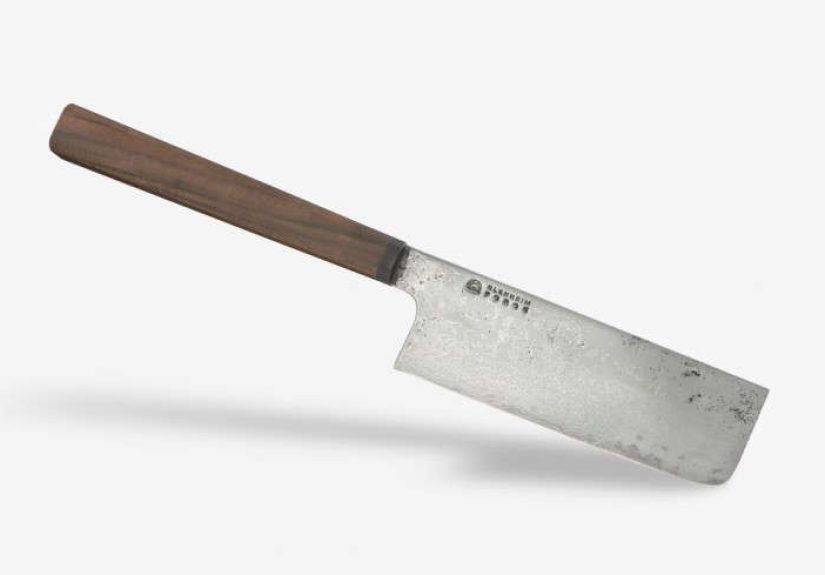
A nakiri knife is a Japanese vegetable knife with a tall, rectangular blade, a squared-off or blunt tip, and a mostly flat edge. It is built for slicing, chopping, mincing, and dicing vegetables and fruits with precision. The wide blade gives your knuckles room, helps guide straight cuts, and makes it easy to scoop chopped ingredients from the cutting board into a pan.
Most nakiri knives are around 5.5 to 7 inches long, with many popular models landing near 6.5 or 7 inches. That size makes the knife long enough to handle cabbage, eggplant, potatoes, squash, and bunches of leafy greens, but still short enough to feel nimble in a home kitchen.
The nakiri should not be confused with a meat cleaver. Yes, it has a rectangular profile. No, it is not meant to hack through bones, frozen food, or anything that fights back. Think of it as a vegetable specialist, not a medieval battle axe with a culinary side hustle.
Why the Nakiri Knife Shape Matters
The Flat Edge Creates Clean Contact
The most important feature of a nakiri vegetable knife is its flat cutting edge. Because the edge meets the cutting board evenly from heel to tip, it can cut completely through vegetables without leaving annoying little “accordion” connections. Anyone who has tried to slice scallions and ended up with a green onion necklace knows exactly why this matters.
This flat profile is especially useful for push cutting. Instead of rocking the knife, you move the blade forward and downward in one controlled motion. The result is a clean slice with less crushing, tearing, or bruising. For delicate ingredients such as herbs, tomatoes, cucumbers, leafy greens, and mushrooms, that cleaner cut can help preserve texture and appearance.
The Tall Blade Gives Control
A nakiri’s blade height is not just for looks. The tall profile gives your guiding hand a stable surface to rest against while using the claw grip. This can make repetitive vegetable prep feel more controlled and less fussy. It also helps when cutting tall or round produce such as onions, apples, sweet potatoes, and zucchini.
The broad side of the blade is also handy for transferring chopped vegetables. Dice an onion, slide the flat of the knife under the pile, and move it to the skillet like a responsible adult. Just avoid scraping the sharp edge sideways across the board; turn the knife over and use the spine if you need to gather ingredients.
The Blunt Tip Keeps the Focus on Vegetables
Many nakiri knives have a squared or rounded-off tip. This design makes sense because the knife is not intended for piercing or delicate tip work. If you need to core strawberries, peel apples, remove pepper ribs with surgical precision, or perform tiny decorative cuts, a paring knife is still the better tool. The nakiri is more about confident, repeated cuts than tiny knife gymnastics.
Nakiri Knife vs. Santoku vs. Chef’s Knife
The nakiri, santoku, and chef’s knife can all cut vegetables, but they do not feel the same in use. Choosing among them depends on your cooking style, your cutting motion, and whether your dinner usually begins with “roughly chop two onions.”
Nakiri vs. Santoku
A santoku knife is a versatile Japanese-style knife often used for vegetables, fish, and boneless meat. It usually has a slightly curved edge and a sheepsfoot-style tip. It is more of an all-purpose knife than a nakiri.
A nakiri, by contrast, is more specialized. Its straighter edge makes it excellent for chopping vegetables cleanly from top to bottom. If you want one knife for nearly everything, a santoku may make more sense. If you already have a chef’s knife or santoku and want a dedicated vegetable prep tool, the nakiri earns its keep quickly.
Nakiri vs. Chef’s Knife
A Western chef’s knife usually has a curved belly, pointed tip, and enough heft to handle a wide range of jobs. It can rock through herbs, slice meat, crush garlic, break down poultry, and tackle heavier prep tasks. It is the dependable multitasker of the knife block.
The nakiri is lighter, flatter, and more focused. It is not as versatile, but for vegetables it can feel faster and more precise. If a chef’s knife is the pickup truck, the nakiri is the compact electric car that slips into tight parking spots and makes your carrot work look suspiciously professional.
Best Uses for a Nakiri Vegetable Knife
The nakiri is built for produce, and that category is wider than many people think. It can handle everyday meal prep, vegetarian cooking, salads, stir-fries, soups, garnishes, and batch cooking with style.
Chopping Leafy Greens
Kale, bok choy, Swiss chard, cabbage, lettuce, napa cabbage, and collard greens are perfect candidates for a nakiri. The long, straight blade helps cut through layers evenly. For cabbage, especially, the nakiri makes thin shreds easier because the blade can travel straight down without rocking awkwardly.
Dicing Onions and Root Vegetables
A sharp nakiri can dice onions neatly and slice carrots, potatoes, beets, radishes, and turnips with excellent control. For very dense produce such as large sweet potatoes or winter squash, technique matters. Use steady pressure and avoid twisting the blade. If the vegetable is too hard, too large, or unstable, reach for a sturdier chef’s knife instead.
Slicing Cucumbers, Zucchini, and Eggplant
This is where the nakiri starts showing off. Its thin edge and straight profile are ideal for uniform slices. Whether you want cucumber rounds for salad, zucchini planks for grilling, or eggplant slices for roasting, a nakiri can deliver clean, consistent cuts without much effort.
Mincing Herbs Without Bruising Them
Herbs can turn dark and mushy when crushed by a dull knife. A sharp nakiri can slice through parsley, cilantro, basil, dill, and mint with less bruising. For best results, use a gentle push cut rather than smashing down like you are trying to win an argument with the basil.
How to Use a Nakiri Knife Properly
Using a nakiri is simple, but it may feel different if you are used to rocking a chef’s knife. The goal is to keep the blade moving in a clean up-and-down or forward-down motion.
Use the Push Cut
Place the tip area of the blade slightly forward on the ingredient, then push the knife forward and down through the food. Lift, reset, and repeat. The motion should feel smooth, not choppy. With practice, the blade seems to glide through vegetables instead of bullying them.
Try Straight Chopping
For celery, scallions, cucumbers, and herbs, a straight up-and-down chop works beautifully. Because the edge is flat, the knife makes full contact with the board. This helps prevent those half-cut vegetable pieces that cling together like they are forming a tiny union.
Use a Claw Grip
Curl the fingertips of your guiding hand inward and let your knuckles guide the side of the blade. This grip helps protect your fingers and supports more consistent cuts. The tall blade of the nakiri makes this technique feel natural once you get used to it.
What to Look for When Buying a Nakiri Knife
A great nakiri does not have to be the most expensive knife in the store. The best choice depends on how you cook, how much maintenance you are willing to do, and how the handle feels in your hand.
Blade Steel
Many nakiri knives are made from stainless steel, high-carbon steel, VG-10, powdered steel, or layered Damascus-style steel. Stainless steel is easier to maintain because it resists rust and staining. High-carbon steel can take a very sharp edge and is loved by knife enthusiasts, but it requires more careful drying and maintenance.
For most home cooks, a quality stainless or stainless-clad nakiri is the easiest place to start. It gives you sharp performance without turning knife care into a part-time job.
Blade Thickness
A nakiri should feel thin and precise behind the edge. A thick blade can wedge in dense vegetables and make the knife feel clumsy. When evaluating a nakiri, look for a blade that moves easily through onions, potatoes, and carrots without forcing ingredients apart.
Handle Style
Nakiri knives may have Japanese-style wa handles or Western-style handles. A wa handle is usually lighter and can make the knife feel blade-forward. A Western handle often feels familiar to cooks who grew up using German or American-style knives. Neither is automatically better. Comfort wins.
Weight and Balance
Some cooks like a feather-light nakiri that feels nimble and quick. Others prefer a little weight to help the knife glide through dense vegetables. If possible, hold the knife before buying. The best nakiri should feel controlled, balanced, and natural, not like you borrowed it from someone with very different hands.
How to Care for a Nakiri Vegetable Knife
A nakiri knife rewards basic care. Treat it well and it will stay sharp, clean, and useful for years. Treat it badly and it will become a sad rectangle with trust issues.
Hand-Wash and Dry Immediately
Do not put a nakiri in the dishwasher. Dishwashers can damage the edge, handle, and finish. Wash the knife by hand with mild soap, rinse carefully, and dry it immediately with a towel. This is especially important for high-carbon steel blades, which can rust or discolor if left wet.
Use the Right Cutting Board
Wood and quality plastic cutting boards are better for your edge than glass, stone, ceramic, or metal surfaces. A beautiful marble board may look elegant on social media, but it is basically a tiny countertop villain when it comes to knife sharpness.
Store It Safely
Use a knife block, magnetic strip, drawer insert, or blade guard. Tossing a nakiri loose into a drawer is bad for the blade and worse for your fingers when you go searching for a measuring spoon.
Sharpen Before It Gets Truly Dull
A nakiri performs best when sharp. Many Japanese-style knives respond well to whetstone sharpening, though beginners can use a reputable professional sharpening service. Honing rods may help with some knives, but thin Japanese edges often benefit more from proper sharpening on stones.
Common Mistakes to Avoid
Even a good nakiri can disappoint if used for the wrong tasks. Avoid cutting bones, frozen food, hard cheese, coconut, or anything that requires twisting the blade. Do not use it as a bench scraper. Do not pry with it. Do not lend it to the friend who says, “Knives are all basically the same,” unless you enjoy emotional risk.
Another common mistake is expecting the nakiri to rock like a chef’s knife. It is not designed for that motion. Use push cuts and straight chops instead. Once you adapt, the knife feels fast, efficient, and surprisingly satisfying.
Who Should Buy a Nakiri Knife?
A nakiri vegetable knife is a smart buy for home cooks who prepare lots of vegetables, fruits, herbs, salads, stir-fries, soups, grain bowls, vegan meals, vegetarian dishes, or meal-prep containers. It is also great for cooks who value clean presentation and uniform cuts.
If you rarely cook vegetables or want one knife to do absolutely everything, start with a chef’s knife or santoku. But if your kitchen life includes onions, carrots, greens, peppers, mushrooms, cabbage, and herbs on repeat, the nakiri can become the knife you reach for without thinking.
Practical Examples: What a Nakiri Does Well
Imagine making a weeknight stir-fry. With a nakiri, you can shred cabbage, slice bell peppers, cut mushrooms, mince garlic, and chop scallions quickly. The flat blade keeps cuts clean, while the wide surface lets you transfer ingredients from board to wok without grabbing an extra bowl.
For a salad, the nakiri can thinly slice cucumbers, radishes, carrots, romaine, and herbs. For soup, it can dice onions, celery, potatoes, and zucchini. For roasted vegetables, it can help create even pieces so everything cooks at the same pace. Uniform cutting is not just pretty; it helps food cook more evenly.
Experience Notes: Living With a Nakiri Vegetable Knife
The first time many home cooks use a nakiri, they expect it to feel like a cleaver. Then they pick it up and realize it is much more refined. A well-made nakiri feels light, thin, and purposeful. It does not crash through vegetables; it slides through them. That difference changes the mood of prep work. Suddenly, chopping onions feels less like a chore and more like a small, organized kitchen ritual.
One of the biggest surprises is how much the flat edge improves everyday cutting. With a chef’s knife, especially one with a pronounced curve, it is easy to leave tiny uncut sections at the bottom of herbs, scallions, or leafy greens. With a nakiri, full board contact makes the cut feel complete. When slicing a bundle of green onions, the pieces separate cleanly instead of dragging along in little connected chains. It is a small thing, but small things matter when dinner is already twenty minutes behind schedule and everyone is pretending not to hover near the stove.
The nakiri also encourages better knife habits. Because it is not made for rocking, you naturally slow down at first and pay attention to your motion. The push cut becomes smoother. Your guiding hand gets more disciplined. The claw grip starts to feel useful rather than like something demonstrated by a very serious cooking instructor on a stainless-steel counter. After a few sessions, the rhythm becomes comfortable: lift, push, slice, repeat. The sound on the board is softer and more even than the heavy thump of a bulky knife.
In real kitchens, the nakiri is especially pleasant during meal prep days. If you are chopping vegetables for soups, stir-fries, roasted trays, lunch bowls, or salads, the knife reduces fatigue because it is efficient without being oversized. A tall blade makes it easy to move chopped vegetables around, and the clean edge helps ingredients look fresher. Carrots become neater, cabbage becomes finer, and cucumbers look like they were sliced by someone who has their life together, even if the laundry says otherwise.
There is a learning curve, though. The nakiri is not the knife to grab when you need to split a butternut squash in half, cut through chicken bones, or open a package because the scissors have vanished into another dimension. It wants vegetables, fruits, herbs, and sensible cutting boards. Respect that boundary and it performs beautifully. Ignore it and you may chip the edge, dull the blade, or discover that Japanese vegetable knives are not impressed by your confidence.
Another practical experience: sharpness matters more with a nakiri than with many heavier knives. A dull nakiri loses the magic quickly. Instead of gliding through tomato skin or pepper flesh, it starts pressing and slipping. Regular maintenance keeps the knife enjoyable. Even basic care, such as hand-washing, drying immediately, storing it in a blade guard, and sharpening before it becomes hopelessly dull, makes a noticeable difference.
For cooks who love vegetables, the nakiri often becomes a favorite because it makes healthy cooking feel easier. When prep is enjoyable, you are more likely to cook from scratch. A pile of vegetables becomes less intimidating. A cabbage no longer looks like a project. Herbs no longer become green paste. The knife does not cook dinner for you, unfortunately, but it does remove some friction from the process. And in a busy home kitchen, that is a genuine win.
Conclusion
The nakiri vegetable knife is a specialized tool, but that specialization is exactly its strength. With its rectangular blade, flat edge, and clean push-cutting ability, it makes vegetable prep faster, neater, and more enjoyable. It is not a replacement for every knife in your kitchen, and it should not be treated like a cleaver. But for slicing cucumbers, chopping greens, dicing onions, mincing herbs, and preparing produce with precision, the nakiri is a quiet superstar.
If your cooking style leans heavily toward vegetables, salads, stir-fries, soups, plant-forward meals, or weekly meal prep, a nakiri deserves a spot on your cutting board. It is efficient without being intimidating, elegant without being fussy, and practical enough to use every day. In other words, it is the rare kitchen upgrade that looks cool and actually earns its drawer space.





 Close
Close