
Table of Contents >> Show >> Hide
- The Tattoo That Turned Into a Character Trial
- Why This Story Landed So Hard Online
- When Personal Faith Becomes Workplace Control
- Are Tattoos “Un-Christian”? Not Nearly as Simple as Some People Think
- Why Runes and Pagan Symbols Still Trigger Panic
- What a Smart Boss Would Have Done Instead
- The Bigger Problem Is Not Ink. It Is Selective Respect.
- Why Stories Like This Keep Resonating
- Conclusion: Character Is Not a Dress Code
- Related Experiences That Make This Story Feel So Familiar
Workplace drama usually comes in familiar flavors: missed deadlines, passive-aggressive emails, and someone reheating fish in the office microwave like they are personally testing the Constitution. But every now and then, a story shows up that feels like a bizarre mashup of HR handbook, church argument, and tattoo studio waiting room. This is one of those stories.
A viral post about a Christian boss allegedly calling an employee “evil” over a planned tattoo struck a nerve because it was not really about ink. It was about power. It was about who gets to define what looks “acceptable,” what counts as “moral,” and whether a manager’s personal beliefs can spill into the workplace like coffee on a white shirt. Spoiler: they should not.
At first glance, the whole thing sounds almost too dramatic to be real. A tattoo idea. A supervisor meltdown. Talk of hell, evil, and Satan worship. Yet the reason the story traveled so far online is simple: plenty of workers have lived some watered-down version of this exact mess. Maybe not with runes and religious panic, but with the same old assumption that if your body, style, or beliefs fall outside the boss’s comfort zone, your professionalism suddenly goes on trial.
The Tattoo That Turned Into a Character Trial
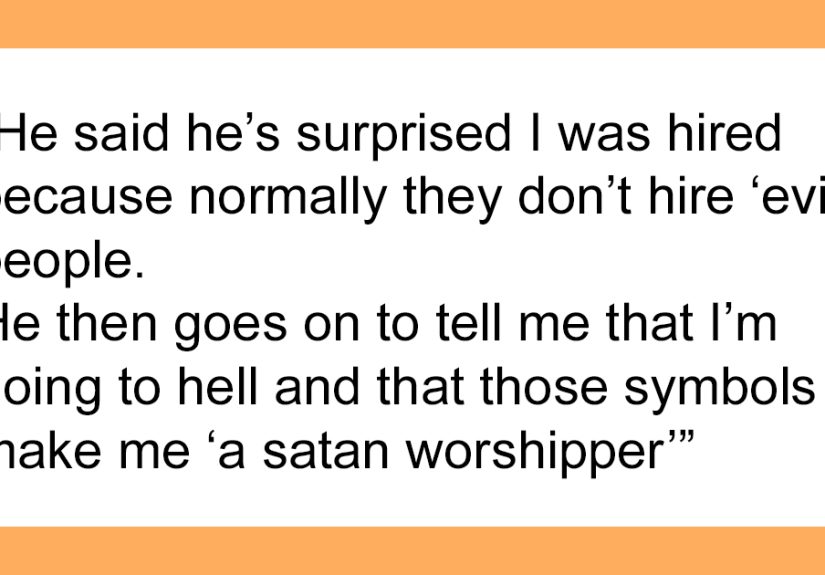
The viral account centered on an employee in small-town Missouri who planned to get a runic tattoo tied to Norse pagan beliefs. According to the story, the employee’s Christian supervisor reacted badlyvery badlyreportedly calling the worker an “evil satan worshipper,” warning them they were headed for hell, and saying the company does not normally hire “evil” people. That is not a policy discussion. That is a theological ambush with management authority attached.
And that is exactly why the story hit so hard.
Because once a boss decides your tattoo is evidence of your soul’s condition, the conversation is no longer about dress code, professionalism, or customer-facing standards. It becomes a referendum on your identity. The tattoo stops being a design and starts being treated like a confession, a threat, or a moral stain. That is a spectacularly reckless way to lead people.
To be fair, employers are generally allowed to set appearance policies. Plenty of workplaces still regulate visible tattoos, especially in conservative industries. But there is a giant difference between saying, “Please cover visible body art during client meetings,” and saying, “Your beliefs make you evil.” One is a policy. The other is prejudice wearing a lanyard.
Why This Story Landed So Hard Online
Tattoos are mainstream now, not some underground rebellion
One reason this story spread so quickly is that tattoos are no longer niche. In the United States, body art has moved from the cultural margins to the suburban cul-de-sac. Memorial tattoos, faith tattoos, military tattoos, floral sleeves, minimalist symbols, and matching sibling ink are all part of the mainstream now. The old stereotype that tattoos automatically signal danger, irresponsibility, or moral collapse looks increasingly dusty.
That does not mean stigma has vanished. It means the stigma now looks older than the evidence. Many Americans see tattoos as ordinary self-expression, while some managers still react as if a forearm design means the office printer is about to summon demons. The culture moved. Some workplaces never updated the software.
Because bias gets weirdly bold when appearance is involved
Appearance bias is one of those workplace issues people love to pretend is too shallow to matter right up until it starts affecting hiring, promotions, and who gets labeled “professional.” Tattoos sit right in the middle of that problem. They are visible, personal, and easy for biased people to turn into a story about your judgment, values, or competence.
That is why so many tattooed professionals still play the long-sleeve game during interviews. They are not confused about their qualifications. They are managing other people’s assumptions. It is less “dress for the job you want” and more “camouflage yourself until Greg in middle management calms down.”
When Personal Faith Becomes Workplace Control
Religious belief is protected in America. So is the right not to share your boss’s religion. That distinction matters. A Christian employee can be openly Christian at work. A pagan employee can be openly pagan. A Muslim employee can be Muslim. A Jewish employee can be Jewish. A nonreligious employee can be nonreligious. That is how religious freedom works when it is doing its job instead of cosplaying as favoritism.
The problem begins when a person in authority treats their own beliefs as the office default and everybody else’s as suspicious, offensive, or demonic. At that point, the workplace starts to feel less like a business and more like a forced membership trial for the boss’s worldview.
And here is the thing managers often miss: employees do not need their boss’s spiritual approval to be good at their jobs. They need clear expectations, fair treatment, and the freedom to work without being mocked, threatened, or morally condemned. Radical concept, apparently.
The legal line bosses should not cross
Legally, this area gets nuanced fast. Employers often can regulate visible tattoos through neutral dress codes. But religion changes the equation. If the tattoo or symbol is connected to sincerely held religious beliefs, the employer may trigger religious discrimination or accommodation issues if they single out that employee unfairly. U.S. workplace law has wrestled with this for years, including cases involving religious tattoos and employer appearance policies.
In plain English: your boss can care about policy, but they should be extremely careful about turning that policy into selective moral panic. Once the criticism shifts from “our appearance standard is X” to “your beliefs make you evil,” the legal and ethical danger lights start blinking like a cheap motel sign.
Are Tattoos “Un-Christian”? Not Nearly as Simple as Some People Think
This is where the internet usually starts windmilling Bible verses. The most common argument against tattoos points to Leviticus. That debate has been around forever, and Christians do not agree on it. Some take a stricter view. Others argue the passage was tied to specific ancient ritual practices and does not operate as a blanket ban for modern believers. A lot of contemporary Christian writers land somewhere in the middle: tattoos are not automatically sinful, but motives, meaning, and wisdom matter.
In other words, even within Christianity, the issue is not settled the way the loudest person in the room likes to pretend it is. And history makes the conversation even messier. Christian communities in different times and places have used tattoos as markers of devotion, identity, and pilgrimage. So the claim that tattoos are inherently anti-Christian is not just oversimplified. It is historically shaky.
That is why this viral boss reaction felt especially off. It was not simply “a Christian perspective.” It was one very aggressive interpretation being used like a hammer. There is a difference between living by your convictions and using them as a workplace flamethrower.
Why Runes and Pagan Symbols Still Trigger Panic
The tattoo in question was not just decorative ink. It reportedly involved runes tied to Norse pagan beliefs, which helps explain why the boss reacted with such theatrical horror. For some religious conservatives, unfamiliar spiritual symbols get flattened into one big category of danger: pagan, occult, anti-Christian, Satanic, same difference. That is not theology so much as panic with a church accent.
But symbols are not interchangeable, and minority spiritual traditions do not become evil just because somebody else lacks context. Treating every non-Christian symbol like evidence of darkness is lazy at best and discriminatory at worst. It reveals more about the observer’s fear than the wearer’s character.
And once fear enters the management chain, reason often leaves through the side door. Suddenly, the employee is not being judged on attendance, performance, or teamwork. They are being judged on how much their body art unsettles someone who confuses personal discomfort with objective truth.
What a Smart Boss Would Have Done Instead
A competent manager faced with this situation would not need a séance, a sermon, or a dramatic speech about evil. They would ask a few practical questions.
Does the tattoo violate a clearly written policy? Is the policy applied consistently? Is the issue about safety, customer-facing presentation, or offensive content? Is there a religious accommodation concern? Can this be handled privately and respectfully?
That is what management looks like when it is not auditioning for a moral panic podcast.
Good bosses do not have to love every employee’s taste. They just have to treat people fairly. Your job as a leader is not to curate everyone into your preferred aesthetic and belief system. It is to create a workplace where performance matters more than your personal ick list.
The Bigger Problem Is Not Ink. It Is Selective Respect.
One of the most revealing things about tattoo bias is how inconsistent it can be. A small cross on the wrist? Meaningful. A memorial date in elegant script? Touching. A patriotic eagle? Rugged. But the second the tattoo points to a less familiar belief system, a darker aesthetic, or a symbol outside the Christian mainstream, some people suddenly act like the employee is one bad day away from sacrificing the copier.
That inconsistency tells you everything. This is often not about tattoos in general. It is about which identities get read as acceptable and which ones get marked as threatening. The issue is not body art. The issue is selective respect.
And selective respect is terrible leadership. It teaches employees that “be yourself” only applies if yourself comes in a boss-approved flavor.
Why Stories Like This Keep Resonating
The reason people keep sharing stories like this is not just outrage. It is recognition. Workers know what it feels like to be judged before they speak. They know what it feels like to edit their appearance, hide parts of themselves, and test the room before deciding whether honesty is safe. Sometimes the thing being policed is a tattoo. Sometimes it is hair, clothing, accent, faith, or gender expression. The mechanism is the same: difference gets recast as risk.
That is why the boss in this story became an internet villain so fast. He was not just “old-fashioned.” He represented a broader workplace habit of turning personal discomfort into moral authority. And people are tired of that trick.
Conclusion: Character Is Not a Dress Code
The wildest part of this whole saga is how small the original issue really was. An employee wanted a tattoo. That should have been the end of it. Instead, it became a crash course in religious intolerance, workplace overreach, and the stubborn afterlife of tattoo stigma.
The smartest takeaway is also the simplest: employers can set standards, but they should never confuse those standards with ownership over a worker’s beliefs or identity. A tattoo is not proof of evil. A rune is not proof of danger. And a boss who cannot tell the difference between personal faith and professional boundaries has no business policing someone else’s soul on company time.
Plenty of Christians have tattoos. Plenty of tattooed people are thoughtful, ethical, competent professionals. Plenty of workplaces have figured out that ink does not prevent someone from answering emails, leading teams, solving problems, or being decent. The real red flag in this story was never the tattoo idea. It was the leadership idea.
Related Experiences That Make This Story Feel So Familiar
Part of what makes this viral story linger is that it echoes experiences workers describe all the time, even when the details are less dramatic. A lot of tattooed employees know the ritual well: long sleeves for the interview, a strategic watchband over the wrist ink, and a brief internal debate over whether authenticity is worth the risk before the first Zoom call even starts. It is not always overt discrimination. Sometimes it is the sigh, the raised eyebrow, or the “interesting choice” comment delivered with just enough politeness to stay deniable.
Then there is the memorial tattoo problem, which says a lot about how shallow appearance judgments can be. Someone gets a tattoo for a dead parent, a lost child, a military friend, or a recovery milestone, and a manager still reduces it to “not professional.” In that moment, the employee learns something brutal: the workplace is willing to ignore meaning if surface discomfort is easier. The tattoo tells a human story; the policy conversation pretends it is just decoration.
Religious inconsistency also shows up in real-life ways that feel uncomfortably close to this story. A visible cross may pass without comment, while a symbol connected to pagan, Kemetic, or another minority spiritual tradition gets treated like a disturbance. That double standard is hard to miss. It tells employees that some forms of belief are viewed as values, while others are viewed as problems to manage. People notice that very quickly, even if nobody says the quiet part out loud.
Client-facing jobs bring another layer. Workers in retail, hospitality, healthcare support, and sales often hear that visible tattoos might make customers “uncomfortable.” Sometimes that concern is real. Sometimes it is just bias outsourced to imaginary customers. The company never says, “We are uncomfortable.” It says, “People might react badly,” which is a convenient way to make prejudice sound like market research. Employees end up carrying the burden of everybody else’s assumptions.
Small-town workplaces can intensify all of this. When everybody knows everybody, appearance and belief travel fast. A tattoo idea becomes lunch gossip. A rumor becomes a personality assessment. Somebody’s body art is suddenly discussed by people who do not know the meaning, the background, or the boundaries they just bulldozed. That atmosphere can make workers feel like they are not just being managed. They are being watched.
Even in modern corporate spaces, people still adapt in quiet ways. Some wait months before showing their tattoos. Some test one visible piece at a time. Some joke about it first so nobody else can weaponize the topic. Some simply decide the paycheck matters more than the fight. None of that means the bias is harmless. It just means people get very skilled at surviving it.
That is why this story resonates beyond internet spectacle. It captures a familiar emotional reality: the exhausting moment when another person treats your appearance as a moral clue and expects you to defend your humanity over something that should have stayed personal. Whether the trigger is a tattoo, a symbol, or a style choice, the experience feels the same. You realize the issue was never the ink. It was always who gets presumed normal.





 Close
Close