
Table of Contents >> Show >> Hide
- What “Old-Fashioned” Means Here
- Ingredients at a Glance
- Best Apples for a Classic Pie
- Tools That Make Life Easier
- Step-by-Step: Make the Old-Fashioned Pie Crust
- Step-by-Step: Make the Apple Pie Filling
- Assemble the Pie
- Bake: The Classic Two-Temperature Method
- How to Know Your Apple Pie Is Actually Done
- Cooling and Serving
- Make-Ahead, Storage, and Freezing
- Troubleshooting: Common Apple Pie Problems (and Fixes)
- Old-School Variations (Still Very Much Apple Pie)
- FAQ
- Kitchen Stories and Apple Pie Moments (Extra Cozy “Experience” Notes)
- Conclusion
There are desserts, and then there’s old-fashioned apple piethe kind that makes your kitchen smell like you’ve got your life together,
even if you’re currently wearing mismatched socks and yelling “WHY is the dough sticking?!” at a rolling pin.
This Old-Fashioned Apple Pie Recipe is classic in the best way: a flaky, buttery double crust; tender apples that still have a little backbone;
warm cinnamon-and-nutmeg vibes; and a filling that sets up sliceable (not “surprise apple soup”).
What “Old-Fashioned” Means Here
“Old-fashioned” doesn’t mean complicated. It means familiar, reliable, and proudly not fussy:
real butter, real apples, real patience while the pie cools (yes, that part is also “real”).
- Double crust (top + bottom) with a flaky texture
- Spiced apple filling that tastes like apples first, spices second
- Two-temperature bake for a crisp crust and bubbly, thickened filling
- Practical anti-soggy strategy (no pastry heartbreak today)
Ingredients at a Glance
For the flaky double crust
- 2 1/2 cups (300g) all-purpose flour
- 1 teaspoon fine salt
- 1 tablespoon sugar (optional, but helpful for browning)
- 1 cup (2 sticks / 226g) cold unsalted butter, cubed
- 6–10 tablespoons ice water (start small; dough is a “needs-based” situation)
For the apple filling
- 3 to 3 1/2 pounds apples (about 7–9 medium), peeled (optional), cored, and sliced 1/4-inch thick
- 3/4 cup granulated sugar (use 2/3 cup if your apples are sweet; closer to 1 cup if very tart)
- 1/4 cup packed light brown sugar
- 2 1/2 tablespoons cornstarch or 3 tablespoons all-purpose flour
- 1 1/2 teaspoons ground cinnamon
- 1/4 teaspoon ground nutmeg
- 1/4 teaspoon ground allspice (optional but charming)
- 1/2 teaspoon fine salt
- 1 tablespoon lemon juice
- 1 teaspoon vanilla extract (optional, but cozy)
- 2 tablespoons unsalted butter, cut into small pieces (for dotting)
For the finish
- 1 egg + 1 tablespoon milk or water (egg wash)
- 1–2 teaspoons coarse sugar (optional sparkle)
Best Apples for a Classic Pie
If you want that old-school, “grandma knew what she was doing” texture, pick apples that hold their shape.
Many bakers love using a mix: one tart, one sweet, and one aromatic.
- Tart + firm: Granny Smith, Pink Lady
- Sweet-tart + crisp: Honeycrisp, Braeburn, Jonagold
- Mellow + tender (great blender): Golden Delicious
Skip apples that turn into applesauce too quickly unless that’s your goal. (No shamejust call it “rustic apple pudding pie” and act confident.)
Tools That Make Life Easier
- 9-inch pie dish (glass or metal)
- Rimmed baking sheet (to catch drips and save your oven from becoming a smoke machine)
- Rolling pin, pastry brush, sharp knife
- Optional: kitchen scale, instant-read thermometer
Step-by-Step: Make the Old-Fashioned Pie Crust
A flaky crust is less about mystical talent and more about two simple rules:
keep things cold and don’t overwork the dough.
1) Mix the dough
- In a large bowl, whisk flour, salt, and sugar.
- Add cold butter cubes. Cut in with a pastry cutter (or pinch with your fingers) until you have pieces ranging from pea-size to almond-size.
- Drizzle in ice water 1 tablespoon at a time, tossing with a fork, until the dough holds together when squeezed.
- Divide into two equal disks, wrap, and chill at least 1 hour (or up to 2 days).
2) Roll it out
- Lightly flour your surface. Roll one disk into a 12–13-inch circle.
- Transfer to your pie dish (roll it onto the pin, then unroll into the dish). Don’t stretch it; stretching is how crusts “snap back” in the oven.
- Trim to leave about a 1-inch overhang. Refrigerate while you make the filling.
Step-by-Step: Make the Apple Pie Filling
Here’s the not-so-secret secret to a less-watery pie: give apples time to release some juice before baking.
This small pause helps you control moisture and intensify flavor.
1) Slice and “dress” the apples
- In a very large bowl, toss apples with lemon juice.
- Add granulated sugar, brown sugar, cinnamon, nutmeg, allspice (if using), salt, and vanilla (if using). Toss until evenly coated.
- Let sit 30–45 minutes at room temperature, tossing once or twice. (You’ll see juices collect. That’s good news.)
2) Choose your thickener strategy
Old-fashioned pies often use flour; it works and tastes traditional. Cornstarch gives a slightly glossier, clearer filling.
Either way, the key is that the pie must bake until the filling is actively bubbling so the thickener fully activates.
- After the apples have rested, sprinkle cornstarch (or flour) over the apples and toss well.
- If the bowl has a lot of liquid, you can leave 2–3 tablespoons behind to reduce sogginess. (Optional, but helpful if your apples are extra juicy.)
Assemble the Pie
1) Preheat like you mean it
Put a rimmed baking sheet on the lowest rack and preheat the oven to 425°F. A hot surface under the pie helps the bottom crust cook through.
2) Fill and top
- Remove the chilled bottom crust from the fridge.
- Spoon in the apples, packing them in tightly and mounding slightly in the center (they’ll shrink as they bake).
- Dot the top of the apples with the small pieces of butter.
- Roll out the second disk into a 12-inch circle for a full top crust, or slice into strips for a lattice.
- Top the pie, then trim excess dough and crimp or flute the edges to seal.
- If using a full top crust, cut 5–6 vents so steam can escape.
3) Egg wash + sparkle (optional but delightful)
- Whisk egg with milk/water. Brush over the top crust.
- Sprinkle with coarse sugar if you want that bakery-style crunch.
- Chill the assembled pie 15–20 minutes if your kitchen is warm (helps the crust keep its shape).
Bake: The Classic Two-Temperature Method
- Place the pie on the hot baking sheet. Bake at 425°F for 20 minutes.
- Without removing the pie, reduce heat to 375°F and bake 40–60 minutes more.
- Start checking around the 45-minute mark at 375°F. If the edges brown too fast, cover them with foil.
How to Know Your Apple Pie Is Actually Done
The crust can look gorgeous while the filling is still quietly plotting to be runny.
For a slice that holds together, look for these signs:
- Deep golden crust (not pale “almost” golden)
- Thick bubbles coming up through vents or latticeespecially near the center
- Apples are tender when you insert a thin knife through a vent
Optional nerdy-but-useful check: the center of the pie will often be around 200°F when the filling has thickened properly.
Cooling and Serving
This is where bravery is required. Let the pie cool on a rack for at least 2–3 hours.
Cooling allows the thickened filling to set; slicing too soon invites “lava filling” to sprint onto your plate.
Serve warm or at room temperature with vanilla ice cream, whipped cream, orif you’re feeling boldly traditionala slice of sharp cheddar.
Make-Ahead, Storage, and Freezing
- Make ahead: You can make and chill the pie dough up to 2 days ahead, or freeze it for longer.
- Best make-ahead pie: Bake the whole pie in advance, cool completely, then refrigerate. Rewarm in a low oven to refresh the crust.
- Storage: Keep loosely covered at room temperature for about 1–2 days (cool, dry kitchen), or refrigerate up to 4–5 days.
- Freezing: Freeze a fully baked, fully cooled pie (well wrapped). Thaw and rewarm to serve.
Troubleshooting: Common Apple Pie Problems (and Fixes)
“My pie is runny.”
- It may be underbaked. You need visible bubbling to activate thickeners.
- It may be undercooled. Let it fully cool before slicing.
- Use the rest/maceration step and measure thickener accurately next time.
“My bottom crust is soggy.”
- Bake on a preheated sheet pan and use the high-then-lower temperature method.
- Don’t let an unbaked assembled pie sit in the fridge for hours (it can soak the crust).
- If your apples are super juicy, leave a little liquid behind after resting.
“My crust is tough.”
- Too much water or too much mixing builds gluten. Add water gradually and stop once it holds together.
- Warm butter = less flaky. Chill whenever the dough feels soft.
Old-School Variations (Still Very Much Apple Pie)
- Brown sugar spice: Swap half the white sugar for more brown sugar for a deeper caramel note.
- Apple cider boost: Add 1–2 tablespoons boiled-down apple cider (or a splash of cider) for extra apple flavor.
- Crunchy top: Use turbinado sugar or demerara on the crust for sparkle and texture.
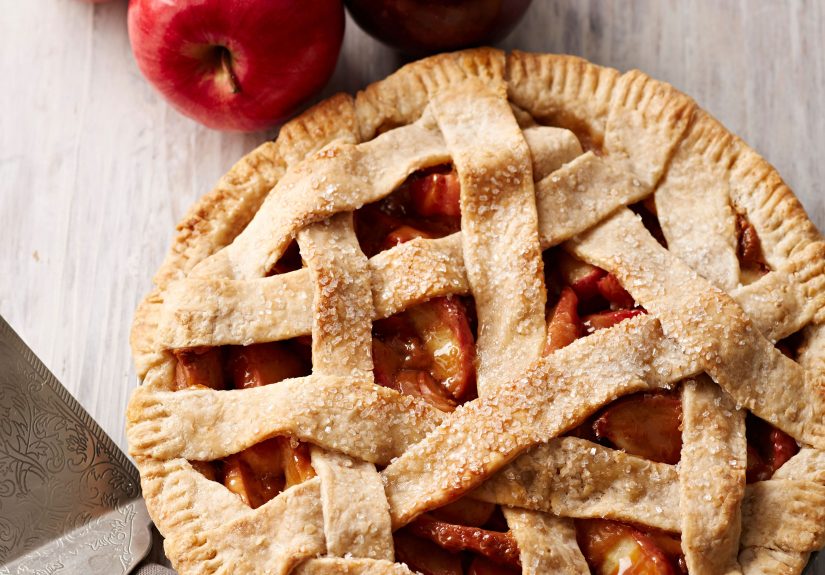
- Lattice showstopper: A simple lattice looks impressive and helps moisture escape.
FAQ
Do I have to peel the apples?
Not strictly. Peeled apples give the most classic texture. Leaving peels on adds color and a slightly chewier bite.
If your crowd loves “old-fashioned,” peeling keeps it familiar.
Flour or cornstarchwhat’s better?
Flour tastes traditional and works beautifully, but can make the filling a bit more opaque.
Cornstarch thickens strongly and can look glossier. Both workjust bake until bubbly and cool fully.
Can I use store-bought crust?
Absolutely. The filling and bake technique matter a lot. If you’re short on time, store crust + homemade filling still tastes like a win.
(And nobody needs to know your freezer’s secrets.)
Why does the pie need such a long cool?
Fruit pies set as they cool. The filling thickens as the starches stabilize and the butter firms up.
Cutting too early is like slicing lasagna straight from the ovendelicious, but structurally ambitious.
Kitchen Stories and Apple Pie Moments (Extra Cozy “Experience” Notes)
If you ask a room full of home bakers about apple pie, you’ll hear the same theme: it’s never just dessertit’s a whole event.
There’s the pre-pie optimism (“This time my crust will behave”), the apple-peeling assembly line, and the moment the cinnamon aroma hits
and suddenly everyone in the house “just happened to wander into the kitchen.”
One very common first-timer experience is the “looks done” trap. The top turns golden, the house smells like a fall candle factory,
and the pie seems ready. Then you slice it too soon and the filling makes a run for it like it’s late for a meeting.
The lesson most bakers learn (usually the sticky way): apple pie needs two thingsbubbling heat and cooling time.
The bubbling is what tells you the thickener has actually switched on; the cooling is what tells the filling to stop acting like a hot tub.
Another classic moment: you carefully weave a lattice, admire your handiwork, and feel like you should receive a tiny pie diploma.
Then the edges brown faster than the middle, and you realize pies have opinions. That’s when the humble strip of foil becomes your best friend.
Plenty of experienced bakers keep a torn ring of foil ready to shield the crust edgesbecause nothing says “tradition” like problem-solving.
Apple choice becomes its own little personality test. Some people swear by Granny Smith because it’s tart and holds shape.
Others love mixing varieties because it creates layers of flavorbright, sweet, and aromatic all at once.
A fun “baker’s example” is combining a firm tart apple (like Granny Smith or Pink Lady) with a sweet-crisp one (like Honeycrisp),
plus something mellow (like Golden Delicious) that bridges everything together. The result is a filling that tastes more “apple-y”
without piling on extra spice.
And then there’s the bottom crust fearthe soggy-bottom horror stories passed down through generations like folklore.
Many home bakers develop a ritual: preheating a sheet pan, baking the pie low in the oven, and refusing to underbake.
The confidence boost is real when you pull out a pie with a crisp base and a filling that’s visibly thickened.
Suddenly you’re not just making pieyou’re making the pie people request.
The most charming “experience” part might be the serving. You can watch the room divide into factions:
ice-cream people, whipped-cream people, and the proud traditionalists who insist cheddar is the correct move.
No matter the topping, apple pie has this talent for slowing everyone down. Conversations get softer, plates get scraped cleaner,
and someone inevitably says, “This tastes like home,” even if “home” is a tiny apartment and the table is also a desk.
Finally, apple pie teaches patience in a sneaky way. The cooling time is not a suggestionit’s the difference between clean slices and warm chaos.
The bakers who learn to wait (or at least pretend to wait while hovering nearby) are the ones who get that perfect wedge:
flaky crust, tender apples, spiced syrup that stays put, and a bite that reminds you why this dessert became a classic in the first place.
Conclusion
A great Old-Fashioned Apple Pie Recipe is equal parts comfort and craft: pick the right apples, keep your crust cold, bake until bubbly,
and let it cool long enough to set. Do that, and you’ll get the kind of classic homemade apple pie that earns repeat requestswithout
requiring you to become a pastry wizard or purchase any new kitchen gadgets (your drawer of mystery tools can rest easy).






 Close
Close