
Table of Contents >> Show >> Hide
- What Does a Purple Candle Mean?
- Why Purple Symbolism Feels So Powerful
- Purple Candle Symbolism in Rituals and Spiritual Practice
- Common Uses for a Purple Candle
- How to Use a Purple Candle in a Simple Ritual
- Purple Candle Meaning Compared to Other Candle Colors
- Does Purple Candle Meaning Change by Tradition?
- Experiences People Often Associate With Purple Candles
- Final Thoughts on Purple Candle Meaning
Purple candles have a reputation, and honestly, they’ve earned it. If white candles are the clean white sneakers of the spiritual world, purple candles are the velvet boots: dramatic, thoughtful, a little mysterious, and absolutely convinced they have something important to say. In candle work, purple is often linked with intuition, wisdom, spiritual growth, insight, personal power, and transformation. It’s the color people reach for when they want to feel less scattered, more centered, and maybe just a touch more magical.
That symbolism did not come out of thin air. Purple has long been associated with royalty, prestige, sacred devotion, and deep reflection. In modern spiritual practice, that old symbolism blends with newer ideas about meditation, higher awareness, chakra work, prayer, and self-discovery. The result is a candle color that feels both ancient and surprisingly practical. A purple candle can show up in a formal ritual, on a quiet meditation altar, or on a desk next to a journal and a very determined cup of tea.
So what does purple candle meaning actually include? Quite a lot, as it turns out. Let’s break down the symbolism, the common uses, and the reasons this color keeps appearing anywhere people gather to reflect, manifest, pray, or search for a little clarity.
What Does a Purple Candle Mean?
At its core, purple candle meaning points to inner depth. This is the candle color most often tied to spiritual awareness, wisdom, imagination, intuition, and personal transformation. Some traditions also connect purple with ambition, influence, dignity, and leadership, which makes sense when you remember purple’s long relationship with royalty and ceremonial power.
In plain English, a purple candle is often used when you want to move beyond surface-level thinking. It is less “please help me find my missing sock” and more “please help me understand what I’m really doing with my life.” That can sound lofty, but the appeal is simple: purple represents the search for meaning. It invites you to slow down, pay attention, and ask better questions.
Depending on the tradition, purple or violet can also be connected to the third eye or crown chakra. In those systems, the color is associated with intuition, spiritual insight, higher consciousness, and connection to something bigger than everyday noise. Whether you see that as divine guidance, inner wisdom, or your brain finally logging off from chaos mode for five minutes, the symbolism is consistent: purple is about awareness.
Why Purple Symbolism Feels So Powerful
1. It has a long history of status and sacred meaning
Purple has been treated as special for centuries. Historically, rich purple dyes were expensive and difficult to produce, which made the color a symbol of wealth, nobility, and prestige. That old-world luxury still clings to purple today. Even if you know nothing about candle color meanings, purple already feels important. It enters the room like it pays rent there.
2. It blends energy and calm
Psychologically, purple sits between the fiery confidence of red and the steadier calm of blue. That combination helps explain why people see it as both powerful and reflective. It carries energy, but not the loud kind. Purple does not bang on the door. Purple knocks once, raises an eyebrow, and somehow still gets invited in.
3. It is linked with mystery, imagination, and intuition
Because purple is less common in nature than many other colors, it often feels rare, mysterious, and symbolic. That makes it a natural fit for rituals involving insight, dreams, meditation, divination, creativity, and spiritual focus. Many people also associate it with mystical traditions, not because the color itself performs miracles, but because it creates a mood of depth and reverence.
4. It appears in religious and devotional settings
Purple candles are also meaningful in Christian practice, especially during Advent and Lent, where purple symbolizes preparation, prayer, repentance, waiting, and reflection. That religious use adds another layer to the color’s identity. Even outside formal worship, purple can suggest sacred time, inner discipline, and thoughtful pause.
Purple Candle Symbolism in Rituals and Spiritual Practice
When people use purple candles in spellwork or ritual work, the symbolism usually falls into a few recurring themes.
Intuition and psychic awareness
Purple candles are often used for intuitive work. That may include tarot, dream journaling, meditation, visualization, or simple quiet reflection. The idea is not that the candle hands you a crystal-ball download on demand. It is that the color helps create an atmosphere where you listen more closely to your inner voice.
Wisdom and clarity
If you are trying to think more deeply, make a thoughtful decision, or step back from emotional static, a purple candle is a natural choice. Many people burn one while studying, journaling, praying, or asking for guidance because purple symbolizes clear thought mixed with insight.
Transformation and personal growth
Another major use of purple candles is change. Not the chaotic kind where your whole life explodes and you suddenly own three vision boards. The better kind: mature, intentional growth. Purple is commonly chosen for rituals involving healing old patterns, stepping into confidence, starting a spiritual practice, or becoming more self-aware.
Spiritual protection and devotion
In some traditions, purple candles are used for devotional work, prayer, spiritual strength, and protection of the mind and spirit. This makes the color useful when someone wants to feel more grounded in faith, more supported during meditation, or more focused during a sacred practice.
Power, influence, and ambition
Not every purple candle ritual is soft and dreamy. Some systems associate purple with leadership, personal authority, success, and influence. In that context, a purple candle can be used when setting goals, building confidence, preparing for a presentation, or working toward a role that requires maturity and presence. It is a color for stepping into your power without turning into a cartoon villain.
Common Uses for a Purple Candle
Here are some of the most common real-world ways people use purple candles in everyday spiritual practice:
Meditation
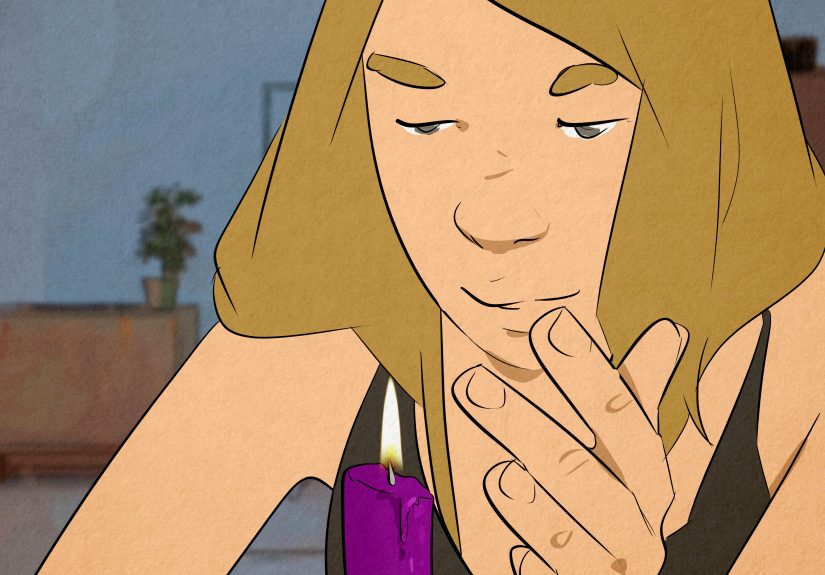
A purple candle can help set the tone for meditation, especially when the focus is spiritual connection, self-inquiry, or intuitive listening. The soft flame gives the mind something steady to return to, while the color reinforces the theme of higher awareness.
Prayer and devotion
For many people, purple candles feel reverent. They work well in prayer corners, devotional altars, or quiet morning rituals where the goal is less “manifest a yacht by Friday” and more “help me become wiser, calmer, and kinder.” A noble goal, honestly.
Dreamwork and journaling
Purple is often chosen for evening reflection. Burning a purple candle while journaling, recording dreams, or setting a bedtime intention can create a ritual around paying attention to the inner life instead of doom-scrolling until your phone becomes part of your face.
Study and contemplation
Because purple is associated with wisdom and deep thought, it can also be used during reading, studying, or creative planning. This is especially true when the task involves philosophy, spirituality, writing, strategy, or personal development.
Rituals for transition
People often use purple candles during life changes: a new job, a spiritual reset, a breakup, a big decision, or a season of healing. The candle becomes a marker of intention. It says, “I’m not the same person I was before, and I’m choosing what comes next.”
How to Use a Purple Candle in a Simple Ritual
You do not need a ten-page moon chart and a suspiciously expensive altar cloth to use a purple candle. A simple ritual can be deeply meaningful.
Step 1: Choose your intention
Be specific. Are you asking for clarity, wisdom, peace, spiritual growth, confidence, or inner healing? Purple works best when the intention has depth.
Step 2: Create a calm space
Clear a small area. Turn off distractions. Breathe for a minute like the adult you are trying to become.
Step 3: Light the candle mindfully
As you light it, say your intention out loud or silently. It can be simple: I invite clarity, I welcome wisdom, or I release confusion and step into insight.
Step 4: Sit with it
Meditate, pray, journal, or reflect. Let the flame become a focal point. The point is not to force a dramatic spiritual event. The point is to pay attention.
Step 5: Close with gratitude
When you are done, thank whatever framework you work with: God, spirit, your higher self, the universe, your own hard-earned common sense, or all of the above.
As always, practice normal candle safety. Symbolism is lovely, but unattended flames are still just fire with a branding problem.
Purple Candle Meaning Compared to Other Candle Colors
Understanding purple becomes easier when you compare it with other common ritual candles.
- White candles usually represent cleansing, peace, healing, and universal substitution.
- Blue candles are often associated with calm, truth, healing, and communication.
- Green candles tend to focus on abundance, growth, luck, and prosperity.
- Red candles are linked with passion, courage, action, desire, and vitality.
- Purple candles stand out for wisdom, spiritual insight, intuition, transformation, devotion, and personal authority.
That distinction matters. If your goal is comfort or cleansing, purple may not be your first choice. But if your goal is understanding, self-mastery, inner change, or sacred focus, purple is in its element.
Does Purple Candle Meaning Change by Tradition?
Yes, a little. And that is normal.
In Christian settings, purple candles may emphasize repentance, preparation, prayer, and sacred waiting. In modern metaphysical practice, they may lean toward intuition, divination, spiritual awakening, and transformation. In color psychology discussions, purple may be framed as a color of creativity, mystery, nobility, and introspection. In chakra-based systems, purple or violet may connect to higher consciousness, intuition, or the crown center.
The overlap is more important than the differences. Across traditions, purple keeps returning to the same neighborhood: reflection, reverence, insight, dignity, and inner growth.
Experiences People Often Associate With Purple Candles
One reason purple candles stay popular is that they lend themselves to memorable experiences. Not necessarily movie-level levitation, sadly, but meaningful moments people remember. Many describe purple candle rituals as quieter than other candle practices. Instead of feeling revved up, they feel settled. Instead of chasing a quick answer, they become more patient with uncertainty.
Some people say a purple candle helps them focus during meditation because the color feels serious without being heavy. Others use it when they are journaling through a crossroads: a career shift, a friendship that has changed, a period of grief, or a season when their beliefs are evolving. In those moments, the candle acts like a visual anchor. It gives the experience shape.
Another common experience is that purple candles feel surprisingly supportive during study or creative work. Writers, students, and deep thinkers often use them when they need concentration with a side of perspective. It is less about “summoning genius” and more about creating a ritual that tells the brain, “We are doing meaningful work now. Please stop opening twelve unrelated tabs.”
People involved in prayer or devotional practice also tend to describe purple candles as reverent. The color can make a room feel more intentional, especially in the early morning or after dark. A short prayer beside a purple candle can feel more solemn, more focused, and somehow less rushed. That change may be symbolic, emotional, or spiritual, depending on your worldview, but the experience itself is real.
There are also people who turn to purple candles during times of personal reinvention. They may light one at the beginning of a new year, before therapy homework, after a breakup, or during a period of rebuilding confidence. In those cases, the candle becomes less of a mystical prop and more of a private statement: I am changing, and I intend to do it with purpose.
Some users connect purple candles with dreamwork. They light one briefly before bed, write a question in a journal, and pay closer attention to what surfaces overnight or in the morning. Others use purple during tarot readings or reflective walks because the color reminds them to trust subtle impressions instead of demanding immediate certainty.
Not every experience is dramatic, and that is part of the point. Purple candle meaning is often strongest in ordinary sacred moments: the pause before a decision, the breath before a prayer, the quiet after a hard day, the notebook page where a better truth finally appears. For many people, purple does not shout. It deepens. It invites stillness, thoughtfulness, and a more honest relationship with the self.
And maybe that is why people keep coming back to it. A purple candle does not promise instant enlightenment or a deluxe spiritual upgrade by Tuesday. What it offers is subtler and, arguably, more useful: a symbol of wisdom, a cue for reflection, and a reminder that sometimes the most powerful thing you can do is slow down long enough to actually hear yourself think.
Final Thoughts on Purple Candle Meaning
If you have ever wondered why purple candle meaning shows up so often in discussions of spellwork, rituals, meditation, and prayer, the answer is pretty clear: purple carries layers. It speaks to history, symbolism, emotion, and sacred practice all at once. It can represent royalty and humility, power and contemplation, ambition and surrender. That is a rare mix.
Whether you use a purple candle for spiritual rituals, quiet reflection, dreamwork, devotional practice, or simply to create a thoughtful atmosphere, the color offers a strong symbolic language. It points toward wisdom, intuition, transformation, and inner authority. And in a world that rewards noise, a symbol that encourages depth is not a bad thing to keep nearby.
So if you are choosing a candle for a ritual, meditation session, or meaningful reset, purple is a beautiful option. It is rich without being flashy, spiritual without being vague, and powerful without needing to raise its voice. In other words, it is the candle equivalent of someone who actually reads the full article before commenting.







 Close
Close