
Table of Contents >> Show >> Hide
- What Happened on the Blue Origin Flight (A Quick, Real-World Recap)
- The Comment That Went Viral (and the Quote That Got “Enhanced”)
- Why the Flight Sparked Backlash: The Three Big Complaints
- The Other Celebrity Reactions: Wilde Wasn’t Alone
- The Defense: Gayle King, Lauren Sánchez, and the “Both/And” Argument
- Katy Perry’s Flight Moments: The Daisy, the Song, and the Meme Machine
- How a 10-Minute Flight Turned Into a 10-Day Culture War
- What This Says About Celebrity Space Tourism Going Forward
- Conclusion: The Real “Waste” Question Isn’t About One Celebrity
- Bonus: of Relatable “Experience” Around This Exact Kind of Viral Space Story
Celebrity space travel has officially entered its “everybody has a group chat opinion” eraand the April 2025 Blue Origin flight with Katy Perry did not merely launch into the sky. It launched into the comment section.
The headline-friendly version goes like this: Olivia Wilde “brutally slammed” Perry’s Blue Origin trip as “a complete waste.” The internet ran with it, memes multiplied, and suddenly a roughly 10–11 minute suborbital flight had the emotional footprint of a three-hour season finale.
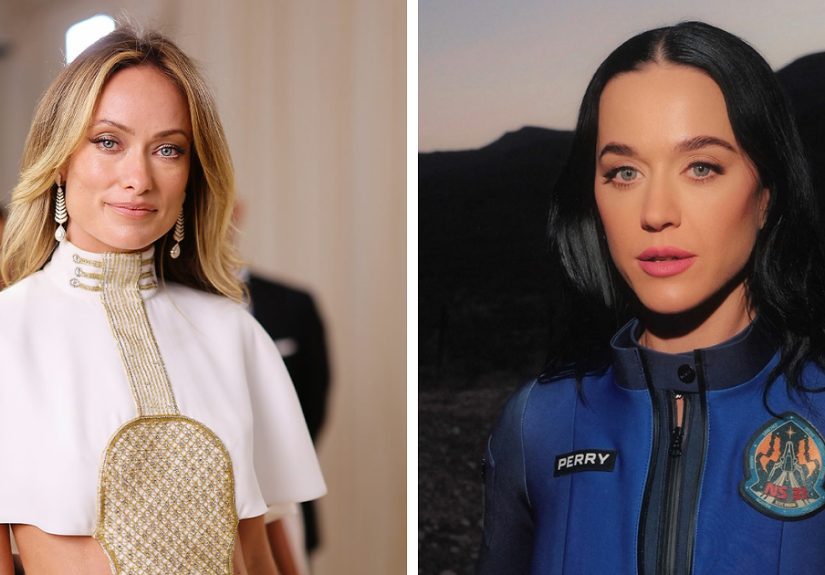
But here’s where it gets interesting (and where the story gets more human than headline): Wilde’s verified jab was differentstill sharp, still sarcastic, and very much in the “I’m not mad, I’m just disappointed… and also online” tone. The viral “waste” phrasing circulated widely in social posts and re-shares, while Wilde’s actual comment, as reported by major outlets, was her caption on a meme: “Billion dollars bought some good memes, I guess.”
So what really happenedon the rocket, on Instagram, and in the collective psyche of people who can’t afford groceries but are somehow expected to clap politely for designer astronaut suits? Let’s break it down.
What Happened on the Blue Origin Flight (A Quick, Real-World Recap)
On April 14, 2025, Blue Origin launched its New Shepard mission NS-31, a fully automated suborbital flight from West Texas. The trip lasted about 10–11 minutes, offering a brief period of weightlessness and a view of Earth near the internationally recognized boundary of space.
The crew was widely promoted as an all-female flight, featuring six high-profile passengers:
- Katy Perry (pop star)
- Gayle King (journalist and TV host)
- Lauren Sánchez (media personality and organizer of the mission)
- Aisha Bowe (aerospace engineer and former NASA rocket scientist)
- Amanda Nguyen (bioastronautics research scientist and advocate)
- Kerianne Flynn (film producer)
As reported across major news coverage, the flight was framed as both symbolic and inspirationalespecially as a high-visibility moment for women in aerospace-related storytelling. It was also, undeniably, a marketing win for the idea of space tourism. And marketing wins come with marketing-sized backlash.
The Comment That Went Viral (and the Quote That Got “Enhanced”)
Let’s talk about the line everyone remembers versus the line that’s actually attributed to Wilde in mainstream reporting.
What Olivia Wilde reportedly posted
Wilde shared a meme on Instagram comparing photos of Katy Perry stepping out of the capsuleone joyful, one dramatically kissing the groundto the feeling of getting off a commercial flight in the modern travel chaos era. Wilde added her own caption:
“Billion dollars bought some good memes, I guess.”
That’s the punchline that reputable entertainment and news outlets repeatedly highlighted: a swipe at the perceived cost-to-value ratio of celebrity space tourism, delivered in a single line that doubles as a culture critique and a stand-up tag.
So where did “What a complete waste!” come from?
The “complete waste” phrasing circulated heavily in social media chatter and was featured in viral posts and re-shares, sometimes alongside Wilde’s name. But in many versions of the story, that wording appears as audience commentarythe kind of blunt, scrolling-fueled moral verdict that thrives online because it fits neatly into a screenshot.
In other words: Wilde’s actual shade was the “memes” caption. The internet did what the internet doesremixed the sentiment into an even spicier, headline-friendly quote. Same vibe, different receipt.
Why the Flight Sparked Backlash: The Three Big Complaints
You don’t need to be anti-space or anti-women to have questions about a celebrity-loaded spaceflight. A lot of the criticism boiled down to three themes: money, meaning, and messaging.
1) The money problem: “Read the room” economics
Even without an official price tag for seats, people assume “astronaut tourism” costs a lot because… it’s a rocket. Pair that with a year where many households feel squeezed, and the optics get rough fast. The underlying question becomes less “Is space cool?” (yes) and more “Is this the best use of massive resources right now?” (debatable).
That’s what makes Wilde’s “billion dollars” meme-caption effective: it’s not a spreadsheet claim so much as a cultural accusationthis feels extravagantly out of touch. Online criticism isn’t always precise; it is, however, emotionally accurate to how people feel about inequality.
2) The meaning problem: Space tourism vs. space progress
Blue Origin’s New Shepard flights are suborbitalbrief trips that cross into space and return quickly. That doesn’t make them “fake,” but it does make them different from long-duration missions, scientific expeditions, or work that advances research in obvious, measurable ways.
So critics ask: What’s the point? Is it inspiration? Is it PR? Is it proof-of-concept for future lower-cost access? Is it just a very expensive rollercoaster with a better view? Depending on your worldview, all of these answers can be trueand that ambiguity is gasoline for controversy.
3) The messaging problem: “Inspiring women” and the glam factor
Another part of the discourse centered on how the flight was presented: glossy, celebrity-forward, and often framed as inspirational for girls and women.
Supporters said visibility mattersespecially when space history has often been told through male-centric imagery. Critics argued the campaign risked reducing empowerment to aesthetics, branding, and “look at us” vibes. When the public senses empowerment is being used as marketing wrapping paper, they get suspiciouseven if the underlying goal is sincere.
The Other Celebrity Reactions: Wilde Wasn’t Alone
This wasn’t a one-person roast. Several public figures questioned the mission’s optics and value, and their comments helped push the topic beyond niche aerospace news into mainstream cultural debate.
- Emily Ratajkowski criticized the flight’s symbolism and environmental implications, suggesting it felt “beyond parody.”
- Olivia Munn questioned the purpose and described the mission as “gluttonous,” pointing to everyday financial stress many people face.
- Amy Schumer mocked the situation in a comedic waybecause in 2025, satire is basically our national coping mechanism.
Whether you agree with them or not, the pattern is clear: criticism wasn’t only about Katy Perry. It was about what celebrity space tourism representsa collision between wealth, visibility, technology, and public frustration.
The Defense: Gayle King, Lauren Sánchez, and the “Both/And” Argument
When the backlash hit, the response from within the mission’s orbit wasn’t “How dare you?” so much as “You’re missing the bigger picture.”
Gayle King defended the flight by framing space as a “both/and” propositionsuggesting that investing in space initiatives doesn’t automatically steal from Earth-based problems. Lauren Sánchez also pushed back on critics, emphasizing the work of Blue Origin employees and arguing the mission matters to the people building and supporting the technology.
And that’s a fair point. Thousands of engineers, technicians, and staff don’t wake up thinking, “How can I create memes today?” They wake up thinking, “How do I build something that works?” The internet often critiques the passengers, but the program includes a much bigger ecosystem behind the scenes.
Katy Perry’s Flight Moments: The Daisy, the Song, and the Meme Machine
In a story dominated by commentary, it’s easy to forget: the flight itself had real human moments.
As widely reported, Perry brought a daisy aboard as a tribute to her daughter. She also reportedly sang “What a Wonderful World” during the ridean earnest gesture that read as heartfelt to some and performative to others. And yes, she kissed the ground after landing, which is the kind of dramatic flourish that guarantees the internet will do what it always does: screenshot it and attach a caption that ruins your day.
This is the celebrity paradox: if you act excited, you’re “cringe.” If you act calm, you’re “cold.” If you act human, you become content.
How a 10-Minute Flight Turned Into a 10-Day Culture War
The Blue Origin/Katy Perry discourse followed a familiar internet pattern:
- Event happens (rocket goes up, rocket comes down, everyone survives)
- Images go viral (daisy! ground kiss! terrified faces! triumphant smiles!)
- Morality debate ignites (money! climate! inspiration! inequality!)
- Quote inflation begins (a caption becomes a “brutal slam,” a reaction becomes a “feud”)
If you’ve ever wondered how news turns into noise, this is the case study. Wilde’s meme caption was a sparkbut the wildfire was public mood: frustration with wealth optics, fatigue with performative branding, and a deep suspicion that “inspiration” is sometimes used as a product label.
What This Says About Celebrity Space Tourism Going Forward
Commercial spaceflight isn’t going away. If anything, the trajectory suggests more high-profile flights, more influencer-ready visuals, and more debates about what counts as progress versus spectacle.
Here’s what will likely matter more and more:
- Transparency: People want claritycosts, goals, emissions, and what the broader mission accomplishes.
- Credibility: Flights framed as “inspiration” land better when paired with tangible investments in education, research, or access.
- Humility: The public responds better to “this is amazing and complicated” than to “this is flawless and iconic.”
In short: if you’re going to space as a celebrity in the 2020s, you’re not just buying a seat on a rocket. You’re buying a front-row ticket to a moral debate you do not control.
Conclusion: The Real “Waste” Question Isn’t About One Celebrity
Did Olivia Wilde “brutally slam” Katy Perry? She definitely mocked the vibebut the most credible reporting points to a meme caption about how expensive the whole thing looked, not a personal vendetta.
And that’s the key: this story isn’t really about Wilde versus Perry. It’s about a culture that’s stressed, online, and increasingly allergic to luxury opticsespecially when luxury is framed as a feel-good inspirational moment.
So whether you think the flight was thrilling, tone-deaf, meaningful, or meme-worthy, one thing is undeniable: it exposed a truth about modern fame. In 2025, you can reach the edge of space… and still not escape the comment section.
Bonus: of Relatable “Experience” Around This Exact Kind of Viral Space Story
There’s a very specific modern experience that kicks in when you see a celebrity space headline like this one, and it usually happens in stagesalmost like your brain is buffering in real time.
Stage one: The headline hit. You’re scrollingmaybe waiting for coffee, maybe pretending you’re “just checking one thing”and suddenly you read: “Celebrity goes to space.” Your first reaction is honestly kind of childlike: Wait, what? Space is still space, no matter how many billionaires turn it into a product. Part of you wants to be impressed because rockets are complicated and the sky is big and humans are still tiny.
Stage two: The photo arrives. This is where the internet takes the wheel. You see the capsule door open, the wide-eyed faces, the awkward steps down the ladder, the triumphant pose, the ground kiss, the symbolic flower. The images feel like a ready-made meme template. You can practically hear the caption being typed by someone who has never felt sunlight but knows every airline delay joke by heart.
Stage three: Your group chat becomes Congress. One person says it’s inspiring. Another says it’s wasteful. Someone else brings up climate concerns. Someone posts a gif. Somebody says “eat the rich” in lowercase, which is how you know they mean business. You watch the conversation split into two lanes: “This is cool technology” and “This is the worst possible timing.” Both lanes have a point, and both lanes are loud.
Stage four: The quote gets weaponized. This is the weirdest part: you see a celebrity’s actual captionmaybe sarcastic, maybe mildand then you see it rephrased into something sharper, meaner, more dramatic. The internet doesn’t just share reactions; it upgrades them for maximum chaos. A joke becomes a feud. A critique becomes a “brutal slam.” A meme becomes a moral verdict. You realize you’re not consuming news anymoreyou’re consuming a story about how people reacted to the news, which is basically news squared.
Stage five: You land on your own honest feeling. And it’s rarely extreme. It’s usually something messy like: “Space is awesome, but this feels like a PR stunt,” or “I’m glad women are visible in this space, but I wish the conversation wasn’t so glossy,” or “I can’t be mad at someone for being excited, but wow the optics are wild.”
That’s the real shared experience behind this whole saga: not just the flight, but the emotional whiplash of watching technology, celebrity, inequality, and internet humor collide in one loud timeline. You don’t have to pick a team to understand why it hit a nerve. You just have to exist online long enough to recognize the pattern: the rocket goes up, the memes come down, and we all argue about what it says about us.







 Close
Close