
Table of Contents >> Show >> Hide
- What Is a Parastomal Hernia?
- Common Parastomal Hernia Symptoms
- When Is a Parastomal Hernia an Emergency?
- What Causes a Parastomal Hernia?
- How Is a Parastomal Hernia Diagnosed?
- Can a Parastomal Hernia Be Treated Without Surgery?
- When Is Parastomal Hernia Repair Needed?
- Parastomal Hernia Repair Options
- Possible Complications of Parastomal Hernia Repair
- Recovery After Parastomal Hernia Repair
- How to Reduce the Risk of a Parastomal Hernia Getting Worse
- Living With a Parastomal Hernia
- Questions to Ask Your Doctor
- Conclusion
- Real-Life Experiences and Practical Lessons About Parastomal Hernia
- SEO Tags
A parastomal hernia is one of those medical terms that sounds like it belongs in a dusty textbook, but for people living with an ostomy, it can become a very real, very practical, and sometimes very annoying part of daily life. In simple language, a parastomal hernia happens when tissue, often part of the intestine, pushes through a weak area of the abdominal wall near a stoma. The result is usually a bulge around the ostomy site.
For some people, the bulge is small and mostly harmless. For others, it can make an ostomy pouch harder to seal, cause discomfort, affect clothing choices, or create anxiety about leakage at exactly the wrong moment. The good news is that many parastomal hernias can be managed without immediate surgery. The even better news is that when repair is needed, surgical techniques have improved significantly.
This guide explains parastomal hernia symptoms, repair options, possible complications, and everyday management tips in clear American English. Think of it as the calm, practical friend who knows what a stoma is and does not panic at the word “hernia.”
What Is a Parastomal Hernia?
A stoma is a surgically created opening in the abdomen that allows stool or urine to leave the body and collect in an ostomy pouch. It may be created after surgery for colorectal cancer, inflammatory bowel disease, bladder cancer, trauma, diverticulitis, or other conditions affecting the bowel or urinary tract.
Because a stoma must pass through the abdominal wall, that area can become a natural weak spot. A parastomal hernia develops when abdominal contents push outward through or beside that opening. The most common sign is a bulge around the stoma. The bulge may become more noticeable when coughing, standing, lifting, or straining.
Parastomal hernias are among the most common long-term complications after ostomy surgery. They may appear within the first year or two after surgery, but they can also develop much later. In other words, your abdomen does not always check the calendar before making plans.
Common Parastomal Hernia Symptoms
Some people with a parastomal hernia have no symptoms at first. They may notice only a slight change in the shape around the stoma. Others experience discomfort, pouching problems, or digestive changes.
Visible Bulge Around the Stoma
The classic symptom is a swelling or bulge near the ostomy site. It may flatten when lying down and become more obvious when standing. Some people notice that their abdomen looks uneven or that the stoma seems to sit on a mound instead of a flat surface.
Pressure, Heaviness, or Pulling
A parastomal hernia may feel like pressure, dragging, fullness, or a pulling sensation near the stoma. The feeling can worsen after a long day, after physical activity, or after standing for a while. It may not be sharp pain, but it can be irritating enough to make you negotiate with your waistband.
Pain or Tenderness
Some hernias cause soreness around the stoma, especially when the area is pressed, strained, or unsupported. Pain that is mild and predictable should still be discussed with a healthcare provider. Pain that is sudden, severe, or paired with vomiting or no pouch output needs urgent medical attention.
Ostomy Pouch Leakage
A parastomal hernia can change the abdominal surface around the stoma, making it harder for the wafer or skin barrier to stick properly. This can lead to leaks, odor, skin irritation, and the deeply unfair feeling that your pouch has chosen drama as a lifestyle.
Skin Irritation
Leaks around the pouch can irritate the skin. Redness, burning, itching, open areas, or weeping skin should be addressed quickly. Healthy peristomal skin is important for a reliable pouch seal, and a reliable pouch seal is important for confidence.
Changes in Output
A parastomal hernia may sometimes affect how stool or urine drains into the pouch. Output may become slower, irregular, or temporarily blocked. Any major change in output should be taken seriously, especially if it comes with bloating, nausea, vomiting, or abdominal pain.
When Is a Parastomal Hernia an Emergency?
Most parastomal hernias are not emergencies. However, a hernia can become dangerous if bowel becomes trapped, blocked, twisted, or loses blood supply. This is rare, but it is the scenario doctors want patients to recognize quickly.
Call your healthcare provider right away or seek urgent care if you have:
- Severe or worsening abdominal pain
- Nausea or vomiting
- Abdominal bloating with little or no gas or stool in the pouch
- A bulge that becomes firm, very tender, red, purple, or cannot be gently reduced
- Fever or chills
- Sudden change in stoma color, especially dark red, gray, brown, purple, or black
- Bleeding that does not stop
These symptoms may suggest obstruction, incarceration, or strangulation. In plain English: the bowel may be stuck or its blood supply may be threatened. That is not a “sleep on it and see” situation.
What Causes a Parastomal Hernia?
A parastomal hernia develops because the abdominal wall has a weak point where the stoma passes through. The stoma opening must be large enough to allow bowel or urinary conduit tissue to pass through, but if the surrounding tissues stretch or weaken, a hernia can form.
Several factors may increase risk:
- Older age
- Higher body weight or abdominal obesity
- Chronic cough
- Heavy lifting or straining
- Smoking
- Poor wound healing
- Emergency surgery
- Malnutrition
- Steroid use or certain immune-suppressing medicines
- Weak abdominal muscles
- Previous abdominal surgery
- Stoma location or opening size
None of these factors means a person “caused” their hernia. Bodies heal differently. Surgery changes anatomy. Gravity is persistent. And sometimes tissue simply does what tissue wants to do.
How Is a Parastomal Hernia Diagnosed?
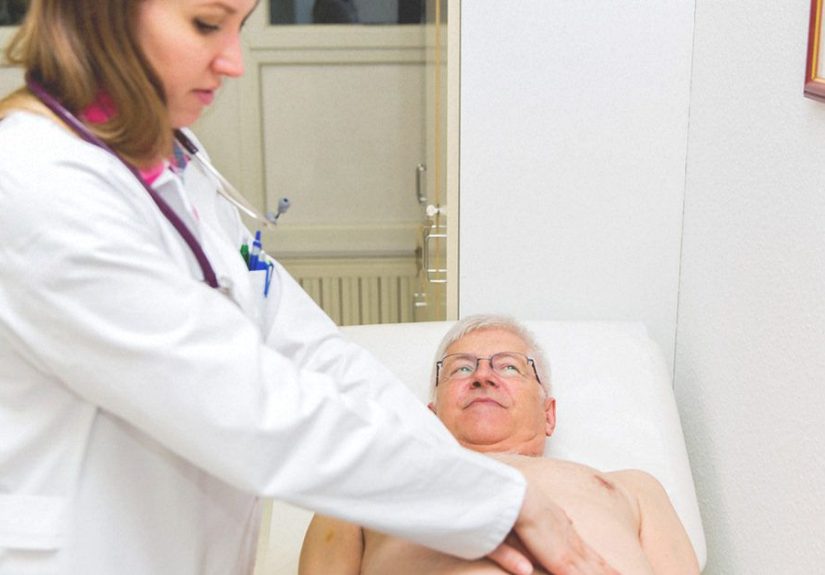
Diagnosis often begins with a physical exam. A surgeon, gastroenterologist, urologist, or wound, ostomy, and continence nurse may look at the stoma while you are lying down, sitting, standing, coughing, or gently straining. The goal is to assess the bulge, stoma function, pouch fit, skin condition, and symptoms.
Imaging may be used when the diagnosis is unclear or when surgery is being considered. A CT scan can show the size of the hernia, what tissue is inside the hernia sac, whether there is obstruction, and how the abdominal wall is shaped. This information helps the surgical team plan the safest repair.
Can a Parastomal Hernia Be Treated Without Surgery?
Yes. Many parastomal hernias are managed conservatively, especially if symptoms are mild. Non-surgical care does not make the hernia disappear, but it may reduce discomfort, improve pouch fit, and help prevent the hernia from getting larger.
Work With a WOC Nurse
A wound, ostomy, and continence nurse can be a game changer. As the shape around the stoma changes, the pouching system may need to change too. A nurse may recommend a different wafer, barrier ring, convexity, belt, pouch angle, or cutting size. Sometimes the “repair” your daily life needs is not in the operating room; it is in the supply drawer.
Use a Hernia Support Belt or Garment
A properly fitted hernia support belt can gently support the area around the stoma. It may improve comfort, help clothing fit better, and reduce the feeling of dragging or pressure. The key phrase is properly fitted. A belt that is too tight, placed incorrectly, or worn directly over the stoma can cause irritation, bleeding, or pouch problems.
Protect the Skin
Skin care is not a minor detail. If leakage irritates the skin, the pouch seal gets worse, which causes more leakage, which causes more irritation. It is the world’s least charming merry-go-round. Address redness, itching, burning, or open skin early with help from a WOC nurse.
Adjust Activity Safely
Many people with ostomies can return to exercise, work, travel, and hobbies. However, heavy lifting, straining, and sudden increases in core pressure may worsen a hernia. After surgery, always follow lifting restrictions. Later, ask your care team about safe core strengthening, breathing techniques, and support garments for exercise.
Manage Coughing and Constipation
Repeated coughing and straining can increase abdominal pressure. Treating chronic cough, avoiding constipation, staying hydrated, and using stool-softening strategies when recommended can reduce stress on the abdominal wall.
When Is Parastomal Hernia Repair Needed?
Surgery is not automatically required for every parastomal hernia. Repair may be considered when the hernia causes significant symptoms or complications. Common reasons include:
- Frequent pouch leakage despite expert ostomy care
- Pain or discomfort that limits activities
- Skin breakdown from repeated leaks
- Progressive enlargement of the hernia
- Obstruction or recurrent partial blockage
- Difficulty fitting clothes or support garments
- Major quality-of-life concerns
- Incarceration or strangulation
The decision depends on the person’s symptoms, overall health, anatomy, type of ostomy, previous surgeries, risk factors, and goals. A good repair plan is not just “close the hole.” It must protect stoma function, reduce recurrence risk, and avoid creating new problems.
Parastomal Hernia Repair Options
Parastomal hernia repair can be complex. The best approach varies from person to person. Surgeons may use open, laparoscopic, robotic, or hybrid techniques.
Local Tissue Repair
Local tissue repair uses stitches to close or tighten the hernia defect. This approach is generally less favored for elective repair because recurrence rates can be high. In many modern practices, suture-only repair is avoided unless there is a specific reason.
Stoma Relocation
Stoma relocation means moving the stoma to a different site on the abdomen. This may be needed in selected cases, especially if the original site has major skin, scarring, or structural problems. However, relocation creates a new abdominal opening, so a hernia can also develop at the new site. It is not a magic trapdoor, unfortunately.
Mesh Repair
Mesh reinforcement is commonly used in parastomal hernia repair because it can strengthen the abdominal wall and reduce recurrence compared with simple suture repair. Mesh may be synthetic, biologic, or absorbable, and it can be placed in different tissue planes depending on the technique and patient factors.
Patients often hear the word “mesh” and immediately picture something from a hardware store. Surgical mesh is medical-grade material designed for the body, but it still carries risks. The surgeon should explain why a specific mesh is recommended, where it will be placed, and what complications are possible.
Keyhole Technique
In a keyhole repair, the mesh has an opening that fits around the stoma bowel. The concept is straightforward, but recurrence can occur if the opening widens or tissue pushes through the slit. Some guidelines suggest that, for laparoscopic repair, mesh without a central hole may be preferred over keyhole mesh when appropriate.
Sugarbaker Technique
The Sugarbaker technique places mesh so the bowel exits sideways under the mesh rather than through a hole in it. A modified Sugarbaker repair is used by some experienced centers and may be performed laparoscopically or robotically. The goal is to cover the weakness broadly and reduce the chance of the bowel pushing back through the defect.
Robotic Parastomal Hernia Repair
Robotic repair is a minimally invasive approach that uses small incisions and robotic instruments controlled by the surgeon. In selected patients, it may allow precise dissection, mesh placement, and stoma revision with less trauma than a large open incision. However, not every patient is a candidate. Prior surgeries, severe adhesions, infection risk, hernia size, and overall health all matter.
Possible Complications of Parastomal Hernia Repair
All surgery has risks. Parastomal hernia repair can be especially challenging because the operation happens near bowel or urinary tissue and an existing stoma. Possible complications include:
- Hernia recurrence
- Wound infection
- Bleeding or hematoma
- Fluid collection called seroma
- Injury to bowel or nearby tissues
- Stoma narrowing, retraction, or poor function
- Mesh infection or mesh-related complications
- Persistent pain
- Adhesions or bowel obstruction
- Need for another operation
Recurrence is one of the biggest concerns. A parastomal hernia repair may be technically successful and still come back later. That is why experienced surgical planning, risk-factor optimization, and realistic expectations are so important.
Recovery After Parastomal Hernia Repair
Recovery depends on the type of surgery, the size of the hernia, whether mesh was used, and the person’s overall health. Minimally invasive repair may involve smaller incisions and a shorter hospital stay than open surgery, but recovery still takes time.
After surgery, patients may need to avoid heavy lifting for several weeks, gradually increase walking, monitor the incision and stoma, and follow specific pouching instructions. A WOC nurse may help refit the pouching system because the abdominal shape often changes after repair.
Call the care team if you notice fever, worsening pain, redness spreading around an incision, pus-like drainage, vomiting, inability to pass gas or stool into the pouch, sudden swelling, or stoma color changes.
How to Reduce the Risk of a Parastomal Hernia Getting Worse
You cannot control every risk factor, but you can support your abdominal wall and ostomy function with smart habits.
- Follow lifting restrictions after ostomy surgery or hernia repair.
- Ask your clinician when and how to restart exercise.
- Use proper lifting mechanics: bend at the knees, keep the load close, and exhale instead of holding your breath.
- Consider a fitted support garment during activity.
- Manage constipation and avoid straining.
- Treat chronic cough when possible.
- Stop smoking if you smoke, because smoking can impair healing.
- Maintain a healthy weight if recommended by your clinician.
- Get pouching problems addressed early instead of waiting for a skin disaster.
Living With a Parastomal Hernia
Living with a parastomal hernia is not only a medical issue. It can affect confidence, clothing, intimacy, work, travel, and exercise. People may worry about leaks, odor, visible bulging, or whether others can tell something is different. These concerns are real, and they deserve practical solutions rather than a dismissive “just don’t worry about it.”
Useful strategies include wearing supportive underwear or ostomy wraps, carrying emergency supplies, testing pouching products at home before wearing them out, and planning meals before long events. Support groups can also help because advice from someone who has actually argued with a pouch seal at 6 a.m. is a special kind of wisdom.
Questions to Ask Your Doctor
Before deciding on treatment, consider asking:
- Is my hernia mild, moderate, or severe?
- Do I need imaging?
- Can this be managed without surgery for now?
- Would a support belt help, and who should fit it?
- What symptoms mean I should seek emergency care?
- Am I a candidate for robotic or laparoscopic repair?
- Will mesh be used? If so, what type and where?
- What is my personal risk of recurrence?
- How might repair affect my stoma function?
- How many parastomal hernia repairs does your team perform?
Conclusion
A parastomal hernia can be frustrating, uncomfortable, and occasionally serious, but it is also manageable. The first step is recognizing symptoms: a bulge around the stoma, pressure, pain, pouch leakage, skin irritation, or output changes. Mild cases may be handled with expert ostomy care, support garments, activity adjustments, and regular monitoring. More severe cases may require repair using mesh, stoma relocation, or minimally invasive techniques such as laparoscopic or robotic surgery.
The most important takeaway is this: do not ignore new pain, vomiting, bloating, fever, no pouch output, or a rapidly changing bulge. Those symptoms deserve prompt medical attention. For everything else, a good care team, a skilled WOC nurse, and a realistic plan can make life with a parastomal hernia far less intimidating.
Real-Life Experiences and Practical Lessons About Parastomal Hernia
People often describe a parastomal hernia as something they noticed gradually. One week the pouch seemed a little harder to place. A month later, the abdomen looked slightly uneven. Then one day, standing in front of the mirror, the bulge was obvious enough to earn a dramatic stare. Many people say the emotional reaction is bigger than the physical symptom at first. It can feel like the body has changed again after already adjusting to ostomy surgery.
A common experience is pouch leakage. Someone may have used the same pouching system successfully for months, only to suddenly deal with leaks at the edge of the barrier. The problem is not always the product. A hernia can change the surface around the stoma, turning what used to be a flat landing pad into a curved hill. In this situation, working with a WOC nurse can be more helpful than buying every ostomy product on the internet like a very stressed-out detective.
Another frequent lesson is that support garments can help, but fit matters. A belt that works beautifully for one person may feel awkward for another. Some people prefer a custom hernia belt with an opening for the pouch. Others like high-waisted compression shorts or ostomy wraps. The goal is gentle support, not squeezing the stoma like it owes you money. If a garment causes pain, bleeding, pressure marks, or pouch problems, it needs to be reassessed.
Daily planning also becomes important. Many people learn to keep extra supplies in a bag, car, desk drawer, or travel pouch. This is not pessimism; it is freedom. Having a backup pouch, barrier ring, disposal bag, wipes, and a change of clothing can make social plans feel less risky. Confidence often comes from preparation, not perfection.
Exercise can feel confusing after a parastomal hernia diagnosis. Some people become afraid to move, while others try to push through discomfort. A safer middle path is usually best. Walking, gentle movement, and clinician-approved core work may help overall strength, but heavy lifting and breath-holding can increase abdominal pressure. Learning to exhale during effort, use proper lifting form, and wear support during activity can make movement feel safer.
People also talk about clothing. A parastomal hernia can change how pants, belts, dresses, or waistbands fit. Soft waistbands, stretch fabrics, ostomy wraps, longer shirts, and supportive undergarments can help. The goal is not to hide in oversized clothes forever. The goal is to find clothing that lets you move, eat, sit, laugh, and live without constantly checking the pouch.
Finally, many patients say the biggest improvement comes from finding the right professionals. A surgeon can evaluate repair options, but a WOC nurse can improve everyday comfort. A dietitian may help with output and constipation. A primary care provider can help manage coughing, weight, smoking cessation, or diabetes. A support group can help with the emotional side. Parastomal hernia care works best when it treats the whole person, not just the bulge.







 Close
Close