
Table of Contents >> Show >> Hide
- Why the PP 503 matters
- Design & construction: the smart simplicity
- Materials, dimensions, and finish
- Production & makers: Johannes Hansen to PP Møbler
- Cultural moment: the Kennedy–Nixon debate
- How the chair feels ergonomics and comfort
- Collecting, authenticity & buying tips
- Styling the PP 503 in interiors
- Care & maintenance
- Legacy & why designers still reference it
- Conclusion what the PP 503 gives you
- About of personal & user experiences with the PP 503 (stories, observations, and practical notes)
Short take: The PP 503 popularly known as The Round Chair or simply “The Chair” is Hans J. Wegner’s iconic armchair from the dawn of Danish Modern. It’s an exercise in restraint: a single continuous semicircular back and arms, finger-jointed craftsmanship, and an elegant seat that can be caned (PP501) or upholstered leather/fabric (PP503). What began as a quietly radical woodworking solution in Copenhagen became a global emblem of mid-century design even earning a cameo in the 1960 Kennedy–Nixon TV debates.
Why the PP 503 matters
Design history loves a good origin story, and the PP 503 delivers one with substance. Unveiled by Hans Wegner around 1949–1950, this chair distilled the Danish Modern ethos beauty through honesty of material and technique. Rather than ornament, Wegner relied on joinery, elegant proportions, and the way wood meets human posture. The result reads as both timeless and of its moment: modern without being flashy, handcrafted but refined for mass appreciation.
Design & construction: the smart simplicity
The continuous semicircle
The most arresting visual of the PP 503 is its wraparound back and arms: a continuous semicircular rail that enfolds the sitter. That single sweep is not merely aesthetic it’s structural. Wegner oriented the finger joints to follow the grain, using form and grain direction to add strength where needed. The visible joinery is part of the honest, functional beauty.
PP501 vs PP503: caned or upholstered
Wegner presented two close relatives: the PP501 with a woven caned seat and back, and the PP503 with a padded, upholstered seat (often leather). Both share the same overarching silhouette; the seat choice changes feel and visual weight. The PP503’s upholstery made it slightly more formal, comfortable for longer periods one of the reasons it was chosen for on-camera appearances and private interiors alike.
Materials, dimensions, and finish
Traditionally offered in woods like oak, walnut, ash, or cherry, the chair emphasizes warm, tactile surfaces finished with subtle oils or soap to highlight grain. Dimensions are compact by modern standards roughly 63 cm wide, 52 cm deep, and 76 cm high with a seat height around 44–45 cm making it versatile in both small and generous rooms. High-quality upholstery options range from top-grain leathers to fine fabrics; hand-woven cane remains a beloved option for the PP501 sibling.
Production & makers: Johannes Hansen to PP Møbler
The chair originated as a collaboration between Wegner and master cabinetmakers in Copenhagen, and its production story ties into the golden age of Danish cabinetmaking. Today PP Møbler produces the chair to Wegner’s specifications, preserving hand-craftsmanship while accommodating modern quality controls. The brand emphasizes made-to-order production and exacting material standards, so each chair is as much a small craft object as a piece of furniture.
Cultural moment: the Kennedy–Nixon debate
Design’s brush with political history is rare, but the PP 503 scored one. When John F. Kennedy and Richard Nixon faced off on television in 1960 the first televised presidential debate versions of Wegner’s Round Chair were used for the candidates and moderators. The chair’s simple dignity and camera-friendly profile helped popularize it in America; it didn’t hurt that Kennedy, who had back troubles, favored the upholstered PP503. That TV appearance helped cement the chair’s nickname in the U.S.: “The Chair.”
How the chair feels ergonomics and comfort
At first glance the chair reads minimal, but sit in it and the design’s generosity shows. The arcing back supports the shoulders without boxing the sitter in; the wide arms provide a relaxed place to rest the elbows; the seat depth and angle encourage upright but comfortable posture. The upholstered PP503 is slightly more forgiving for extended sitting than the caned PP501, which breathes better but feels firmer. For many enthusiasts, the comfort is inseparable from the tactile pleasure of handcrafted wood and fine upholstery.
Collecting, authenticity & buying tips
Because it’s collectible, buyers should watch for provenance and maker marks. Original early examples from Johannes Hansen carry different markings and patina than later PP Møbler production. PP Møbler’s current production pieces are authentic to Wegner’s intent and carry the brand’s stamp; these often come with custom wood and upholstery choices and a waiting period because of handcrafting. Reproductions exist study joinery, grain orientation, and the finger joints to judge quality. If you want the canonical experience, an original PP503 or a current PP Møbler piece is the way to go.
Styling the PP 503 in interiors
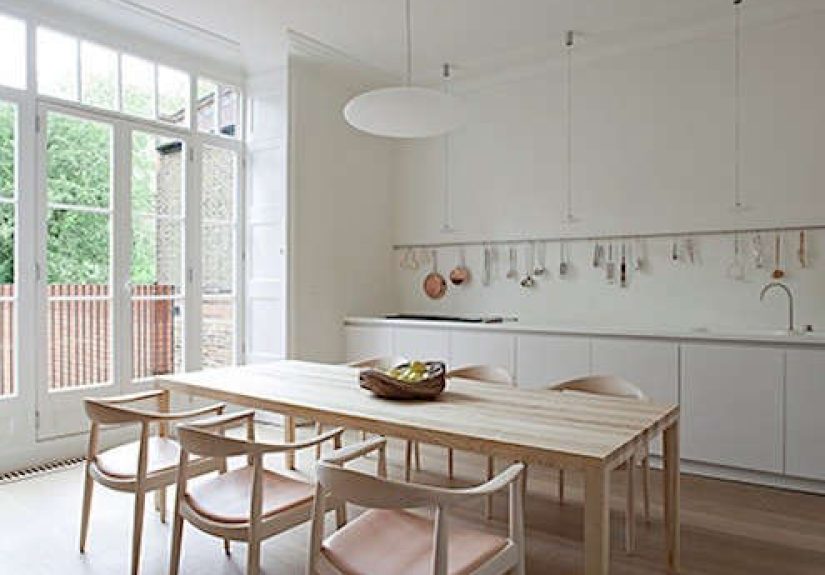
The chair is a chameleon: it reads as mid-century in a period room and as restrained modern in a contemporary minimalist scheme. Use it as a focal occasional chair in a living room, flanking a fireplace, or as distinguished seating in a study. Pair warm walnut finishes with neutral textiles for a Scandinavian palette; a black or deep-brown leather seat gives a more formal, library-ready feel. Because the silhouette is strong but compact, a single PP 503 can anchor a vignette without overwhelming a room.
Care & maintenance
Wood: regular dusting, occasional oiling or soap cleaning per the maker’s recommendations. Leather: conditioners designed for top-grain leather help avoid brittleness; avoid excessive sunlight to prevent fading. Cane: keep humidity moderate to prevent shrinking or sagging. Because so much of the chair’s appeal is in the timber and joinery, careful maintenance preserves both appearance and structural integrity for decades.
Legacy & why designers still reference it
Wegner’s Round Chair is often taught in design courses as an exemplar of form following craft-based function. The piece is deceptively simple the semicircular back appears effortless only because of meticulous consideration of wood behavior and joinery. It represents a moment when industrial modernism and skilled craft found synergy, and it keeps inspiring because that fusion remains relevant to designers seeking durability, sustainability, and honesty of materials.
Conclusion what the PP 503 gives you
The PP 503 is more than a pretty silhouette: it’s a lesson in how disciplined restraint and top-flight craftsmanship produce something both utilitarian and iconic. Whether you love it for its historical cache (the Kennedy debate cameo), its sculptural back, or its quiet comfort, the chair continues to quietly ask the same question Wegner wanted designers to consider: can furniture be beautiful without being loud? The PP 503 answers yes, emphatically.
About of personal & user experiences with the PP 503 (stories, observations, and practical notes)
My first close encounter with a PP 503 was at a small design gallery tucked into an old industrial loft: a single chair sat under a soft lamp, its semicircle back catching the light like a wooden halo. Up close I noticed what photos never convey the gentle warmth of the finish under the fingertips, the slight give in the upholstered seat, and the pleasing, quiet confidence of the joinery. Sitting in it for the first time felt like an exercise in civilized repose: I found myself naturally straightening my posture, shoulders relaxed into the curve, palms resting on the broad, low arms. The chair invited conversation without clamoring for attention.
Friends who own PP503s tend to treat them as heirloom objects rather than disposable seating. One collector told me they bought a used PP503 at auction because “the grain matched the floors in my house” and because the chair had a small repair history that spoke of use rather than neglect. That person refurbished the upholstery in a warm tan leather and positioned the chair by a west-facing window; over time the patina on the leather and the soft sheen on the oak arms have made it feel integral to the home’s character. Owners often report that while the chair isn’t a couch replacement for binge-watching, it is the perfect seat for reading, meetings, or holding guests with a certain quiet dignity.
Design students I’ve spoken with love the PP 503 as a study piece. They sketch the chair to practice proportion and try to replicate the continuity of the back rail in quick models. Many say the chair teaches restraint: there are no unnecessary elements, and every curve and joint must justify itself structurally and visually. During a workshop I attended, a student tried a plywood mockup of the semicircular back and learned the hard lesson that bending and grain orientation can’t be faked attention to material behavior is nonnegotiable.
On the practical side, people who live with PP503s emphasize routine care. One design blogger kept a short checklist: dust weekly, clean spills immediately, condition leather twice a year, and avoid heaters or prolonged direct sunlight. These small rituals keep the chair feeling alive rather than preserved behind glass. Another practical note: the chair occupies a modest footprint, so it works wonderfully in modern apartment layouts; its silhouette reads large in photos but in real life fits into corners and conversation groupings comfortably.
There’s also an amusing social effect: guests notice it. The PP 503 often elicits questions “Is that an original?” or “Who design?” and these conversations often turn into deeper talks about craft, provenance, and the longevity of objects. For many, the chair becomes a pedagogical object a chance to explain why a well-made chair is not merely function but also story, technique, and lineage. In that way the PP 503 functions like a small, silent ambassador for thoughtful making.
Finally, I’ll confess a personal bias: the PP 503 feels optimistic. Its curve welcomes rather than dominates; its proportions suggest human scale and calm. Whether placed in a minimalist loft or a lived-in family room, the chair quietly argues that design can be both beautiful and good at its job. That argument that elegance need not be expensive to understand is why sitting in a PP 503 still feels like a small luxury and why the chair keeps finding new admirers decades after 1950.







 Close
Close