
Table of Contents >> Show >> Hide
- Why Real Christmas Tree Care Starts Before You Decorate
- How To Choose A Fresh Real Christmas Tree
- The Essential Real Christmas Tree Gear Checklist
- How To Set Up A Real Christmas Tree The Right Way
- How To Water A Christmas Tree So It Actually Lasts
- Decorating Tips That Help, Not Hurt
- Common Real Christmas Tree Mistakes To Avoid
- How Long Will A Real Christmas Tree Last?
- Post-Holiday Cleanup And Recycling
- Conclusion: The Best Holiday Tree Is The One You Can Care For Well
- Real-Tree Holiday Experiences: What People Learn Once The Tree Is In The House
- SEO Tags
Nothing says “the holidays are here” quite like carrying a real Christmas tree through the front door and immediately discovering it is somehow both wider and pokier than expected. A fresh-cut tree brings the scent, the glow, the family photos, and at least one annual debate about whether the top is leaning “a little” or “like the Tower of Pisa in a sweater.” The good news is that real Christmas tree care is not complicated. The bad news is that it does require a little planning, a little gear, and a very real relationship with water.
This real Christmas tree care guide covers everything you need for a beautiful, safer, longer-lasting holiday centerpiece: how to choose the right tree, which gear actually matters, how to keep a tree fresh indoors, what mistakes dry trees out fast, and how to get through the season without crawling under the branches every night with a measuring cup and regret. Whether you are shopping a choose-and-cut farm, a neighborhood lot, or the garden center down the road, this guide will help you bring home a tree that looks great from day one through the last cookie crumb of the season.
Why Real Christmas Tree Care Starts Before You Decorate
The biggest mistake people make with a real tree is assuming the job starts once the ornaments come out. In reality, freshness begins at selection, continues during transport, and matters most in the first few hours after you get home. A tree is a cut plant, not a wooden coat rack. If you treat it like one, it will answer by dropping needles into your rug like confetti with a grudge.
The goal is simple: buy a fresh tree, keep the trunk cut open, place it in a sturdy stand with enough water, and protect it from heat. Those four moves do most of the heavy lifting. Everything else is support work.
How To Choose A Fresh Real Christmas Tree
Look for color, flexibility, and scent
A fresh real Christmas tree should have healthy-looking needles, a natural green tone, and branches that feel flexible rather than brittle. If you gently run your hand along a branch, you should not end up holding a sad fistful of green needles. A little inner needle drop is normal, especially on older growth inside the tree, but heavy green needle loss is a warning sign.
Another quick test: bend a few needles. Fresh needles tend to feel springy. Dry needles snap. The tree should also smell like a tree and not like a cardboard display rack. That famous evergreen fragrance is not just festive; it is often a decent clue that you are looking at a fresher tree.
Choose-and-cut farms usually win on freshness
If you want the best odds of long-lasting needle retention, a choose-and-cut farm is hard to beat. Trees harvested close to purchase are usually better hydrated than pre-cut trees that have spent more time on a lot. That does not mean lot trees are bad. It just means you need to be a little pickier. Ask when the shipment arrived. Give the tree a light shake. Inspect the trunk and branch tips. Trust your hands as much as your eyes.
Pick the right species for your decorating style
Not all real Christmas trees behave the same way. If you hang heavy ornaments, look for strong branching. If you want classic fragrance, some species stand out. If you have pets, kids, or bare arms that bruise emotionally and physically, needle sharpness matters too.
- Fraser fir: Excellent needle retention, strong branches, pleasant scent, and a favorite for households that want the full “magazine cover” effect.
- Scots pine: Dense shape, very good needle retention, and often a budget-friendlier option.
- Blue spruce: Beautiful color and stiff branches, but those needles can be sharp enough to make decorating feel like a trust exercise.
- Douglas-fir: Loved for fragrance and soft texture, though branch strength can vary depending on ornament weight.
The best real Christmas tree is the one that fits your room, your stand, your ornament collection, and your patience level.
The Essential Real Christmas Tree Gear Checklist
You do not need a garage full of gadgets, but the right Christmas tree gear makes setup easier and ongoing care dramatically less annoying.
1. A sturdy tree stand with serious water capacity
This is the non-negotiable item. A good stand should hold plenty of water for the trunk diameter of your tree. Bigger trees need bigger reservoirs and stronger support. If the stand is flimsy, tiny, or looks like it came free with disappointment, keep shopping.
2. A pruning saw or hand saw
You will likely need to make a fresh straight cut at the base of the trunk before setting the tree in water. A simple saw does the job well. No fancy lumberjack energy required.
3. Tree gloves
Especially helpful with spruce or any tree that bites back. Gloves also save your hands during lifting, turning, fluffing, and the annual “tilt it slightly left… no, my left” debate.
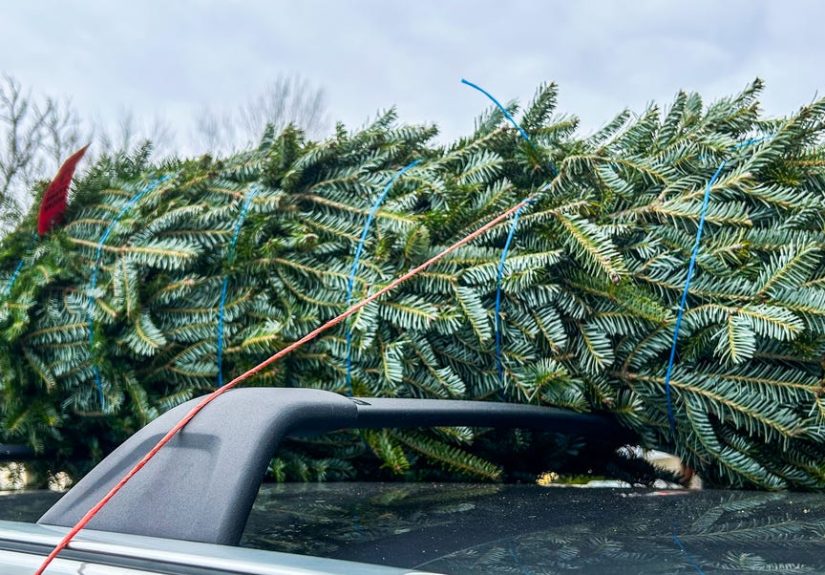
4. Old blanket or tree bag for transport
This protects the tree during the ride home and protects your car from sticky sap, loose needles, and the faint feeling that your hatchback was not designed for a seven-foot fir.
5. Watering funnel or tubing setup
One of the smartest low-tech hacks is attaching a funnel to a length of tubing so you can refill the stand without kneeling under the tree. It is not glamorous, but neither is spilling water behind the stand while wearing festive socks.
6. LED light strings
LED Christmas lights produce less heat than older incandescent strands, making them a smart choice for a real tree. They also tend to use less electricity, which your December utility bill may appreciate.
7. A timer or smart plug
Lights should turn off when you are asleep or away from home. A timer removes the burden of remembering, which is helpful during a season fueled by shopping lists and sugar cookies.
8. Optional stability helpers
If you have energetic pets, toddlers, or a tree that seems spiritually committed to leaning, guy wires or discreet anchors can add stability. This is especially useful for tall trees in busy rooms.
How To Set Up A Real Christmas Tree The Right Way
Make a fresh cut before it goes in the stand
Before placing the tree in its stand, cut about half an inch to one inch from the base of the trunk. This helps reopen the wood so it can take up water efficiently. Make the cut straight across. Do not cut the trunk at an angle, and do not carve a dramatic point as if the tree is entering a medieval jousting contest.
Do not whittle the trunk to fit the stand
If the stand is too small, the stand is the problem. Avoid shaving down the sides of the trunk to force a fit. The outer layers of wood are especially important for water uptake, so trimming them away can reduce hydration.
Get it into water fast
Once the fresh cut is made, place the tree in water as soon as possible. If you cannot bring it inside right away, keep it in a cool shaded place with the trunk in a bucket of water. Freshness is easier to preserve than to restore.
Choose the location carefully
Keep the tree away from fireplaces, radiators, heat vents, space heaters, sunny windows, and other heat sources. Heat speeds drying. Also make sure the tree does not block an exit or create a traffic jam in your room. Holiday charm should not come with evacuation challenges.
How To Water A Christmas Tree So It Actually Lasts
If there is one golden rule in every real Christmas tree guide, it is this: never let the water level drop below the base of the trunk. Once the cut end dries out, resin can seal the wood and interfere with water uptake. In plain English, your tree stops drinking and starts aging in dog years.
Check the stand daily, and during the first several days, check it more than once if your tree is especially fresh or large. Many real trees drink heavily early on. That is normal. In fact, a thirsty tree is often a good sign that the trunk is taking up water as it should.
Use plain water. Not sugar water. Not aspirin. Not bleach. Not mysterious holiday potions from the internet. Research-based extension guidance consistently recommends fresh plain water for keeping a real Christmas tree hydrated. The tree is decorating your house, not competing on a reality show called America’s Next Top Beverage.
Decorating Tips That Help, Not Hurt
Use cooler lights
LED strands are a smart pick because they generate less heat. Less heat means less drying pressure on the needles and branches. It is a small equipment choice that supports both tree longevity and holiday safety.
Inspect every light string
Before hanging lights, check cords, sockets, and bulbs for damage. Replace strands with frayed wires, broken sockets, or loose connections. Also follow the manufacturer’s instructions on how many strands can be safely connected together. This is not the season for experimental electrical engineering.
Go easy on heavy ornaments
Match your ornaments to your tree species and branch strength. Firs tend to support heavier ornaments better than softer-branched trees. Spread weight evenly instead of clustering all the heaviest pieces on one photogenic side.
Avoid open flames and highly combustible decor
Never decorate a Christmas tree with lit candles. Yes, it looks magical in old paintings. So does sailing across the Atlantic in the 1700s, and we have improved on that too.
Common Real Christmas Tree Mistakes To Avoid
- Buying only by looks: A pretty tree is great, but freshness matters more than symmetry.
- Using a stand that is too small: Tiny reservoirs create big problems.
- Forgetting the recut: A fresh cut helps the trunk resume water uptake.
- Letting the stand run dry: This is the fastest route to premature needle drop.
- Placing the tree near heat: Warm air dries a tree much faster.
- Overloading old outlets and worn light strings: Holiday sparkle should not come with sparks.
- Keeping a dry tree indoors too long: Once the tree is brittle and dropping heavily, it is time to say goodbye.
How Long Will A Real Christmas Tree Last?
With steady watering, a fresh trunk cut, a proper stand, and a cooler indoor location, many real trees can stay attractive for three to four weeks. Some species hold up better than others, and the starting freshness matters a lot. A farm-fresh Fraser fir treated well can be impressively durable. A dry lot tree parked next to a heat vent may age like a banana on a dashboard.
If the needles become brittle, the tree stops drinking, or green needle drop increases sharply, it is drying out. That is your cue to remove it promptly rather than squeezing out “just one more week” for sentimental reasons.
Post-Holiday Cleanup And Recycling
When the season ends, do not just drag the tree to the curb and hope holiday magic handles the rest. Many communities offer Christmas tree recycling, and real trees can be chipped into mulch, used in erosion-control projects, or even repurposed as wildlife or fish habitat in some programs.
Before recycling, remove all ornaments, tinsel, hooks, lights, wire, and decorations. Check your city, county, parks department, or local waste service for collection rules. A real tree can keep giving after the holidays, which is more than can be said for that mystery tin of peppermint popcorn.
Conclusion: The Best Holiday Tree Is The One You Can Care For Well
A real Christmas tree is not high-maintenance. It is just honest. Give it a fresh cut, plenty of plain water, a stand that can actually do its job, and a cooler safe spot away from heat, and it will reward you with fragrance, color, texture, and the kind of holiday atmosphere no scented candle has fully duplicated. The best holiday setup is not the most expensive one. It is the one built on smart gear, daily care, and a little attention before the needles start filing complaints.
If you want the simplest version of this entire real Christmas tree gear and care guide, here it is: buy fresh, recut the trunk, water like you mean it, use LED lights, keep the tree away from heat, and recycle it when the season ends. That is the formula. Everything else is ornaments and confidence.
Real-Tree Holiday Experiences: What People Learn Once The Tree Is In The House
One of the most common experiences people have with a real Christmas tree is surprise at how alive it still feels after it comes home. On the lot, a tree can look still and almost stage-ready. In the house, it becomes part decoration, part houseguest, and part ongoing project. The scent changes the room immediately. Even before ornaments go up, the space feels warmer and more festive. People often say the house suddenly smells like the holiday they remember from childhood, not the one they ordered online with two-day shipping.
Then comes the second surprise: how much water the tree drinks. First-time real-tree buyers often assume filling the stand is a once-a-day chore, like watering a polite houseplant. Instead, they discover the reservoir can drop faster than expected, especially in the first several days. Many experienced households develop a ritual around it. Someone checks the stand first thing in the morning. Someone else tops it off in the evening. It becomes part of the season, like turning on the porch lights or arguing over whether the angel or the star looks less crooked.
Another common experience is learning that placement matters more than people think. Families who put the tree near a fireplace or sunny window often notice it dries faster. Families who choose a cooler corner usually get a longer-lasting display. This becomes one of those holiday lessons people remember forever. The tree may look perfect in the warmest, brightest spot in the room, but the tree itself would prefer a calmer address.
People with pets often describe the tree as an irresistible new attraction. Cats may view it as a climbing gym with lights. Dogs may treat the lower branches as a sniffing station. That is why sturdier stands, balanced decorations, and secure cords become more than “nice extras.” They become sanity-preserving gear. Households with children often say the same thing: once a real tree is in the home, stability matters as much as beauty.
There is also the decorating experience itself. A real tree rarely looks exactly like the perfectly symmetrical artificial model on the box. It has personality. One side may be fuller. One branch may dip. The top may curve like it has opinions. Oddly, this is part of the charm. Families often end up loving the imperfections because they make the tree feel unique. The decorating process becomes less about perfection and more about working with the tree’s natural shape. That shift usually makes the room feel more welcoming, not less.
Finally, there is the quiet experience that happens near the end of the season. If the tree has been well cared for, it still looks handsome under soft lights, even after the excitement of gift-opening is over. At that point, many people say the tree becomes less of an event and more of a companion to the season itself. It is there during movie nights, late-night cleanup, visiting relatives, and ordinary mornings with coffee. That may be the real reason people keep choosing fresh trees. A real Christmas tree is not just holiday decor. It becomes part of the lived memory of the holidays.




 Close
Close