
Table of Contents >> Show >> Hide
- The road trip that accidentally became a three-member family
- The moment Mexico entered the chat (and the story got complicated)
- Why “bringing the cat home” isn’t as simple as buying a plane ticket
- What this story teaches anyone thinking about adopting a pet abroad
- The human side: why people cheer for stories like this
- Conclusion: the real destination was the cat we adopted along the way
- Extra: of Real-World Experiences Inspired by This Story
Some travel stories begin with a boarding pass. This one begins with a rescued cat in Washington, D.C., a vintage VW van with more personality than horsepower,
and two British teachers who discovered the most dangerous thing on a road trip isn’t a broken engineit’s falling in love with a tiny creature who thinks your laptop screen is a chew toy.
The headline version goes like this: a UK couple refused to return home without their adopted cat, and they ended up stuck in Mexico for about a year.
But the real story is messier (in a good way), filled with border surprises, veterinary recovery time, pandemic-era chaos, and the kind of paperwork that makes you miss doing taxes for fun.
If you’ve ever wondered what happens when “vanlife” collides with “cat parenthood” and international pet travel rules, buckle uppreferably with a seatbelt, a carrier, and a sense of humor.
The road trip that accidentally became a three-member family
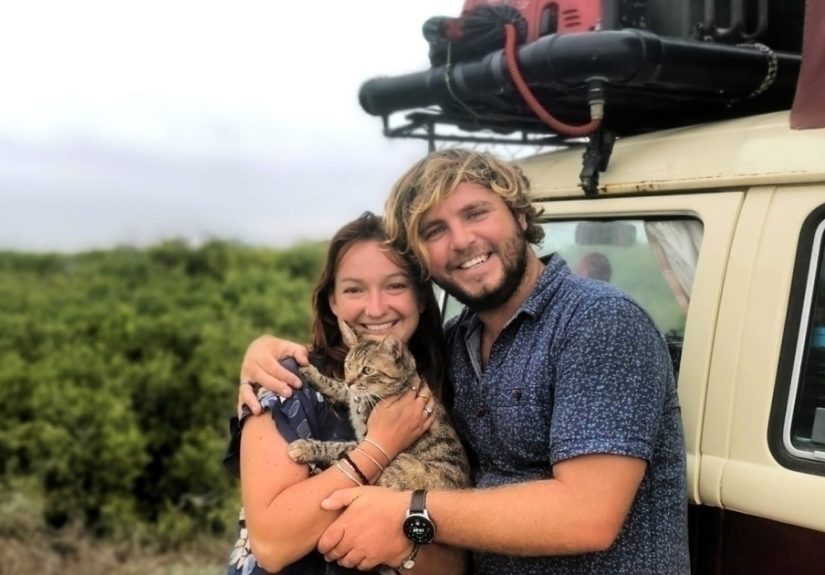
Lee Hodges and Willow Rolfe set off on a long-planned North American road trip in a restored Volkswagen camper van. A couple months into their journey,
they found themselves in Washington, D.C., and made the kind of decision that changes a travel itinerary forever: they adopted a cat.
The catlater named Aimeewasn’t just a “we’ll foster for a bit” situation. She became the travel companion, the morale officer, and (depending on your definition)
the trip’s most relentless project manager: “Drive more. Pet me. Open the treat bag. Repeat.”
The couple had left cats back home and felt pulled toward rescuing an animal while on the road. Their first rescue attempt, a young kitten, didn’t survive.
Soon after, Aimee entered the pictureand stayed. In photos and updates, she’s not portrayed as luggage with whiskers. She’s shown as a true teammate:
perched in the van, watching the world go by, and joining outdoor stops like she’s been training for “America’s Next Top Adventure Cat.”
Aimee wasn’t a “stay at the campsite” cat
Aimee reportedly learned to walk on a leash, which is the kind of sentence that makes dog owners blink twice and say,
“Wait… cats can do that?” (Yes, some cats can. They just prefer you to know they’re doing you a favor.)
Leash training meant she wasn’t stuck inside the van 24/7she could explore in controlled bursts, get enrichment, and burn off the energy that might otherwise be redirected into
shredding a map, a backpack, or your last remaining shred of patience.
This detail matters because it shows something important about traveling with cats: success usually isn’t “we got lucky.”
It’s preparation, routine, and a steady supply of “please don’t panic” strategiescarrier familiarity, safe harness use, and reading your cat’s comfort level like it’s a weather report.
The moment Mexico entered the chat (and the story got complicated)
As the couple crossed from the United States into Mexico, the trip took a hard turn. Aimee was attacked by dogs and suffered a serious injury, described as a broken leg/paw.
And here’s where the headline becomes real life: you can’t exactly “walk it off” when your family member is a cat with a fractured limb.
The couple stayed put so she could receive care and recover.
Any pet owner understands the emotional math: a flight home can be rescheduled; bone healing cannot.
Even if you’re not naturally sentimental, watching a small animal heal tends to rearrange your priorities at record speed.
The plan became “wait until she’s okay,” not “stick to the original timeline.”
Then the pandemic hitbecause of course it did
While Aimee needed time to heal, COVID-era disruptions spread worldwide. Travel slowed, borders tightened, services became unpredictable,
and “getting home” turned into a game of shifting rules and shrinking options.
The couple reportedly wanted to return to the UK, but they weren’t willing to leave Aimee behindespecially not after her injury.
The result: they remained in Mexico far longer than planned, navigating a mix of local restrictions, changing conditions, and the constant question,
“If we move, will the next place be safer… or will it be where we get stuck again?”
On top of that, their van broke down (more than once), and repairs weren’t instant. When you live in your vehicle, a mechanical failure isn’t just inconvenient.
It’s your home, your transportation, your storage unit, and your daily routine all going offline at the same time.
Add visa timelines, border policies, and supply-chain delays for parts, and you’ve got a very modern kind of travel thriller:
The Fast and the Furry-ous: Paperwork Drift.
Why “bringing the cat home” isn’t as simple as buying a plane ticket
If you’ve never traveled internationally with a pet, here’s the blunt truth: the hardest part often isn’t the flight.
It’s the rules. Pet travel is a system designed to prevent disease spread (especially rabies), protect animal welfare, and keep borders from becoming
a free-for-all of undocumented critters. That’s a good thingright up until you’re living inside the rulebook with a cat who did not consent to bureaucracy.
The couple’s situation highlights a common reality: pet travel requirements can be time-sensitive and sequence-sensitive.
Miss a step, do something in the wrong order, or lose a document, and you may have to restart the clock.
When you’re dealing with a healed leg, a ticking visa, and a van that needs parts shipped from somewhere far away, “restart the clock” feels like a prank.
The paperwork triathlon: microchip, rabies vaccination, and official documents
Most international pet travel systems revolve around a few core ideas:
identification (microchip), disease prevention (rabies vaccination and other vet care),
and documentation (health certificates or official forms).
Many destinations require a specific microchip standard, proof the rabies vaccine is current, and a veterinary health certificate issued within a narrow window before travel.
Here’s the detail that surprises people: in many rule sets, the microchip must come first. If a rabies vaccine is administered before the animal is microchipped,
the vaccination may not count for travel purposes because it can’t be reliably tied to that specific animal.
It’s not personal. It’s paperwork logicannoying, consistent, and strangely proud of itself.
Mexico entry rules vs. leaving Mexico (and why “entry” is only half the battle)
Entering a country with a pet and leaving a country with a pet can feel like two completely different sports.
Mexico’s entry process for U.S.-origin dogs and cats has included inspection upon arrival and, in some cases, less emphasis on pre-issued health certificates than travelers expect.
But leaving Mexico for another destinationespecially the UKcan trigger a more demanding checklist:
timelines, endorsed documents, approved routes, and airline-specific policies.
Translation: you might be able to arrive with relative ease, then discover that departing is the real boss fight.
The UK angle: approved routes, strict documents, and limited “easy modes”
The UK (and Great Britain specifically) has clear requirements for bringing in pet cats, dogs, and ferretsapproved travel routes,
a microchip, a valid rabies vaccination, and the correct paperwork such as an animal health certificate or other accepted documents.
That’s before you factor in carrier standards, airline restrictions, and the “no surprises” expectation at arrival.
For travelers, one of the most frustrating parts is that “almost correct” often equals “not accepted.”
If the dates are off, the microchip number is missing, or the form isn’t endorsed properly, you may not be allowed to travel as planned.
That’s the kind of rigidity that turns a couple’s compassionate decisionwe’re not leaving our catinto a months-long logistical saga.
What this story teaches anyone thinking about adopting a pet abroad
It’s easy to read this and think, “Wow, that’s intense. I could never.” But the better takeaway is:
if you might rescue an animal while traveling, you can preparewithout turning your backpack into a mobile filing cabinet.
Here are practical lessons pulled from real-world pet travel guidance and the reality of how things go sideways.
1) Assume your timeline will changethen build a plan that can survive it
Aimee’s injury is the obvious reason the couple stayed put. But injuries aren’t the only timeline wreckers.
Vet appointments, quarantine rules, document endorsement delays, airline capacity limits for pets, and border policy changes can all create gaps.
Plan for buffers. If the “perfect plan” requires everything to go right on the first try, it’s not a planit’s wishful thinking in a trench coat.
2) Get organized early (because “later” is when offices close)
If you’re adopting or traveling with a cat internationally, start building your document stack early:
microchip information, vaccination records, vet visit notes, parasite prevention history, and any required certificates.
Keep both digital backups and physical copies. Paper gets wet. Phones get lost. Cats, somehow, remain unbothered.
3) Train for travel like it’s a lifestyle, not a one-day event
Cats handle travel better when it isn’t brand-new trauma every time. Carrier acclimation, calm routines, and low-stress handling can make a huge difference.
Many vet and animal welfare sources recommend making the carrier part of everyday lifeleave it out, add familiar bedding, and create positive associations with treats.
The goal isn’t “cat loves travel.” The goal is “cat is not convinced travel is a betrayal.”
4) Respect the cat’s stress budget
Long travel days, unfamiliar places, noisy border crossings, and crowded airports can overwhelm even confident cats.
Some cats benefit from calming techniques like pheromone products, gradual desensitization, or vet-guided medication options when appropriate.
The responsible move is to talk to a veterinarian before a major trip, especially if the cat has a history of anxiety, motion sickness, or medical issues.
The human side: why people cheer for stories like this
On the surface, this is a quirky travel headline. Underneath, it’s a story about commitment.
The couple’s decision is relatable because it’s not framed as heroic in a polished-movie way.
It’s framed as stubborn love: “This cat is family. So we’ll figure it out.”
It also taps into something that felt especially sharp during the pandemic years: the sense that plans are fragile, systems are unpredictable,
and the things that matter most are often the small living beings right next to you.
In that context, staying in Mexico for monthsdealing with repairs, budgets, and logisticsreads less like recklessness and more like loyalty.
And yes, there’s humor in it. Because any story involving a cat who bites laptops and refuses to be abandoned is automatically 20% comedy.
But the reason it sticks is simple: it’s proof that love doesn’t always look like grand speeches.
Sometimes it looks like sleeping in a van, calling another vet, filling out another form, and saying,
“Nope. We’re not going without her.”
Conclusion: the real destination was the cat we adopted along the way
“Refusing to come back home without their adopted cat” sounds like a dramatic headlineuntil you remember how quickly a rescue animal becomes family.
For this UK couple, Aimee wasn’t an accessory to the adventure. She was the adventure, especially once injury and pandemic disruption changed everything.
The bigger lesson isn’t “don’t adopt abroad.” It’s “if you do, respect the reality.”
International pet travel is doable, but it’s rule-heavy and timing-sensitive. If you’re preparedpaperwork, vet planning, carrier training, stress management
you can protect your pet and your sanity. And if you’re not prepared, you might still do it… but you may be doing it the hard way,
powered by love, stubbornness, and whatever snacks your cat has decided are acceptable this week.
Extra: of Real-World Experiences Inspired by This Story
If you’ve ever traveled long-term with a petor even just moved apartments with a catyou know the emotional truth behind this kind of headline:
the hardest part isn’t the distance, it’s the uncertainty. Humans can rationalize chaos. Cats prefer schedules, familiar smells, and predictable food bowls.
So when a couple chooses to stay put in a foreign country for their adopted cat, what they’re really choosing is stability for someone who can’t understand
why the world keeps changing every few days.
Travelers who adopt animals on the road often describe a weird mental shift: the trip stops being about “seeing everything” and starts being about “doing right by one.”
Suddenly you’re planning routes around veterinary access, safe parking, temperature, and quiet places for recovery.
You learn to evaluate towns not by their postcard views but by practical questions: Is there a good clinic nearby? Can we get supplies? Will the cat have a calm place to sleep?
That kind of responsibility can feel heavy, but it also makes the experience more grounded. Your days get structure: meds, meals, short safe walks, carrier practice,
and “okay, let’s not do a 10-hour drive today because the cat deserves peace.”
The paperwork side is its own adventure genre. People who’ve traveled internationally with pets often say the “forms” are the real villainnot because they’re evil,
but because they’re picky. Dates must align. Microchip numbers must match exactly. One missing stamp can turn a flight into a delay,
and a delay can trigger new requirements. That’s why experienced travelers become obsessive document hoarders:
photos of records on the phone, printed copies in multiple bags, and a backup plan in case a border agent wants something “just one more thing.”
It sounds extreme until you’re standing at a counter with a stressed cat and a clock ticking toward departure.
Then there’s the day-to-day reality of traveling with a cat. Cats can adapt brilliantly, but they adapt on their timeline.
Some days they’re calm and curious, watching the world through a window like tiny philosophers. Other days they’re offended by the concept of motion.
You learn small tricks that feel like magic: familiar bedding in the carrier, covering part of it to create a “cave,” keeping the environment steady,
and building rituals that signal safety. Many travelers also describe the emotional payoff as enormous:
when your cat settles in a new place, eats normally, and chooses to nap near you, it feels like a vote of trust.
Finally, there’s the social side. Traveling with a cat invites conversation everywhere.
People stop, smile, ask questions, and tell stories about animals they’ve loved.
In moments when travel feels lonely or stressful, a pet becomes a bridgesomething that makes strangers kinder and makes unfamiliar places feel more human.
That’s why stories like this resonate: a couple stuck far from home isn’t just “stuck.” They’re building a life around care, commitment, and a cat who turned a road trip into a family.
If that’s not an experience worth writing about, what is?
Sources consulted (no links in article): Bored Panda interview recap; EFE-syndicated Spanish press scan; USDA APHIS pet travel guidance; CDC pet import guidance; AVMA travel guidance; U.S. State Department pet travel info; American Airlines pet policy; ASPCA travel safety guidance; Animal Humane Society cat travel tips; Humane World animal travel guidance; VCA Hospitals cat travel guidance; AAHA pet travel safety guide; Banfield cat carrier acclimation guidance; PubMed Central articles on feline travel stress and pheromones.




 Close
Close