
Table of Contents >> Show >> Hide
- The hacker tradition: when the world doesn’t sell your solution
- From a single finger to a whole arm: what prosthetics actually do
- The maker toolkit: clever linkages, 3D printing, and open-source collaboration
- Where hacks meet healthcare: the part nobody should skip
- The ethics of DIY limbs: empowerment without the savior complex
- What’s next: better control, better comfort, and maybe some feeling
- How to join the tradition without “playing doctor”
- Conclusion: the most human kind of hardware upgrade
- Experiences in the hacker tradition (illustrative stories from common real-world patterns)
In the hacker world, “replacement parts” usually mean a fried capacitor, a snapped gear, or the
one USB cable that worked yesterday and is now apparently on strike. But every so often, the
phrase turns literal: a missing finger, a partial hand, or an entire armand a person who looks
at that problem the way hackers look at any problem: measure, prototype, iterate, improve.
This isn’t a sci-fi fantasy about turning humans into robots (though, yes, it can look extremely
cool). It’s a very real story about prosthetics, the maker movement, open-source collaboration,
and the practical, sometimes messy reality of building devices that have to work every day, not
just in a demo video. It’s also a story about humilitybecause bodies are not breadboards, and
“move fast and break things” is a terrible motto when the “thing” is a socket rubbing against skin.
So let’s talk about replacing a finger or an arm in the hacker tradition: what’s possible, what’s
smart, what’s risky, and why the most “hardcore” hackers in this space often have the softest
skillslistening, collaborating, and respecting the lived reality of the person wearing the device.
The hacker tradition: when the world doesn’t sell your solution
Prosthetics live at an intersection of medicine, engineering, and daily life. That alone makes them
hacker bait. A prosthetic has to fit a unique body, handle unique tasks, and survive unique abuse
(dropping a coffee, hauling groceries, chasing a toddler, carrying a backpack that somehow weighs
more than the laws of physics allow).
Hackers are drawn to prosthetics for familiar reasons: cost, customization, and curiosity. Traditional
devices can be expensive and slow to obtain, and even when they’re available, they’re not “one size
fits all” in function or comfort. Makers also love that prosthetics are a full-stack project: mechanics
(linkages and hinges), materials (plastics, metals, silicone, textiles), electronics (sensors, motors),
and software (control systems and calibration).
But the most important part of the hacker tradition here is cultural: the belief that people can share
knowledge freely, build on each other’s work, and make tools that expand human capability. In open
prosthetics communities, a design improvement can travel the world overnightsometimes literally
printed on a desktop machine the next day.
From a single finger to a whole arm: what prosthetics actually do
“Prosthetic” doesn’t mean one thing. Upper-limb devices range from simple cosmetic restorations to
sophisticated powered hands with multiple grasp patterns. If you’re new to this world, it helps to
understand the major categoriesbecause the “best” prosthesis is usually the one that matches a
person’s goals, environment, and tolerance for weight, maintenance, and training.
1) Passive (cosmetic) prostheses: the quiet MVP
Passive prostheses focus on appearance and basic support rather than active grasping. They can help
with balance, stabilize objects, and restore a natural silhouette. They’re often lighter, comfortable,
and lower maintenancequalities that matter a lot in real life, even if they’re less flashy than
powered hands.
Hackers sometimes underestimate passive devices because they don’t feel “technical.” But “simple”
can be a feature: fewer moving parts means fewer breakdowns, fewer repairs, and fewer situations
where you’re holding a sandwich while your battery decides to take a personal day.
2) Body-powered prostheses: cables, harnesses, and surprisingly good control
Body-powered devices use the wearer’s movementoften through a harness and cable systemto open
and close a terminal device (like a hook or mechanical hand). They’re durable and offer a kind of
mechanical feedback through the cable tension. That feedback can be incredibly useful because
sensation is limited in most prosthetic systems.
In the hacker tradition, body-powered prostheses are loved for the same reason bicycles are loved:
they’re efficient machines you can understand, modify, and repair. They can also be faster to learn
than people expectespecially for tasks where reliability and quick response matter more than
cosmetic realism.
3) Myoelectric and hybrid systems: when muscles become the interface
Myoelectric prostheses use electrical signals from muscles (EMG signals) detected by electrodes in
the socket. A controller translates those signals into movementopening a hand, rotating a wrist,
or flexing an elbow. Hybrid setups combine body-powered and myoelectric components to balance
weight, cost, and control.
This category is where “hacker thinking” meets serious engineering: signal processing, pattern
recognition, sensor placement, and the endlessly practical problem of keeping electrodes happy on
sweaty, moving skin. Myoelectric devices can provide strong grips and more lifelike motion, but
they also bring tradeoffs: cost, weight, maintenance, and time spent training.
A key reality check: most prostheses still do not provide normal sensation. You can build clever
mechanisms and smart control systems, but “feeling” is a different mountain to climbwhich is why
many research efforts focus on control and sensory feedback at the same time.
The maker toolkit: clever linkages, 3D printing, and open-source collaboration
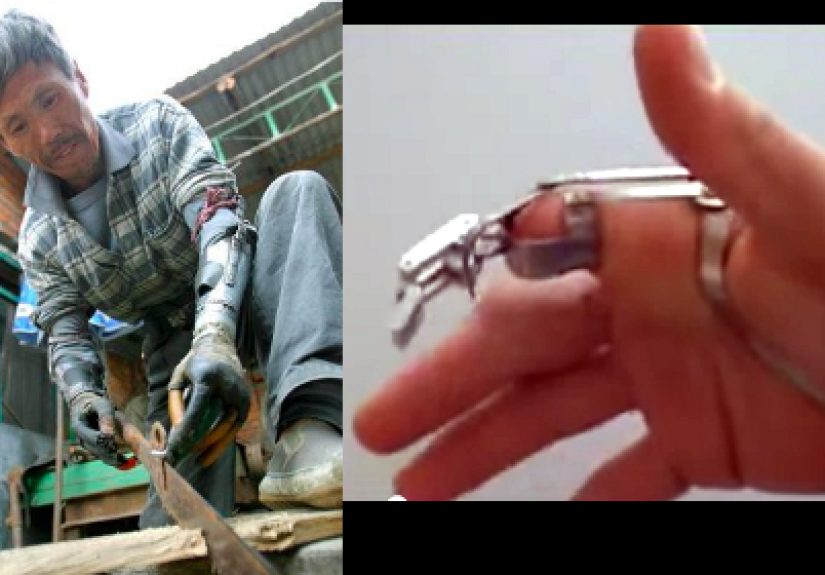
The hacker approach to prosthetics often starts small: replace a single digit, restore a pinch grip,
or create an assistive tool for a specific task. This is exactly what you see in classic maker-prosthetic
projectsmechanical fingers that leverage remaining joints, or customized attachments designed for
one person’s daily life.
The magic isn’t always in advanced electronics. Sometimes it’s in geometry: a linkage that bends
“like a real finger,” a hinge that doesn’t pinch skin, or a strap placement that makes a device feel
secure instead of annoying. In prosthetics, comfort is not a luxury feature. Comfort is uptime.
Robohand, e-NABLE, and the “open hardware” moment
One of the most cited milestones in open prosthetics is the Robohand story: makers collaborating
across continents, using 3D printing and simple hardware to produce functional hand devices and
share designs openly. That spiritpublish, iterate, and help someone else build the next version
became fuel for broader volunteer networks, including communities that match makers with children
and families who need low-cost assistive hands.
It’s also where the hacker tradition shines socially: people who might never meet in person contribute
improvementsstronger joints, easier assembly, better sizing, or a grip shape that works for a school
backpack zipper instead of a lab test object.
3D printing: promise, pitfalls, and the “comfort tax”
3D printing changed the conversation by making rapid customization possible. You can scan, model,
print, adjust, and reprint faster than many traditional workflows allow. But the hype that “3D printing
will make prosthetics dirt cheap” didn’t fully landespecially for devices that must be comfortable,
durable, and safe for long-term wear.
A 3D-printed demo hand can look amazing and still be uncomfortable after 30 minutes. Plastic parts
can pinch. Fit can be “close” but not close enough. And professional-grade sockets and components
involve specialized materials, finishing, and know-how. In other words, 3D printing is a powerful tool,
not a magic wand.
The strongest, most useful impact of 3D printing today may be in precision fit, faster iteration, and
knowledge sharinghelping clinics and designers collaborate more effectivelyrather than instantly
eliminating cost.
Where hacks meet healthcare: the part nobody should skip
Here’s the truth that separates “cool build” from “wearable solution”: prosthetics are worn on the body.
That means the hard problems aren’t just motors and materialsthey’re skin health, pressure distribution,
alignment, and training.
Fit and skin health: the invisible engineering
A prosthetic that’s slightly misaligned can cause pain, irritation, or compensatory movements that stress
the shoulder, neck, and back. Even a “simple” finger prosthesis can change how a person grips, types,
or liftssometimes in ways that take weeks to notice.
This is why the best hacker-prosthetics projects don’t treat clinicians as “the boring gatekeepers.”
They treat prosthetists, occupational therapists, and rehab teams as co-designers who understand the
body’s constraints and the realities of long-term use.
Regulation and safety: not the fun part, but the necessary part
In the U.S., prosthetic components and systems fall under medical device regulation. That doesn’t mean
every hinge needs a dramatic FDA storyline, but it does mean safety, labeling, and quality practices matter,
especially if a device is being commercialized or used clinically.
For hackers, the takeaway is simple: if you’re building for yourself or prototyping, focus on safe materials,
conservative designs, and professional input. If you’re building for others, the bar goes upfast. The moment
a project moves from “personal experiment” to “device intended for medical purposes,” responsibility changes.
The ethics of DIY limbs: empowerment without the savior complex
The hacker tradition can do real good here, but it has to be done with care. A prosthetic is not a gadget you
swap every year because the new model has a better camera. It’s part of someone’s body strategyhow they
move through the world, how they work, how they socialize, how they avoid pain.
Accessibility: building options, not expectations
Some people love advanced hands. Some prefer hooks. Some choose no prosthesis at all. All of those choices
can be valid. The goal isn’t to “fix” a person; it’s to expand options and support autonomy.
The best maker communities learn this quickly: success isn’t “a hand that looks human.” Success is “a device
that helps this specific person do what they want to do”and that can mean holding a bike handle, opening a
lunch container, stabilizing a guitar pick, or just feeling comfortable in public.
Smart prosthetics and privacy: when your hand becomes a data source
As prosthetics become more connectedbetter sensors, smarter control systems, possibly cloud-linked tuning
privacy questions follow. EMG patterns, usage logs, and device settings can be sensitive information. Hackers
can help by pushing for transparent design, offline functionality, and user control over data.
What’s next: better control, better comfort, and maybe some feeling
The frontier isn’t only “more motors.” It’s better interfacesways to make control intuitive, reduce fatigue,
and improve reliability in messy real-world conditions (heat, sweat, motion, and the occasional surprise rainstorm).
Targeted Muscle Reinnervation (TMR): rerouting signals for better control
Targeted Muscle Reinnervation is a surgical technique that transfers residual nerves to new muscle targets,
producing EMG signals that can be measured and used for prosthetic control. In some settings, it has also been
associated with reductions in certain types of pain, which can be a major quality-of-life issue for people with
limb loss.
TMR is not a “hack it at home” topicthis is specialized clinical work. But it’s relevant to the hacker tradition
because it reframes the prosthetic interface: instead of forcing the body to adapt to the device, the body and
device can be designed to communicate more naturally.
Pattern recognition and implantable sensors: making signals more reliable
Researchers and companies are also exploring ways to capture muscle signals more accurately than surface
electrodes canbecause surface sensors can shift, lose contact, and require recalibration. New approaches
include improved pattern recognition training and implantable sensors that aim to deliver a more stable
signal source.
This is a great example of how the “hacker mindset” shows up in research: don’t just optimize the algorithmfix
the input. Better data in means better control out.
Sensory feedback: closing the loop
A major limitation in prosthetics is missing sensation. Some research efforts work on providing users with
feedback about movement or contactso gripping a cup becomes less like guessing and more like sensing.
The long-term vision is closed-loop control: intent goes out, feedback comes back, and the system feels less
like operating a tool and more like using a limb.
How to join the tradition without “playing doctor”
If you’re inspired by hacker prosthetics, there are safe, constructive ways to participate:
- Support open designs responsibly: contribute documentation, durability testing, or ergonomic improvements.
- Collaborate with clinicians: prosthetists and therapists can turn “cool idea” into “wearable reality.”
- Build assistive tools: task-specific attachments and accessibility aids often have lower risk and high impact.
- Volunteer with established networks: many groups coordinate fittings, sizing, and follow-up with families.
- Respect user choice: sometimes the right solution is simpleror no prosthesis at all.
The hacker tradition isn’t about being reckless. It’s about being resourcefuland that includes knowing when
professional support is the most powerful tool in the kit.
Conclusion: the most human kind of hardware upgrade
Replacing a finger or an arm in the hacker tradition is ultimately a story about agency. It’s the refusal to accept
“that’s just how it is,” paired with the wisdom to respect biology, safety, and the realities of everyday life.
The best hacker prosthetics don’t chase perfection. They chase usefulness. They iterate. They document. They
admit when something doesn’t work. And they celebrate the quiet victories: a comfortable fit, a reliable grip,
a kid riding a bike with confidence, a worker returning to a task they love.
In other words, it’s classic hackingjust with higher stakes and a much better reason to test twice and cut once.
Experiences in the hacker tradition (illustrative stories from common real-world patterns)
The stories below are composite, illustrative experiences based on widely reported situations in prosthetics
and maker communities. They’re not medical advice and not claims about a specific person’s private lifejust
realistic snapshots of what “hacker tradition” can look like when it leaves the workbench and enters daily life.
Experience #1: The “one-finger problem” that turned into a whole design philosophy
A hobby machinist loses part of an index finger and quickly discovers the annoying truth: the world is designed
for five working digits. Buttons feel different. Tools feel slippery. Even typing becomes a weird game of “which
finger is supposed to do that?”
The first instinct is a sleek, realistic silicone coveruntil the machinist tries it and realizes that cosmetic
doesn’t mean functional. So the mindset flips: instead of chasing a perfect replica, the goal becomes a
reliable pinch. A small mechanical finger that leverages remaining joint movementsomething that bends in a
predictable waystarts to feel like a victory.
The “hacker moment” isn’t just building the part. It’s realizing the requirements were wrong. The best design
isn’t the one that looks most like a finger; it’s the one that makes daily tasks less frustrating. Once that’s clear,
the improvements come fast: a grippier surface, a shape that doesn’t snag, a hinge that doesn’t pinch, and a
strap that stays put without feeling like a medieval punishment device.
Experience #2: The kid who outgrew a prosthesis faster than the printer could finish
A parent hears about volunteer maker networks creating low-cost, colorful hand devices for kids. The pitch is
simple and hopeful: something lightweight, customized, and easier to replace as a child grows.
What the parent doesn’t expect is how much of the experience is emotional rather than technical. The first
“hand” isn’t a miracleit’s a starting point. The kid tries it, laughs at how it looks like a superhero gadget,
then immediately finds the weak spot: the grip works great on a foam ball, but the backpack zipper is the real
boss fight.
So the makers iterate. They tweak the grip shape. They smooth a rough edge. They redesign a small joint that
cracked under playground stress. And the most meaningful “feature” ends up being community: someone answers
messages at 11 p.m., someone else shares a stronger part design, and a third person explains a sizing trick that
prevents rubbing.
The end result isn’t “a perfect prosthetic hand.” It’s something better: a child who feels supported, a parent
who feels less alone, and a device that’s good enough to help with a few daily tasks while everyone learns what
the next version should become.
Experience #3: The veteran who tried “high-tech” and chose “works every day”
A veteran is offered multiple prosthetic options and expects the fanciest, most powered device to be the obvious
winner. After all, why wouldn’t you choose the model that looks the most like a human hand and promises
multiple grasp patterns?
Then reality shows up. The powered hand can be strong, but it’s heavier. The socket fit has to be just right.
Sweat affects electrode contact. Maintenance is real. Some days it’s excellent. Other days it feels like a brilliant
prototype that forgot it’s supposed to help carry groceries.
Meanwhile, a simpler body-powered setupless glamorous, more mechanicaldelivers something priceless:
predictability. It responds quickly. It’s easier to service. The user can “feel” a bit through cable tension and
learns to trust it.
The hacker lesson here is deeply unsexy and deeply true: uptime matters. A device that works 90% of the time
in a lab can lose to a device that works 99% of the time in the real world. The “best” prosthesis is not the one
with the most techit’s the one the user actually wants to wear.







 Close
Close