
Table of Contents >> Show >> Hide
- Why a Dartboard Makes a Surprisingly Great Clock Face
- Plan First: The Three Decisions That Make This Project Easy
- Tools and Materials
- Step-by-Step: How to Make a Repurposed Dart Board Clock
- Design Ideas That Look Intentional (Not Like a Craft Emergency)
- How to Hang a Dartboard Clock Safely
- Troubleshooting (Because Every DIY Has a Plot Twist)
- Maintenance and Safety Tips
- Conclusion: A Clock With a Backstory
- of Experiences Related to a Repurposed Dart Board Clock
You know that old dartboard in the garagethe one that’s seen a thousand “bullseyes” (and at least three
accidental drywall confessions)? Instead of letting it keep collecting dust, you can turn it into a
repurposed dart board clock that looks like it belongs in a cozy pub, a game room, or a
“my house has personality” living room.
The best part: a dartboard already has what most clocks pay good money to fakebold graphics, built-in
contrast, and an instantly recognizable vibe. With the right clock movement and a smart plan for mounting,
you’ll end up with a statement piece that’s equal parts functional and “Wait… that used to be a dartboard?”
Why a Dartboard Makes a Surprisingly Great Clock Face
A regulation dartboard is roughly 17.75 inches across, which lands in the sweet spot for a
wall clock: big enough to read from across the room, not so huge it starts negotiating rent. Many boards are
also fairly thick and sturdy, which helps them feel substantial on the wall rather than flimsy and “dollar
store adjacent.”
Visually, the segmented rings and high-contrast colors do a lot of work for you. Even if you keep the original
number ring, the design still reads “clock-ish” at a glance because it’s circular, centered, and organized.
And if you’re the kind of person who enjoys a quirky detail, the fact that the dartboard numbers don’t match
1–12 is a featurenot a bug. (It’s like your clock has a sense of humor. Or a past.)
Plan First: The Three Decisions That Make This Project Easy
1) Pick the Right Dartboard to Repurpose
Most people are working with one of these:
-
Bristle/sisal boards: Dense, durable, and “self-healing” (the fibers close up after darts
are pulled). Great for an authentic look, but tougher to drill cleanly. - Paper or coiled boards: Lighter and easier to modify, but often look more worn and can shed.
-
Plastic/soft-tip boards: Easiest to drill and clean, but the look is more modern and less
“pub classic.”
If your board is ancient and shedding like a stressed-out winter coat, consider sealing the face lightly (or
framing it) rather than fighting the crumble. You’re making a clock, not a dust generator.
2) Choose a Clock Movement That Actually Fits
Clock movements are picky about two things: shaft length (how much thickness it can pass through)
and torque (how heavy/long the hands can be).
-
Shaft length: Measure the total thickness where the movement will mount (dartboard + any backing
board). Choose a movement with a threaded shaft long enough to clear that thickness and tighten with the nut. -
Torque: If you’re using longer hands (especially on a ~18″ face), look for a high-torque movement
so the hands don’t stall.
Here’s the reality check: many dartboards are thicker than typical “clock dial” projects. The simplest workaround is
to mount the movement through a thinner center section by creating a recess on the back, or by using a
separate backer board that the movement mounts through (instead of trying to pass the shaft through the full dartboard thickness).
3) Decide Your Style: “Classic Pub” or “Art Piece With a Wink”
Your clock can go a few different directions:
- Keep the dartboard look (original ring and numbers) for game-room authenticity.
- Overlay real clock numerals (1–12) for easier reading.
- Minimal markers (tacks, brass nails, small dots) for a cleaner, modern clock.
- Theme it for a home bar: add a small plaque, a bottle-opener, or a chalkboard label underneath.
Tools and Materials
You don’t need a full workshop. You just need the right basics:
- Old dartboard (cleaned and dry)
- Quartz clock movement kit (ideally high-torque if using larger hands)
- Clock hands (sized for the dartboard diameter)
- Drill + bits (a 3/8″ hole is common for many movementsverify your kit)
- Painter’s tape, ruler/tape measure, pencil
- Optional: Forstner bit or hole saw (for a clean recess), sandpaper
- Mounting hardware (D-rings, French cleat, or heavy-duty wall hanger)
- Level
Step-by-Step: How to Make a Repurposed Dart Board Clock
Step 1: Clean and Prep the Board
Give the face a gentle brush to remove dust and loose fibers. If your board has a removable number ring, pop it off
and clean underneath. If it’s grimy, a slightly damp cloth can helpjust don’t soak it. Let it dry fully before drilling.
Step 2: Find the True Center (Don’t “Eyeball It” Like It’s a Pizza)
Many dartboards have a clear bullseye center point, but you still want to mark it precisely. A simple method:
measure the diameter, divide by two, and confirm the center by measuring across multiple directions. Use painter’s tape
on the face to mark where you’ll drilltape helps reduce chipping and gives you a clean writing surface.
Step 3: Create the Mounting Path for the Movement
This is the part that separates a smooth DIY win from an afternoon of “why won’t this nut catch the threads?”
Option A (Most common): Drill a center hole and recess the back.
- Drill the center hole for the movement shaft (many kits use around 3/8″, but confirm your movement’s specs).
-
Flip the board over. Use a Forstner bit or hole saw to make a shallow recess so the movement body can sit closer to the face.
This reduces the “effective thickness” the shaft must pass through. - Test-fit often. You want the movement secure, not rattling around like spare change in a cup holder.
Option B (Beginner-friendly): Use a backer board.
Mount the dartboard onto a plywood backer first. Then cut/drill the backer so the movement mounts through the backer,
not through the full dartboard thickness. You’ll still align the movement shaft to the dartboard’s center hole, but the
backer does the structural job and gives you more flexibility.
Step 4: Install the Movement
Insert the movement from the back, push the threaded shaft through to the front, add the washer, then tighten the nut.
Don’t crank it down like you’re tightening lug nutssnug is enough.
Step 5: Add the Hands (The “Don’t Touch Each Other” Rule)
Install the hour hand first, then the minute hand, then the second hand (if your kit includes one). Before you celebrate,
manually rotate the hands a full 12 hours to ensure they don’t scrape the face or each other. If they rub, gently bend them
so they sit on different planes.
Step 6: Choose Your “12 o’clock” Moment
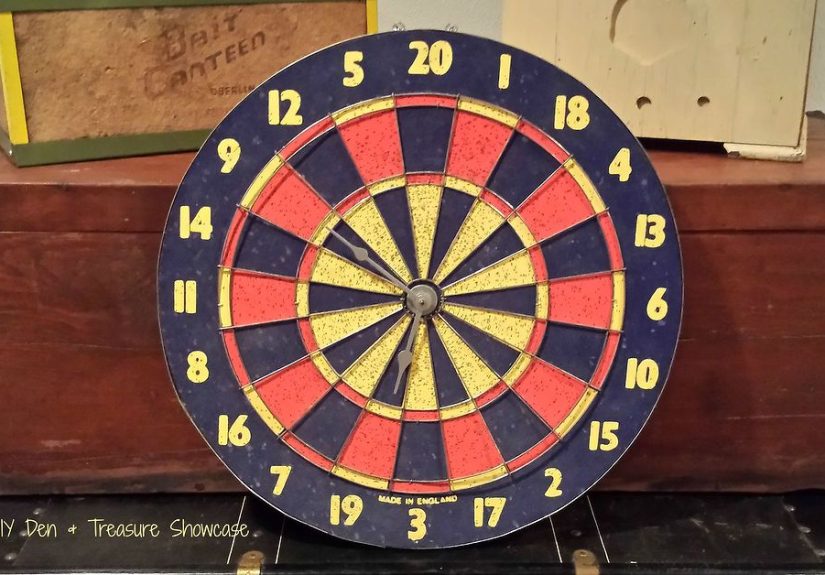
A dartboard’s top number is usually 20, not 12. You have choices:
- Embrace the dartboard logic: Make “20” the top. It’s a conversation starter and still works as a clock once you’re used to it.
- Overlay 12–3–6–9 markers: Add small dots or tacks at quarter positions so reading time is quicker.
- Replace or cover the ring: Create a simple ring overlay with 1–12. (Bonus: looks more “real clock,” less “game night.”)
Design Ideas That Look Intentional (Not Like a Craft Emergency)
1) The “Home Bar MVP”
Add a small plaque underneath: “Last Call,” “Cheers,” or your family name. Pair it with warm lighting and a bottle shelf.
2) The Minimalist Bullseye
Remove the number ring, keep the face clean, and use thin hands in matte black. It becomes modern wall art with a wink.
3) The Trophy Wall Clock
Mount the dartboard clock on a stained wood backer, add two small hooks below for keys, and you’ve got function + style in an entryway.
4) The “No Sharp Things” Version
Want the look without risk? Use faux darts (blunted) or paint small “dart” markers instead of sticking real darts into the board.
Great for family spaces.
5) The Vintage Pub Face
Lightly distress the ring, add brass fasteners at the hour points, and use hands with a classic spade or cathedral shape.
How to Hang a Dartboard Clock Safely
A dartboard clock can be heavier than a typical wall clock, especially if it’s a bristle board. That means your hanging method matters.
(Gravity is patient. It will wait until 2:00 a.m.)
Best mounting options
- Into a stud: The most secure option. If you can hit a stud, do it.
- French cleat: A fantastic solution for heavier pieces because it spreads the load and keeps the clock flush and stable.
- Heavy-duty anchors: Works when studs aren’t available, but use anchors rated well above your clock’s weight.
Hang it at a height that makes sense
Many designers use the “eye-level” rule for wall piecesaround the mid-to-high 50s inches to the center point on an open wall. For a clock,
place it where it’s readable and balanced in the room (often similar to that eye-level guideline), then adjust for furniture beneath it.
Also: skip adhesive hooks for something with real weight. This isn’t a paper calendar. It’s a dense circle of “I used to be a sport.”
Troubleshooting (Because Every DIY Has a Plot Twist)
The hands get stuck or stop moving
- Make sure the hands aren’t rubbing each other or the face.
- Consider a higher-torque movement if the hands are long/heavy.
- Confirm the movement nut is snug and the hands are fully seated.
The clock sits crooked
- Use two-point hanging (two hooks or a cleat) to reduce twisting.
- Check that the mounting hardware is level before hanging the clock.
The center hole looks rough
- Use a backing scrap when drilling to reduce tear-out.
- Touch up the edge with a thin trim ring, washer, or painted detail around the hands.
Maintenance and Safety Tips
- Dust occasionally with a soft brush so fibers don’t build up around the hands.
- If the movement is ticking loudly, consider a “silent sweep” movement option.
- If you use real darts as decor, keep them high and securesharp objects shouldn’t be at kid-height (or clumsy-adult-height).
Conclusion: A Clock With a Backstory
A repurposed dart board clock is one of those rare DIY projects that feels both practical and genuinely cool.
It keeps a familiar object out of the trash, upgrades your wall decor, and gives your space a little personalitywithout screaming,
“I watched one craft video and now I own 47 glue guns.”
The keys to success are simple: choose a movement that fits your thickness, use hands that won’t strain the mechanism, and mount the finished
clock like you respect gravity. Do that, and you’ll have a timepiece that doesn’t just tell timeit tells a story.
of Experiences Related to a Repurposed Dart Board Clock
People who build a dartboard wall clock often say the most surprising part isn’t the drilling or the assemblyit’s how quickly the piece becomes
a “house landmark.” Friends walk in, spot it immediately, and you get the same three reactions: a laugh, a closer inspection, and the inevitable,
“Wait… does it actually work?” (It does. That’s the flex.)
One common experience is realizing that center alignment is everything. Even a tiny off-center hole can make the hands look like they’re
wobbling as they sweep around the board. The fix is usually simple: measure twice, mark carefully, and test-fit the movement before tightening
anything. DIYers who take a couple extra minutes here tend to have a clock that looks crisp instead of “slightly seasick.”
Another frequent lesson: dartboards are thicker than you think. The first time someone tries to mount a standard quartz movement straight through
the board, they often discover the shaft doesn’t reach far enoughor the nut barely catches the threads. That’s why so many successful builds
use a back recess or a backer board. Once you create that thinner “mounting zone,” the installation becomes straightforward and the clock sits
closer to the wall, which makes it look more intentional.
People also talk about the “hand selection moment.” Long, dramatic hands look amazing on an 18-inch face, but they can be heavyand if the movement
isn’t strong enough, the hands may lag or stop. Builders who swap to a high-torque movement (or choose lighter hands) usually report that the clock
becomes more reliable and needs fewer “why are you stuck at 3:17?” interventions.
Style-wise, the experience tends to split into two camps. Some love keeping the original dartboard number ring because it feels authentic and
sparks conversation. Others prefer adding subtle 12–3–6–9 markers so telling time is faster. Both groups agree on one thing: you get used to reading it.
After a few days, your brain starts treating the dartboard layout like a familiar mapespecially if you’ve added clear quarter-hour reference points.
Finally, there’s the day-to-day lived experience of having it on the wall. A dartboard clock makes a room feel warmer and more personal, especially
in a bar nook, game room, or den. Owners often mention it becomes a “story object”something that reminds them of game nights, family gatherings, or
that one friend who insists they can hit bullseye after “just one more round.” And honestly, that’s the charm: your clock isn’t just counting minutes.
It’s keeping a little piece of fun on the wall, permanently on display.




 Close
Close