
Table of Contents >> Show >> Hide
- The Short Version: Russia’s Carrier Problem in One Ship
- Why the Admiral Kuznetsov Matters
- A Brief History of the Admiral Kuznetsov
- The Syria Deployment and the Start of the Repair Saga
- The 2018 Dry Dock Disaster
- The 2019 Fire and the 2022 Fire
- Why the “Before 2024” Delay Was So Important
- What Was Russia Trying to Upgrade?
- Russia’s Industrial Challenge
- Could the Admiral Kuznetsov Still Return?
- What the Delay Says About Russian Naval Strategy
- Why Scrapping the Carrier Might Make Sense
- Why Keeping It Also Makes SenseAt Least Politically
- The Experience Lesson: What the Kuznetsov Teaches About Big Machines
- Conclusion: A Carrier Stuck Between Symbol and Scrap
Russia’s only aircraft carrier, the Admiral Kuznetsov, has spent so much time under repair that its comeback story now feels less like a naval milestone and more like a long-running sitcom with a very expensive set. Once meant to symbolize Moscow’s blue-water ambitions, the ship has instead become famous for delay after delay, dockyard mishaps, onboard fires, and that unmistakable trail of black smoke that made it look as if the Industrial Revolution had decided to join a carrier strike group.
The headline “Russia’s sole aircraft carrier won’t return to sea before 2024” originally captured a specific repair delay. But with hindsight, it also captured something bigger: the slow-motion unraveling of Russia’s carrier aviation dream. The Admiral Kuznetsov was not merely late; it became a floating case study in what happens when aging Soviet hardware, limited industrial capacity, costly modernization, and wartime priorities all collide in the same shipyard.
This article explains why the Admiral Kuznetsov repair delay mattered, what went wrong, why the ship is so difficult to restore, and what its uncertain future says about the Russian Navy’s place in modern naval power.
The Short Version: Russia’s Carrier Problem in One Ship
The Admiral Kuznetsov is Russia’s only aircraft carrier, although Russia officially calls it a “heavy aircraft-carrying cruiser.” That wording is not just patriotic poetry. It reflects the ship’s unusual design: part carrier, part missile cruiser, part Soviet-era compromise. Unlike U.S. nuclear-powered supercarriers that are built around sustained air operations, the Kuznetsov was designed to carry fighters while also packing heavy anti-ship missiles.
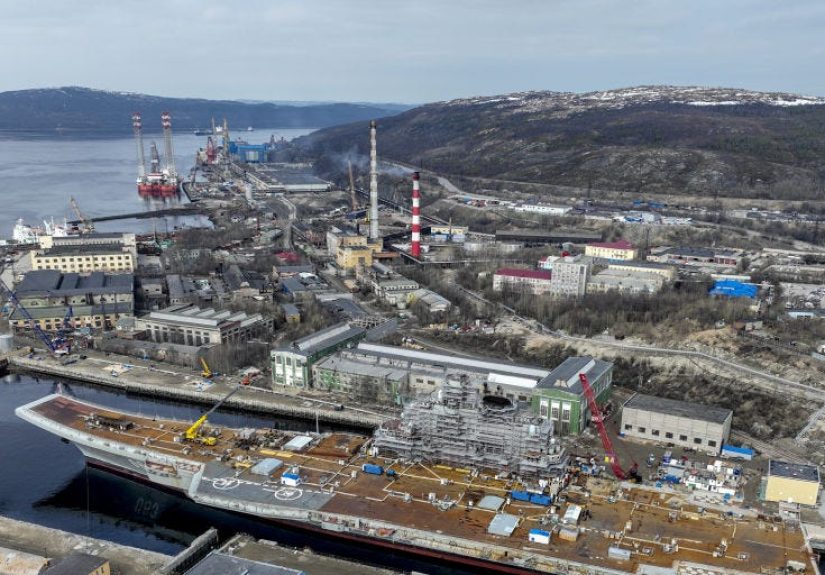
On paper, that makes the ship sound intimidating. In practice, it has struggled to meet the basic requirement of a carrier: being available at sea when needed. The vessel entered a major overhaul after its deployment off Syria in 2016 and 2017. It was expected to return after repairs and upgrades, but the timeline kept sliding. By 2022, reports said the carrier would not be delivered back to the Russian Navy before 2024. Later reports suggested sea trials might begin in 2024, with delivery possible at the end of that year if nothing else went wrong. That “if” was doing Olympic-level heavy lifting.
Why the Admiral Kuznetsov Matters
Aircraft carriers are not just ships. They are floating statements of ambition. A country with a functioning carrier can project air power far from home, support overseas operations, and signal that it wants a seat at the grown-up table of global naval influence. The United States has built an entire maritime strategy around carrier strike groups. China is rapidly developing its carrier fleet. Britain, France, and India maintain carrier programs because the symbolism and capability still matter.
For Russia, the Admiral Kuznetsov aircraft carrier served a similar symbolic role. It was proof that Moscow had not completely lost its Soviet-era naval reach. Even when the ship was aging and mechanically temperamental, it allowed Russia to claim a place among the few powers that could deploy fixed-wing aircraft from a sea-based platform.
That is why its repair saga has received so much attention. When a nation’s only carrier cannot go to sea for years, the problem is not just mechanical. It becomes strategic. It raises uncomfortable questions: Can Russia sustain carrier aviation? Does it have the shipbuilding infrastructure to maintain such a vessel? Are resources better spent on submarines, missiles, drones, or smaller warships? And perhaps most awkwardly, is the carrier still an assetor has it become a very large, very smoky liability?
A Brief History of the Admiral Kuznetsov
The Admiral Kuznetsov was launched in 1985 during the final years of the Soviet Union. It was built at the Black Sea shipyard in what is now Ukraine, a detail that became historically awkward after the Soviet collapse. The carrier eventually entered Russian service and became the flagship of the Russian Navy.
The ship is roughly 1,000 feet long and has a full-load displacement of around 55,000 to 58,000 tons, depending on configuration and source. It uses a ski-jump flight deck rather than steam or electromagnetic catapults. Aircraft accelerate up the ramp and launch under their own power. This design is simpler than catapult-assisted launch systems, but it limits aircraft payload and fuel flexibility.
Its typical air wing has included Su-33 fighters, MiG-29K fighters, and helicopters for anti-submarine, search-and-rescue, and support roles. The ship also carried heavy anti-ship missile systems, which is one reason Russia classified it as a cruiser rather than simply an aircraft carrier.
Not Your Average Carrier
Compared with American carriers, the Kuznetsov is a different animal. U.S. Navy carriers are nuclear-powered, built for high-tempo flight operations, and supported by large escort and logistics networks. The Kuznetsov is conventionally powered and has long been associated with unreliable boilers, thick smoke, and the need for tug support during some deployments. In plain English: if U.S. carriers are floating airports, the Kuznetsov sometimes behaved like a floating airport that brought its own roadside assistance.
That does not mean the ship was useless. It gave Russian naval aviators a platform to train from and provided Moscow with a visible instrument of power projection. But it never matched the reliability, sortie generation, or global support infrastructure of Western carrier forces.
The Syria Deployment and the Start of the Repair Saga
The Kuznetsov’s most famous modern deployment came during Russia’s military operation in Syria. The carrier sailed to the eastern Mediterranean in 2016, attracting international attention as it passed through European waters trailing heavy smoke. The deployment was meant to demonstrate reach and relevance, but it also exposed problems.
During that mission, Russia lost aircraft in separate incidents connected to carrier operations. The air wing was later reported to have operated from land bases instead of relying solely on the ship. For a carrier, that is not exactly the kind of review you want. It is like opening a restaurant and then telling guests the kitchen works better across the street.
After returning from the Syria mission, the ship entered a major repair and modernization program. The work was supposed to refresh key systems, improve reliability, and extend service life. Instead, the repair period turned into a long list of setbacks.
The 2018 Dry Dock Disaster
One of the biggest blows came in 2018, when the PD-50 floating dry dock sank while the Kuznetsov was undergoing work. This was not a minor inconvenience. Large dry docks are essential for servicing massive warships, and Russia had limited infrastructure capable of handling a vessel of this size.
During the accident, a crane crashed onto the carrier’s flight deck, damaging the ship and adding yet another repair burden. The dry dock itself was a major asset, and its loss complicated the entire modernization project. The carrier was already a difficult patient; now the hospital had partly collapsed around it.
The 2019 Fire and the 2022 Fire
As if the dry dock accident were not enough, a major fire broke out aboard the ship in December 2019 during repair work. The blaze caused casualties, injuries, and additional damage. Fire aboard a ship is always dangerous, but fire aboard a carrier under repair is especially troubling because overhaul work often involves exposed systems, temporary cabling, fuel residues, welding, and partially dismantled compartments.
Then, in December 2022, the Kuznetsov suffered another fire while still in the repair process. That incident was reportedly brought under control, but it reinforced the ship’s reputation as a magnet for bad news. By this point, the carrier had become less a symbol of naval revival and more a symbol of industrial frustration.
Why the “Before 2024” Delay Was So Important
The reported delay pushing the carrier’s return to 2024 mattered because it showed that the repair program was not merely behind schedule; it was repeatedly discovering new problems. In complex military ship overhauls, especially on older vessels, one repair often uncovers three more. Rust, wiring issues, outdated equipment, worn machinery, and hidden structural damage all tend to appear once workers open up the ship.
That appears to have been the story with the Admiral Kuznetsov. Russian sources cited defects found during the upgrade process. The ship had already missed earlier expectations, and each new delay made the project harder to justify.
There is a brutal logic to old warship repair: the longer a ship sits idle, the more expensive it becomes to return it to service. Systems age. Skilled crew members move on. Supplier networks change. Replacement parts become harder to source. And at some point, the repair budget starts looking less like maintenance and more like an argument for building something new.
What Was Russia Trying to Upgrade?
The modernization program reportedly focused on major technical areas: power systems, flight deck equipment, electronics, aviation support systems, and shipboard infrastructure. The goal was not to transform the Kuznetsov into a U.S.-style supercarrier. That was never realistic. The aim was to make it seaworthy, useful, and able to support Russian naval aviation for years longer.
But upgrading an old carrier is not like installing a new phone app. You cannot tap “update,” restart twice, and enjoy smoother performance. A carrier is an entire industrial city at sea. It has propulsion, aviation fuel systems, magazines, hangars, elevators, radars, crew spaces, firefighting systems, power distribution, navigation systems, and flight operations equipment. When one major area is old, the surrounding systems often are too.
The Problem With One-of-a-Kind Ships
The Kuznetsov is also a one-of-a-kind problem for Russia because it has no sister ship in active Russian service. That matters. Navies learn efficiency by maintaining classes of ships. Spare parts, training programs, repair procedures, and crew experience all improve when multiple vessels share common systems.
With one aging carrier, every repair becomes more specialized. Every lesson applies to one ship. Every investment must be justified against a single hull. That makes the economics painful.
Russia’s Industrial Challenge
The carrier’s troubles also highlight Russia’s broader shipbuilding constraints. Russia remains strong in submarines, missiles, coastal defense, and certain classes of smaller warships. But large surface combatants are a different challenge. Building and maintaining major surface ships requires enormous dry docks, specialized cranes, precision manufacturing, trained workers, reliable suppliers, and consistent funding.
The loss of the PD-50 dry dock was especially damaging because it exposed how narrow Russia’s margin was for servicing its biggest ships. If a country has several large carrier-capable dry docks, one accident is a setback. If it has very few, the same accident becomes a strategic bottleneck.
Sanctions, budget pressures, and the demands of the war in Ukraine have only made these challenges more severe. Even if the Russian Navy wanted the Kuznetsov back badly, the state still had to decide whether the money, workers, and shipyard time were worth it.
Could the Admiral Kuznetsov Still Return?
By 2023, reports suggested factory sea trials could begin in 2024 and that handover to the fleet might happen by the end of 2024 if testing went smoothly. But the phrase “if testing went smoothly” is doing a lot of work, especially for a ship with the Kuznetsov’s record.
Later reporting became even less optimistic. By 2025, public reports indicated that the ship’s repair program had been suspended and that Russia was weighing whether to sell, scrap, or otherwise abandon the vessel. While official Russian messaging can be opaque, the overall trend is clear: the Kuznetsov has not returned to meaningful operational service, and confidence in its future has weakened dramatically.
At this point, the ship’s fate appears to depend on more than engineering. It depends on politics, prestige, budget priorities, and whether Russia believes traditional carrier aviation remains worth preserving.
What the Delay Says About Russian Naval Strategy
The Kuznetsov’s problems do not mean the Russian Navy is powerless. Russia still fields nuclear submarines, cruise missiles, naval aviation, coastal missile systems, and capable regional forces. But the carrier’s absence reveals a gap in global power projection.
Without a working aircraft carrier, Russia cannot conduct carrier aviation in the way the United States, China, France, Britain, or India can. It cannot easily train new generations of carrier pilots. It cannot maintain the same rhythm of deck operations. It cannot credibly deploy a carrier group to distant waters as a regular tool of statecraft.
That matters because naval power is partly about habits. Crews, pilots, engineers, and commanders must practice constantly. Carrier aviation is one of the most complex military skills in the world. If the platform sits idle for years, the human ecosystem around it also fades.
Why Scrapping the Carrier Might Make Sense
For all the symbolism attached to the Kuznetsov, scrapping it could be a rational decision. The ship is old, expensive, and difficult to maintain. Russia has other military priorities. The war in Ukraine has consumed enormous resources. Modern naval warfare is increasingly shaped by long-range missiles, drones, submarines, electronic warfare, and distributed sensors.
A single unreliable carrier may not provide enough value to justify its cost. Worse, if restored only partially, it could become a prestige platform that drains money without offering dependable capability. Navies love tradition, but tradition does not patch boilers, rebuild dry docks, or train pilots by magic.
That said, retiring the ship would carry a symbolic cost. Russia would lose its only carrier and with it a visible marker of great-power naval status. For a country that cares deeply about military prestige, that is not a small thing.
Why Keeping It Also Makes SenseAt Least Politically
The argument for keeping the Kuznetsov is not purely military. It is also political and institutional. As long as the carrier exists, Russia can claim to have carrier aviation. It can preserve some training pipeline. It can maintain the idea of future carrier operations, even if the present reality is parked in Murmansk with repair crews sighing heavily.
There is also the issue of sunk cost. Russia has already spent years and significant funds trying to modernize the ship. Governments often hesitate to abandon expensive projects because doing so admits that previous investments may not pay off. This is the classic “we’ve come too far to stop now” trap, also known as the reason many people finish terrible movies.
The Experience Lesson: What the Kuznetsov Teaches About Big Machines
There is a practical lesson in the Kuznetsov story that goes beyond Russia, aircraft carriers, or naval strategy. Big machines do not forgive neglect. Whether it is a warship, a factory, a bridge, or even a family car that makes a suspicious clunking noise every Tuesday, maintenance delayed is rarely maintenance avoided. It usually becomes maintenance with interest.
Anyone who has worked around complex systems knows this feeling. A small repair is postponed because the schedule is busy. Then another issue appears. Then the part is unavailable. Then the person who knows the system best retires, changes jobs, or is reassigned. Suddenly, what began as a manageable fix becomes a full restoration project involving spreadsheets, bad coffee, and people saying “we should have handled this earlier.”
The Kuznetsov is that experience at national scale. Its story shows how hardware, people, facilities, and budgets are tied together. You cannot keep a carrier ready with patriotic speeches. You need dry docks, skilled welders, aviation crews, spare parts, safety culture, and steady funding. You need boring competence. In engineering, boring is beautiful. Boring means the pump works, the fire system functions, the dock does not sink, and the ship leaves port without becoming a meme.
Experience From Watching Repair Projects Go Wrong
Many long repair projects fail because leaders underestimate hidden damage. A ship may look solid from the outside, but internal systems tell the real story. Corrosion hides behind panels. Old wiring waits in dark spaces. Pipes that worked yesterday become tomorrow’s emergency. When inspectors finally open everything up, the project changes from “upgrade” to “rescue mission.”
That pattern is familiar in homes, cars, factories, and ships. A homeowner opens a wall to replace a pipe and discovers mold. A mechanic replaces a belt and finds a failing pump. A company updates one software system and uncovers a dependency chain held together by hope and duct tape. The Kuznetsov’s repair saga feels dramatic because the object is huge, but the logic is ordinary: old systems reveal their secrets slowly and expensively.
Prestige Can Be Expensive
The carrier also teaches a lesson about prestige projects. Prestige can motivate nations to build impressive things, but it can also trap them into maintaining symbols long after their practical value becomes questionable. A carrier looks powerful. It photographs well. It appears on posters. It makes officials sound serious. But if it cannot deploy reliably, the image starts working against itself.
In that sense, the Kuznetsov is a warning about confusing possession with capability. Owning a carrier is not the same as operating one. Having a flight deck is not the same as sustaining carrier aviation. Keeping a ship in the fleet list is not the same as having a ready naval asset.
The same lesson applies in business and technology. Buying an expensive tool does not create expertise. Launching a platform does not guarantee users. Owning equipment does not replace maintenance. The hard part is not the announcement; it is the daily grind that follows.
The Human Side of an Idle Carrier
There is also a human dimension. Ships are not just steel. They are communities of sailors, pilots, engineers, mechanics, cooks, officers, and technicians. When a ship sits idle for years, those people lose training opportunities. Some transfer elsewhere. Some leave the service. Some are reassigned to roles far from their original specialty.
Carrier aviation depends on repetition. Pilots need deck practice. Crews need launch and recovery routines. Engineers need familiarity with living machinery. If the platform is unavailable, the skill base slowly thins. Restarting that culture is harder than restarting an engine.
This is why the Kuznetsov’s delay mattered so much. The damage was not only to a ship’s schedule. It affected an entire ecosystem of naval aviation. Every missed year made return harder.
Conclusion: A Carrier Stuck Between Symbol and Scrap
The story of Russia’s sole aircraft carrier is not simply about a ship being late. It is about the difficulty of preserving great-power symbols when the industrial, financial, and military environment changes around them. The Admiral Kuznetsov was once meant to show that Russia could operate a serious carrier force. Instead, its long repair saga has revealed the limits of maintaining a unique, aging, accident-prone vessel under pressure.
The original report that the carrier would not return to sea before 2024 now looks almost optimistic. Years of repair problems, fires, dockyard setbacks, and shifting priorities have pushed the ship’s future into uncertainty. Whether it is eventually restored, mothballed, sold, or scrapped, the Kuznetsov has already become one of the most fascinating naval cautionary tales of the modern era.
For Russia, the question is no longer only “When will the carrier return?” It is “What is the carrier still for?” Until that question has a convincing answer, the Admiral Kuznetsov will remain what it has been for years: a massive symbol tied to the pier, carrying more history than aircraft.







 Close
Close