
Table of Contents >> Show >> Hide
- The Rise of Starlink: A Space Internet Explosion
- Why Are Satellites Falling Back to Earth?
- The Daily Descent: How Often Satellites Burn Up
- The Visual Spectacle and Public Reaction
- Environmental and Scientific Concerns
- Should We Be Worried?
- A Fun (and Strange) Cosmic Reality
- My Personal Take: A Space Observer’s Perspective
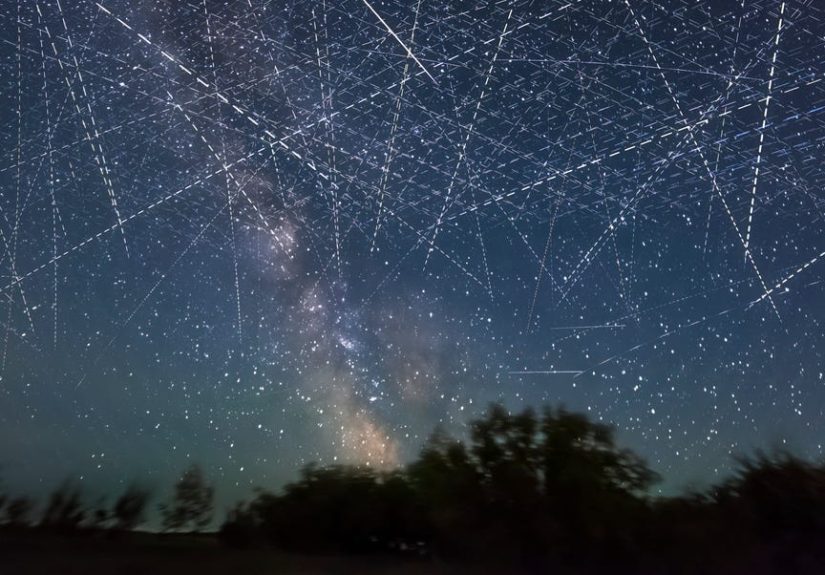
Look upreally look upat the night sky. Those streaks of glowing light zipping across the stars aren’t falling stars or supernatural omens. They’re decommissioned satellites from SpaceX’s megaconstellation, Starlink, burning up in Earth’s atmosphere as part of a routine cosmic cleanup. But what’s really going on when we say “SpaceX’s satellites are falling from the sky every single day”? Buckle up, because the truth is stranger (and more fascinating) than a sci‑fi plot.
The Rise of Starlink: A Space Internet Explosion
A few years ago, SpaceX set out to blanket the Earth with internet coverage via thousands of small satellites orbiting in low Earth orbit (LEO). The idea was simple: global Wi‑Fi, beamed down from space, reaching even the most remote corners of the globe. Fast‑forward to today, and that vision has exploded into realitywith more than 10,000 Starlink satellites launched into orbit and plans for tens of thousands more.
This rapid deployment has shifted the landscape of space traffic. With so many satellites buzzing around our planet, natural orbital decay and routine retirement have turned what used to be rare events into routine occurrences.
Why Are Satellites Falling Back to Earth?
Every satellite has a lifespan. For Starlink, that’s typically around five to six years. Once a satellite nears the end of its useful life, engineers at SpaceX deorbit itmeaning they lower its orbit so it reenters Earth’s atmosphere and disintegrates in a fiery descent. Most of the time, these satellites burn up completely, turning into harmless vapor before they ever reach the ground.
There’s also a natural process called orbital decay, where atmospheric drageven at extremely high altitudesslowly pulls satellites downward over time. This drag is especially noticeable during periods of heightened solar activity, when the upper atmosphere expands and increases resistance on orbiting objects.
The Daily Descent: How Often Satellites Burn Up
If you’ve heard the dramatic claim “SpaceX satellites are falling every single day,” here’s what that really means: According to data compiled by space trackers and astronomers such as Harvard–Smithsonian astrophysicist Jonathan McDowell, an average of one to two Starlink satellites reenter the atmosphere daily. Some analyses even suggest this could rise to three to four per day as the constellation continues to expand.
That might sound like an alarming number at first, but context matters. The vast majority of these satellites are designed to break apart and vaporize completely upon reentry. Very littlealmost nothingreaches Earth’s surface. And even during peak deorbiting periods, the rate is still just a tiny portion of the total space debris overhead.
The Visual Spectacle and Public Reaction
If you live in the Northern Hemisphere and have ever seen bright streaks cross the sky, you might have thought you were witnessing a meteor shower. But sometimesjust sometimesyou were watching a Starlink satellite’s final farewell. These fiery reentries can look like miniature shooting stars, enchanting skywatchers and delighting social media stargazers.
Of course, not everyone finds this as enchanting. Astronomers and environmentalists have raised questions about how these reentriesand the underlying rapid growth of satellite constellationsimpact both scientific observations and the Earth’s atmosphere.
Environmental and Scientific Concerns
When a satellite burns up, it doesn’t vanish without a trace. The materials that compose itmetals like aluminum and components of solar panelsturn into gas and fine particles at extreme heat. Some scientists worry these materials could interact with the upper atmosphere in ways that aren’t yet fully understood, particularly regarding ozone chemistry and atmospheric composition.
For example, aluminum oxidethe residue from many burned satellitescan influence the way the upper atmosphere absorbs and reflects sunlight. While experts argue that current levels are small relative to natural atmospheric processes, the rapid increase in reentries from megaconstellations like Starlink is raising eyebrows.
There’s also the broader challenge of space sustainability. More satellites mean more risk of orbital collisions and space debris accumulationknown in space science circles as Kessler syndrome. This hypothetical cascade effect could make certain orbits unusable due to debris collisions, posing a long‑term risk for satellites and spacecraft.
Starlink’s Design and Safety Features
Thankfully, SpaceX has intentionally designed Starlink satellites with reentry safety in mind. Most are built to burn up fully without leaving large fragments behind, and controlled deorbiting maneuvers help ensure predictable reentry paths. Moreover, catastrophic uncontrolled reentrieswhere large parts could reach the surfaceare extremely rare.
SpaceX has also adapted its satellite altitudes to reduce decay time and enhance safety. By lowering operational orbits on many satellites, the company helps ensure that dead satellites reenter more quickly and quietly.
Should We Be Worried?
If your first thought upon hearing “satellites are falling from the sky every day” was “run for cover,” rest assured: the risk to humans is incredibly small. Most satellites completely disintegrate long before they get near the ground. In fact, no known incidents exist of a Starlink satellite causing harm or damage on Earthand given their design, that’s unlikely to change.
However, this phenomenon raises broader questions about how we manage Earth’s neighborhood in space. As we continue to populate LEO with tens of thousands of satellites, coordination, regulation, and careful planning become increasingly essential. Stuff that looks like science fictionfleets of internet satellites, reentries lighting up skiesis now our reality.
A Fun (and Strange) Cosmic Reality
At the end of the day, “satellites falling from the sky” is both an eye‑catching headline and a testament to humanity’s bold foray into space. These reentries are not disasters; they’re planned outcomes of a massive technological experimentthe largest satellite constellation ever launched. From fiery streaks that rival volcanic sunsets to debates about atmospheric chemistry, this story involves science, policy, and a sense of human wonder about our place under the stars.
My Personal Take: A Space Observer’s Perspective
I remember the first time I saw a streak in the night sky that wasn’t a plane or a meteorit glowed with a slow, deliberate grace, almost like a cosmic firefly saying goodnight to the universe. It wasn’t a meteor, though; it was an old Starlink satellite completing its final mission.
What struck me wasn’t fear, but awe. We live in an era where human‑made objectsour inventionscirculate Earth every day, living out lifecycles that end in spectacular, silent fireworks high above the world. It’s beautiful, strange, and a bit humbling.
Still, the environmental and scientific implications can’t be ignored. Just because something is designed to burn up doesn’t mean its effects vanish without trace. Watching a satellite streak across the sky one night might feel magicaland it isbut each of those streaks also reminds us that our influence on Earth’s atmosphere and near‑Earth space environment is growing rapidly. It’s a cosmic responsibility that calls for thoughtful regulation, international cooperation, and ongoing research.
In many ways, these daily reentries are a metaphor for our times: ambitious, transformative, not without controversy, and unfolding at dizzying speed. As satellites continue falling every day, the conversation about how to manage and steward Earth’s orbital space will only get louder. And to that, I say: bring on the discussionsafely, responsibly, and with an eye toward both science and poetry.
SEO JSON Metadata







 Close
Close