
Table of Contents >> Show >> Hide
- Why Stephen Colbert Came Back Swinging
- The Howard Stern Drama, Explained Without the Conspiracy Corkboard
- Why Colbert Picked Stern as the Target
- A Small Joke Inside a Much Bigger Late-Night Mess
- Did the Bit Work? Yes, but With an Asterisk and a Drum Fill
- What the Moment Says About Howard Stern
- What the Moment Says About Stephen Colbert
- Why This Story Still Matters
- The Audience Experience: What This Kind of Late-Night Drama Feels Like in Real Time
- Final Take
Late-night television has always loved a dramatic entrance, but in 2025 the genre seemed to be living inside one long, caffeinated cliffhanger. A host gets suspended. Another gets canceled. A radio icon teases a career-defining announcement, then vanishes like a magician who forgot the second half of the trick. So when Stephen Colbert returned from his summer break and decided to poke fun at Howard Stern’s latest cloud of chaos, the joke landed as more than a quick laugh. It felt like a snapshot of a very weird moment in American media, when every teaser sounded apocalyptic and every monologue came with a side order of corporate anxiety.
That is what made Colbert’s opener so effective. He was not merely making fun of Stern. He was making fun of the whole performance economy around modern entertainment: the breathless trailers, the rumor-mill theatrics, the promise that tonight, finally, all will be revealed. And because Colbert has spent years perfecting the art of sounding both exasperated and delighted by absurdity, he turned Stern’s drama into a joke about the age itself. Think less “cheap shot at a fellow host” and more “comedy autopsy of a hype machine that forgot to stop revving.”
Why Stephen Colbert Came Back Swinging
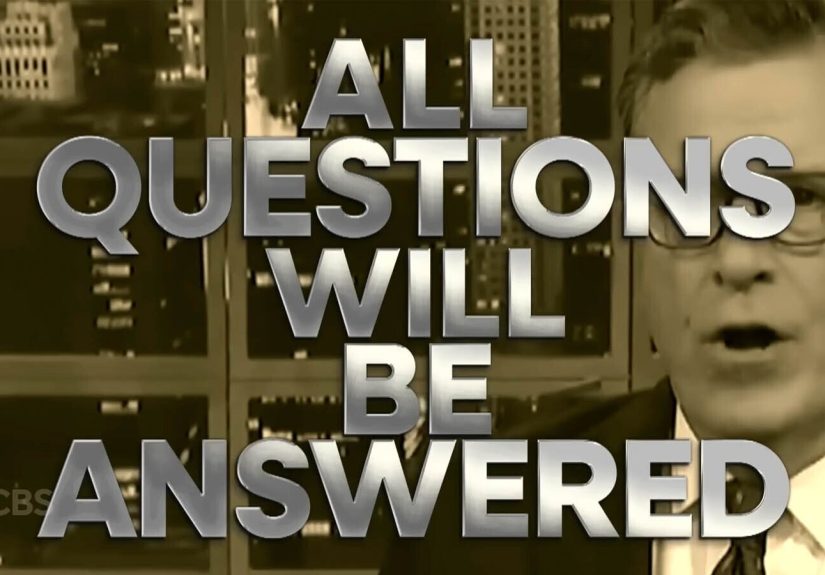
When The Late Show returned in early September 2025, Colbert did not open with a solemn speech or a giant political broadside. Instead, he led with a spoof trailer styled after Howard Stern’s own heavily promoted promise that all the rumors about his future would soon be addressed. It was the kind of opening that rewards viewers who had been following the entertainment-news carousel but still works even if you only understood one thing: somebody, somewhere, had overpromised spectacularly.
Colbert’s parody leaned into fake mysteries and knowingly ridiculous questions, treating his own final season like an overproduced prestige drama. That was the joke. Modern media hype has become so oversized that even a talk show mug can be framed like a state secret. The humor came from the contrast between the thunderous setup and the gloriously trivial payoff. In other words, Colbert spotted the funniest possible target: not Stern’s career, but the melodramatic packaging around it.
The Howard Stern Drama, Explained Without the Conspiracy Corkboard
A teaser designed for maximum panic
In August 2025, Howard Stern and SiriusXM leaned into rumors swirling around his future. The promotional language was pure showbiz catnip: all questions would be answered, all truths would be told, and Stern himself would finally speak. For a broadcaster who built a career on provocation, hype, and making the medium feel like an event, the trailer sounded exactly like a classic Stern move. It practically dared entertainment sites and fans to start guessing.
The rumors were not appearing out of nowhere. Stern’s contract was nearing its end, gossip around his future was picking up, and tabloids were happily tossing gasoline onto the campfire. The setup invited audiences to expect either a retirement announcement, a contract war, or some glorious radio-table-flip moment. In short, the stage was set for fireworks.
Then the fireworks turned out to be a rain delay
But when the promised date arrived, Stern did not deliver the grand reveal many listeners expected. Instead, the timeline got pushed back. That anti-climax is exactly what gave Colbert his material. Comedy loves a balloon full of hot air, but it loves an underinflated balloon even more. Stern’s tease had all the emotional architecture of a season finale and the immediate results of a calendar reschedule.
That delay changed the tone of the whole story. What had looked like a potentially major media moment suddenly felt like a joke about show-business suspense itself. Colbert did not need to invent the absurdity. He just had to mirror it, polish it, and hand it back to the audience with better punchlines.
Why Colbert Picked Stern as the Target
Because the bit was really about hype culture
On the surface, the opener looked like a simple parody of Howard Stern. But the sharper reading is that Colbert was mocking the culture of self-importance that now surrounds every media update. Announcements no longer announce; they “drop.” Interviews do not air; they become “events.” Every rumor is sold like a Marvel post-credit scene. Colbert understands that inflation of tone better than almost anyone in late night, and he used Stern’s situation as a perfect vessel for it.
There was also something slyly self-aware about it. Colbert was parodying overhype while appearing in the final season of his own show, after one of the most heavily discussed cancellations in the business. By making himself part of the joke, he made the bit feel less like a snipe and more like a knowing shrug from someone who sees the circus from inside the tent.
Because Stern is still a useful cultural shorthand
Even in an age of podcasts, streams, clips, and algorithmic fame, Stern still represents a particular kind of media myth: the shock jock as weather system. Mention his name, and audiences immediately understand that drama, ego, provocation, and performance are entering the room together. Colbert did not need to overexplain the premise. Stern’s public image did half the work for him.
A Small Joke Inside a Much Bigger Late-Night Mess
This is where the story gets more interesting. Colbert’s Stern parody did not exist in a vacuum. By the second half of 2025, late-night TV was already wobbling under real pressure. In July 2025, CBS announced that The Late Show with Stephen Colbert would end in May 2026. Officially, the network described the move as financial. Unofficially, the timing triggered a wave of skepticism because Colbert had recently criticized his corporate parent and because political pressure around media companies was becoming impossible to ignore.
Then came the Jimmy Kimmel saga. After a controversial monologue, Jimmy Kimmel Live! was suspended and then restored, turning one host’s absence into a national conversation about corporate fear, free speech, and how much pressure politicians and regulators can exert without technically calling it censorship. Howard Stern publicly backed Kimmel, framed the affair as a threat to open expression, and even made a point of protesting Disney over it.
So when Colbert spoofed Stern’s mini-drama on his return, the joke had extra texture. It was funny on its own, but it also arrived in an atmosphere where late-night comedy no longer felt like a stable format. The hosts were not just competing for punchlines; they were navigating legal pressure, political hostility, changing economics, and shrinking institutional patience. In that environment, even a silly parody trailer starts to look like commentary on the fragility of the whole machine.
Did the Bit Work? Yes, but With an Asterisk and a Drum Fill
Why it worked
The opener worked because Colbert understands rhythm. A great late-night return needs energy, immediacy, and a subject that feels current without requiring a dissertation. Stern’s delayed reveal was ideal. The story already sounded exaggerated, the source material was ripe for parody, and the joke let Colbert reintroduce himself with something lighter than a doom monologue. That matters. Audiences returning from a hiatus want to feel the host is awake, plugged in, and ready to play.
It also worked because the parody format matched the subject. A dramatic teaser about dramatic teasers is inherently funny. Colbert did not have to explain why hype is ridiculous; he just copied the tone and nudged it a few inches past reality. That is often where the best satire lives.
Why it only partly worked
At the same time, the joke had one built-in problem: the news cycle had already started sprinting away from it. In today’s media environment, a story can feel gigantic on Tuesday and fossilized by Thursday. Because Stern delayed his own payoff, the parody lost a little of its snap. Instead of responding to a huge reveal, Colbert was responding to a postponed reveal, which is less like satirizing a fireworks show and more like roasting a sign that says fireworks may return next week.
That does not make the bit a failure. It just means the joke was more clever than explosive. The audience got the premise, the writing was sharp, and the satire was real, but the target had already gone slightly soft. Colbert was firing at a balloon that had already started leaking.
What the Moment Says About Howard Stern
Stern’s side of the story is almost as revealing as Colbert’s joke. For all the speculation, the radio host later made clear that he was not being fired, that he remained in talks with SiriusXM, and that the rumors had run far ahead of the facts. By December 2025, he had extended his deal with SiriusXM for another three years. So the great media mystery ended not with a collapse, but with continuity.
That ending makes the earlier drama look even more theatrical in hindsight. Stern, intentionally or not, demonstrated something the entertainment business knows but rarely admits out loud: suspense is a product. A rumor, a teaser, a delay, a denial, and finally a renewal can each become separate mini-events. The audience does not just consume the show anymore. It consumes the weather around the show.
And that, frankly, is why Stern remains relevant. Even when the actual outcome is less seismic than the marketing suggested, he still knows how to make attention orbit him. Colbert saw that instantly and converted it into comedy fuel.
What the Moment Says About Stephen Colbert
Colbert’s real gift has never been limited to political satire. His deeper talent is identifying the absurd wrapper around public life. He notices not only what happened, but how it was sold, framed, exaggerated, delayed, branded, and fed to the audience. In the Stern parody, he acted less like a scold and more like a customs officer opening a suspiciously oversized suitcase labeled “IMPORTANT ANNOUNCEMENT.” Inside, of course, was mostly tissue paper and dramatic music.
That approach matters because it shows why Colbert has remained such a strong late-night presence even in a shaky era. He can attack politics directly, but he can also step sideways and expose the machinery of celebrity, network panic, and media theater. Sometimes that side angle is even funnier, because it reveals how silly serious people become when they think they are controlling the narrative.
In that sense, the Howard Stern joke was classic Colbert. It was topical, nimble, a little smug in a charming way, and built on the idea that the modern media ecosystem is always one fog machine away from parodying itself.
Why This Story Still Matters
At first glance, “Stephen Colbert mocks Howard Stern drama” sounds like a small entertainment item, the sort of thing you scroll past between a trailer reaction and a celebrity divorce update. But it matters because it captures where late-night comedy and media culture now overlap. Hosts are no longer just joke tellers. They are symbols in bigger battles over speech, network courage, political pressure, and the economics of old-school television. Even their throwaway jokes can carry the static of that environment.
The moment also shows how humor now competes with velocity. To land, a parody has to hit while the internet is still paying attention. That is becoming harder by the hour. Colbert managed to get there in time, but barely. The bit was funny partly because it felt like it was racing the expiration date on relevance and crossing the finish line with its tie half loosened.
And maybe that is the most modern part of the whole story: everybody is improvising under pressure, hoping the audience still remembers what the joke is about before the next notification barges in.
The Audience Experience: What This Kind of Late-Night Drama Feels Like in Real Time
For viewers, moments like this are oddly familiar now. You hear about a teaser before you hear about the actual show. You see screenshots, fragments, headlines, reactions, and counter-reactions before the original clip ever crosses your screen. By the time the host walks out onstage, the audience is not arriving fresh; it is arriving pre-marinated in rumor. That changes the experience of comedy in a big way.
Take the Stern-Colbert moment from the viewer’s side. First there is the setup: Howard Stern will finally speak. Maybe he is leaving. Maybe he is fighting with SiriusXM. Maybe this is retirement. Maybe it is just a stunt. Then there is the delay, which somehow makes the situation both less important and more irresistible, like a cliffhanger from a soap opera that has somehow wandered into media reporting. Then Colbert comes back and turns the whole thing into a parody trailer. Suddenly the audience is watching three things at once: the original Stern hype, the disappointment that followed, and Colbert’s joke about both.
That layered feeling is part of what modern entertainment consumption has become. You are no longer simply watching a monologue. You are watching commentary on commentary on commentary. The laugh often comes from recognizing the stack. It is less “ha, good joke” and more “ha, yes, this entire circus really did happen.”
There is also a weird emotional whiplash to it. One minute, late-night feels light and silly. The next, it becomes a story about corporate pressure, political heat, contract anxiety, and whether television institutions still have a spine. In 2025, especially, audiences were being asked to toggle quickly between comedy and concern. A host’s return was not just a return. It was a referendum, a signal, a stress test, a loyalty check, and then maybe, if there was time, a punchline about a coffee mug.
That is why Colbert’s Stern bit resonated beyond its size. It captured the feeling of being a viewer right now: slightly amused, slightly exhausted, fully aware that everyone in entertainment is selling gravity and chaos at the same time. You start to recognize the formulas. The thunderous voice-over. The all-caps promise. The mysterious countdown. The eventual explanation that turns out to be far more ordinary than the trailer suggested. It is not just one host doing one stunt. It is a cultural rhythm.
And yet, audiences keep showing up. That says something too. People still want the release valve of late night. They still want someone to take a bloated media moment, pop it with a pen, and remind everyone that no, actually, the emperor is not wearing prestige television armor. He is wearing a headset and selling next week’s segment. Colbert understood that appetite perfectly. He gave viewers a laugh, but he also gave them recognition. He said, in effect, yes, I saw the nonsense too. Let us enjoy how ridiculous it is together.
That shared recognition may be the closest thing late night has to its old magic now. Not certainty. Not dominance. Not even pure escapism. Just the pleasure of watching somebody smart stand in the middle of the noise and translate it into something human, timely, and funny before the next outrage stampedes through the door.
Final Take
Stephen Colbert mocking Howard Stern drama in his late-night return worked because it was never just about Howard Stern. It was about overhype, media performance, and the delicious gap between what entertainment promises and what it actually delivers. Stern supplied the raw material by turning uncertainty into suspense. Colbert supplied the sharper ending by reframing that suspense as comedy.
In a calmer era, the bit might have been just a cute opener. In 2025, it felt like a miniature state-of-the-union for late-night television: funny, anxious, self-aware, and fully conscious that the industry is standing on a floor that keeps moving. Colbert did what great hosts do in unstable times. He took a messy story, found the cleanest joke hiding inside it, and delivered it before the audience could scroll away.
Not bad for a joke that started with a trailer and ended with a reminder: in modern media, sometimes the funniest thing is not the scandal itself. It is the soundtrack insisting that the scandal is the most important thing to happen since fire.




 Close
Close