
Table of Contents >> Show >> Hide
- What Are Teeth-Nails, Exactly?
- Why Teeth-Nails Feel So Deeply Unsettling
- How Wild Nail Art Went From Niche to Mainstream
- The Real Expert Take: Weird Is Fine, Unsafe Is Not
- Dentists Would Like a Word, Too
- Should Anyone Actually Get Teeth-Nails?
- Why the Video Works So Well Online
- Common Viewer Experiences After Seeing Teeth-Nails
- Conclusion
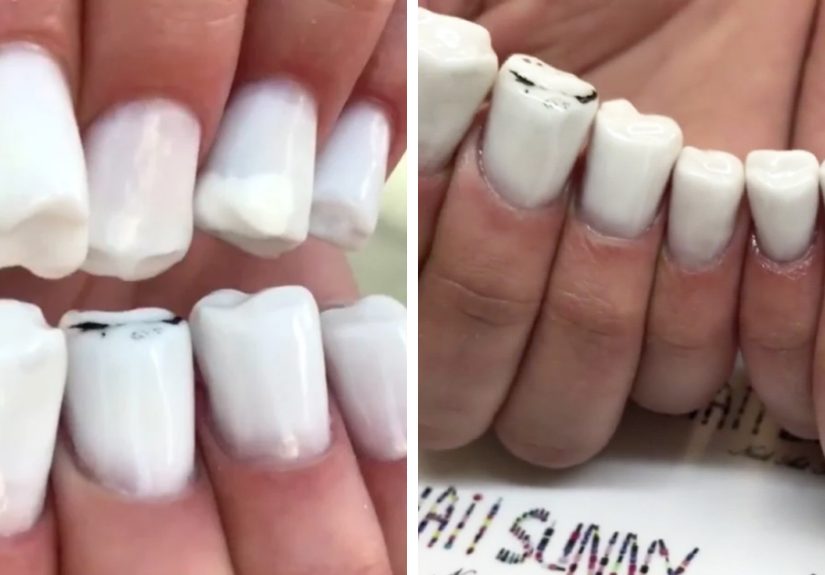
Every so often, the internet gifts humanity a beauty trend so deeply unsettling that it makes you question three things at once: fashion, anatomy, and whether your phone should have parental controls for adults. Teeth-nails are one of those gifts. They are exactly what they sound likenails sculpted to look like tiny molarsand yes, the effect is somehow worse in motion. A still photo is unsettling. A video is a jump scare for your manicure standards.
But here’s the thing: the viral teeth-nails moment is more than just a gross-out curiosity. It says a lot about how beauty trends evolve, why bizarre visuals spread so fast online, and where the line sits between clever nail art and “please don’t make me look at that while I’m eating.” It also opens the door to a more useful conversation about nail safety, salon hygiene, and the modern internet’s love affair with things that are both fascinating and mildly cursed.
So let’s talk about the manicure that looks like it belongs in a dentist’s nightmare. We’ll cover what teeth-nails are, why people can’t stop watching, how wild nail art became mainstream, and what experts actually want you to know before your next salon experiment.
What Are Teeth-Nails, Exactly?
Teeth-nails are a form of acrylic or sculpted 3D nail art designed to mimic human molars. Instead of a smooth glossy tip, the nail surface is built into little ridges and bumps so it resembles a tiny tooth sitting on the end of each finger. In the viral version, the nails were intentionally realistic enough to make viewers recoil, laugh, or whisper, “Nope,” as they backed away from the screen like they’d just seen a haunted floss pick.
The look first went viral because it hit the sweet spot of internet shareability: it was weird, instantly understandable, easy to react to, and impossible to forget. You do not need a tutorial, a trend report, or a trend forecaster in Milan to understand teeth-nails. One glance and your brain goes, “That is a tooth. Why is it on a hand? I reject this.” That immediate reaction is exactly why the video spread.
And to be fair, the technical skill is real. Sculpting a tiny molar with believable curves, ridges, and a slightly too-human finish takes talent. The problem is that artistry and wearability are not always close friends. Sometimes they live in the same neighborhood. Teeth-nails live in separate zip codes.
Why Teeth-Nails Feel So Deeply Unsettling
If you had a full-body shiver when you saw teeth-nails, congratulations: your brain is functioning normally. The design mashes together two very different body categoriesteeth and handsin a way that feels biologically wrong. That is a fast track to discomfort. Humans tend to get creeped out when something looks familiar but appears in the wrong place, the wrong texture, or the wrong context.
That reaction overlaps with what many people loosely describe as the “uncanny” effect. A thing looks close enough to real life to trigger recognition, but off enough to feel threatening or gross. Teeth already have a weird emotional status. They are part of us, but once isolated from the mouth, they become instant horror-movie props. Put ten little fake molars on a hand and your brain starts flashing error messages.
There’s also the cluster effect. A lot of people react strongly to repeated bumps, ridges, or hole-like textures, especially when those textures resemble something organic. Teeth-nails pile that discomfort onto a body part we usually expect to be smooth, polished, and elegant. Instead of a chic manicure, you get a row of miniature chewing tools. It is difficult to call that “soft glam.”
Psychologically, disgust is one of the internet’s most powerful accelerants. Gross content grabs attention quickly, sticks in memory, and practically begs to be shared with the caption, “I am suffering and now you must too.” That is why bizarre beauty videos often outperform perfectly tasteful ones. A clean nude manicure may get admiration. Teeth-nails get reactions, screenshots, group chats, and emotional damage.
How Wild Nail Art Went From Niche to Mainstream
Teeth-nails didn’t appear out of nowhere. They are part of a long evolution in nail art that has been moving toward more texture, more dimension, and more drama for years. Beauty media has tracked the rise of 3D manicures for more than a decade, from chunky embellishments and molded acrylic details to celebrity sets that blur the line between nail art and wearable sculpture.
In other words, the road to teeth-nails was paved with rhinestones, chrome, sculpted flowers, exaggerated shapes, and the general internet philosophy of “but what if we made it weirder?” Today’s nail trends regularly feature raised textures, dramatic silhouettes, and highly conceptual looks. Mainstream fashion coverage has shown that 3D manicures are no longer fringe. They are editorial, aspirational, and increasingly common on celebrities and social platforms.
That doesn’t mean every bizarre manicure is destined for everyday life. A runway look, an Instagram stunt, and a practical manicure are three different species. The same culture that celebrates inventive nail art also produces designs that are better appreciated as content than as something you’d want while opening a soda can, answering emails, or meeting your dentist face-to-face.
Teeth-nails sit right at that intersection. They are memorable enough to become viral content, technically impressive enough to earn reluctant respect, and unsettling enough to spark debate. That combination is internet gold. It is also why people kept watching the video even while wishing they hadn’t.
The Real Expert Take: Weird Is Fine, Unsafe Is Not
Here’s where the laughs end and the useful advice begins. Experts are not especially concerned that your manicure might look like a set of lower premolars. They are concerned about how nails are applied, cleaned, maintained, and removed.
Dermatologists and public health agencies consistently point to the same basics. Nail tools should be properly cleaned and, in shared commercial settings, sterilized. Cuticles should not be cut because they help act as a barrier against infection. Nail products can trigger allergic reactions, and some also require good ventilation because fumes and dust can irritate the skin, eyes, and respiratory system.
That matters even more with elaborate 3D sets. The more sculpting, gluing, filing, and product layering involved, the more important technique becomes. A dramatic manicure may be stunning on camera, but if the salon is careless about sanitation or overaggressive with prep and removal, the risks get very real. Think irritation, infection, nail weakening, or damage to the natural nail plate.
If you get regular gel or acrylic sets, experts also advise against peeling off product yourself. It is satisfying for about six seconds and regrettable for much longer. Improper removal can strip layers of the natural nail and leave your fingertips looking like they lost a small but meaningful legal battle.
What to look for before any salon service
Ask how tools are disinfected. Look for clean workstations, fresh or properly sanitized implements, and technicians who do not treat your cuticles like they are optional packaging. If a salon cannot clearly explain cleaning procedures, that is your cue to leave with your fingers and peace of mind intact.
Ventilation matters, too. Nail products can involve chemicals that should not be inhaled in a stale, fume-heavy room for extended periods. And if you are doing gel manicures, skin experts commonly recommend applying sunscreen to your hands or using protective gloves with the fingertips exposed before UV lamp exposure.
Dentists Would Like a Word, Too
The irony of teeth-nails is that they are fake teeth crafted with the care some people refuse to give their real ones. Dentists have spent years pushing back on online DIY dental stunts and misinformation, from aggressive whitening hacks to enamel-damaging trends that treat teeth like craft supplies. Actual tooth enamel does not regenerate once it is worn away. That is one reason dental professionals cringe whenever internet culture turns oral health into a shortcut challenge.
So while teeth-nails themselves are just nail art, the trend accidentally highlights a funny truth: people will baby a themed manicure while casually doing chaotic things to their actual teeth. Your molar-themed acrylic set is temporary. Your enamel is not. If this trend inspires anything practical, let it be a renewed respect for dentists and for not treating your mouth like a DIY project from a cursed beauty channel.
Should Anyone Actually Get Teeth-Nails?
As a form of artistic expression, sure. Nail art is art. It can be funny, grotesque, satirical, hyper-detailed, campy, or all of the above. If the goal is a Halloween look, a social media stunt, or an avant-garde shoot, teeth-nails absolutely succeed. They are unforgettable, highly shareable, and strangely impressive in the way a hyperrealistic cake shaped like a foot is impressive. You admire the craftsmanship while hoping nobody serves it to you.
As an everyday manicure? That is a tougher sell. The design is visually intense, likely impractical for day-to-day life, and guaranteed to start conversations you may not want to have. Some accessories whisper “fashion.” Teeth-nails yell “I made choices.”
The smarter takeaway is not that people should avoid creative manicures. It is that creativity works best when paired with comfort, hygiene, and a little self-awareness. You can love bold nails without choosing a set that makes strangers instinctively protect their gums.
Why the Video Works So Well Online
The video element matters because movement makes the illusion worse. As the fingers flex, the tiny teeth seem even more real and even more wrong. Motion gives the brain extra information, which can intensify both fascination and disgust. That is why a short clip often lands harder than a still image. The hand starts to behave like a hand, but the nails continue to insist they belong in a mouth. The cognitive mismatch gets stronger, not weaker.
Videos like this also thrive because they invite instant participation. People do not need expertise to react. They can vote yes or no, leave jokes, tag friends, or contribute their own “this should have stayed in the drafts” commentary. It becomes less of a beauty tutorial and more of a communal group shudder.
And that, really, is the teeth-nails formula: a talented execution, a mildly horrifying concept, an immediate emotional response, and an algorithm that rewards all four. The internet was never going to let this one stay quiet.
Common Viewer Experiences After Seeing Teeth-Nails
If you want the human side of this trend, it shows up in how people describe the experience of watching it. First comes disbelief. Most viewers do a double take because the brain initially tries to classify the image as normal nail art. Then it realizes the shapes are teeth, and the mood shifts from curiosity to emotional betrayal.
Second comes the involuntary body check. People touch their own teeth, rub their fingertips together, or make that universal “absolutely not” face that requires no translation. It is an oddly physical reaction for a beauty video, but that is the power of body-based imagery. When something reminds us of bones, skin, nails, or teeth in the wrong context, we feel it more than we merely observe it.
Third comes the laughter. Teeth-nails are gross, yes, but they are also absurd. A lot of viewers end up laughing because humor is one of the fastest ways to handle discomfort. That is why comment sections under bizarre beauty clips are always full of one-liners, dramatic fake medical diagnoses, and phrases like “delete this with love.” Comedy softens the revulsion, but it also keeps the trend circulating because jokes are highly shareable.
Fourth comes the scroll-return effect. You leave the video. You think you are done. Then, for reasons science may one day fully explain, you go back and watch it again. Not because you enjoyed it exactly, but because your brain wants to confirm that it was real. This is the same impulse that makes people rewatch strange cooking hacks, impossible cleaning videos, and furniture restoration clips that somehow end in emotional conflict. Teeth-nails trigger that same “I need to see this one more time” loop.
Finally, there is the conversational afterlife. People do not keep teeth-nails to themselves. They send the clip to siblings, coworkers, partners, and unlucky group chats with captions like “good morning to everyone except this manicure.” That social relay is a huge part of why bizarre trend videos last. You are not just reacting to the thing; you are reacting together. The shared experience becomes the entertainment.
So yes, teeth-nails are disturbing. But they are also a perfect case study in how modern internet culture works. Show people something skillful, gross, funny, and just plausible enough to exist in the real world, and they will do the rest. They will gasp, laugh, share, debate, and maybe schedule a nice normal manicure as emotional recovery.
Conclusion
Teeth-nails may never become a mainstream manicure choice for people who enjoy peace, snacks, or being taken seriously at the grocery store. But as viral beauty content, they are almost perfect. They combine craftsmanship with shock value, body horror with fashion, and absurdity with just enough realism to make viewers squirm.
The bigger lesson is that the weirdest manicure on your feed is not necessarily the most important one. What matters more is how trends are executed, whether salons follow safe practices, and whether people remember that real nails and real teeth deserve more care than any viral stunt. Watch the video, laugh if you must, recoil if you must, send it to a friend if you absolutely must. Then moisturize your cuticles, keep your tools clean, and let your molars remain where nature intended.




 Close
Close