
Table of Contents >> Show >> Hide
- Why Cutting Boards Slide (And Why It Happens at the Worst Time)
- The Best Way: The Damp Towel (or Paper Towel) “Anchor” Method
- If You Want a More “Permanent” Fix: The Best Alternatives
- Countertop-Specific Tricks (Because Not All Counters Are Created Equal)
- Make It Safer: Cutting Board Stability + Food Safety (The Two-Step Combo)
- Troubleshooting: When the Board Still Moves (Or Rocks Like a Tiny Seesaw)
- A Quick “Non-Slip Cutting Board” Cheat Sheet
- Real-World Kitchen Experiences (The “Yes, This Actually Happens” Section)
- Conclusion
A cutting board that scoots across your countertop has the same chaotic energy as a shopping cart with one
possessed wheel. You’re trying to slice an onion; it’s trying to audition for the Winter Olympics.
Besides being wildly annoying, a sliding cutting board is a real kitchen safety problembecause knives don’t
care that you “almost had it.”
The good news: you don’t need a fancy gadget, a new countertop, or a motivational speech for your cutting board.
The best fix is simple, cheap, fast, and used in plenty of pro kitchens. Then, if you want to upgrade your setup,
there are a few excellent longer-term options that make meal prep calmer, safer, and honestly… less dramatic.
Why Cutting Boards Slide (And Why It Happens at the Worst Time)
Cutting boards slide because most countertops are smooth and hardgreat for wiping down, not great for traction.
Add a little moisture (from rinsed produce, meat juices, or a freshly cleaned counter that’s still damp), and you’ve
basically built a tiny skating rink.
A few common “slip starters”:
- Slick countertop surfaces like granite, quartz, stainless steel, glass, or polished laminate.
- Lightweight boards (thin plastic boards are convenient, but they can drift).
- Warped boards that rock on one corner like a wobbly restaurant table.
- Juice + fat + water forming a thin layer that reduces friction.
- Too-small boards where your chopping motion constantly nudges the board’s center of gravity.
Once you understand the cause, the solution is straightforward: create friction and stability underneath the board.
That’s it. No magic. Just physics doing the right thing for once.
The Best Way: The Damp Towel (or Paper Towel) “Anchor” Method
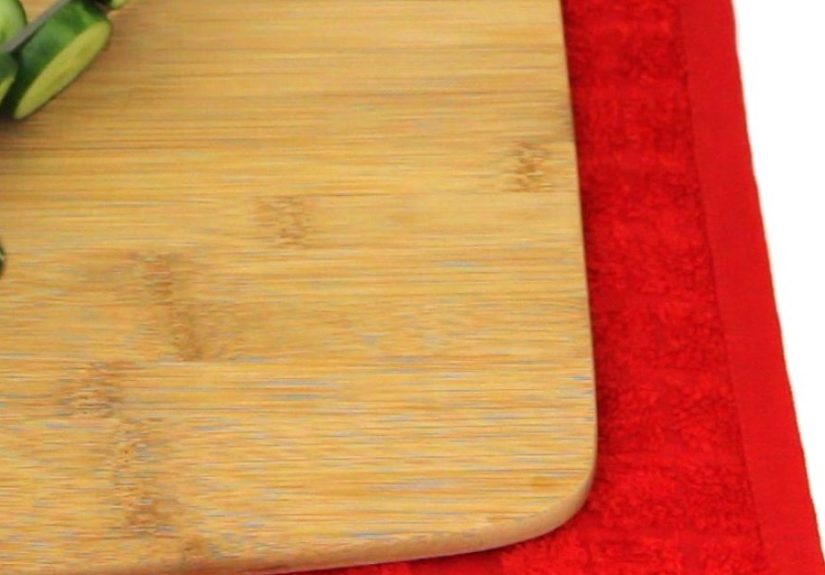
If you only remember one thing from this article, make it this: place a damp towel under the cutting board.
It’s the quickest, most reliable way to stop a cutting board from sliding aroundespecially on smooth counters.
The towel grips the countertop and the board at the same time, creating traction where you need it.
How to Do It (The “Just Right” Version)
- Wet a clean kitchen towel (or use a folded paper towel if you’re in a hurry).
- Wring it out thoroughly. You want it damp, not dripping. Think: “rain jacket,” not “swimming pool.”
- Fold it to match your board’s footprint so the board sits fully on the towel and doesn’t wobble.
- Press the board down firmly to set it. Now try pushing the board with your palmif it moves, add a touch more dampness or refold for full contact.
Why This Works So Well
Moist fabric increases friction without needing adhesives or permanent hardware. It also adapts to tiny surface
imperfections that cause micro-slips. In other words, it’s grippy, forgiving, and instantly adjustable. It’s also
accessible: you can do it at home, at a rental, in a dorm kitchen, or in an Airbnb where the “cutting board”
is suspiciously thin and the counter is basically glass.
The “Don’t Make It Weird” Tips
- Use a thin towel if you can. Thick towels can act like a spongey mattress and make the board rock.
- Don’t leave a wet towel under a wooden board for hours. Wood and water are not best friends long-term.
- For raw meat prep: use a paper towel (single-use) or a dedicated towel that goes straight into the hot wash afterward.
If you’re looking for the best way to stop your cutting board from sliding, this is it. Fast. Cheap. Effective.
And it instantly makes chopping feel more controlledlike your kitchen upgraded itself while you weren’t looking.
If You Want a More “Permanent” Fix: The Best Alternatives
The damp towel trick is the MVP for everyday cooking, but there are situations where you might want a setup that’s
grab-and-go: no wetting, wringing, or folding required. Here are the best non-slip cutting board options (and when each one shines).
1) Non-Slip Cutting Board Mats (Silicone or Purpose-Built Grippers)
A dedicated non-slip cutting board mat is like the damp towel’s organized cousin who labels pantry jars.
Silicone mats (or mats designed specifically to grip cutting boards) are easy to rinse, often dishwasher-safe, and
provide consistent traction. They’re especially handy if you cook a lot, meal prep frequently, or use multiple boards.
Best for: daily prep, slick counters, quick setups, households that prefer washable solutions over towels.
2) Rubber Feet / Grippy Edges (Built-In Stability Boards)
Many modern boardsespecially plastic utility boardscome with non-slip feet or silicone edges.
This built-in traction reduces sliding without any extra accessories. The biggest bonus is convenience:
you set it down and start chopping.
Best for: busy weeknights, beginner cooks, households that want low-fuss kitchen safety upgrades.
3) Drawer Liner or Shelf Liner (Budget-Friendly and Shockingly Effective)
A piece of grippy drawer liner under the board works incredibly well. It’s basically a reusable traction layer.
Choose a liner that’s easy to wash and dry. Keep a small piece in a kitchen drawer just for this purpose, and it becomes
a simple, repeatable system.
Best for: renters, minimalist kitchens, anyone who wants a reusable “anchor” without using towels.
4) Upgrade the Board: Bigger, Heavier, Better Balanced
Sometimes the board is the problem. A larger board gives you more room to work and reduces the “nudge factor” from repetitive chopping.
A heavier board (often wood or composite) tends to stay put better than a thin, flexible board.
Best for: frequent cooks, anyone tired of re-centering the board every 30 seconds, serious knife work.
Countertop-Specific Tricks (Because Not All Counters Are Created Equal)
Granite/Quartz/Stainless Steel
These surfaces are famously slick. The damp towel method works beautifully here. Non-slip mats also perform well
because they create consistent grip across polished stone and metal.
Laminate
Laminate varies: some textures grip fine, others are slippery. If your board slides when you’re slicing tomatoes,
it’s towel time. If it only slips during aggressive chopping (sweet potatoes, squash, or carving), a mat or rubber-foot board may be the better long-term fix.
Butcher Block Counters
Ironically, wood-on-wood can still slipespecially if the counter has a sealed finish or the board is very smooth.
Try a barely damp towel or a thin grippy liner. Keep moisture minimal to protect both surfaces.
Glass Counters or Glass Cutting Boards (Please Don’t)
If you’re using a glass cutting board, your knives are the ones suffering. Even if you stabilize it, it’s hard on blades
and tends to be noisy and slippery. If you’re stuck with glass temporarily, use a non-slip mat underneath and keep your cutting pressure controlled.
Make It Safer: Cutting Board Stability + Food Safety (The Two-Step Combo)
A stable board helps prevent slips, but food safety matters tooespecially when you’re using towels, liners, and reusable mats around raw ingredients.
The goal is a kitchen setup that’s both non-slip and not gross.
Use Separate Boards (Or at Least Separate Systems)
A practical approach: keep one board (or one side of a reversible board) for raw meat, poultry, and seafood,
and another for produce and ready-to-eat foods. If you’re using a towel under the board, treat it like part of the system:
it touches “raw prep territory,” so it needs to be cleaned appropriately.
Clean and Sanitize the Board Properly
Most boards can be washed with hot, soapy water after use. For deeper sanitation, many food-safety guidelines recommend
sanitizing cutting boards (wood and plastic) with a properly diluted bleach solution and allowing it to contact the surface before rinsing and drying.
Always let boards dry completely.
Handle Towels Like Adults (Even If the Rest of Us Are Just Pretending)
- Use a fresh towel (or paper towel) for stabilizing when prepping raw meat.
- Don’t wipe hands, counters, and cutting board with the same towel during prep. That’s how cross-contamination throws a party.
- Launder reusable towels hot and dry completely. If it smells “a little off,” it’s not “seasoned”it’s time to wash it.
Troubleshooting: When the Board Still Moves (Or Rocks Like a Tiny Seesaw)
If the Board Slides Even With a Towel
- Make the towel slightly damper (still wrung outno puddles).
- Increase contact area by folding the towel so it covers more of the board’s base.
- Switch materials: a silicone mat or grippy liner may work better on ultra-slick stone.
If the Board Wobbles (Warped or Uneven)
Wobble usually means the board isn’t flat. A towel can help by filling small gaps, but a badly warped board may always
feel unstable. If it’s a wooden board you love, consider rotating usage, letting it dry evenly, and maintaining it properly.
If it’s a cheap board that rocks like it’s trying to soothe a baby… it might be time to retire it.
If You’re Carving Something Heavy (Turkey, Roast, Watermelon)
Big jobs need big stability. Use the damp towel method plus a larger board, ideally with a juice groove.
Carving is where boards love to slide the most because you apply forward pressure. Anchoring the board here isn’t optionalit’s sanity.
A Quick “Non-Slip Cutting Board” Cheat Sheet
- Fastest fix: damp towel or damp paper towel under the board.
- Best reusable upgrade: silicone non-slip mat or purpose-built gripper.
- Best low-fuss board choice: board with rubber feet or grippy edges.
- Best for heavy chopping: larger, heavier board + anchoring method.
- Best for raw meat prep: dedicated board + single-use paper towel anchor (or a towel that goes straight to laundry).
Real-World Kitchen Experiences (The “Yes, This Actually Happens” Section)
If you’ve ever tried to dice an onion while your cutting board slowly moonwalks toward the counter’s edge, welcome to the club.
Sliding boards don’t just happen to people who “don’t know what they’re doing.” They happen to everyoneespecially when you’re in a rush,
the counter is freshly wiped, and your brain is juggling three timers and a text message that says, “We’re five minutes away.”
One of the most common moments this shows up is meal prep. You line up peppers, chicken, herbs, and a lemon you swear was a normal size
until it rolled across the cutting surface like it had an agenda. You start chopping, and the board shifts a half-inch. You adjust it.
Then it shifts again. Suddenly you’re spending more energy managing the board than managing the knife, and that’s backwards. The damp towel trick
changes the whole vibe: the board stays where you put it, your shoulders relax, and you stop doing that tiny angry scoot every 45 seconds.
Another classic scenario: cutting something stubbornsweet potatoes, butternut squash, or a watermelon that’s basically a bowling ball in produce form.
These foods require pressure, and pressure is exactly what turns “kind of slippery” into “why is my cutting board trying to escape?”
Anchoring the board with a wrung-out towel makes the motion feel controlled. You can focus on good techniquesteady hands, stable stance,
intentional cutsinstead of bracing the board with your elbow like you’re playing defensive line in the NFL.
Then there’s carving. Carving is the moment your kitchen pretends to be a cooking show, except your audience is hungry and judging you silently.
When you carve a roast turkey or slice a brisket, you push forward with the knife. If the board isn’t anchored, it slides at the exact moment
you want stability most. Putting a damp towel under the board is a tiny move that can prevent a big messlike juices running across the counter
or the board shifting just as you’re trying to make neat slices. It’s the difference between “effortlessly competent” and “why are we like this.”
Even low-stakes prep benefits. Chopping herbs? Your board shouldn’t shimmy. Slicing strawberries? The board shouldn’t drift.
Making a sandwich? The board shouldn’t migrate like it’s searching for better lighting. Once you get used to a stable board,
you notice how much smoother everything feels. Your cuts get more consistent because your surface isn’t moving under you. Cleanup feels easier
because you aren’t chasing scraps around the counter. And surprisingly, cooking becomes a little more funbecause you’re not annoyed before you even start.
The best part is how easy it is to build this into your routine. Some people keep a dedicated “board towel” folded in the same drawer.
Others stash a small square of silicone or grippy liner next to the boards. Either way, it becomes automatic: board out, anchor down, chop confidently.
It’s not flashy, but it’s one of those small kitchen upgrades that pays off every single day.
Conclusion
The best way to stop your cutting board from sliding around is also the simplest: anchor it with a damp, wrung-out towel (or paper towel).
It’s fast, reliable, and makes chopping safer immediately. If you want a longer-term setup, a non-slip cutting board mat, grippy drawer liner,
or a board with rubber feet can give you a consistent, low-fuss solution. Combine stability with smart cleaning habits, and you’ll have a prep station
that feels steady, safe, and pleasantly unchaoticexactly what your fingers deserve.





 Close
Close