
Table of Contents >> Show >> Hide
- What “The Marriage Portrait” Is About (Without Spoiling the Fun)
- The Real History Behind the Fiction
- Why a Portrait Matters So Much in a Marriage Like This
- Themed Threads That Make the Novel So Addictive
- What Makes “The Marriage Portrait” Feel Modern (Even in a Palace)
- How to Read It: Tips for Maximum Enjoyment
- FAQs People Ask Before They Start
- Experiences That Make the Book Hit Even Harder (Extra )
- Conclusion
A marriage portrait is basically the Renaissance version of a “relationship status update,” except the stakes were higher, the clothes were heavier, and nobody
could simply untag themselves. One painted panel could announce a new alliance, reassure nervous in-laws, flatter a ruling family’s ego, and quietly warn a young
bride: Smile. This is your life now.
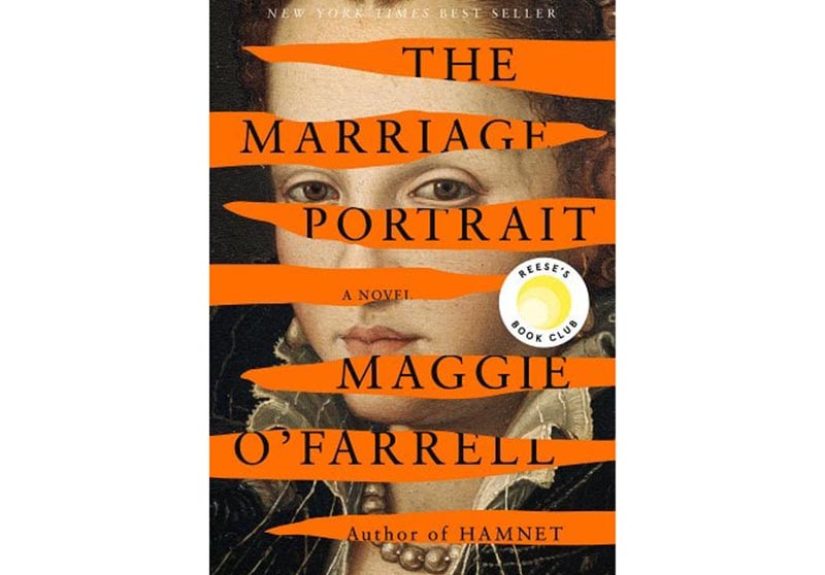
That deliciously uncomfortable idea is the engine inside The Marriage Portrait, Maggie O’Farrell’s historical novel that turns one
young woman’s “picture-perfect” union into a suspenseful, psychologically sharp story about power, art, and survival. The book reads like a candlelit thriller:
gorgeous, intimate, and just a little bit ominouslike someone locked the palace doors and swallowed the key.
What “The Marriage Portrait” Is About (Without Spoiling the Fun)
O’Farrell’s novel centers on Lucrezia de’ Medici, a teenage girl in 16th-century Italy whose life becomes a political chess move. When her
older sister dies on the brink of marriage, Lucrezia is thrust into the role of replacement bridea swap that feels practical to the men making decisions and
catastrophic to the girl expected to live with them.
She is married into an elite court where every smile has a price tag and every silence is a strategy. Her husband, Alfonso, is powerful, polished, and
unsettlingly difficult to read. Lucrezia, observant and creative, tries to learn the rules fast enough to stay alive long enough to matter.
The novel’s tension comes from the collision of two realities: the public fantasy (the grand marriage, the glittering court, the portrait that “proves”
everything is fine) and the private truth (fear, isolation, and the creeping suspicion that love is not the pointcontrol is).
The Real History Behind the Fiction
The Marriage Portrait is rooted in real people and real dynastic logic. Lucrezia de’ Medici was a historical figure from Florence’s famously powerful
Medici family, and her marriage was the kind of diplomatic arrangement that stitched together alliances in Renaissance Italy. When you’re a ruling house,
“romance” is nice, but an heir is non-negotiable.
Historically, Lucrezia died young, and her early death generated rumorsexactly the kind of rumor that survives for centuries because it fits too neatly into a
story we already understand: a girl married for politics, living in a gilded cage, disappearing behind palace walls. O’Farrell uses that historical gapthe
missing voice, the missing interior lifeto build a novel that feels less like a costume drama and more like a psychological close-up.
For readers who like their fiction anchored in “this really happened… sort of,” the book’s pleasure is in the blend: recognizable historical textures, vivid
sensory detail, and a fiercely imagined inner world. It’s history with a heartbeat.
Why a Portrait Matters So Much in a Marriage Like This
1) A portrait wasn’t just a pictureit was politics
In an era when power traveled by letter, messenger, and rumor, portraiture helped a family control the story. A painted image could circulate to other courts
and function like a curated press release: “Here is our daughter. Here is our alliance. Here is what we want you to believe.”
That’s why the phrase “marriage portrait” carries a chill. A marriage portrait is supposed to represent unity, but historically it often
reflected a transaction: bodies pledged, lands promised, futures negotiated.
2) Portraits could reveal ownership as much as affection
Renaissance portraiture is packed with codesjewelry that signals status, fabric that screams wealth, posture that whispers hierarchy. In some early “couple”
portraits, even when the woman seems front and center, the visual language can suggest that the material world surrounding her belongs to the man. When you
notice that, a “romantic” portrait starts to look more like a beautifully framed contract.
3) The sitter’s expression becomes a battleground
A portrait freezes you in a single version of yourself, chosen by a patron, approved by a family, judged by strangers. If you’re a teenage bride with little
agency, a portrait can feel like a theft: your face captured to serve someone else’s narrative. In O’Farrell’s hands, portraiture becomes the perfect metaphor
for marriage as an institution: you are seen, but not necessarily known.
Themed Threads That Make the Novel So Addictive
Agency vs. obedience
Lucrezia’s story is about more than avoiding a bad husband. It’s about carving out personhood in a world that treats young women as movable pieces. The court’s
expectations are suffocatingly specific: behave, produce an heir, be grateful, be quiet. Lucrezia’s inner lifethe part of her that thinks in colors and
patterns and possibilitiespushes back.
Surveillance (and the performance of being “fine”)
Court life is a pressure cooker where everyone watches everyone. Servants report. Families bargain. Even kindness can be strategic. In that environment, a girl
learns to perform safety: to smile at the right moment, to say the correct thing, to never reveal what she truly suspects. The novel’s tension builds through
those micro-moments when Lucrezia has to decide: do I speak, or do I survive?
Art as both escape and evidence
Lucrezia’s creativityher ability to notice details and interpret thembecomes more than a hobby. It’s a tool. Art sharpens observation. Observation becomes
self-defense. And self-defense becomes the quiet rebellion of a girl who refuses to be reduced to a decorative object in someone else’s palace.
The body as a political site
In dynastic marriages, a bride’s body is not treated as hers. It is treated as a vessel for heirs, a symbol of alliance, and a site of control. O’Farrell
doesn’t sensationalize this; she makes it personal, specific, and unsettlingbecause it is personal. The horror is not in one dramatic villain moment; it’s in
the system that makes such moments plausible.
What Makes “The Marriage Portrait” Feel Modern (Even in a Palace)
The novel resonates because it understands something timeless: the gap between public image and private reality. Swap oil paint for Instagram, and the pressure
to look perfect while feeling trapped is instantly recognizable.
The book also nails the modern appetite for stories that reclaim sidelined womenthose historical figures who appear in footnotes, rumors, or someone else’s
poem. It asks: what did she want, fear, dream, notice? What did she say when nobody was listening? That question turns a “period piece” into something urgent.
How to Read It: Tips for Maximum Enjoyment
- Lean into the suspense. Even if you know historical outcomes, O’Farrell writes like destiny has teeth.
- Pay attention to objects. Rooms, fabrics, animals, and paintings often carry emotional meaning.
- Notice who gets to speak. Power in this world is measured in permissionwho may ask questions, who must answer, who is silenced.
- Read it with someone. It’s an incredible book-club novel because every chapter invites debate: love, duty, fear, survival, complicity.
FAQs People Ask Before They Start
Is The Marriage Portrait based on a true story?
It’s inspired by real historical figures and circumstances, but it’s a novelmeaning O’Farrell invents scenes, relationships, and psychological detail to fill
the gaps history leaves behind.
Is it more literary or more thriller?
Both. The prose is lush and attentive, but the structure delivers dread and momentum. Think “high art with a racing pulse.”
Do I need to read Hamnet first?
No. Different story, different setting, same authorial superpower: making the past feel intensely alive.
Experiences That Make the Book Hit Even Harder (Extra )
If you’ve ever tried to take a “nice” photo with your family, you already understand the emotional physics behind a marriage portrait. You stand close. You
angle your body. You do the face that says, “We are normal and harmonious,” even if five minutes earlier someone was arguing about directions, shoes, or why
Uncle Jeff insists on blinking in every picture. The cameraor the paintercaptures a single frozen second, and suddenly that second becomes the official story.
Now magnify that experience until it becomes statecraft. That’s the shiver you feel while reading The Marriage Portrait. The novel taps into a very
human memory: the moment you realized you were being watched and judged, and the “right” expression mattered more than your actual feelings. Readers often
describe a strange empathy with Lucrezia’s situation even if their lives look nothing like a Renaissance court, because the emotional core is familiar. Who
hasn’t performed happiness for an audience?
Another experience that enriches this book is museum-goingespecially if you’ve wandered through Renaissance galleries where portraits line the walls like
solemn witnesses. You start by admiring the clothes. Then you notice the hands: who touches whom, who holds what, who is centered, who is pushed slightly to the
side. You read the placard and realize the sitter was fifteen. Or sixteen. Or “married at fourteen.” Suddenly the glitter turns heavy. You walk to the next
portrait and catch yourself thinking: Did she want this? Did she have a choice? O’Farrell’s novel feels like that museum moment stretched into a
full narrativetaking the silent girl in the painted frame and giving her a pulse, a mind, and a point of view sharp enough to cut.
Book clubs have their own special relationship with this story. Someone inevitably says, “I had to keep reading because I felt trapped with her.” Someone else
argues, “But you can’t judge that time by our standards.” Then another person counters, “It’s not about standards. It’s about power.” And just like that, the
discussion becomes less about history and more about how people still trade images for securityhow reputations can function like currency, how marriage can be
both sanctuary and cage, and how a woman’s value is still too often measured by what she can provide rather than who she is.
Even wedding photographymodern, glossy, and supposedly joyfulcan make the novel feel eerily relevant. Anyone who has stood under hot lights in formal wear
knows the “portrait pressure”: the urge to look radiant, the fatigue hiding behind your eyes, the odd feeling that the image will outlast the messy truth of the
day. Years later, people will point to the photo and say, “You look so happy,” and you’ll think, Yes, that’s what the picture says. The photograph
becomes the story people remember, even if the lived experience was complicated.
That’s the final genius of the marriage portrait, whether painted in oil or captured in pixels: it convinces the world to believe in a version of events.
O’Farrell’s novel invites you to question that versionand to listen, with fresh attention, for the voices history framed but never fully heard.
Conclusion
The Marriage Portrait is a dazzling reminder that “beautiful” doesn’t always mean “safe.” It takes the elegance of Renaissance portraiture and flips it
into narrative suspense, asking what a polished image can hideand what it costs to keep hiding.
Whether you come for historical fiction, feminist reimagining, court intrigue, or simply the pleasure of prose that makes you feel the velvet and smell the
candle smoke, this book delivers. And when you finish, you may never look at a formal couple portrait the same way again.







 Close
Close