
Table of Contents >> Show >> Hide
- A Quick Answer to the Eclipse Question
- Why So Many People Get Confused
- The Next Solar Eclipse After 2024 Was March 29, 2025
- How the 2025 Partial Eclipse Differed from the 2024 Total Eclipse
- The Next Total Solar Eclipse After 2024 Is August 12, 2026
- What Readers in the United States Should Know
- How to Watch Solar Eclipses Safely
- How to Plan for the Next Great Eclipse
- What the Experience of the Next Solar Eclipse After 2024 Feels Like
- Conclusion
Note: This article reflects eclipse data current as of March 31, 2026, and is written to stay evergreen by clarifying the difference between the next solar eclipse, the next total solar eclipse, and the next total eclipse visible from the contiguous United States.
After the blockbuster total solar eclipse of April 8, 2024, millions of people suddenly became part-time astronomers, full-time weather stalkers, and very serious owners of eclipse glasses. Naturally, one question floated up almost immediately: What is the next solar eclipse after 2024? It sounds simple, but it is actually a sneaky little question. Are we talking about the next solar eclipse on the calendar? The next total solar eclipse? Or the next one that Americans can easily see without boarding a plane, learning Spanish, and stress-eating airport pretzels?
Here is the big picture. The next solar eclipse after 2024 was the partial solar eclipse on March 29, 2025. But the next total solar eclipse after 2024 is August 12, 2026. If you live in the contiguous United States and want the next total eclipse visible from home soil, that wait is much longer. So yes, the answer depends on what kind of eclipse fan you are: casual skywatcher, hardcore eclipse chaser, or someone still emotionally recovering from 2024.
A Quick Answer to the Eclipse Question
Let’s clear the cosmic fog right away. If you mean the very next solar eclipse after the April 2024 event, it was a partial solar eclipse on March 29, 2025. If you mean the next time the Moon completely blocks the Sun somewhere on Earth, that is the total solar eclipse on August 12, 2026.
This distinction matters because not all solar eclipses are created equal. A total solar eclipse is the headline act. It turns daytime eerie, reveals the solar corona, and makes people say things like, “I am changed now.” A partial solar eclipse is still wonderful, but it is more like the stylish trailer before the movie. The Sun never disappears completely, which means the experience is quieter, subtler, and much less likely to make strangers burst into happy tears.
Why So Many People Get Confused
The phrase “the next solar eclipse after 2024” sounds straightforward, but it contains three common meanings. First, some people mean the next solar eclipse anywhere in the world. Second, others really mean the next total solar eclipse, because totality is the event that gets all the dramatic photos and goosebumps. Third, many U.S. readers mean the next eclipse they can see from the United States, or better yet, from the lower 48 states without turning the trip into a full-blown passport adventure.
That is why eclipse articles can accidentally talk past readers. One source may focus on the global calendar, another on the next eclipse visible in North America, and another on the next total eclipse worth traveling for. A good article has to do what your favorite teacher did in school: answer the question you asked, the question you meant, and the question you did not realize you were asking.
The Next Solar Eclipse After 2024 Was March 29, 2025
On the calendar, the next solar eclipse after April 8, 2024 was the March 29, 2025 partial solar eclipse. This event was visible from parts of the Northern Hemisphere, including sections of Europe, western Africa, Greenland, Iceland, eastern Canada, and the northeastern United States. That sounds gloriously broad, but there was one important catch: this eclipse was partial everywhere. The Moon’s central dark shadow, the umbra, missed Earth entirely, so nobody, anywhere, got totality.
For many North American viewers, the timing gave the eclipse a special personality. In parts of the northeastern U.S. and eastern Canada, the event happened around sunrise. That meant some people saw the Sun come up already looking as though someone had taken a celestial bite out of it. New England, in particular, had a narrow but memorable chance to catch the eclipse after sunrise, even though the event was already well underway by then. It was less “midday blackout” and more “dramatic breakfast astronomy.”
What Made the March 2025 Eclipse Special
Partial eclipses do not get the same hype as total eclipses, but they have their own charm. The March 2025 eclipse stood out because of its geometry and timing. A sunrise eclipse always adds atmosphere. The low Sun can look redder, softer, and more cinematic near the horizon, and when the Moon clips it at just the right moment, the shape becomes striking. Some observers described it as a horned or crescent Sun climbing into the sky, which is the sort of thing that makes even non-astronomy people stop mid-coffee and say, “Okay, that is actually cool.”
Still, it was not a repeat of April 2024. No corona. No full darkness. No magical moment when the crowd collectively gasps because the world suddenly looks like sunset at lunchtime. The 2025 event was beautiful, but it was a partial eclipse doing partial eclipse things. Think elegance, not drama.
How the 2025 Partial Eclipse Differed from the 2024 Total Eclipse
The April 8, 2024 eclipse was a total solar eclipse across a path stretching through Mexico, the United States, and Canada. In the path of totality, the Moon completely blocked the Sun for a brief period. That is when the sky darkened, temperatures could drop, stars and planets became more visible, and the Sun’s corona emerged like a ghostly crown. It was the kind of event that can make seasoned scientists sound like poets and practical adults book hotel rooms two states away.
By contrast, the March 29, 2025 eclipse never reached totality. Even at maximum eclipse, part of the Sun remained visible. That means proper eye protection was required the entire time for anyone viewing directly. There was no safe “glasses off” moment because there was no total phase. This is one of the biggest differences between partial and total solar eclipses, and it is also where many people make dangerous assumptions. If any part of the Sun is still visible, your eclipse glasses stay on. No exceptions. The Sun does not hand out bonus points for enthusiasm.
The Next Total Solar Eclipse After 2024 Is August 12, 2026
If what you really want is the next grand, full, jaw-dropping eclipse after 2024, mark August 12, 2026. That is the date of the next total solar eclipse after the 2024 event. The path of totality crosses parts of Greenland, Iceland, Spain, Russia, and a tiny area of Portugal, while a broader partial eclipse will be visible from surrounding regions of Europe, Africa, and even parts of North America.
For eclipse travelers, this matters a lot. The 2026 total eclipse is the next serious destination event for people who caught the eclipse bug in 2024 and now want a sequel. Spain, in particular, has attracted attention because it combines strong travel appeal with the rare chance to stand in the Moon’s shadow. That is a difficult vacation pitch to beat. “Would you like beaches, great food, old cities, and the temporary collapse of ordinary daylight?” Yes. Obviously yes.
Why Totality Is Worth the Hype
If you have never experienced totality, it may sound like eclipse enthusiasts are overselling it. They are not. Photographs help, but they do not fully capture the scale or mood. During totality, the Sun’s bright face vanishes, the corona spreads around the Moon, the horizon glows with a strange all-around twilight, and the whole sky seems to pause. It is not just something you see. It is something you feel.
That is why people who saw the 2024 eclipse immediately started asking about the next one. Once you have seen the Sun disappear in broad daylight, your brain becomes extremely open to future questionable travel decisions.
What Readers in the United States Should Know
For U.S. readers, the eclipse calendar can be mildly rude. Yes, the March 29, 2025 eclipse was visible from the northeastern United States, but only partially and only for a limited slice of the country. Most of the continental U.S. was not in a good position to enjoy it. If you missed 2024 and hoped another total eclipse would roll back through the lower 48 anytime soon, the universe has a frustrating answer: not for a while.
The next total solar eclipse visible from any point in the contiguous United States arrives in 2044, and the next one that sweeps dramatically across the lower 48 from coast to coast comes in 2045. That makes the years after 2024 feel like a split between two kinds of eclipse fans: the stay-at-home planners and the passport-renewing schemers.
So if your goal is to experience totality again before 2044, travel is the smart move. The 2026 eclipse is the next major opportunity. If your goal is simply to enjoy eclipse watching of any kind, partial eclipses remain absolutely worth your time. They may not dim the world the way a total eclipse does, but they still offer the thrill of watching celestial mechanics play out in real time.
How to Watch Solar Eclipses Safely
Eclipse safety is not the boring fine print. It is the main character. For any partial solar eclipse, including the March 2025 event, you need proper solar viewing glasses or a certified solar filter for telescopes, cameras, or binoculars. Regular sunglasses are not enough. Neither is optimism. Neither is squinting. Neither is that one friend who says, “I looked for a second and I was fine.”
Indirect viewing methods work well too. A pinhole projector is simple, cheap, and surprisingly fun, especially for kids or classroom groups. Tree leaves can also act like hundreds of natural pinhole projectors, casting crescent-shaped Sun images on the ground during a partial eclipse. Suddenly, your backyard turns into a science demo hosted by a very committed oak tree.
The one exception to the “keep your glasses on” rule happens during a total solar eclipse and only while the Sun is completely covered. That brief totality window is safe for direct viewing. But the second even a sliver of the Sun reappears, eye protection goes back on. For the March 2025 eclipse, there was no total phase anywhere, so the rule was simple: filters on the whole time.
How to Plan for the Next Great Eclipse
If you are already thinking ahead to August 12, 2026, planning matters. First, decide what kind of experience you want. Do you want totality at all costs? Then you need to be inside the path of totality, not merely nearby. “Close” does not count in eclipse watching. Being outside the path is the astronomy equivalent of having concert tickets for the parking lot.
Next, think about weather, lodging, and mobility. Eclipses concentrate a huge number of people into narrow viewing zones, which means popular destinations can book up early. A flexible itinerary helps. So does understanding the local terrain. A sunrise eclipse benefits from a clear eastern horizon. A midday total eclipse may reward high ground, open spaces, and solid transportation backup plans.
Finally, choose whether you want to photograph the eclipse or simply experience it. Many veteran eclipse chasers recommend keeping gear simple. It is easy to spend the whole event wrestling a camera and then realize you missed the actual emotional punch of the sky changing around you. In other words, get the photo if you want it, but do not let your phone become your entire personality during totality.
What the Experience of the Next Solar Eclipse After 2024 Feels Like
The experience of chasing the next solar eclipse after 2024 is part astronomy, part travel story, and part emotional ambush. It starts innocently enough. You tell yourself you are just checking dates. Maybe you look up one eclipse map. Maybe two. Suddenly you are comparing cloud statistics, searching sunrise angles, and wondering whether a tiny coastal town with three hotel rooms and one bakery is “logistically ideal.” Congratulations. You have entered eclipse brain.
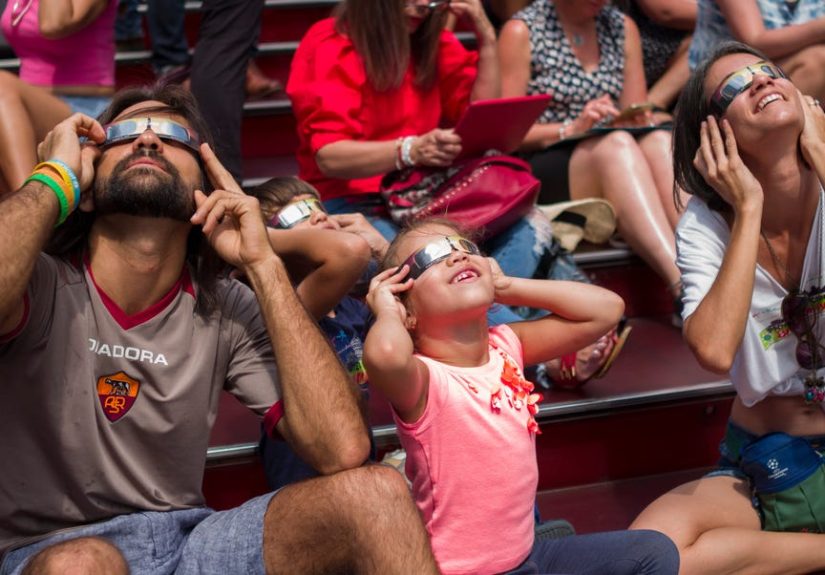
What makes the experience so memorable is that eclipses never feel entirely theoretical once you are there in person. Even a partial eclipse changes the mood of the day. People speak a little softer. Kids ask better questions than adults. Neighbors who have never once discussed astronomy suddenly become deeply interested in orbital mechanics while standing in a driveway wearing paper glasses. The sky turns into a live event, and for a while, everyone is paying attention to the same thing. In modern life, that alone feels rare.
A partial eclipse, like the one that followed 2024 in March 2025, creates suspense in slow motion. The Sun does not vanish. Instead, it changes shape gradually, almost teasingly, as if the universe is editing the morning in real time. If you catch it near sunrise, the experience can feel especially cinematic. The horizon glows. The light seems softer than usual. You keep glancing up through safe filters because each minute looks a little different from the last. It is quieter than totality, but there is a special intimacy to it. You are not overwhelmed; you are drawn in.
Total eclipse travel is different. It carries the buzz of a festival and the nerves of a weather-dependent exam. People gather early, check forecasts obsessively, and make friends fast because everyone knows they are there for the same absurdly specific miracle. Then the light begins to thin. Shadows sharpen. The temperature shifts. Birds get confused. Conversation fades. And when totality hits, the reaction is almost always bigger than expected. Some people cheer. Some go silent. Some forget every scientific term they ever knew and just point at the sky like delighted cave dwellers. Honestly, fair enough.
The best part is what happens after. For days, maybe years, people describe the event with the same slightly stunned energy. They talk about the color of the horizon, the shape of the corona, the weirdness of standing in daylight that suddenly felt borrowed. They compare stories about where they were, who they were with, and whether the clouds almost ruined everything. An eclipse becomes more than a date on a calendar. It becomes a memory with weather, geography, emotion, and company attached to it.
That is why interest in the next eclipse after 2024 has remained so strong. People are not just looking for another astronomical event. They are looking for another experience that makes the world feel bigger, stranger, and somehow more connected. You can read the maps, memorize the dates, and study the science, and you should. But when the sky finally starts to change, the experience is still wonderfully human. You look up, everyone else looks up too, and for a few unforgettable minutes, the entire day belongs to the sky.
Conclusion
The phrase “The Next Solar Eclipse After 2024” has two useful answers. The immediate next solar eclipse after the April 8, 2024 total eclipse was the partial solar eclipse of March 29, 2025. The next total solar eclipse after 2024 is August 12, 2026. For U.S. readers, that distinction matters because the next easy, dramatic dose of totality is not coming back to the contiguous United States until 2044.
So the real takeaway is simple. If you want the next eclipse on the calendar, look to March 2025. If you want the next grand total-eclipse adventure, look to August 2026. And if you caught the eclipse fever in 2024, welcome to the club. The meetings are irregular, the snacks are questionable, and the sky keeps giving us reasons to show up.






 Close
Close