
Table of Contents >> Show >> Hide
- Precision Is the Social Contract Beneath Modern Life
- When Precision Turned Craft Into Industry
- Precision Builds More Than Machines
- Timekeeping: The Most Invisible Precision of All
- The New Precision Economy
- What Happens When Civilizations Stop Caring About Precision?
- Experiences That Reveal What Precision Really Means
- Conclusion
Civilization has always loved grand speeches. We celebrate empires, skylines, inventions, revolutions, and moonshots. But if you strip away the marble, steel, glass, and patriotic theme music, something far less glamorous is doing the real heavy lifting: precision. Not passion alone. Not ambition alone. Precision.
The world you woke up in this morning only worked because millions of things landed where they were supposed to land. Your phone kept time closely enough to stay in sync with networks. Water moved through pipes that were sized, aligned, and sealed with care. Roads and bridges held their geometry. Manufactured parts fit together without requiring a prayer circle. Your coffee maker, your car, your laptop, your home’s electrical system, and the aircraft arcing overhead all relied on a quiet miracle of exactness.
That is the hidden story of human progress. Civilizations are not built merely by people with big dreams. They are built by people who can measure, compare, repeat, calibrate, and hold a line. The flashy headline is always innovation. The footnote is tolerance. And, as any machinist, engineer, surveyor, or watchmaker could tell you, the footnote is usually where the truth lives.
Precision Is the Social Contract Beneath Modern Life
Before precision became industrial, it was civic. Trade cannot scale if one town’s pound is another town’s creative interpretation. Construction cannot become reliable if builders are working from local approximations and cheerful hand-waving. Science cannot advance if measurements are not repeatable. In other words, civilization starts to mature the moment it stops saying, “Eh, close enough,” and starts asking, “Compared to what standard?”
This is why measurement science matters so much. It sounds like the kind of phrase that could empty a dinner party in twelve seconds, but it is one of the foundations of the modern world. A civilization that agrees on time, length, weight, pressure, temperature, and geometry can coordinate trade, engineering, transportation, and research at scale. A civilization that does not is basically trying to run a symphony with half the orchestra tuned to a toaster.
Precision is not just about tiny numbers and lab coats. It is about trust. When a manufacturer orders material from one supplier and tooling from another, both need confidence that the measurements mean the same thing. When an engineer in one state shares drawings with a plant in another, the dimensions must survive translation. When a hospital device is calibrated, when a bridge deck is laid out, when a navigation signal reaches a receiver, all of it depends on standards that are stable, shared, and boring in exactly the right way.
That boredom, by the way, is heroic. Civilizations survive on dependable dullness. The glamorous part is the launch. The essential part is the calibration sticker.
When Precision Turned Craft Into Industry
There was a time when products were less “manufactured” and more “persuaded into existence.” Skilled craftspeople made objects one at a time, adjusting pieces by hand until they fit. The workmanship could be beautiful, but it was slow, inconsistent, and difficult to scale. If a part broke, replacement was often an adventure. “Interchangeable” was more of an aspiration than a guarantee.
The Rise of Interchangeable Parts
Everything changed when societies began to treat uniformity as a feature, not a limitation. The development of interchangeable parts was one of the great turning points in industrial history because it transformed repair, assembly, logistics, and output. A working civilization needs more than invention; it needs repeatability. The moment parts could be produced to dependable dimensions and assembled in sequence, industry stopped being a collection of talented exceptions and became a system.
This shift did not happen because people suddenly became smarter. It happened because they became more exact. Jigs, fixtures, gauges, and increasingly specialized machine tools gave factories a way to hold dimensions and control variation. Once that system matured, industries could grow, cities could expand, and consumers could expect products that behaved like products rather than moody little snowflakes.
That might sound harsh toward handcrafted irregularity, but civilization is not run on artisanal surprise. You do not want a “unique” bearing. You do not want a one-of-a-kind brake component. And you definitely do not want a bridge assembled by a team that views measurements as a suggestion.
Tolerances: The Difference Between “Fits” and “Fantastic, It Broke”
Precision is often misunderstood as the pursuit of absolute perfection. In reality, engineering lives in the world of tolerances. Good design does not demand impossible exactness everywhere. It specifies how much variation is acceptable for a part to function, assemble, and last. That is where modern manufacturing becomes less like sculpture and more like disciplined negotiation.
Tolerances are civilization’s compromise with reality. Materials expand and contract. Machines wear. Processes drift. Nothing physical is truly perfect. So engineers define allowable variation with extraordinary care. Too loose, and parts rattle, leak, misalign, or fail. Too tight, and production becomes wasteful, expensive, or impossible. Precision, then, is not fanaticism. It is judgment.
Modern design languages such as GD&T exist because complex manufacturing needs a common grammar. Dimensions alone are not enough. Orientation, position, flatness, roundness, and relationships between features all matter. A civilization capable of making advanced machines is, in part, a civilization capable of describing variation intelligently.
Precision Builds More Than Machines
It is easy to associate precision with machine shops, microscopes, and people who own suspiciously expensive measuring tools. But precision is just as vital in the built environment. Roads, tunnels, dams, rail lines, bridges, utility corridors, ports, and airports all depend on geometric discipline. Without it, infrastructure becomes an expensive argument with gravity.
Bridges Do Not Care About Your Optimism
A bridge is a magnificent act of controlled agreement. Loads must travel where engineers intend. Supports must land where calculations assume. Components must align in three dimensions, not just in a hopeful artist’s rendering. Geometry is not decorative in bridge construction; it is central.
That means layout accuracy, surveying, material control, and inspection are not side quests. They are the difference between a structure that performs as designed and one that begins life already carrying hidden problems. A few small deviations can cascade into larger ones. That is the cruel comedy of precision work: tiny errors love making giant friends.
The same logic applies to dams, channels, and large civil works. These structures manage water, force, settlement, and time. They are not static sculptures. They move, age, expand, contract, and respond to environment. Precision in construction is only part of the story; precision in monitoring matters too. Civilizations endure when they do not merely build well, but also measure well after the ribbon-cutting is over.
Surveying Is the Skeleton Under the Landscape
Most people never think about geodesy, control points, coordinate systems, or real-time positioning networks unless they work in surveying, mapping, construction, or navigation. Yet these systems quietly organize space for the rest of us. Property boundaries, transportation corridors, site development, machine control, emergency response, and infrastructure maintenance all depend on accurate position.
Precision here is both literal and philosophical. To build well, a civilization must know where things are. Not approximately. Not “over there-ish.” It must know where they are in relation to everything else. That requires reference frameworks, correction systems, and continuous maintenance of measurement networks. In the modern world, even location has an invisible backbone.
Timekeeping: The Most Invisible Precision of All
If geometry gives civilization its shape, timekeeping gives it rhythm. And modern civilization is obsessed with rhythm. Financial transactions, communications networks, power systems, navigation, data exchange, logistics, broadcasting, and scientific research all depend on synchronized time. The irony is delicious: some of the most advanced systems in human history can wobble if their clocks do.
This is where precision becomes almost poetic. A person can glance at a wristwatch and think of time as casual. A civilization cannot. Civilizations require official time scales, atomic standards, synchronization systems, and constant coordination between terrestrial and satellite systems. In other words, while humans say things like “I’m running five minutes late,” infrastructure says, “That is an unacceptable lifestyle choice.”
Global navigation systems make this beautifully clear. GPS is not magic. It is timing. Receivers determine position from signals arriving from satellites, and those signals depend on exceptionally precise clocks. Even tiny timing errors can grow into large position errors. That means atomic clocks, ground updates, monitoring, and synchronization are not luxuries; they are the invisible plumbing of modern navigation.
Meanwhile, official time distribution keeps networks aligned. The timestamps buried in communication systems, financial records, and control operations are only as trustworthy as the timing references behind them. Civilization looks digital on the surface, but underneath it is still deeply metrological.
The New Precision Economy
Precision is not a dusty industrial relic. It is becoming even more important as manufacturing grows more complex. In advanced machining, robotics, semiconductor work, aerospace production, medical devices, and additive manufacturing, the cost of uncertainty can be brutal. One unnoticed deviation can wreck quality, throughput, safety, or performance.
From Machine Tools to Digital Threads
Today’s best manufacturers do not treat measurement as the sad little audit that happens after production. They pull it into the whole process. Sensors monitor conditions. Software models behavior. Inspection feeds process control. Calibration protects traceability. Metrology is no longer just the referee; it is increasingly part of the offense.
Additive manufacturing is a perfect example. It offers incredible design freedom, but it also introduces new verification problems. Internal defects, surface variation, process drift, and material behavior all demand more sophisticated measurement strategies. The future of manufacturing will not belong to the companies that simply build faster. It will belong to the ones that can measure uncertainty before uncertainty sends them an invoice.
And that is the bigger lesson. Precision is not anti-innovation. It is what allows innovation to survive contact with reality. Big ideas become dependable products only when measurements, tolerances, and process control do their quiet work.
What Happens When Civilizations Stop Caring About Precision?
Things do not usually collapse with cinematic flair. More often, they drift. Standards get neglected. Maintenance gets deferred. Measurements lose traceability. Drawings become sloppy. Data quality declines. Time sync gets treated as an IT housekeeping issue instead of critical infrastructure. Eventually, systems that once worked elegantly start behaving like an overconfident intern on a Friday afternoon.
A civilization does not need perfection to flourish, but it does need discipline. Precision is the practical form of that discipline. It says that reality can be tested, variation can be managed, and quality can be reproduced. It replaces guesswork with evidence and wishful thinking with geometry.
That is why precision deserves more cultural respect than it gets. We tend to honor visionaries, founders, and inventors, and rightly so. But civilizations are ultimately maintained by people who verify the angle, zero the instrument, inspect the part, validate the timestamp, and refuse to sign off on “good enough” when good enough is one bad day away from failure.
Experiences That Reveal What Precision Really Means
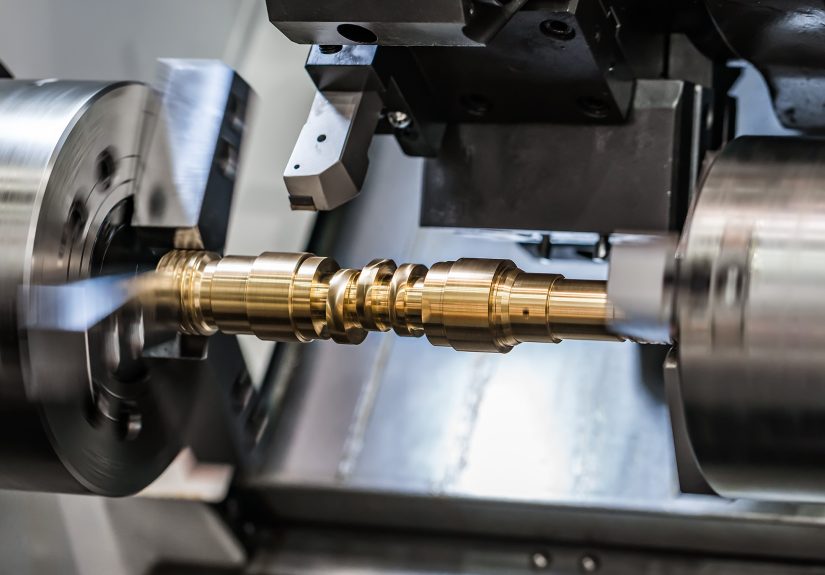
One of the best ways to understand precision is to watch it up close. Not in a slogan, and not in a glossy ad where sparks fly in dramatic slow motion, but in ordinary work. Stand in a machine shop for an hour and you start to see the emotional life of measurement. A machinist does not just look at a part. They look at whether it repeats. Whether the cut is drifting. Whether heat is sneaking into the process. Whether the tool sounds wrong by half a whisper. To an outsider, it can seem obsessive. To someone who understands the stakes, it looks like respect.
You see the same thing on a survey crew. There is a calm, almost ceremonial quality to setting control, checking references, confirming line and elevation, and refusing to let assumptions do the job of verification. The public sees the finished road, the finished building, the finished bridge. The crew sees the chain of exact decisions that had to be right first. That is one of civilization’s oddest tricks: the better precision is done, the less visible it becomes.
Even everyday people have experiences with precision whether they realize it or not. The elevator door that closes cleanly. The replacement part that actually fits. The navigation app that finds the right turn instead of confidently escorting you into a lake. The kitchen faucet that threads into place without leaking. The contact lens that feels normal because its dimensions are not random. Every one of those small satisfactions is a tiny encounter with an enormous system of standards, tooling, inspection, and measurement discipline.
Then there are the moments when precision fails, and suddenly everyone becomes a philosopher. A table wobbles. A cabinet door refuses to line up. A car develops a vibration that should not exist. A building renovation turns into a comedy of old walls, strange clearances, and historical optimism masquerading as craftsmanship. In those moments, people rediscover a harsh truth: reality keeps score. Precision was there all along; you just only noticed it when it left the room.
There is also a strangely human pleasure in working precisely. Ask anyone who has trammed a machine, aligned a fence, dialed in a setup, squared a frame, or watched a measurement come in exactly where it should. There is satisfaction in it because precision is evidence that thought has successfully met matter. The plan did not merely exist on paper. It arrived in the world intact.
That experience matters culturally as much as technically. Societies that value precision tend to build habits of patience, accountability, and verification. They learn that quality is not luck and that excellence is usually a chain of small accuracies rather than one dramatic gesture. They also learn humility, because precision punishes ego fast. Steel does not care how confident you are. Geometry does not blush. Time does not negotiate. If your numbers are wrong, the universe will provide prompt feedback.
In that sense, precision is more than a technical requirement. It is a civic virtue. It teaches us to check our work, define our terms, respect constraints, and understand that small deviations can become large consequences. Those are not just engineering lessons. They are civilization lessons. The societies that endure are rarely the ones that are loudest about greatness. They are the ones that keep standards, maintain systems, and understand that progress is built one verified detail at a time.
So yes, civilizations are built on ambition, labor, imagination, and courage. But the version that lasts is built on precision. The line must be measured. The clock must be trusted. The parts must fit. The structure must hold. The coordinates must agree. And somewhere, usually out of frame, a deeply unimpressed professional is checking whether the numbers are actually right. Civilization owes that person a thank-you card.
Conclusion
The precision upon which civilizations are built is not abstract. It lives in standards, tolerances, timing systems, control networks, manufacturing methods, and infrastructure geometry. It is the difference between systems that scale and systems that stumble. Grand achievements may win the headlines, but precise measurement is what keeps those achievements alive long after the applause ends.







 Close
Close