
Table of Contents >> Show >> Hide
- The V-Bombers Were Marvels of the Atomic Age
- How the Escape System Worked, and Why It Was So Uneven
- Why the Issue Turned from Design Compromise into Public Controversy
- The Official Case Against Full Retrofit
- The Case for Retrofit Was More Than Sentiment
- Accidents Kept the Argument Alive
- So, Was the RAF Wrong?
- What the Controversy Felt Like for the Crews
- Conclusion
- SEO Tags
Cold War bombers were built to look confident, sound terrifying, and reassure politicians that national deterrence was under control. The British V-force did all three with style. The Vickers Valiant, Handley Page Victor, and Avro Vulcan looked futuristic enough to make science fiction jealous, and for a time they formed the core of Britain’s airborne nuclear deterrent. But tucked inside that elegant engineering was a grim argument that never really went away: if things went wrong, why did only some of the crew get ejection seats?
That question became the heart of the V-Bomber ejector seat controversy. It was not just a technical debate over aircraft design. It was a moral argument, a crew-survival argument, and, frankly, a very British argument about whether practicality should beat fairness when lives were on the line. The pilots in the front had Martin-Baker seats. The rear crew usually did not. In emergencies, they were expected to escape through a hatch. On paper, that sounded possible. In the real world, paper has never experienced G-forces, smoke, spin, or panic.
What made the controversy endure is that both sides had arguments that sounded reasonable until an accident happened. Then one side started sounding a lot less reasonable.
The V-Bombers Were Marvels of the Atomic Age
To understand the controversy, you first have to understand the job. The V-bombers were designed in the early nuclear era, when Britain wanted a credible strategic bomber force of its own. The Valiant entered service first, followed by the Vulcan and Victor. These aircraft were meant to fly high, fast, and far, delivering nuclear weapons if the Cold War ever turned hot in the worst possible way.
In that original concept, altitude was part of the safety plan. A stricken bomber at high altitude might give the crew time to abandon the aircraft in sequence. The pilots could continue flying while the other crew members escaped, then eject later themselves. In design offices and Air Ministry discussions, that logic had a certain clean, diagram-friendly appeal. Unfortunately, actual emergencies are messy, and bomber crews are made of bones rather than drafting lines.
The V-force also used a five-man crew arrangement that reflected the technology of the day. These bombers carried navigators, radar specialists, and electronics officers because this was an age before compact avionics and glass cockpits. The aircraft were sophisticated, but sophistication came with crowded compartments, role specialization, and escape problems that were not shared equally.
How the Escape System Worked, and Why It Was So Uneven
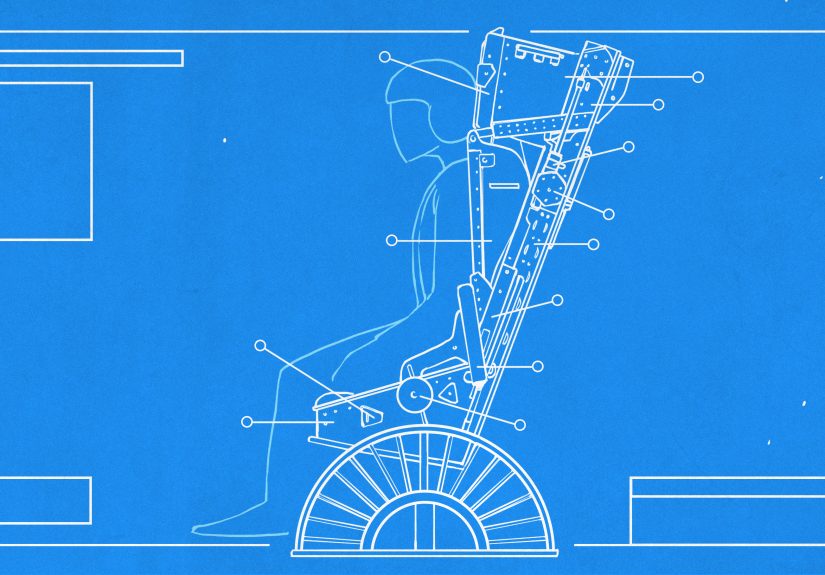
The core of the V-Bomber ejector seat controversy is brutally simple. On the Vulcan, and effectively across the V-bomber family in operational terms, only the pilot and co-pilot sat on ejection seats. The rear crew sat behind and below them, facing aft, and in an emergency were expected to leave through the crew entry hatch. That meant getting out of their seats, moving to the hatch, and exiting the aircraft in the right conditions and at the right time.
And there was the problem. “The right conditions” in an aircraft emergency can be as rare as a polite online comments section.
At high altitude with time, discipline, and stable flight, hatch escape could work. But if the bomber was low, out of control, burning, or spinning, the rear crew’s odds dropped hard. Ejection seats are violent, imperfect, and never cozy, but they are fast. A hatch escape is slower, more physical, and more dependent on the aircraft being cooperative. Aircraft in distress are famous for not being team players.
Even the ejection seats that did exist were not magical. Early Martin-Baker seats had limits, and a 1952 Valiant prototype accident showed that seat escape itself could be dangerous, with one pilot killed after striking the aircraft’s fin. So the controversy was never as simple as “ejection seats equal safety, hatch equals doom.” Still, the larger problem remained painfully obvious: the front crew had a rapid escape option, while the rear crew often had a procedure.
Why the Issue Turned from Design Compromise into Public Controversy
The controversy sharpened as the mission changed. Early V-bomber doctrine emphasized high-altitude penetration, but the surface-to-air missile age changed the rules. After air defenses improved and high-altitude survivability looked shakier, the V-force increasingly adapted to low-level operations. That made sense tactically. It made the rear crew’s escape problem worse.
Low-level flying reduced reaction time in emergencies. It also increased the odds that a malfunction, bird strike, fire, or loss of control would become fatal before a rear crew member could unstrap, move, reach the hatch, and get clear. Critics argued that a design compromise that had seemed tolerable in a high-altitude nuclear role looked far uglier once those same aircraft were expected to skim lower and operate in harsher flight profiles.
Parliament noticed. In January 1961, a Commons question explicitly asked why V-bombers did not provide ejector seats for all crew members when American bombers such as the B-47, B-52, B-58, and proposed B-70 were cited as comparators. The government answer was that rear crew had an escape hatch and that retrofitting ejection seats would require a large modification program that would weaken Bomber Command’s front line for a long period. That reply did not kill the issue. It basically fed it.
By 1964, the Lords were openly debating not just technical feasibility but morality and morale. Critics asked whether it was right to keep sending men up in aircraft when everyone understood that a low-level emergency left the rear crew with “next to no chance” of bailing out. When a controversy graduates from engineering to ethics, it has already stopped being small.
The Official Case Against Full Retrofit
To be fair to the officials and engineers involved, they were not shrugging and saying, “Good luck back there.” The official case against fitting rear-crew ejection seats rested on several serious points.
1. The redesign would be major
Government statements argued that installing rear-crew ejection seats was not a simple bolt-on fix. The rear compartments would need extensive redesign and structural alteration. In other words, this was not like adding cup holders to a sedan. It was major surgery on an aircraft already in service.
2. The bombers would be out of action for months
Officials warned that each aircraft could spend months on the factory floor if retrofit work went ahead. For a force still considered operationally important in Britain’s nuclear posture, that mattered. You cannot maintain deterrence very well if your deterrent is parked in pieces under fluorescent lighting.
3. The V-force was expected to phase out
Another official argument was timing. By the mid-1960s, policymakers believed the V-bombers were approaching the later phase of their strategic career, with a broader shift toward other delivery systems. If the force was expected to phase out around 1970, did it make sense to pour years of engineering work into a full escape-system rebuild?
4. Improvements short of ejection seats were being introduced
Rather than install full rear-crew ejection seats, the RAF and industry pursued assisted-escape measures. These included swivel seats, pneumatic or inflatable cushions, and modified parachute and harness arrangements intended to get rear crew to the hatch much faster. Official statements claimed these changes could cut escape time dramatically and improve survival chances even at low altitude.
That was the practical case. It was not absurd. It was also not emotionally satisfying to the men sitting nearest the hatch.
The Case for Retrofit Was More Than Sentiment
The pro-retrofit argument was not simply “all crew deserve identical equipment,” though that point had real force. It was also based on changing operations, comparative design trends, and lived experience.
First, critics argued that low-level flying changed the math. A system acceptable for stable, high-altitude abandonment looked dangerously optimistic in a low-level emergency. Second, they pointed out that other bomber programs had moved toward more comprehensive crew escape arrangements. Third, they argued that morale mattered. Bomber crews were not stupid; they knew exactly who had the quick way out and who did not.
There was also the plain moral argument. Governments spend enormous sums training pilots, navigators, radar officers, and electronics specialists. More importantly, crews are not interchangeable spare parts. Asking rear crew to accept inferior escape prospects because redesign would be inconvenient may be strategically rational in a memo, but it lands very differently inside a cockpit.
The controversy therefore became a clash between system logic and human logic. System logic asked whether the force could afford retrofit. Human logic asked why some lives were protected by explosive engineering while others were protected by optimism and a hatch.
Accidents Kept the Argument Alive
Controversies like this do not survive on theory alone. They survive because incidents keep reopening the wound.
One of the most revealing Vulcan examples came in 1959, when XA891 suffered an electrical failure. The aircraft commander gained height and bought enough time for the crew to abandon the aircraft. Everyone survived, making it the first complete Vulcan crew to escape successfully. Supporters of the existing arrangement could point to that incident and say, “See? The system can work.”
But later events told a harsher story. In a 1964 Vulcan accident during a demonstration, both pilots ejected successfully, while the rear crew did not escape, reportedly because the aircraft’s spin and G-forces defeated them. In a 1968 Vulcan crash, both pilots again ejected while the rear crew were killed. These were exactly the scenarios critics feared: the airplane became unrecoverable quickly, the front seats worked, and the rear compartment paid the price.
That is why the V-Bomber ejector seat controversy never sounded like a fussy technical niche to the people involved. It was a pattern. Not every accident followed the same script, but enough of them did to make the imbalance impossible to ignore.
So, Was the RAF Wrong?
The honest answer is more complicated than a slogan.
If you judge the decision by the realities of cost, engineering complexity, and force availability in the early 1960s, the refusal to retrofit rear-crew ejection seats was understandable. Governments often choose the least disruptive solution, especially when deterrence posture is involved. From that perspective, assisted-escape modifications were a compromise that preserved aircraft strength while attempting to improve survival.
If you judge the decision by crew equity, by later low-level doctrine, and by accident outcomes, it looks much harder to defend. The official view depended heavily on scenarios in which the aircraft remained controllable long enough for rear-crew escape. Real accidents often refused to cooperate with that assumption. Gravity, spin, fire, and chaos are notorious critics of planning documents.
So the RAF was not irrational. But it may have been too willing to believe that a compromise designed for one mission profile would remain acceptable after the mission changed. That is the quiet lesson underneath the drama: aircraft safety decisions age. What seems tolerable in one operational era can become morally threadbare in the next.
What the Controversy Felt Like for the Crews
For the men who actually flew these bombers, the controversy was not a museum caption or a parliamentary exchange. It was something much more immediate: an awareness of where you sat, how fast you could move, and whether the airplane would still be giving you enough time to do it.
Imagine the practical psychology of the rear compartment. You were not in a panoramic fighter cockpit with a dramatic canopy and a single bright handle promising instant separation from disaster. You were in a working space built for navigation, radar, electronics, and procedure. You faced aft. Your world was instruments, charts, coordination, and discipline. In routine flight, that arrangement made sense. In an emergency, it asked for a calm, physical sequence inside a machine that might suddenly be doing its best impression of a dropped filing cabinet.
Ground drills could help, and crews did practice them. They knew the routine. They knew how the swivel seats and assisted escape measures were supposed to speed things up. They knew the theory of reaching the hatch in seconds rather than fumbling their way there. But drills happen on the ground, where the floor stays where floors belong and nobody is trying to wrestle a damaged bomber back into the sky.
That gap between drill and reality mattered. Crews understood that high altitude gave them a better chance. Time was everything. Altitude was time. Stable flight was time. A captain who could hold the aircraft together for just a little longer might turn a fatal emergency into a survivable one. That is why some successful abandonments became almost legendary within bomber culture: they proved discipline and flying skill could buy life. They also proved how much depended on circumstances rather than certainty.
There was also an emotional asymmetry built into the layout. The pilots’ ejection seats were not a secret. Everyone knew who had them. That does not mean bomber crews were resentful in some cartoonish sense. These were professional teams. But professionalism does not erase arithmetic. When only two men have the immediate option and the others rely on timing, geometry, and a hatch, every crew member understands the hierarchy of survival whether anyone says it aloud or not.
And then there was low-level flying. The V-force’s move downward did not just change tactics; it changed how emergencies felt in the body. Low-level flight is busy, noisy, and unforgiving. The scenery stops being scenery and starts looking uncomfortably available for impact. In that environment, rear-crew escape was not just about bravery. It was about whether there was enough sky left to make bravery useful.
Veterans and historians often remember the Vulcan especially as both magnificent and slightly mad: a huge bomber that could be handled with surprising agility, a Cold War machine with charisma to spare. That charisma can hide the crew’s daily reality. Inside the aircraft, the controversy was about trust. Trust in training. Trust in the captain. Trust in engineering. Trust that the aircraft would fail in a polite enough manner to let everyone leave.
That last bit was the real problem. Aircraft emergencies are rarely polite. Which is exactly why the V-Bomber ejector seat controversy still has enough bite to spark debate decades later.
Conclusion
The V-Bomber ejector seat controversy endures because it sits at the uncomfortable intersection of engineering, strategy, and ethics. The V-force was a triumph of British aeronautical ambition, but it also embodied a design compromise that became harder to justify as missions changed and accidents accumulated. Officials argued that full retrofit was too disruptive and too late. Critics argued that none of those reasons mattered much to the men in the back if the aircraft was out of control at low level.
In the end, the controversy was never really about whether the V-bombers were brilliant. They were. It was about whether brilliance had been purchased with an escape hierarchy that history exposed too clearly. That is why this issue still resonates: it reminds us that in military aviation, the most revealing question is sometimes not how an aircraft fights, but how fairly it lets its crew survive when fighting is over.






 Close
Close