
Table of Contents >> Show >> Hide
- What Is Skultuna’s Lily Candleholder?
- The Story Behind the Design
- Why It Still Looks Modern
- The Beauty of Polished Brass
- How to Style Skultuna’s Lily Candleholder
- Small Details That Make It More Interesting
- How to Care for It Without Losing Your Mind
- Candle Safety, Because Fire Is Not a Styling Accessory
- Is It Worth the Attention It Gets?
- The Experience of Living With Skultuna’s Lily Candleholder
- Final Thoughts
Some home accessories whisper. Others politely nod from a shelf and hope you notice them someday. Skultuna’s Lily Candleholder does neither. It enters a room the way a very elegant guest enters a dinner party: quietly, yes, but with enough confidence that everybody somehow adjusts their posture. That is the strange magic of this small Scandinavian object. It is a candleholder, sure, but it also behaves like sculpture, a conversation starter, and the sort of design piece that makes even your coffee table feel like it suddenly has excellent taste.
For anyone interested in timeless décor, Swedish design, polished brass accents, or mid-century forms that still look fresh decades later, the Lily Candleholder is easy to understand and surprisingly hard to forget. It has curves, but not fussiness. Shine, but not glitter. Drama, but only the tasteful kind. In a world full of home accessories trying very hard to be “iconic,” this one simply gets on with the job and ends up iconic anyway.
What Is Skultuna’s Lily Candleholder?
At its core, the Lily Candleholder is a sculptural brass candleholder with a shape that resembles the opening petals of a lily. That floral inspiration matters, but not in an obvious, botanical-print-on-a-pillow kind of way. The piece does not scream “flower.” Instead, it translates the idea of a flower into smooth, sweeping lines that feel refined, architectural, and almost aerodynamic. It is organic without being rustic and decorative without being fussy.
This is one reason the design has aged so well. The Lily Candleholder works beautifully in a mid-century modern interior, but it also slides just as easily into minimalist homes, traditional spaces, eclectic apartments, and quiet luxury setups where every object looks like it has a passport and a point of view. Put simply, it is the rare decorative piece that can look equally at home on a marble mantel, a walnut dining table, a bookshelf, or a nightstand next to a stack of books you keep pretending to finish.
The Story Behind the Design
The Lily Candleholder has real design history behind it, which helps explain why it feels more substantial than a random brass accessory grabbed during a midnight shopping spiral. It was created by Swedish sculptor Ivar Ålenius Björk, a designer known for portrait busts and public works, and the piece was originally designed for the 1939 New York World’s Fair. That origin story gives it a little extra sparkle. It was born at a moment when modern design was presenting itself to the world with optimism, clarity, and a belief that everyday objects could also be beautiful.
The candleholder was originally produced by Ystad-Metall, a Swedish manufacturer associated with beautifully crafted metal objects. Over time, the Lily became one of those beloved Scandinavian pieces that collectors, stylists, and design-minded homeowners kept noticing again and again. Later, Skultuna brought the design back into production, preserving its sculptural identity while making it accessible to a modern audience that still appreciates objects with a backbone.
That matters because the Lily Candleholder is not a retro imitation of something vaguely old-looking. It is the real thing, or rather, the real design thoughtfully revived. And that distinction is important. Plenty of décor pieces borrow the language of vintage Scandinavian design. The Lily Candleholder speaks it fluently.
Why It Still Looks Modern
A lot of products from the 1930s and 1940s now look charming in a museum way. You admire them, respect them, and then keep them far away from your actual living room. The Lily Candleholder avoids that fate because its form is so disciplined. It uses symmetry, negative space, and soft curvature in a way that still feels contemporary. There is no visual clutter. No extra ornament. No decorative nonsense hanging off the sides just for excitement.
The result is a piece that feels both soft and strong. From one angle it looks floral. From another it feels almost abstract, like a tiny brass monument. That dual personality is exactly what makes it interesting. It is warm enough to soften a room and sharp enough to elevate one.
Design-wise, it also benefits from scale. The Lily Candleholder is compact enough to fit into everyday life, but it has enough visual presence to anchor a vignette. You do not need six of them, a tray, three art books, a branch, and an emotional support ceramic bowl to make it work. One well-placed Lily often does more than an entire army of trendy accessories.
The Beauty of Polished Brass
Much of the candleholder’s appeal comes from its polished brass finish. Brass has a special trick: it reflects light while also warming it. Unlike chrome, which can feel cool and crisp, or matte black, which can disappear into a room, polished brass catches the eye in a way that feels rich, mellow, and alive. It adds glow rather than glare.
That glow becomes especially noticeable at golden hour, under lamplight, or when paired with an actual lit taper candle. Suddenly the Lily Candleholder is doing what great brass objects do best: bouncing warmth around a room and making everything nearby look slightly more expensive, slightly more intentional, and significantly more charming.
Today, the Lily is most closely associated with polished brass, though silver-plated versions are also available through some retailers. The brass model remains the classic choice, and it is easy to see why. The finish brings out the sculptural curves and gives the piece that unmistakable Scandinavian mix of restraint and richness.
How to Style Skultuna’s Lily Candleholder
On a Dining Table
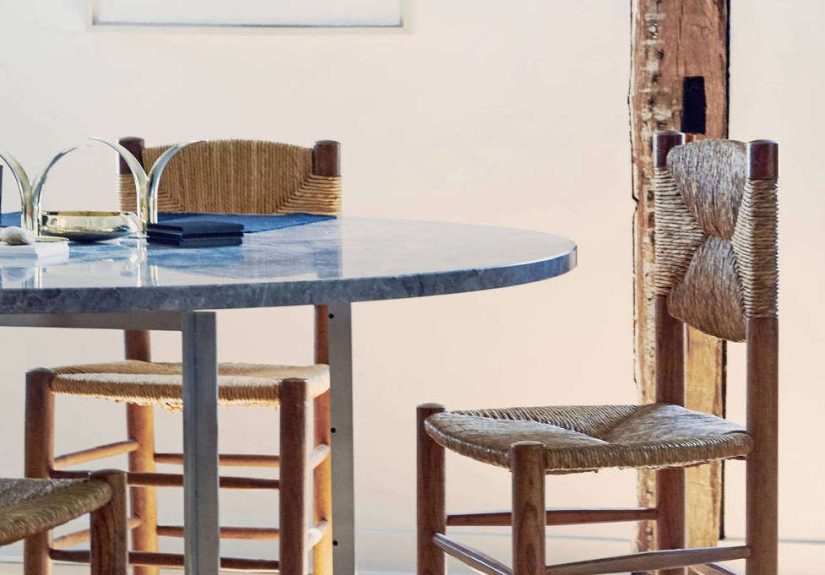
This is probably the most natural setting. A single Lily Candleholder at the center of a dining table can look poised and sculptural. A pair can create symmetry without becoming stiff. Add slim taper candles in ivory, cream, deep brown, forest green, or soft blush, and the whole arrangement feels elevated without turning into an overproduced tablescape. No one needs a themed tablescape that looks like it was built by a committee. The Lily prefers confidence over clutter.
On a Mantel or Console
Brass candleholders are often used to add height and visual interest, and the Lily does this beautifully because its shape is already expressive. It works especially well next to framed art, stacked books, stoneware vessels, or darker woods. If your mantel or console feels flat, the Lily brings movement without demanding a full decorative intervention.
On a Bookshelf
This is where the piece shows off its sculptural side. On a shelf, even unlit, it reads like a collectible object. It pairs especially well with art books, black-and-white photography, ceramics, and other tactile materials. It gives a shelf that little wink of adulthood that says, “Yes, I buy books for the content, but I also know what a good vignette looks like.”
As a Seasonal Accent
Because brass works year-round, the Lily Candleholder can move with the seasons without looking like it is wearing a costume. In fall and winter, it looks cozy and dramatic with darker tapers. In spring and summer, lighter candles and airy surroundings make it feel fresh. The trick is not to over-style it. Let the form do the heavy lifting.
Small Details That Make It More Interesting
One of the lovelier details in the current Skultuna ecosystem is the mini vase accessory made for the Lily Candleholder. It allows the piece to do double duty, introducing a delicate floral element into an already floral-inspired design. That sounds dangerously precious on paper, but in practice it is clever and charming. A single stem or tiny branch can make the piece feel even more poetic.
This also speaks to the flexibility of the design. The Lily Candleholder is not trapped in one narrow use case. It can be formal on a holiday table, relaxed on a bookshelf, romantic with a lit candle, or quietly sculptural when displayed on its own. Very few small décor objects manage that range without looking confused. The Lily pulls it off.
How to Care for It Without Losing Your Mind
Here is the good news for anyone who loves brass but not exhausting maintenance routines: Skultuna treats brass as a living material. In other words, the surface naturally changes over time. Tarnish and patina are part of the story, not signs of failure. If you like that mellow, aged look, you can let the candleholder develop character. If you prefer a brighter finish, you can polish it with a gentle brass polish and a soft, dry cloth.
The best approach is to be gentle. Avoid harsh scrubbing, and do not leave aggressive cleaning mixtures sitting on the metal like they are trying to settle a grudge. Soft cloths, mild polishing methods, and a little patience are your friends. If wax drips happen, and they will because candles enjoy chaos, warm water can help loosen the residue before careful cleanup.
It is also wise to handle polished brass thoughtfully. Fingerprints, moisture spots, and careless placement on delicate surfaces can all affect the finish. None of this is dramatic, but it does reinforce the point that the Lily Candleholder is an object worth treating with a little respect. Not white-gloves-in-a-museum respect, just normal grown-up respect.
Candle Safety, Because Fire Is Not a Styling Accessory
The Lily Candleholder may be beautiful, but it still holds a real flame. That means common-sense candle safety matters. Never leave a lit candle unattended. Do not let the candle burn all the way down into the holder. Keep candleholders away from materials that can catch fire, and remember that metal gets hot. If the holder is sitting on a delicate tabletop, use protection underneath rather than hoping for the best. Hope is not a fire-safety strategy.
If you are using more than one candle, give them space. A carefully styled table is lovely. A cluster of overheated flames trying to audition for a disaster report is not. The Lily Candleholder rewards restraint, aesthetically and practically.
Is It Worth the Attention It Gets?
Yes, and not only because it is photogenic. The strongest argument for Skultuna’s Lily Candleholder is that it succeeds on multiple levels at once. It has legitimate design history. It has material richness. It has a sculptural silhouette. It works across decorating styles. It looks good lit and unlit. It feels collectible without becoming untouchable.
That is a rare mix. Many decorative pieces are either too practical to be memorable or too precious to be useful. The Lily sits comfortably in the sweet spot between those extremes. It is functional art, which is a phrase people overuse, but in this case the shoe actually fits. And it is a very nice shoe.
The Experience of Living With Skultuna’s Lily Candleholder
Living with Skultuna’s Lily Candleholder is not really about owning a candleholder. It is about what happens when a small object quietly changes the mood of a room. That may sound dramatic for a brass piece that fits on a table, but that is exactly how good design works. It does not need to be loud to be influential. The Lily changes how a surface feels. It makes a corner seem considered. It gives a room a pulse, especially in the evening when light hits the brass and the whole piece begins to glow like it is in on some beautiful Scandinavian secret.
What makes the experience so satisfying is that the candleholder never feels disposable. Plenty of home décor is fun for a season and forgettable by the next one. The Lily is the opposite. It tends to become part of the room’s identity. You move it from a dining table to a bookshelf, then to a mantel, then back again, and somehow it works everywhere. It is adaptable without feeling generic. It has personality, but it is not needy about it.
There is also something wonderfully tactile about it. Even when unlit, the polished brass has presence. The curves catch the light during the day, and the form changes slightly depending on where you stand. In the morning it feels crisp and sculptural. At night it feels warm and romantic. Add a simple taper candle and it shifts again, becoming more intimate and ceremonial. Suddenly an ordinary dinner feels a little more intentional. A quiet night in feels less like collapsing into the sofa and more like choosing to inhabit your home well.
The ownership experience also includes the slow evolution of the material. Brass is not static. It records touch, air, time, and use. Some people will polish it regularly to keep that brighter shine; others will let it darken and soften into patina. Either choice feels right because the object is not fighting age. In fact, it seems built for it. That may be one of the most appealing things about the Lily Candleholder: it does not ask to remain frozen in perfection. It asks to be lived with.
And then there is the emotional side. The piece carries history without feeling dusty. You know it comes from a real design lineage, tied to the 1939 New York World’s Fair and a serious Scandinavian design tradition, but you experience it in the present tense. That mix of heritage and immediacy gives the object unusual depth. It feels meaningful without becoming solemn.
In practical terms, the Lily is also the kind of object people notice. Guests ask about it. They pick it up. They tilt their heads and say some version of, “What is this?” That is usually the sign of a strong design piece. It interrupts autopilot. It makes people look twice. And because it is both useful and sculptural, it earns its place without needing to justify itself.
So the experience of living with Skultuna’s Lily Candleholder comes down to this: it makes everyday spaces feel a little more refined, candlelight feel a little more ceremonial, and home feel a little more edited in the best possible way. Not colder. Not fussier. Just more intentional. And in decorating, that is often the difference between a room that looks fine and a room that feels memorable.
Final Thoughts
Skultuna’s Lily Candleholder has endured because it does not chase trends. It relies on proportion, material, history, and a shape that feels both natural and exact. It is floral without being frilly, sculptural without being showy, and luxurious without trying too hard. If you want a brass candleholder that brings Scandinavian design credibility, visual warmth, and lasting appeal, this one earns its reputation the old-fashioned way: by being genuinely excellent.
In short, the Lily Candleholder is proof that a small object can carry a lot of atmosphere. And honestly, that is a pretty impressive trick for something whose day job is holding a candle.




 Close
Close