
Table of Contents >> Show >> Hide
- The Tiny House Everyone’s Talking About (And What It Really Is)
- Why Floor-to-Ceiling Windows Feel Like a Tiny-Home Cheat Code
- What You Actually Get for ~$16K (And What You Don’t)
- Foundation Options: Where the Dream Meets the Dirt
- Layout Ideas for 225 Square Feet That Don’t Feel Like a Closet
- The Glass Reality Check: Energy, Comfort, and Privacy
- Safety and Codes: Yes, Glass Has Rules
- Who This Amazon Tiny House Is Perfect For
- Design Tricks to Make a Tiny Glass Cabin Feel Like a Boutique Stay
- Experiences: What It’s Like Living (or Working) Behind Floor-to-Ceiling Windows
- Conclusion
Somewhere between “I want a backyard office” and “I should just move to a cabin and become mysteriously good at baking bread,”
there’s a sweet spotand Amazon has been stocking it. The internet headline that keeps popping up is the same one you’re here for:
a $16K Amazon tiny house with floor-to-ceiling windows that makes the whole place feel twice as big.
Is it real? Yes. Is it actually a “tiny house” the second it lands on your property? Not exactly. But is it a genuinely eye-catching,
build-it-yourself cabin kit with a wall of glass that can turn a boring patch of lawn into a “why does your yard look like a boutique resort?” moment?
Absolutely.
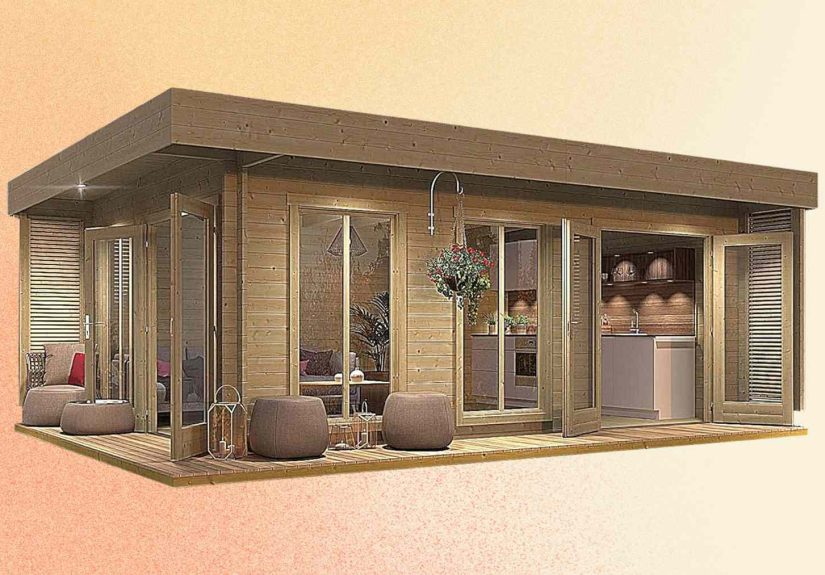
The specific star of this viral tiny-home moment is commonly sold as the Allwood Bonaire resort-style cabin kit.
It’s typically priced in the under-$16,000 range (prices change, because the internet is chaos), and it’s designed to be
a bright, modern, indoor-outdoor space: tall windows, full-glass French doors, and a wraparound porch vibe that practically demands
a morning coffee and a smug sense of accomplishment.
Let’s break down what this “$16K Amazon tiny house with floor-to-ceiling windows” actually is, what you really get for the price,
and what it takes to turn a pretty kit into a functional, comfortable space you’ll genuinely use.
The Tiny House Everyone’s Talking About (And What It Really Is)
First: terminology. Most of these Amazon “tiny houses” are either prefab shells, container-style units, or
cabin kitsand the $16K glassy wonder that keeps going viral is in the cabin-kit category.
That means you’re buying a pre-cut structure package (walls, roof boards, windows, doors, hardware) that you assemble on a prepared site.
You’re not buying a finished home with plumbing, electrical, insulation, drywall, cabinets, and a working bathroom the moment the truck leaves.
Think of it as “adult LEGO,” except the instructions are longer and your reward is a building, not a Millennium Falcon.
Quick specs people love about this kit
- Size: About 225 square feet of interior floor areacompact but not claustrophobic.
- Look: Modern cabin / resort pavilion aesthetic with big glass openings.
- Materials: Solid wood construction commonly described as slow-grown Nordic spruce.
- Signature feature: Tall, light-flooding windows often described as “floor-to-ceiling,” plus full-glass French doors.
- Use cases: Backyard office, guesthouse shell, studio, pool house, creative workshop, or short-term rental buildout.
Why Floor-to-Ceiling Windows Feel Like a Tiny-Home Cheat Code
In a small space, light isn’t just ambianceit’s square footage, emotionally speaking. Tall windows and full-height glass doors
stretch your sightlines, blur the boundary between inside and outside, and make 225 square feet feel less like “converted storage”
and more like “intentional design.”
The psychology is simple: when your eyes can travel farther, your brain reads the room as larger. That’s why tiny homes that lean into
daylightespecially with big glass panelstend to photograph like a dream and live more comfortably day-to-day.
(Also: sunlight is the cheapest décor you will ever own, and it never goes out of style.)
What the “wall of glass” does well
- Expands the room visually: You borrow scenery from the outdoors.
- Improves functionality: A bright space works better as an office, studio, or lounge.
- Makes it feel premium: Tall glazing reads “modern architecture,” even if your furniture is 60% flat-pack.
- Boosts versatility: Open the doors and you’ve got indoor-outdoor flow for entertaining or just feeling fancy.
What You Actually Get for ~$16K (And What You Don’t)
Cabin kits can be an incredible value, but only if you understand the boundary between “structure” and “finished livable space.”
The $16K number typically covers the kit: the pre-cut wood components, windows, doors, and essential hardware.
Depending on the seller, you may also see references to delivery in multiple crates and a numbered parts system.
Typically included in a resort-style cabin kit like this
- Pre-cut wall boards / wall components
- Floor boards
- Roof boards / rafters (structure varies by model)
- Windows and doors (including large glazed openings)
- Hardware and basic assembly documentation
Typically not included (aka: the stuff that turns it into a “real” space)
- Foundation: slab, piers, blocks, or a system approved by your local building department
- Roofing finish: shingles/metal roofing and underlayment (often separate)
- Insulation: especially important if you want four-season comfort
- Weatherproofing: sealants, exterior finish, flashing details
- Electrical + plumbing: rough-ins, permits, fixtures, connection to utilities (or off-grid systems)
- Interior buildout: walls/ceilings finish, flooring finish, cabinetry, bathroom build, HVAC
The takeaway: the kit gets you a gorgeous shell and a head start. The rest is your design, your budget, and your willingness
to learn the difference between “I watched three DIY videos” and “I understand flashing and water management now.”
Foundation Options: Where the Dream Meets the Dirt
“Where do I put it?” is not just a philosophical tiny-house questionit’s a real-world one. Many kits like this can be installed
on a concrete slab, or elevated on treated wood or block supports depending on site conditions
and your plans for utilities.
If you want plumbing, plan for it early. Raising the structure can create space for routing lines, but it also introduces
requirements around anchoring, access, and moisture protection. If you want the kit to function as an ADU, guesthouse, or habitable space,
your local building department will have opinionsand those opinions matter more than the product photos.
Layout Ideas for 225 Square Feet That Don’t Feel Like a Closet
The magic of a bright, glassy tiny cabin is that you can keep the interior simple and still make it feel intentional.
Here are a few layout approaches that work especially well with big windows and French doors.
1) The backyard office that doesn’t scream “office”
- Desk facing the windows (because staring at trees is the most productive form of procrastination)
- Low storage along one wall: closed cabinets + open shelves for “I’m organized” theater
- A compact loveseat or daybed for breaks (or “meetings,” depending on who’s asking)
2) The guest suite shell (simple, flexible, comfortable)
- Murphy bed or sofa bed to keep daytime space open
- Mini kitchenette wall: under-counter fridge + sink + induction cooktop
- Optional partition for a small bathroom if your buildout plan and permits allow
3) The creative studio that finally gets you out of the house
- Work table in the center (good light from every direction)
- Tool/storage wall along the least-windowed side
- Porch seating for breaks, drying time, or pretending you’re in a design magazine
The Glass Reality Check: Energy, Comfort, and Privacy
Big windows are a vibebut glass is also a thermal negotiator. In a tiny space, temperature swings feel bigger because there’s less air volume
to buffer heat gain and heat loss. That’s why window performance matters more than people expect.
Two terms you’ll see when evaluating windows (or upgrading glazing during your buildout) are:
U-factor (how well a window resists heat loss) and solar heat gain coefficient (SHGC)
(how much solar heat comes through). In general, a lower U-factor is better for insulation; SHGC depends on climate and orientation.
How to stay comfortable with “floor-to-ceiling windows”
- Use smart window coverings: Cellular shades can significantly reduce heat loss in winter and cut unwanted heat gain in summer.
- Plan shading: Overhangs, exterior screens, and porch design can protect you from harsh afternoon sun.
- Ventilation matters: Cross-breezes plus a ceiling fan can make a small, sunny space feel great.
- Consider low-e glazing upgrades: If the kit glazing isn’t optimized for your climate, upgrades can pay off in comfort.
- Privacy without cave vibes: Sheer curtains + top-down/bottom-up shades keep light while blocking sightlines.
Also: remember condensation. Tiny spaces + big glass + human breathing = moisture.
Good sealing, ventilation, and smart window choices reduce foggy mornings and “why is my window sweating?” confusion.
Safety and Codes: Yes, Glass Has Rules
When a design leans heavily on large windows and glass doors, you’re also stepping into building-code territory around safety glazing.
In many jurisdictions, certain glazing near doors and in impact-prone areas must be safety glass (often tempered or laminated).
This isn’t a buzzkillit’s a “please don’t turn your beautiful cabin into a very expensive lesson” situation.
The bigger point: if you’re planning to use your Amazon tiny house kit as a true dwelling or ADU, you’ll need to align with local code requirements
and permitting. Tiny houses on foundations often reference sections like IRC Appendix Q (where adopted) for design allowances and requirements.
Even if your build is “just” a studio or office, many places still require permits for new structures, electrical work, and plumbing.
Your practical checklist before you click “Buy Now”
- Call or check your local building department about permits for accessory structures and habitable spaces.
- Ask whether your plan is treated as a shed, studio, ADU, or dwelling (the answer changes requirements).
- Confirm setbacks, height limits, lot coverage, and utility connection rules in your area.
- Budget time for approvalsthis is the unglamorous part that keeps projects from going sideways.
Who This Amazon Tiny House Is Perfect For
If you want a light-filled retreat that feels high-end without a high-end footprint, this style of kit makes a lot of sense.
It’s especially appealing for people who want a structure that can be customized over time: start with a shell, then build out interiors
as budget and weekends allow.
Great matches
- Backyard office: A dedicated workspace that doesn’t steal a bedroom from your main house.
- Guesthouse shell: A flexible space that can evolve from lounge to sleep space to short-term rental.
- Studio or gym: Big windows make movement, art, and hobbies feel less boxed-in.
- Pool house / hangout pavilion: The porch + glass doors are built for “come in and out all day.”
Not ideal if…
- You need a finished, code-compliant home delivered move-in ready without additional work.
- You’re in a climate where insulation and HVAC are non-negotiable and you don’t want a buildout project.
- Your local zoning or HOA is famously allergic to anything fun.
Design Tricks to Make a Tiny Glass Cabin Feel Like a Boutique Stay
The shell is only half the story. The reason these kits look so stunning online is that the interiors are usually styled with a few consistent moves:
fewer visual interruptions, lower furniture, and materials that echo the outdoors.
Steal these ideas
- Keep furniture low: It preserves the vertical drama of the tall windows.
- Use one calm palette: Wood + warm whites + a few darker accents reads modern and intentional.
- Hide clutter: Closed storage makes small spaces feel luxurious, not busy.
- Layer lighting: Even with tons of daylight, you’ll want soft lamps at night to avoid “fishbowl chic.”
- Make the porch functional: Two chairs + a small table instantly turns the exterior into an extra room.
Experiences: What It’s Like Living (or Working) Behind Floor-to-Ceiling Windows
If you’ve never spent real time in a tiny space with a wall of glass, here’s the honest experience most people discover after the honeymoon phase:
it’s not just prettierit changes how you use the space. In a traditional spare room office, you might feel like you’re “going to work.”
In a glass-forward backyard cabin, the ritual feels more like stepping into a little destination. You walk across the yard, open the French doors,
and suddenly you’re in a room that feels separate from the main house’s noise and chores. That mental shift alone can make the space worth it.
Morning is usually when the windows earn their keep. Natural light makes tiny interiors feel awake, even before the caffeine hits.
People who use these as offices often set their desk to face the glassnot because it’s ergonomic (though it can be), but because it’s motivating.
Staring at daylight and greenery tends to reduce the “I am trapped in my inbox” feeling. It’s a small psychological upgrade that adds up, especially
if you work from home and your brain needs boundaries.
The flip side shows up around mid-afternoon. Sunlight that feels magical at 9 a.m. can feel like a personal attack at 3 p.m. if the glass faces west.
Owners and builders often end up adding one or more of these: shades, exterior screening, or a deliberate “porch-first” seating plan that lets you enjoy
the view without baking. The good news is that tiny spaces require less “stuff” to fix comfort issuesone good set of cellular shades can change the whole
room’s temperature behavior and privacy vibe in minutes.
Privacy is the other big lived experience. With floor-to-ceiling windows, you learn quickly whether your yard is peaceful or basically a neighbor runway.
In quiet, wooded, or larger-lot settings, the glass feels like a luxury resort feature. In tighter suburbs, it can feel like you accidentally built a display case.
The people happiest long-term usually treat privacy as a design feature, not an afterthought: layered window coverings, strategic landscaping, and interior lighting
that’s warm at night (so you don’t turn the cabin into a glowing aquarium).
Then there’s the weather drama. Rain on big windows is genuinely cozy, especially when you’re inside reading, working, or watching a storm roll in.
But big glazing also makes you more aware of drafts, condensation, and temperature swings. The most satisfying builds are the ones where someone took the “boring”
parts seriously: sealing, ventilation, and smart glazing choices. When that’s handled well, the experience is exactly what the photos promisebright, calm, and
surprisingly spacious. When it’s handled poorly, you’ll still love the view… while wearing a hoodie indoors and wondering why your windows are crying.
Bottom line: a $16K Amazon tiny house with floor-to-ceiling windows can feel like the coolest room you’ve ever addedbecause it’s not just square footage,
it’s a change of scenery. And sometimes, that’s the upgrade people actually need.
Conclusion
The viral “$16K Amazon tiny house” is less a turnkey home and more a seriously stylish cabin kit that trades square footage for light,
openness, and indoor-outdoor energy. If you go in with clear expectationskit versus finished dwellingthis type of build can be a smart way to add a
backyard office, studio, or guest-ready retreat that feels bigger than its footprint.
The floor-to-ceiling-window look isn’t just eye candy; it’s a practical small-space strategy. Plan for comfort (insulation, shading, ventilation),
respect local permits and codes, and design with privacy in mind. Do that, and you’ll end up with a bright little sanctuary that feels
like a weekend getawayexcept it’s 40 steps from your kitchen.






 Close
Close