
Table of Contents >> Show >> Hide
- Why Glasses Get So Gross So Fast
- How to Clean Glasses Properly: The Best Step-by-Step Method
- What to Use to Clean Glasses
- What Not to Use on Your Glasses
- How to Deal With Foggy Lenses
- How to Clean Glasses on the Go
- How Often Should You Clean Your Glasses?
- How to Keep Glasses Cleaner Longer
- When Cleaning Is Not Enough
- The Everyday Experience of Cleaning Glasses the Right Way
- Conclusion
- SEO Tags
There are few daily annoyances more dramatic than putting on your glasses and realizing the world looks like it has been filmed through a greasy soup filter. One minute you are trying to read a menu, answer an email, or cross the street like a responsible adult. The next minute, your lenses are foggy, streaky, speckled, and somehow carrying evidence of everything you have eaten, touched, and regretted.
The good news is that cleaning glasses properly is not complicated. The bad news is that a lot of people are doing it wrong. Shirts, tissues, paper towels, random sprays from under the kitchen sink, and the old “just breathe on it and rub really hard” routine may feel quick, but they can leave scratches, damage lens coatings, and make your glasses look worse over time.
If you are tired of foggy lenses and constant smudges, this guide breaks down the right way to clean glasses, what mistakes to avoid, and how to keep your lenses clear for longer. Your glasses work hard. The least we can do is stop attacking them with napkins from the glove compartment.
Why Glasses Get So Gross So Fast
Before getting into the step-by-step method, it helps to know what you are actually fighting. Most dirty lenses are not covered by one single villain. They are usually dealing with a full cast of troublemakers:
- Skin oils from your fingers, eyelashes, brows, and nose
- Dust and debris floating around all day
- Makeup, sunscreen, and lotion that transfer from your face to the frames and lenses
- Water spots from rain, humidity, or splashing
- Fog caused by warm, moist air hitting cooler lenses
Foggy lenses are especially common when you walk from a cold room into warmer air, sip a steaming drink, cook over a hot pan, or wear a face mask that sends your breath upward. Smudges and dust do the rest, turning a mild annoyance into an optical crime scene.
How to Clean Glasses Properly: The Best Step-by-Step Method
If you want clear lenses without damaging them, this is the simple method worth sticking to. It works for most prescription glasses, reading glasses, sunglasses, and lenses with common coatings.
Step 1: Wash Your Hands First
Start with clean hands. This step sounds boring, which is exactly why people skip it. But if your fingers are covered in lotion, cooking oil, or mystery grime from your keyboard, you are just transferring that mess straight onto the lenses.
Use soap and water, then dry your hands with a clean towel. Congratulations. You have already done more for your glasses than most panicked T-shirt wipers.
Step 2: Rinse Your Glasses Under Lukewarm Water
Hold your glasses under a gentle stream of lukewarm water. This helps wash away dust and tiny particles before you touch the lenses. That matters because rubbing dry debris across the surface is one of the easiest ways to create fine scratches.
Do not use very hot water. Heat can be rough on certain lens coatings and frame materials. Lukewarm is your friend here. Think cozy, not lobster-boil.
Step 3: Add a Tiny Drop of Mild, Lotion-Free Dish Soap
Place a tiny drop of mild dish soap on each lens, or on your fingertips first, then gently work it over both sides of the lenses and the frame. Focus on areas that collect the most grime, such as:
- The nose pads
- The bridge
- The hinges
- The temple arms behind your ears
Use only a small amount. You are cleaning glasses, not marinating them. Also make sure the soap is plain and gentle. Skip heavily scented, moisturizing, antibacterial, or degreasing formulas if possible, because fancy extras are not always friendly to lens coatings.
Step 4: Gently Rub With Your Fingers
Use the pads of your fingers to lightly massage the soap around the lenses and frames. No nails. No scrubbing like you are trying to erase a bad decision. Gentle pressure is enough.
This step breaks down oils and lifts grime from the areas a dry cloth usually misses. It is also why soap-and-water cleaning often works better than simply wiping smudges around in circles.
Step 5: Rinse Thoroughly
Rinse away all soap residue under lukewarm water. If any soap remains, your lenses may dry with streaks or film. Take a few extra seconds here. A rushed rinse is often why people say, “I cleaned my glasses and somehow made them dirtier.”
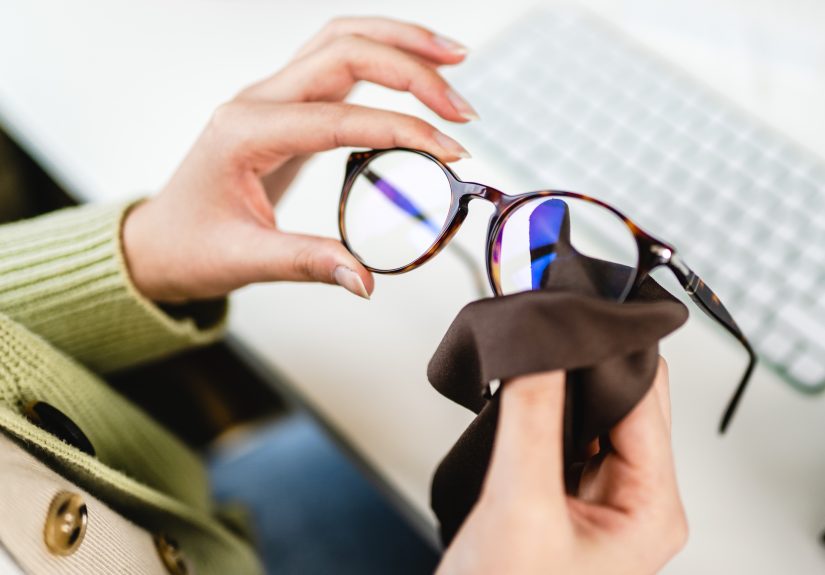
Step 6: Dry With a Clean Microfiber Cloth
Use a clean microfiber cloth made for eyewear. Gently dry the lenses, frame, and nose pads. If the cloth is dirty, dusty, or living at the bottom of a backpack with cracker crumbs, it is no longer a hero. It is part of the problem.
Microfiber works because it is soft, low-lint, and designed to lift residue without scratching. A clean lens cloth can leave your glasses truly clear instead of merely “less embarrassing.”
What to Use to Clean Glasses
When in doubt, keep your cleaning setup simple. You do not need a lab, a ring light, or a premium eyewear spa package. You need a few reliable basics:
- Lukewarm water
- Mild, lotion-free dish soap
- A glasses-safe lens spray, if you prefer
- A clean microfiber cloth
- A protective case for storage
If you like pre-moistened lens wipes, choose ones specifically made for eyeglasses. That “specifically” matters. Not every wipe in your house deserves to meet your lenses.
What Not to Use on Your Glasses
This section saves marriages, coatings, and expensive lenses. Here is what should not touch your glasses:
- Paper towels, tissues, napkins, or toilet paper they can be abrasive and leave lint
- Your shirt, hoodie, or sleeve soft-looking fabric can still hold dust and scratch lenses
- Household glass cleaner many formulas contain harsh chemicals that are not meant for coated lenses
- Ammonia, bleach, vinegar, or harsh surface sprays too aggressive for many modern lens coatings
- Hot water not ideal for coated lenses or certain frame materials
- Dry wiping rubbing first and asking questions later is how scratches happen
If your lenses have anti-reflective, anti-glare, blue-light, polarized, or other specialty coatings, gentle cleaning matters even more. Those coatings are useful, but they are not invincible. They are more like “smart but sensitive.”
How to Deal With Foggy Lenses
Now for the complaint that inspired this article title: fog. Foggy lenses happen when moisture in warm air condenses on cooler lenses. Translation: your breath, coffee, soup, weather, or workout is staging a tiny weather event directly on your face.
Here are practical ways to cut down on fogging:
Use the Soap-and-Water Method
A proper wash with mild soap and water can leave behind a very thin film that may help reduce fog in some situations. Letting the lenses air dry briefly before finishing with a microfiber cloth can help preserve that effect.
Improve Mask Fit
If your glasses fog while wearing a mask, the issue is often airflow. Warm breath escapes upward and lands on the lenses. A better-fitting mask, especially one with a nose wire, can direct air away from your glasses. Positioning your glasses slightly forward or resting them over the top edge of the mask can also help.
Try an Anti-Fog Product Made for Glasses
Anti-fog sprays, wipes, and built-in anti-fog coatings can be useful if fogging is a daily issue. The key is using products that are safe for your specific lenses. If your glasses have premium coatings, double-check with your optician or product instructions before applying anything new.
Avoid Big Temperature Swings When Possible
You may not be able to control the weather, but you can reduce sudden transitions. If you know you are stepping into a steamy kitchen or a cold morning commute, be ready with a clean microfiber cloth and realistic expectations. Fog loves drama.
How to Clean Glasses on the Go
Sometimes you are not near a sink. You are in the car, at the office, in class, or halfway through a grocery run trying to identify whether that label says “oregano” or “organics.” In those moments, do this:
- Blow off loose dust only if you must, but avoid rubbing immediately.
- Use a glasses-safe lens spray or eyewear wipe.
- Wipe gently with a clean microfiber cloth.
- As soon as you get home, do a full rinse-and-soap cleaning.
Emergency cleaning is fine. Turning emergency cleaning into your everyday routine is less fine.
How Often Should You Clean Your Glasses?
For most people, a quick proper cleaning once a day is a smart baseline, especially if you wear your glasses from morning to night. But some situations call for more frequent cleaning, such as:
- After cooking
- After using hair products or sunscreen
- After workouts
- During pollen-heavy or dusty days
- Any time you notice smears, fog, or reduced clarity
If your lenses constantly look dirty five minutes after cleaning, the issue may be your cloth, your cleaning method, or buildup around the nose pads and frame edges that needs more attention.
How to Keep Glasses Cleaner Longer
Cleaning matters, but prevention makes life easier. These small habits can help your lenses stay clear between washes:
- Store your glasses in a case when you are not wearing them
- Avoid touching the lenses directly
- Do not place glasses face-down on tables or counters
- Keep a spare microfiber cloth at work, in your bag, or in the car
- Wash your microfiber cloth regularly so it does not turn into a grease transfer device
Also, keep your glasses away from extreme heat. Leaving them on a hot car dashboard may seem harmless until the frames warp or lens coatings start acting like they have been through a tiny desert apocalypse.
When Cleaning Is Not Enough
Sometimes the problem is not dirt. If your lenses still look cloudy, streaky, or weirdly hazy after a proper cleaning, you could be dealing with:
- Fine scratches
- Worn-out lens coatings
- Crazing or coating damage from heat
- Old microfiber cloth residue
- Frame buildup around the lens edges
If that sounds familiar, it may be time to visit an optician. A professional can tell you whether the lenses just need a deeper cleaning, a small adjustment, or full replacement. Sometimes “I cannot see clearly” is not your eyeballs being dramatic. It is your lenses quietly giving up.
The Everyday Experience of Cleaning Glasses the Right Way
Anyone who wears glasses long enough develops a relationship with smudges. It starts innocently. You notice a faint blur in one corner of a lens and think, “That is probably nothing.” Ten minutes later, you are tilting your head, squinting at a screen, and wondering whether the room got darker or your glasses are simply filthy again. In real life, that is how it goes. Dirty lenses creep up on you. They do not usually announce themselves with a drumroll.
One of the most common experiences is the morning surprise. You put on your glasses right after waking up, expecting instant clarity, and instead find fingerprints from the night before, a little dust from the nightstand, and maybe one mystery streak that appears to have no known origin. Cleaning them properly in the morning can change the whole tone of the day. Screens look sharper, road signs stop glowing like abstract art, and your coffee tastes less like defeat.
Then there is the kitchen effect. You open the dishwasher, lift a pot lid, or lean over a skillet, and suddenly your lenses fog like they are auditioning for a weather documentary. In those moments, many people instinctively grab the nearest dish towel or shirt hem. That quick wipe feels efficient, but it usually leaves behind lint, streaks, and a vague sense of betrayal. When you switch to rinsing and using a clean microfiber cloth instead, the difference is immediate. The lenses clear faster, and you are not grinding grease and steam residue into the surface.
Cold-weather transitions are another classic struggle. You come in from outside, and your glasses cloud over the second you step indoors. For a few seconds, you are basically navigating by memory and optimism. A lot of glasses wearers also deal with fog while wearing masks, especially during commutes, errands, or long days indoors. A better mask fit and cleaner lenses really do make everyday life easier. The solution is not glamorous, but it is effective, and effective is beautiful when you are trying not to walk into a door.
People who wear makeup, sunscreen, or moisturizer know a different version of the same problem. Nose pads collect product. The bridge gets slick. Lenses pick up tiny smears from adjusting frames all day. After a while, glasses can feel impossible to keep clean. But once you start washing the full frame, including the nose pads and hinges, not just the lenses, everything feels fresher. The glasses sit better, look better, and stop carrying half your skincare routine around like a souvenir.
There is also a surprisingly satisfying part of learning the right cleaning method: your glasses stop looking permanently tired. A lot of people assume dull, smeary lenses are just part of owning glasses. They are not. Often, the problem is buildup, rough wiping, or using the wrong cleaner over and over again. Once you start rinsing first, using mild soap, and drying with a clean microfiber cloth, your lenses can stay clearer and your frames can hold up better over time.
It is a small routine, but it solves a very real daily annoyance. And when your glasses are clean, everything feels a little less chaotic. The world looks sharper. Your eyes feel less strained. You stop polishing your lenses with your shirt like a desperate magician. That alone is growth.
Conclusion
If you want clear vision and longer-lasting lenses, the best way to clean glasses is refreshingly simple: wash your hands, rinse the glasses under lukewarm water, use a tiny bit of mild lotion-free dish soap or a glasses-safe cleaner, rinse well, and dry with a clean microfiber cloth. That is the method. No gimmicks. No aggressive scrubbing. No paper towel heroics.
Just as important, avoid the habits that quietly wreck lenses over time, especially dry wiping, hot water, and harsh household cleaners. If foggy lenses are your daily nemesis, cleaner lenses, better airflow, and anti-fog-safe products can help more than frantic rubbing ever will.
In other words, treat your glasses less like a window and more like the expensive face technology they are. They will reward you by letting you see things clearly, which is a fairly strong selling point.






 Close
Close