
Table of Contents >> Show >> Hide
- What Is the Tokyo Atacama Observatory (TAO), Exactly?
- Why Height Matters for Infrared Astronomy (And Why Moisture Is the Villain)
- The Telescope: 6.5 Meters of “Let’s Build It Where Breathing Is a Challenge”
- What TAO Can Help Us Learn
- The Price of the View: Challenges at 5,640 Meters
- How TAO Fits Into the Bigger Astronomy Picture
- Conclusion: A New Infrared Eye on the Roof of the World
- of Experience: What It Feels Like to Chase Infrared Skies at TAO
If you’ve ever looked at a “great view” and thought, Nice, but what if we climbed another 18,500 feet? congratulations, you think like
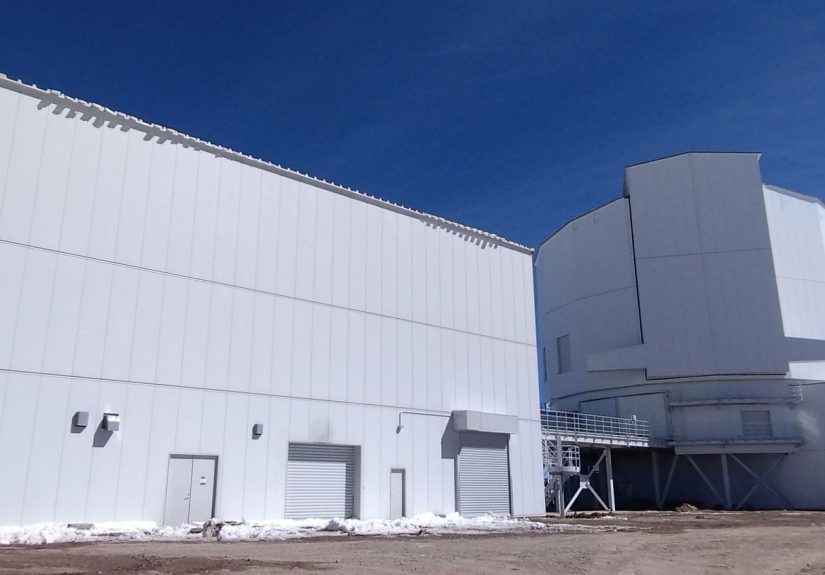
an infrared astronomer. The Tokyo Atacama Observatory (TAO) has officially opened on the summit of Cerro Chajnantor in northern Chile, becoming the
highest-altitude astronomical observatory on Earth and giving scientists a rare ground-based window into the infrared universe.
Here’s the twist: despite the “Tokyo” in the name, TAO isn’t in Japan. It’s run by the University of Tokyo, but it lives in the Atacama Desert
one of the driest, clearest places on the planet. And the altitude isn’t just for bragging rights; it’s the whole point. The higher you go, the less
water vapor you have above you and water vapor is basically infrared’s biggest hater.
What Is the Tokyo Atacama Observatory (TAO), Exactly?
TAO is a major ground-based astronomy facility built to excel at infrared observations. Its flagship instrument is a 6.5-meter optical-infrared
telescope designed to capture faint, heat-based signals that visible-light telescopes often miss. Think of it as a “thermal detective” especially
good at tracking warm dust, star formation, and the hidden structures of galaxies.
Where is it located?
TAO sits on Cerro Chajnantor in northern Chile’s Atacama region at about 5,640 meters (18,500 feet) above sea level. That puts it higher than many
famous high-altitude observatories and even higher than nearby facilities on the Chajnantor Plateau, including ALMA (which operates at about 5,000
meters). The result is thinner air, less moisture, and better infrared transparency.
Why call it “Tokyo” if it’s in Chile?
Because the project is led by the University of Tokyo. In other words: the management is Tokyo; the zip code is Chile; the lungs are optional.
(Kidding. Please bring oxygen. TAO certainly does.)
Why Height Matters for Infrared Astronomy (And Why Moisture Is the Villain)
Infrared has a problem: Earth’s atmosphere
Infrared light carries information that visible light can’t: heat signatures, dust-obscured regions, and chemical fingerprints from molecules. The
snag is that much of Earth’s atmosphere especially water vapor absorbs infrared before it can reach a telescope. That’s why space telescopes are
so powerful… and also why they come with a price tag that makes your wallet file a formal complaint.
Ground-based infrared astronomy works best where the atmosphere is both thin and dry. High altitude reduces the
total air mass a telescope looks through, while arid conditions reduce the water vapor that blocks infrared wavelengths. TAO’s elevation is a
deliberate move to push ground-based infrared observing into territory that’s typically difficult from the surface of Earth.
Why the Atacama Desert is basically nature’s observatory showroom
The Atacama is famous for clear skies, low humidity, and minimal cloud cover. It’s one reason Chile hosts multiple world-class observatories.
TAO’s site combines this dryness with extreme elevation a one-two punch that helps open up parts of the infrared spectrum that are otherwise
heavily muted from the ground.
The Telescope: 6.5 Meters of “Let’s Build It Where Breathing Is a Challenge”
TAO’s 6.5-meter optical-infrared telescope is designed to be efficient for infrared work, supported by specialized instruments that translate faint
infrared photons into data astronomers can actually use. Like all modern observatories, it’s less “one telescope” and more “a precision ecosystem”
of optics, detectors, cooling systems, and software.
SWIMS: A wide-field galaxy census tool
One of TAO’s main instruments is SWIMS (Simultaneous-color Wide-field Infrared Multi-object Spectrograph). In plain English, it’s built to observe a
large patch of sky and gather infrared information efficiently, helping scientists study galaxy evolution including how galaxies grow, how star
formation changes over time, and how supermassive black holes may co-evolve with their host galaxies.
SWIMS matters because big questions require big samples. Instead of obsessing over one galaxy like it’s a reality show contestant, SWIMS can help
researchers build statistical stories: what’s typical, what’s rare, and what changed across cosmic time.
MIMIZUKU: Mid-infrared vision for dusty, hidden environments
TAO also features MIMIZUKU (Mid-Infrared Multi-field Imager for gaZing at the UnKnown Universe) an instrument aimed at mid-infrared observations,
where warm dust and embedded structures often shine. Mid-infrared is especially useful for studying planet-forming environments and dusty regions
around young stars, because the dust that blocks visible light often glows in infrared.
If visible light shows you the “surface,” mid-infrared can show you what’s heating up underneath the cosmic equivalent of checking the oven light
instead of opening the door every two minutes and ruining the bake.
What TAO Can Help Us Learn
TAO’s science goals span a wide range from the early universe to nearby planetary systems. That’s typical for a major telescope, but TAO’s infrared
strength gives it special leverage in a few headline areas.
1) Planet formation: watching dusty nurseries do their thing
Planets form in disks of gas and dust around young stars. Those disks are messy, dynamic, and often opaque in visible light. Infrared helps because
warm dust emits strongly at these wavelengths, allowing astronomers to study disk structure, temperature patterns, and how material moves and clumps.
With enough sensitivity and the right wavelengths, astronomers can compare disks at different ages to piece together a timeline: when gaps appear,
when dust grains grow, and when conditions shift from “planet ingredients” to “planet in progress.”
2) Galaxy evolution: finding the “hidden” star formation
Many galaxies especially in earlier cosmic epochs are dusty. Dust absorbs starlight and re-emits energy in the infrared. That means a galaxy can
look modest in visible light while secretly running a star-formation festival behind the scenes. Infrared data helps reveal the real energy budget,
not just the parts that leak through dust.
Add spectroscopy and wide-field surveys, and you can start mapping how star formation rose and fell across billions of years and how that
correlates with galaxy mass, environment, and black hole growth.
3) Cosmic “chemistry”: tracing organic and mineral dust
Infrared is also a powerful tool for identifying materials, because molecules and dust grains have characteristic signatures at specific
wavelengths. Studying these features helps researchers connect laboratory experiments on Earth with what’s actually happening in space from the
evolution of organic dust to the physical conditions in regions where stars and planets assemble.
4) Dynamic phenomena: the advantage of flexible access
Some celestial events don’t politely schedule themselves around shared telescope time. Variable stars, transient dust events, and rapid changes in
disk brightness can require repeated observations. As a university-led facility, TAO is positioned to support longer and more flexible observing
campaigns the kind where you can return to the same target repeatedly and catch changes in the act.
The Price of the View: Challenges at 5,640 Meters
Building a precision instrument where humans can get altitude sickness just by standing still is… ambitious. TAO’s location provides extraordinary
observing conditions, but it also forces the project to solve real-world problems that lower-altitude observatories rarely face.
Human limits: oxygen is not a “nice-to-have”
At this elevation, the air pressure is low enough that people can experience altitude sickness, impaired decision-making, and serious health risks.
Work plans must include medical protocols, oxygen support, and limited exposure time. Even routine maintenance becomes a carefully choreographed
operation rather than a casual “grab a wrench and head up.”
Engineering reality: cold, wind, dust, and thin air
Extreme sites can punish hardware. Temperature swings stress materials. Wind loads demand robust enclosures and careful vibration control. Dust
management matters because optics are allergic to grime (and telescopes don’t come with a “wipe screen” setting). Thin air also affects cooling and
heat transfer a big deal for infrared detectors, which often need stable, low temperatures to perform at their best.
Remote operations: because the mountain doesn’t care about your lungs
The solution is to operate TAO remotely as much as possible, reducing the need for humans to stay at the summit. Remote observing rooms, robust
telemetry, automation, and careful scheduling help keep people safe while still keeping the telescope productive. In practice, this means the
observatory must be as good at software and systems engineering as it is at optics.
How TAO Fits Into the Bigger Astronomy Picture
Modern astronomy is a team sport. No single telescope “does it all,” and TAO’s best science will often come from combining datasets across
wavelengths and platforms.
TAO + ALMA: a powerful local pairing
TAO’s infrared capabilities complement ALMA’s millimeter/submillimeter observations. ALMA can map cold dust and gas with incredible detail; TAO can
probe warmer dust, embedded regions, and infrared signatures. Together, they can build a more complete picture of star and planet formation from
cold raw materials to warm structures where assembly happens.
TAO + space telescopes: ground truth and follow-up
Space observatories like the James Webb Space Telescope are unmatched for sensitivity and atmospheric-free infrared access. But ground-based
telescopes like TAO can provide flexible follow-up, repeated monitoring, and survey support especially when the science demands frequent checks or
rapid response. The best results often come when space and ground instruments trade strengths instead of competing.
Conclusion: A New Infrared Eye on the Roof of the World
The Tokyo Atacama Observatory’s opening is more than a headline about altitude. It’s a deliberate scientific strategy: go where the air is driest and
thinnest, then use advanced infrared instruments to observe regions of the universe that are otherwise obscured dusty stellar nurseries, evolving
galaxies, and chemical fingerprints that hint at how planets and materials develop.
TAO’s biggest promise is not just sharper data, but unique data: the kind that fills gaps between optical observations, radio maps,
and space-based infrared surveys. In the coming years, expect TAO to play a growing role in multi-telescope studies the astronomy equivalent of
assembling a full detective squad instead of sending one person with a flashlight.
And if you ever need perspective on your own workday: remember there are engineers and astronomers operating precision hardware at 18,500 feet.
Suddenly that “third Zoom call in a row” feels… survivable.
of Experience: What It Feels Like to Chase Infrared Skies at TAO
Imagine landing in the Atacama and realizing the sky looks almost too clean like someone turned the contrast knob up and forgot to turn it back
down. The air is dry in a way that makes you understand why lip balm was invented. In San Pedro de Atacama, you see tourists sipping water like
it’s their new religion, because acclimatization isn’t a wellness trend here it’s a survival strategy with good marketing.
During the day, the landscape is a study in extremes: bright salt flats, rust-colored ridges, and a horizon that feels unreasonably far away. Then,
as evening comes, the temperature drops like a dramatic plot twist. This is where you learn that “desert” doesn’t mean “warm,” it means “the planet
has mood swings.”
Now picture the operational rhythm of a high-altitude observatory. You’re not casually driving up the mountain like you’re heading to a scenic
overlook. Everything is planned: oxygen, timing, checklists, and the kind of cautious optimism you usually reserve for trying to assemble furniture
without instructions. At 5,640 meters, your body negotiates with reality. Simple tasks feel like you’re doing them while wearing an invisible
weighted vest. You talk a little less, think a little slower, and suddenly you understand why remote operations aren’t just convenient they’re
merciful.
The most surreal part is how “normal” the work still looks from the outside. People monitor screens, log data, run calibrations, and troubleshoot
issues the same verbs used in labs everywhere except here the stakes include things like weather windows, equipment safety, and human physiology.
When the telescope is pointed and the instruments are humming, there’s a quiet satisfaction in the control room: not loud celebration, just that
calm sense of “Yes, the universe is cooperating tonight.”
Then come the moments that make the whole effort feel worth it. You’re not seeing infrared light with your eyes, but you’re watching it become
information: a faint signal from warm dust around a young star, or the infrared glow of a galaxy whose visible light is muted by cosmic grime.
Someone cracks a joke about the mountain being the most aggressive coworker on the team. Someone else replies, “At least it’s consistent,” which is
astronomer humor for “we have learned to respect the environment’s boundaries.”
By the end of the night, you walk outside and look up. The Milky Way doesn’t appear; it dominates. And you get the core truth behind TAO’s
existence: the sky isn’t just prettier here it’s more transparent in the wavelengths that matter. TAO is a reminder that sometimes the best way to
understand the universe is to go to an uncomfortable place, build something precise, and let the cosmos do the talking.







 Close
Close