Table of Contents >> Show >> Hide
- Quick Bite: What Makes a Shark “Incredible”?
- Table of Contents
- Top 10 Incredible Sharks
- 1) Great White Shark (Carcharodon carcharias)
- 2) Whale Shark (Rhincodon typus)
- 3) Basking Shark (Cetorhinus maximus)
- 4) Tiger Shark (Galeocerdo cuvier)
- 5) Bull Shark (Carcharhinus leucas)
- 6) Shortfin Mako Shark (Isurus oxyrinchus)
- 7) Great Hammerhead Shark (Sphyrna mokarran)
- 8) Thresher Shark (Alopias spp.)
- 9) Goblin Shark (Mitsukurina owstoni)
- 10) Greenland Shark (Somniosus microcephalus)
- Sharks, People, and the Myth of the “Mindless Killer”
- Final Thoughts
- Extra Bite: Sharky Experiences That Make the Facts Feel Real (About )
- SEO Tags
Sharks have an image problem. Somewhere along the way, Hollywood convinced the world that every shark is a floating set of teeth with a personal vendetta.
In real life, sharks are more like the ocean’s elite athletes, ancient engineers, and occasionally… weird little goblins with spring-loaded jaws.
This list is a celebration of shark greatness: size, speed, super-senses, and the kind of evolutionary glow-up that makes you whisper, “Okay, nature… I see you.”
Below are the top 10 incredible sharks that prove the sea is not messing around. You’ll get fascinating facts, where they live, what makes them special,
and why many of them need our help more than we need their fear factor.
Quick Bite: What Makes a Shark “Incredible”?
“Incredible” doesn’t just mean “big.” It can mean ancient, fast, mysterious, gentle, or equipped with senses that make your phone’s Face ID look like a potato.
Sharks are key players in ocean ecosystemsmany keep food webs balanced, shape animal behavior, and help maintain healthier marine habitats.
Top 10 Incredible Sharks
1) Great White Shark (Carcharodon carcharias)
The great white is the celebrity sharkrecognized instantly, misunderstood constantly. Yes, it’s a powerful predator.
But it’s also a highly tuned marine specialist built for long-distance cruising, sudden bursts of speed, and hunting in chilly water where other fish
might be thinking, “Absolutely not.”
- What makes it incredible: It can keep parts of its body warmer than the surrounding ocean (a huge advantage in cold water).
- Size snapshot: Adults can reach around 20 feet; pups start life already several feet longbecause sharks don’t do “tiny.”
- Why it matters: As an apex predator in many regions, it helps regulate prey populations and influences where other animals feed and migrate.
- Fun fact: Many bites on people are believed to be investigativemore “What are you?” than “Lunch appointment.”
2) Whale Shark (Rhincodon typus)
The whale shark is proof that “shark” doesn’t automatically mean “chasing things.” This is the world’s largest fish and a filter-feeding gentle giant.
It swims around like a living submarine with a polka-dot paint job, calmly vacuuming up tiny prey like plankton and fish eggs.
- What makes it incredible: It uses a highly efficient filtration approach that helps it feed without clogging its “filters.”
- Vibe check: Big, calm, and minding its own businessbasically the ocean’s peaceful bouncer.
- Where you’ll find it: Warm oceans worldwide, often near plankton-rich areas.
- Why it’s a star species: Its size draws awe, and its feeding style shows sharks can be ecosystem-friendly giants, not just predators.
3) Basking Shark (Cetorhinus maximus)
If you ever see a massive fin slicing the surface and your brain starts composing a panic soundtrack, take a breath: it might be a basking shark.
This is the second-largest living fish after the whale shark, and it’s another filter feeder that survives on tiny plankton.
The mouth is huge, the vibes are gentle, and the diet is basically “sea confetti.”
- What makes it incredible: It can filter an astonishing amount of water per hour while feeding.
- Why people misjudge it: It looks dramatic at the surfacebig fin, big body, big “OMG”but it’s not hunting you.
- Nature’s lesson: Not all enormous animals are aggressive. Sometimes they’re just very committed to plankton.
4) Tiger Shark (Galeocerdo cuvier)
Tiger sharks are the ocean’s “try anything once” eaters. They’re famous for a broad dietfish, birds, other marine animals, and unfortunately,
human trash that shouldn’t be in the water in the first place. Their stripes (especially vivid in juveniles) give them their name, and their confident cruising
style gives them their reputation.
- What makes it incredible: A tough, adaptable predator with a wide-ranging menu and a strong presence in tropical and temperate waters.
- Size snapshot: Among the largest predatory sharks, with some individuals reported around 18 feet.
- Conservation angle: Their “garbage diet” isn’t funnyit’s a reminder that ocean pollution hurts wildlife in weird, preventable ways.
- Fun fact: The stripes fade with age, like a punk-rock teen growing into a serious adult… who still eats everything.
5) Bull Shark (Carcharhinus leucas)
Bull sharks are the reason you should never assume “sharks = saltwater only.” They tolerate brackish water and can move into freshwater systems,
sometimes traveling far inland via rivers. They’re sturdy, stocky, and often found near coastlinesbasically the shark equivalent of showing up
uninvited to every party.
- What makes it incredible: Its ability to handle both salt and fresh water is a rare superpower in the shark world.
- Where you’ll find it: Coastal waters, estuaries, and sometimes rivers connected to the sea.
- Why it’s famous: It’s commonly discussed in shark-bite data because it shares space with humans more than many offshore species.
- Smart takeaway: Respect wildlife habitat boundariesespecially where rivers meet the sea.
6) Shortfin Mako Shark (Isurus oxyrinchus)
The shortfin mako is the sports car of the open ocean: streamlined, powerful, and built for speed. It’s highly migratory, crossing vast distances through
temperate and tropical waters. If sharks had a track meet, makos would show up in aerodynamic gear and ask where the finish line is.
- What makes it incredible: A sleek build designed for fast swimming and long-distance travel.
- Signature look: Pointed snout, metallic-blue tones, and teeth that can be visible even when the mouth is closed.
- Why it needs attention: Many migratory sharks face heavy fishing pressure across multiple regions, making management complicated.
- Fun fact: This is the shark that makes tuna nervousand tuna are basically the endurance athletes of fish.
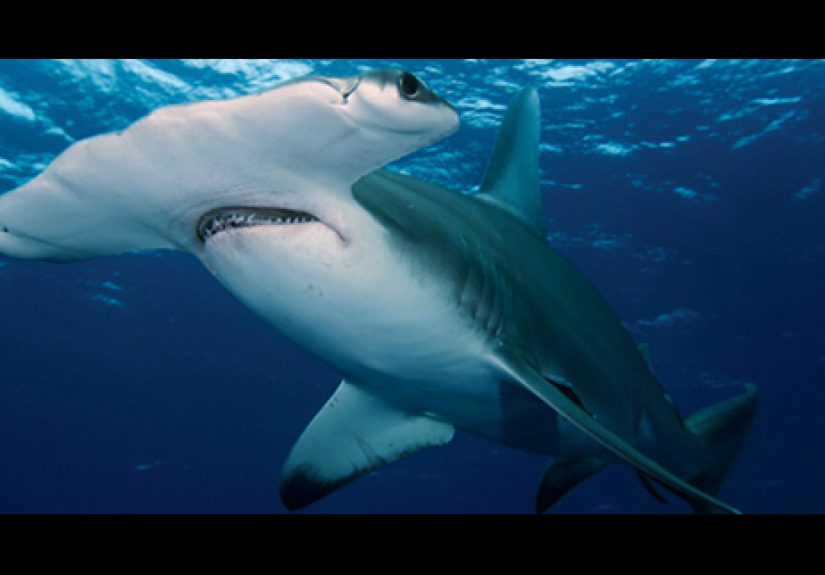
7) Great Hammerhead Shark (Sphyrna mokarran)
The great hammerhead looks like it was designed by someone who asked, “What if a shark had a built-in metal detector?” That iconic head (the cephalofoil)
isn’t just for style points. It’s loaded with sensory equipment that helps detect the faint electrical signals of preyespecially rays and skates hiding in sand.
Also, it’s the largest hammerhead species, so it shows up to the ocean like: “Yes, I’m the boss. Yes, my head is a masterpiece.”
- What makes it incredible: Enhanced electroreception and maneuverability paired with serious size.
- Size snapshot: Reports place maximum length around 18–20 feet.
- Why it’s special: A specialized hunter of raysan example of sharks filling precise ecological roles.
- Conservation note: Hammerheads are heavily impacted by fishing and the fin trade; many populations are under significant pressure.
8) Thresher Shark (Alopias spp.)
Thresher sharks are the ocean’s action-movie specialists, famous for a tail that can be as dramatic as the rest of their body.
They use that long upper tail lobe like a whip to stun schooling fish. Yes, a shark that tail-slaps its dinner. If you’re imagining a stealthy underwater
ninja, you’re not wrong.
- What makes it incredible: A weaponized tail used for huntingrare and wildly efficient.
- Behavior highlight: Fast swimmer; sometimes leaps out of the water.
- Human risk: Generally considered low-risk to peoplesmall mouth, timid nature, and not interested in your beach sandwich.
- Why it’s memorable: It’s one of the best examples of “sharks are not all built the same.”
9) Goblin Shark (Mitsukurina owstoni)
If sharks had a Halloween category, the goblin shark would win every year. It lives in deep water, has a long snout packed with electro-sensing organs,
and can project its jaws forward to grab prey with a “surprise!” mechanism. Add its pinkish coloration and it’s basically the ocean’s rare collectible monster.
(A harmless one, unless you’re a small fish in the deep sea having an objectively terrible day.)
- What makes it incredible: Deep-sea adaptation plus a protrusible jaw that looks like a sci-fi gadget.
- Super-sense: Its snout helps detect electric fields in dark, deep water.
- Why it’s important: A window into ancient shark lineages and deep-ocean biodiversity.
- Fun fact: It’s rare enough that sightings can feel like spotting a myth with fins.
10) Greenland Shark (Somniosus microcephalus)
The Greenland shark didn’t get the memo that life should be short and chaotic. Instead, it chose the “slow, cold, and centuries long” plan.
Scientists estimate these sharks can live at least 250 years, and may live much longerpossibly over 500 years.
That means a Greenland shark alive today could have been swimming when people were still arguing about whether tomatoes were suspicious.
- What makes it incredible: Extreme longevity and slow growth in frigid Arctic and North Atlantic waters.
- Life pace: Grows slowly (often described around a centimeter per year), with an extraordinarily late maturity timeline.
- Why it matters: Long-lived species are especially vulnerable to overfishing because populations recover very slowly.
- Fun fact: Its “century-long childhood” is real. Nature really said, “No rush.”
Sharks, People, and the Myth of the “Mindless Killer”
Sharks do not spend their days plotting beach-themed chaos. Most species avoid people, and many shark bites are believed to be curiosity-driven rather than
predatory. Sharks have impressive sensory systemssmell, hearing, vision in low light, vibration detection, and electroreceptionso they explore their world differently
than we do. In murky conditions, a mistaken identity can happen, but the idea of sharks as villains is wildly overblown.
Meanwhile, sharks face real threats: overfishing, fin trade, bycatch, habitat pressure, and changing ocean conditions. If you love the oceansnorkeling, seafood,
sunsets, or just the idea that Earth has a functioning ecosystemshark conservation is not optional. It’s part of the maintenance plan.
Final Thoughts
From filter-feeding giants (whale sharks and basking sharks) to specialized hunters (hammerheads and threshers) and deep-sea oddities (goblin and Greenland sharks),
these animals are astonishingly diverse. The ocean isn’t a one-note horror soundtrackit’s an entire orchestra, and sharks play multiple instruments at once.
If this list did one thing, let it be this: replace “fear” with “respect.” Sharks don’t need to be loved like puppies. They just need to be understoodand protected
so they can keep doing their job in the sea.
Extra Bite: Sharky Experiences That Make the Facts Feel Real (About )
1) The Aquarium Moment: When a “Predator” Looks Peaceful
One of the most surprising shark experiences happens behind glass: watching a shark glide. In aquariums, the drama disappears and the design becomes obvious.
You notice the effortless motion, the small adjustments of fins, the way a body can look both ancient and perfectly modern at the same time.
Kids point, adults whisper, and someone inevitably says, “I didn’t realize they were… kind of beautiful.” That’s the magic.
A slow pass from a large shark can change the mood from “scary” to “majestic” in about three seconds.
2) On the Water: How Respect Turns Into Better Choices
Shark tours and responsible wildlife trips (think: strict rules, no chasing, no harassment) often leave people with the same takeaway:
sharks feel less like monsters and more like neighbors. You learn that many species aren’t patrolling beaches; they’re following food, seasons, temperature,
and currents. You also learn that we control a lot of the risk through behavior: avoiding murky water at dawn/dusk in certain areas, not swimming near fishing activity,
and giving wildlife space.
Even if you never see a shark in the wild, you can feel their presence by noticing the ecosystem around youschools of fish, seabirds feeding, the clarity of water,
the health of reefs. Sharks are part of that bigger picture. When they decline, it’s rarely a single-species problem. It’s a signal.
3) The “Wait… That’s a Shark?” Realization
A lot of people have a secret shark story: the time they saw a fin and realized it wasn’t a great white. It might have been a harmless fish, a dolphin,
or even a basking shark filtering plankton like a floating vacuum cleaner. That moment is oddly empowering because it teaches you to pause before panicking.
The ocean has many finned characters, and not all of them are auditioning for a thriller.
The more you learn, the more “shark encounters” become less about fear and more about curiosity. Suddenly you’re the person explaining the difference between
a hammerhead and a thresher at a beach picnic. Congratulationsyou’ve become the fun friend with marine biology facts.
4) Helping Sharks Without Ever Getting Wet
The most practical “shark experience” is realizing how small choices stack up: choosing sustainable seafood when possible, reducing plastic use,
supporting science-based conservation groups, and respecting protected areas. Sharks don’t need us to cosplay as ocean heroes. They need fewer hooks, fewer nets,
cleaner water, and better policies. And honestly? That’s a lot more effective than trying to out-swim a mako, which would end poorly for everyone involved.