
Table of Contents >> Show >> Hide
- First: What “BOGO” Means at Home Depot (Spoiler: It’s Usually a Promo Bundle)
- Where the Best “Free Tool” Promos Actually Live
- The Most Common “Free Tool” Deal Patterns (And How to Shop Them Like a Grown-Up)
- How to Find BOGO Tool Deals Faster (Without Living on Aisle 12)
- Step-by-Step: How to Actually Get the Free Tool in Your Cart
- “Home Depot Hack” Talk: What’s Real, What’s Risky, What’s Just Internet Noise
- Fine Print That Matters (Yes, Even for a “Free” Tool)
- How to Stack More Savings Without Doing Anything Weird
- Quick Examples: What a “Free Tool” Deal Looks Like in Real Life
- How to Decide If a BOGO Tool Deal Is Actually Worth It
- Real-World Experiences: What BOGO Hunting Feels Like (And How to Not Lose Your Mind)
- Conclusion: Get the Deal, Keep the Value
“Buy one, get one free” sounds like the kind of math you can do without taking your gloves off. But when it comes to Home Depot tool promos, “BOGO” often shows up wearing a fake mustache and carrying a clipboard labeled Offer Guidelines.
The good news: you absolutely can score “free” tools at Home Depotespecially during big seasonal events, brand promos, and those legendary battery-kit bundles. The better news: once you learn how the promos are structured, you’ll stop missing deals that are basically hiding in plain sight… like that one 10mm socket that’s always “around here somewhere.”
This guide breaks down how Home Depot “BOGO tool deals” actually work, where to find them, and how to check out without accidentally buying the wrong SKU and rage-whispering “why isn’t it adding the free tool?” at 1:00 a.m.
First: What “BOGO” Means at Home Depot (Spoiler: It’s Usually a Promo Bundle)
In tool-world, Home Depot “BOGO” usually falls into one of these buckets:
- Buy a qualifying battery kit, get a free tool (classic and wildly popular).
- Buy a qualifying tool kit, get a free battery (the reverse card).
- Buy a combo kit, choose a “free” bare tool (build-your-own kit vibes).
- Buy two qualifying items, get a discount (not free, but often feels like it).
- Limited-time brand events (Ryobi Days, holiday promos, Black Friday/Cyber Monday tool drops).
Most of these promos are structured as a discount applied at checkout, not an actual second item that rings up at full price and then magically becomes $0 for fun. That matters for everything from checkout behavior to returns (more on that later).
Where the Best “Free Tool” Promos Actually Live
If you’re only browsing aisle endcaps on a Saturday, you’re seeing the highlight reelnot the full movie. Home Depot tool promos show up in a handful of predictable places:
1) Special Buy of the Day / Daily Deals
Home Depot runs rotating limited-time “Special Buy” promotions online. Tools sometimes show up as a featured category, and the pricing can be excellent when the stars align and the algorithm decides you deserve joy.
2) Pro Special Buy of the Week
This is where contractor-friendly promos can pop up. Even if you’re not a full-time pro, it’s worth checking because these deals can include high-demand brands and bundles.
3) Brand Events (The “Name-Your-Free-Tool” Specials)
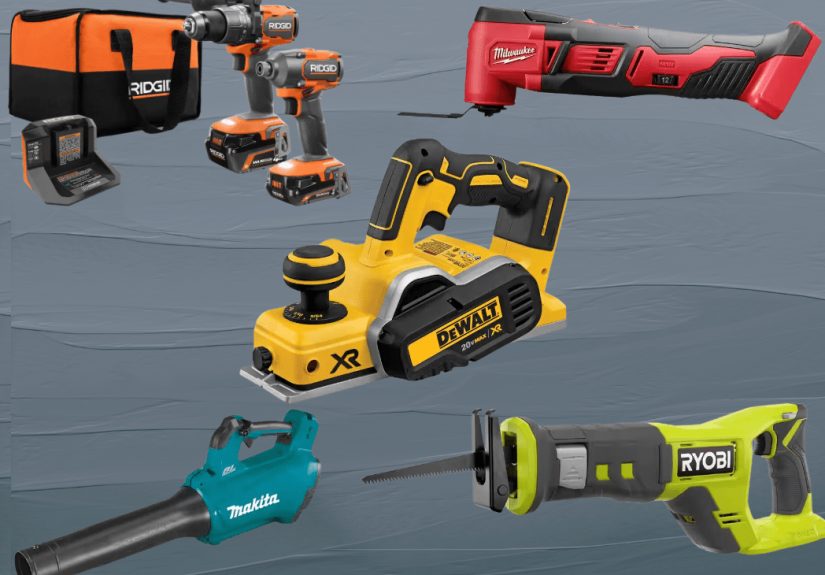
These are the big ones: promotions where you buy a qualifying kit (often batteries + charger) and then pick a free tool from a list. Ryobi is famous for this format, but you’ll see similar setups with DeWalt, Milwaukee, Makita, Ridgid, and others depending on the season.
4) Pro Xtra Offers (Extra Savings If You’re Logged In)
Home Depot’s Pro Xtra loyalty program can surface personalized offers and pro-focused promotions. Sometimes it’s not “free tool” level, but it can stack value through perks and targeted discounts.
The Most Common “Free Tool” Deal Patterns (And How to Shop Them Like a Grown-Up)
Let’s decode the patterns you’ll see again and again, plus why they work.
Pattern A: “Buy This Battery Kit, Pick a Free Tool”
This is the headline act. Typically, Home Depot will feature a battery starter kit (often a 2-pack + charger) and allow you to choose a free tool from a curated list. The list can include everything from drills and impact drivers to fans, lights, saws, nailers, and outdoor tools.
Why it’s so common: Batteries are the “platform buy-in.” Once you own batteries for a system, you’re more likely to keep buying tools in that ecosystem. (And yes, this is the part where your garage quietly becomes a brand shrine.)
How to win:
- Compare the free-tool list and choose the item with the highest value that you’ll actually use.
- Check whether the “free tool” is a tool-only (bare tool) or a kit. Tool-only is common because you already bought batteries.
- Watch for higher-capacity battery promos (5Ah/6Ah/8Ah+). The upfront price is higher, but the value can be better if the free tool is strong.
Pattern B: “Buy This Tool Kit, Get a Free Battery (or Battery Kit)”
Sometimes the promo flips: you buy a tool kit (like a saw, blower, or combo kit) and Home Depot adds a battery or battery kit as the bonus. This is most useful when you want the tool anyway and need more runtime.
How to win: If you already have plenty of batteries, this deal only shines if the battery is higher capacity, newer tech, or a system you’re building into (like moving from occasional DIY to “I now own three oscillating multi-tools for reasons”).
Pattern C: “Buy a Combo Kit, Choose a Free Bare Tool”
This one is for people building a cordless collection: buy a multi-tool combo kit and choose a free bare tool to round out the lineup. It’s like a value meal, except it’s loud and comes with a carrying bag you’ll use exactly twice.
How to win: Choose the free tool that fills a gap. If your kit already includes a drill/driver and impact, consider a multi-tool, recip saw, sander, router, inflator, or work lightsomething that saves time on real projects.
How to Find BOGO Tool Deals Faster (Without Living on Aisle 12)
Here’s how to search smarter:
- Use the right keywords: “free tool,” “free battery,” “Special Buy,” “bonus tool,” “starter kit,” “2-battery kit,” and the brand name (Ryobi, DeWalt, Milwaukee, Makita, Ridgid).
- Filter by “Special Buy” when browsing tool categories online.
- Check seasonal event pages (holiday tool promos, Ryobi Days, Spring sales, Black Friday tool events).
- Compare kits by ecosystema “free tool” is only free if it works with what you already own.
Also: if a deal looks “too good,” read the product page carefully. Many promos require a specific qualifying SKU. A nearly identical kit might not trigger the free item, and the website will not apologize to you.
Step-by-Step: How to Actually Get the Free Tool in Your Cart
Online checkout method (most reliable)
- Start from the promo page when possible (not a random search result).
- Add the qualifying item (battery kit or tool kit) to your cart.
- Look for a prompt like “Choose your free gift” or a list of eligible tools.
- Select the bonus item and confirm it’s added.
- Verify the cart shows the promo discount (often as a line-item discount or an adjusted price).
- Complete checkout before the promo expires or sells out (yes, it happens).
In-store method (works best when the signage is clear)
- Match the promo signage to the exact SKUs on the shelf labels.
- Grab the qualifying purchase item and the bonus tool (from the eligible list).
- At self-checkout, watch for the discount to apply after scanning both items.
- If it doesn’t apply, ask an associate to confirm the promo and SKU eligibility.
Pro tip: Some promos are online-focused, while others are in-store and online. If the deal is crucial, confirm availability and eligibility on the product page first.
“Home Depot Hack” Talk: What’s Real, What’s Risky, What’s Just Internet Noise
You’ve probably seen videos and forum posts calling these promos a “hack.” Here’s the grounded version:
- Home Depot promos often apply a prorated discount across the qualifying item and the “free” item.
- That means your receipt might show each item assigned a portion of the discount rather than making the bonus item literally $0.
- Because of that, returns may result in a partial refund based on the prorated valuesnot the original “full price” of each item.
Important: Return outcomes can vary by item category, store practice, and how the promotion is coded at checkout. Home Depot’s published return policy gives the general framework (like typical return windows), but promo handling can get nuanced fast.
Also important: Don’t try to “game” returns. Abuse policies can get you flagged, and the only thing worse than paying full price is paying full price and losing the ability to return something that’s genuinely defective.
Fine Print That Matters (Yes, Even for a “Free” Tool)
Before you get hypnotized by the word “FREE,” watch for these common constraints:
- Limit per transaction: Many promos cap how many times you can redeem in one order.
- Eligible list: The free tool choices are limited to a specific list. Similar-looking tools may not qualify.
- Online-only vs in-store: Some promos are one or the other.
- Return windows: Many items fall under the standard return window, but some categories have shorter windows or specific requirements.
- Inventory: The free tool can sell out first, even if the qualifying kit is still available.
How to Stack More Savings Without Doing Anything Weird
“Free tool” promos are great, but you can often improve the overall deal by stacking legitimate savings layers:
1) Loyalty and targeted offers
If you’re shopping for tools often, a loyalty program can surface personalized discounts and pro-focused promotions.
2) Seasonal timing
Home Depot’s tool deals tend to spike during:
- Spring sales (garage refresh season and outdoor tools)
- Father’s Day (classic tool promo window)
- Holiday tool events (October through December is a deal parade)
- Black Friday/Cyber Monday (bundles, batteries, and brand promos everywhere)
3) Military and veteran discount (where eligible)
If you qualify, Home Depot’s military/veteran discount can help on eligible itemsthough it has program rules and an annual maximum discount cap. Always confirm eligibility and category exclusions before assuming it stacks with promos.
Quick Examples: What a “Free Tool” Deal Looks Like in Real Life
Here are realistic scenarios based on the way Home Depot commonly structures promotions:
- Battery kit + free tool choice: You buy a cordless starter kit (two batteries + charger). At checkout, you select one free bare tool from a list (fan, multi-tool, light, saw, nailer, etc.). The discount applies automatically when both items are in the cart.
- Holiday promo bundle: You buy a qualifying leaf blower kit and choose a free tool from a smaller list. This is common when brands push outdoor tools during seasonal transitions.
- Black Friday brand promo: You buy a higher-priced battery kit and get a free premium tool option (like a more advanced bare tool). The free tool list can be larger during these events.
In all cases, the key is the same: qualifying SKU + eligible free-item list + discount applied at checkout.
How to Decide If a BOGO Tool Deal Is Actually Worth It
Not every “free tool” is a win. Use this quick checklist:
- Would I buy the qualifying item anyway? If not, you might be paying extra for the illusion of savings.
- Is the free tool useful to me this year? (Not “someday,” because someday is how garages become museums.)
- Am I locked into an ecosystem I already own? Battery compatibility is everything.
- Is there a simpler sale on the exact tool I want? Sometimes a straight discount beats bundle gymnastics.
If you pass those tests, congrats: you’re not just deal-chasingyou’re deal-driving.
Real-World Experiences: What BOGO Hunting Feels Like (And How to Not Lose Your Mind)
Let’s talk about the part nobody puts in the promo banner: the experience of chasing “free tool” deals can be equal parts thrilling and mildly absurdlike trying to assemble a patio set with instructions written by a poet who hates you.
One of the most common real-world moments is the “why isn’t the free tool showing up?” spiral. You add the battery kit. You add the tool you want. You stare at the cart like it owes you money. Nine times out of ten, the culprit is boring: the tool you picked isn’t on the eligible list, or you chose a nearly identical SKU that doesn’t qualify. The fix is usually simple: go back to the promo landing page (or the product page that lists eligible bonus items) and select the tool from the official “choose your free gift” flow. If you’re shopping late at night, this is also where you discover that the free tool you wanted is out of stockand your backup choice is a work light you didn’t know existed but will soon love like a loyal sidekick.
In-store, the experience is different. Sometimes the signage is crystal clearbig promo card, eligible items stacked like a monument to cordless convenience. Other times it’s a scavenger hunt. You’ll see a bold “FREE TOOL” callout on an endcap, then realize the eligible tools are spread across three aisles, two locked cages, and one lonely shelf tag that looks like it survived a hurricane. If you’re going in person, the best move is to identify the exact kit model number first (phone screenshot works), then match that to shelf labels. Associates are often helpful when you can say, “I’m looking for the promo that pairs this kit with the eligible free-tool list,” instead of “I heard tools are free today.”
Then there’s the psychological trap: the deal makes you feel like you should choose the most expensive free tool, even if you don’t need it. That’s how people end up with a specialty saw they’ll use once, while still borrowing a neighbor’s sander next month. The smarter “experienced shopper” approach is to pick the tool that removes friction from projects you actually do. For many DIYers, that’s a multi-tool (cuts, sands, scrapes), a recip saw (demo hero), an inflator (surprisingly useful), a fan (jobsite luxury), or a quality work light (because projects don’t stop just because the sun clocks out).
Finally, experienced deal-hunters learn timing. The best promos tend to cluster around big retail windowsspring sales, Father’s Day, holiday events, Black Friday/Cyber Mondayand they can change fast. You’ll sometimes see a promo that’s amazing on Monday, merely “fine” by Wednesday, and gone by Friday. The trick is not to panic-buy, but to watch for the pattern: if you’re already planning a tool purchase, those event windows are when your money goes the farthest.
The bottom line: the “free tool” experience is easiest when you treat it like a system. Start from the promo page, confirm the eligible list, pick a tool that matches your projects, and check out before inventory disappears. Do that, and you’ll get the best kind of free tool: the one that actually earns its spot in your toolbox.
Conclusion: Get the Deal, Keep the Value
Home Depot “BOGO tool deals” are realbut they’re rarely the simple “two identical items, one costs $0” version people imagine. Most of the time, they’re structured as buy a qualifying kit, choose a bonus tool with the discount applied at checkout. Once you shop them the right waystarting from promo pages, matching eligible SKUs, and choosing a tool you’ll useyou can score outstanding value without falling into the “free stuff made me buy things” trap.
In other words: don’t chase “free.” Chase useful. The best deal is the one that helps you finish projects faster, cleaner, and with fewer trips back to the store because you realized you needed a different blade.






 Close
Close