
Table of Contents >> Show >> Hide
- What Makes a Film Character Truly Menacing?
- Top 10 Menacing Film Characters Ranked
- 1. Hannibal Lecter The Silence of the Lambs (1991)
- 2. Darth Vader Star Wars Saga
- 3. Anton Chigurh No Country for Old Men (2007)
- 4. The Joker The Dark Knight (2008)
- 5. Norman Bates Psycho (1960)
- 6. Annie Wilkes Misery (1990)
- 7. Hans Landa Inglourious Basterds (2009)
- 8. Nurse Ratched One Flew Over the Cuckoo’s Nest (1975)
- 9. Jack Torrance The Shining (1980)
- 10. Amon Göth Schindler’s List (1993)
- Honorable Mentions: More Menacing Movie Characters
- Why Menacing Characters Stay With Us
- Personal Viewing Experiences: What These Characters Teach Us About Fear
- Conclusion: The Lasting Power of Movie Menace
- SEO Tags
Some movie characters enter a scene like a thunderstorm in expensive shoes. Others do it with a whisper, a stare, or a haircut so terrifying it deserves its own warning label. The most menacing film characters are not always the loudest villains, the strongest monsters, or the ones with the biggest body count. True menace is more elegant than that. It is the feeling that the air has changed because one person has stepped into the frame.
This list of the top 10 menacing film characters celebrates the screen figures who made audiences sit up straighter, clutch the popcorn bucket, and quietly wonder whether checking the locks at home might be a healthy lifestyle choice. These characters come from horror, science fiction, crime thrillers, psychological dramas, war films, and comic-book cinema. Some are brilliant. Some are brutal. Some are calm enough to make brutality feel like a business appointment.
To rank them, this article looks at cultural impact, performance, cinematic design, psychological intensity, quotability, and that special “please do not let me be alone in a hallway with this person” factor. From Hannibal Lecter’s polished cruelty to Darth Vader’s mechanical doom, these are the movie characters who prove that menace is not just about being evil. It is about being unforgettable.
What Makes a Film Character Truly Menacing?
A menacing character is different from a basic villain. A basic villain wants power, revenge, money, or maybe just better lighting. A menacing character changes the emotional temperature of the film. They create dread before they act. They make silence feel dangerous. They often understand people better than people understand themselves, which is deeply inconvenient for everyone else in the story.
The best scary movie characters and iconic film villains usually share a few traits: control, unpredictability, confidence, and a visual or vocal signature that sticks in the brain. Darth Vader has his breathing. Anton Chigurh has his coin toss. Hannibal Lecter has his velvet manners and surgical gaze. Nurse Ratched has institutional calm so cold it could refrigerate leftovers.
Great menace also depends on contrast. The scariest characters are often polite, organized, or strangely charming. That contrast makes them more disturbing because it suggests their cruelty is not impulsive. It is chosen. It is practiced. It has a filing system.
Top 10 Menacing Film Characters Ranked
1. Hannibal Lecter The Silence of the Lambs (1991)
Dr. Hannibal Lecter is proof that a character does not need much screen time to take over an entire movie. Played with icy precision by Anthony Hopkins, Lecter is cultured, brilliant, soft-spoken, and horrifyingly amused by human weakness. He is the rare villain who can make a polite conversation feel like psychological trespassing.
What makes Hannibal Lecter so menacing is not simply that he is a cannibalistic serial killer. That would be enough for most people’s nightmare resume. His real power lies in his ability to read others. When Clarice Starling approaches him for help, he does not just answer questions. He opens emotional doors she did not know were unlocked. Lecter’s prison cell becomes less like a cage and more like a stage where he conducts fear with perfect timing.
His menace is intellectual, intimate, and almost elegant. He rarely raises his voice. He does not need to. Every word seems sharpened before it leaves his mouth. Among the greatest movie villains of all time, Lecter stands at the top because he makes intelligence itself feel dangerous.
2. Darth Vader Star Wars Saga
Darth Vader is cinematic menace with a cape, a helmet, and the most stressful breathing pattern in movie history. From his first entrance in Star Wars: A New Hope, Vader communicates authority before he even speaks. He is not just a villain; he is a moving monument to fear, control, and tragedy.
Vader’s design is a masterpiece of visual storytelling. The black armor, skull-like mask, mechanical voice, and towering posture make him feel half-warrior, half-machine, and half-nightmare. Yes, that is three halves. Vader gets extra math because he is Darth Vader.
What elevates him beyond a simple space tyrant is the emotional ruin underneath the armor. Once Anakin Skywalker, he becomes a servant of the dark side and the Empire’s most terrifying enforcer. His menace comes from power, but also from repression. He is a man buried inside a machine, and every breath reminds the audience that something human has gone terribly wrong.
3. Anton Chigurh No Country for Old Men (2007)
Anton Chigurh, played by Javier Bardem, is one of modern cinema’s most unsettling creations. He does not behave like a normal hitman, because normal hitmen do not usually turn moral philosophy into a coin-operated death machine. Chigurh moves through No Country for Old Men like fate wearing a bad haircut and carrying a captive bolt pistol.
His menace comes from his calm certainty. He does not seem angry. He does not seem excited. He simply arrives, decides, and acts. When he asks someone to call a coin toss, the scene becomes unbearable because the audience understands that ordinary logic has left the room. There is no bargaining with him. There is no emotional appeal. There is only chance, principle, and the terrifying sense that Chigurh believes he is not choosing anything at all.
Anton Chigurh is menacing because he removes humanity from violence. He turns murder into procedure. That coldness makes him one of the most frightening film characters of the 21st century.
4. The Joker The Dark Knight (2008)
Heath Ledger’s Joker is chaos with a Glasgow smile and a magic trick nobody wants to volunteer for. In The Dark Knight, the Joker is not motivated by money, status, or conventional revenge. He wants to prove that civilization is a thin coat of paint over panic. Naturally, he chooses Gotham as his laboratory, because Gotham’s urban planning already looks like a cry for help.
What makes this Joker menacing is his unpredictability. He laughs at pain, changes stories about his scars, and treats every social rule as a toy to be broken. He is theatrical, but not silly. Behind the makeup is a terrifying strategist who understands fear, media, corruption, and moral pressure.
Ledger’s performance made the Joker feel like a force of infection. He spreads doubt. He turns heroes against their own ideals. He does not just threaten lives; he threatens meaning. That is why he remains one of the most iconic movie villains ever put on screen.
5. Norman Bates Psycho (1960)
Norman Bates is the quiet smile at the front desk that makes you realize the motel vacancy sign may actually be a warning. Played by Anthony Perkins in Alfred Hitchcock’s Psycho, Norman is awkward, gentle, nervous, and deeply disturbing. His menace is hidden under politeness, which is why it lingers so effectively.
Unlike villains who announce themselves with weapons or speeches, Norman appears fragile. He talks about taxidermy, his mother, and loneliness. The genius of the character is that the audience almost feels sorry for him before the full horror emerges. Hitchcock turns that sympathy into dread, revealing that danger can wear a shy expression and offer sandwiches.
Norman Bates helped redefine screen terror. He made psychological horror feel personal and domestic. The fear is not a monster from another planet; it is a man in the next room, a house on the hill, and a voice that should not be answering back.
6. Annie Wilkes Misery (1990)
Annie Wilkes is every creator’s nightmare: the superfan who loves your work so much that she might remodel your ankles. Played by Kathy Bates in Misery, Annie begins as a rescuer and caregiver, but the warmth curdles quickly. Her cheerfulness becomes a cage. Her praise becomes surveillance. Her hospitality becomes horror with doilies.
What makes Annie so menacing is how unpredictable her moods are. One moment she is sweet and almost childlike; the next, she is volcanic. She does not think of herself as evil. In her mind, she is loyal, moral, and deeply wronged by the fictional choices of her favorite author. That self-righteousness makes her scarier than a villain who knows they are monstrous.
Annie Wilkes remains one of the best horror movie villains because she brings terror into a familiar emotional space: fandom, admiration, and dependency. She reminds us that obsession is affection after it has eaten all its vegetables and gone completely feral.
7. Hans Landa Inglourious Basterds (2009)
Colonel Hans Landa, played by Christoph Waltz, is terrifying because he understands the power of charm. In Quentin Tarantino’s Inglourious Basterds, Landa is witty, multilingual, theatrical, and brutally intelligent. He smiles like a dinner guest and investigates like a predator.
The opening scene alone earns him a place among the most menacing film characters. Sitting in a farmhouse, Landa turns conversation into a trap. He is patient. He is polite. He drinks milk. Somehow, the milk becomes frightening. That is advanced villainy.
Landa’s menace is social and psychological. He controls rooms by making people underestimate how much he already knows. He weaponizes courtesy, making every pleasantry feel like a blade wrapped in a napkin. As a film antagonist, he is not physically imposing in the obvious way. His power is precision. He smiles, and the walls move closer.
8. Nurse Ratched One Flew Over the Cuckoo’s Nest (1975)
Nurse Ratched, played by Louise Fletcher, is the face of institutional menace. She does not need a chainsaw, a spaceship, or a secret lair. She has fluorescent lighting, paperwork, and a voice that sounds like discipline being poured into a glass.
In One Flew Over the Cuckoo’s Nest, Ratched maintains power through rules, shame, and emotional control. Her menace is quiet because it comes from authority. She rarely appears out of control, and that is exactly the problem. She uses the system around her to crush resistance while maintaining the appearance of professionalism.
Ratched is frightening because she represents a kind of evil that can hide behind procedure. She does not look like chaos. She looks like order taken too far. That is why she remains one of cinema’s most chilling antagonists and one of the most memorable examples of psychological power on film.
9. Jack Torrance The Shining (1980)
Jack Torrance is what happens when isolation, resentment, supernatural influence, and writer’s block form a very bad committee. Played by Jack Nicholson in Stanley Kubrick’s The Shining, Jack begins as a troubled husband and father hoping to reset his life at the Overlook Hotel. Unfortunately, the Overlook is less of a hotel and more of a haunted pressure cooker with room service from hell.
Jack’s menace grows gradually. At first, it is in the sarcasm, the stare, the tightening jaw. Then it becomes something larger, theatrical, and violent. Nicholson’s performance makes Jack both human and monstrous, which is why the character remains so disturbing. He is not just possessed by the hotel; he also seems to be giving it plenty to work with.
Jack Torrance is menacing because he turns family safety into family terror. The horror is not outside the door. It is the person who is supposed to protect you, now holding an axe and delivering one of cinema’s most famous entrances.
10. Amon Göth Schindler’s List (1993)
Amon Göth, portrayed by Ralph Fiennes in Schindler’s List, is one of the most disturbing characters in modern film because his menace is rooted in historical atrocity. Unlike stylized villains who belong to fantasy, horror, or comic-book worlds, Göth represents real human cruelty shaped by ideology, power, and dehumanization.
Fiennes plays him not as a cartoon monster, but as a man whose evil is casual, entitled, and terrifyingly ordinary within the machinery of genocide. That ordinariness is what makes him so hard to watch. He can appear bored, amused, angry, or charming, but violence is always nearby. His unpredictability is not entertaining; it is morally sickening.
Including Göth on a list of menacing film characters requires care because the horror surrounding him is not fictional in the same way as Darth Vader or Hannibal Lecter. His presence in Schindler’s List is a reminder that cinema can confront audiences with evil that is not fun, not glamorous, and not safely contained by genre. He is menacing because he reflects the real world at its worst.
Honorable Mentions: More Menacing Movie Characters
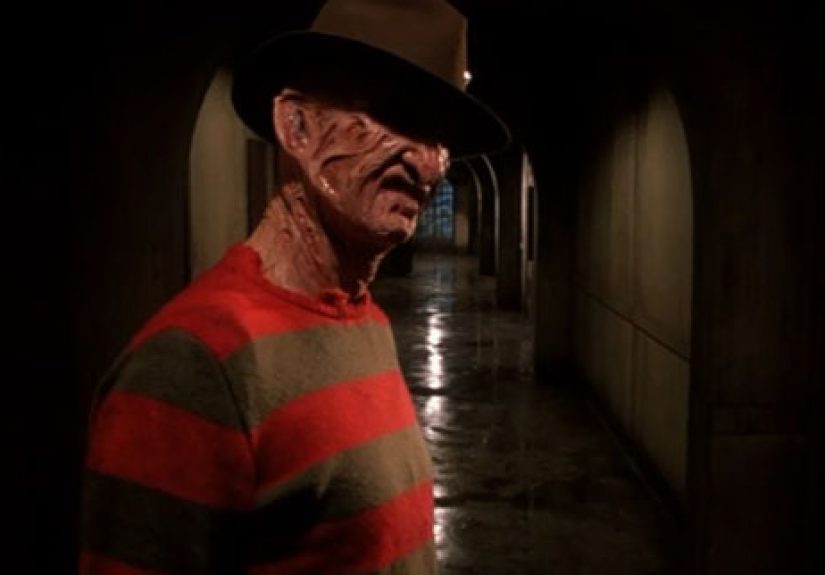
No list of the top menacing film characters can include everyone. The Wicked Witch of the West deserves credit for terrifying generations of children and teaching America that green skin plus skywriting equals panic. Michael Myers remains a minimalist masterpiece of slasher menace. The Xenomorph from Alien is pure biological nightmare fuel. Freddy Krueger turned sleep into a liability. The T-1000 from Terminator 2: Judgment Day made running from liquid metal feel like a very reasonable cardio plan.
Other unforgettable choices include John Doe from Se7en, Max Cady from Cape Fear, Frank Booth from Blue Velvet, Patrick Bateman from American Psycho, and Amy Dunne from Gone Girl. Each has a different flavor of menace, from philosophical cruelty to social manipulation. If cinema teaches us anything, it is that danger has excellent range.
Why Menacing Characters Stay With Us
Menacing characters endure because they expose pressure points in human nature. Hannibal Lecter reveals the fear of being psychologically seen. Darth Vader represents lost humanity and overwhelming power. Anton Chigurh embodies randomness and death. The Joker attacks moral certainty. Norman Bates turns innocence into suspicion. Annie Wilkes makes devotion frightening. Nurse Ratched shows how cruelty can hide inside rules.
These characters also make their heroes better. A hero is only as compelling as the force pushing against them. Clarice Starling becomes more courageous because Lecter is so perceptive. Batman becomes more morally tested because the Joker refuses ordinary logic. Luke Skywalker’s hope matters because Vader seems so far beyond saving.
For filmmakers, menacing characters are powerful storytelling tools. They create suspense, reveal theme, and give the audience something to fear beyond plot mechanics. A good villain blocks the hero. A great menacing character haunts the viewer after the credits.
Personal Viewing Experiences: What These Characters Teach Us About Fear
Watching the most menacing film characters is a strange pleasure. We do not enjoy them because we approve of them. We enjoy them because they are masterclasses in tension. They show how movies can make an audience feel danger through framing, sound, silence, performance, and timing. A raised eyebrow can be scarier than an explosion if the actor knows exactly where to place it.
One of the most memorable experiences with characters like Hannibal Lecter or Anton Chigurh is realizing that fear does not always arrive loudly. Sometimes it arrives in a calm voice. Lecter’s conversations with Clarice are frightening because they feel too controlled. He is behind glass, but he somehow has the power in the scene. Chigurh creates a similar effect. When he talks to a gas station owner, nothing obviously spectacular is happening, yet the tension is almost unbearable. The viewer understands that one wrong sentence could become fatal. That kind of suspense is built on performance, editing, and the audience’s imagination doing push-ups in the corner.
Darth Vader offers a different experience. His menace is mythic. The breathing, the music, the armor, and the posture make him feel larger than the room. When Vader appears, the story suddenly becomes simpler and more dangerous: escape or be crushed. Yet the emotional backstory adds depth. Viewers are not only afraid of what Vader can do; they are saddened by what he became. That combination of fear and tragedy is why he remains so powerful decades after his first appearance.
Characters like Annie Wilkes and Nurse Ratched hit closer to home because their menace is domestic and social. Annie is frightening because she begins as helpful. Nurse Ratched is frightening because she uses authority instead of obvious violence. These characters remind viewers that horror can come from control, dependency, and emotional manipulation. They do not need castles or starships. A bedroom, a ward, or a locked door is enough.
The experience of watching Jack Torrance is especially uncomfortable because his menace grows inside a family space. The Overlook Hotel is huge, but the emotional trap feels intimate. Jack’s transformation is terrifying because it corrupts the role of husband and father. The viewer is not just watching a man become dangerous; the viewer is watching trust collapse. That is why The Shining continues to feel disturbing even after countless parodies and references.
These characters also teach an important storytelling lesson: menace works best when it has rhythm. If a villain is violent every second, the audience becomes numb. The great ones know when to pause. Hans Landa’s long conversations are frightening because he stretches time. The Joker’s unpredictability works because he alternates comedy, cruelty, and philosophy. Norman Bates unsettles us because his vulnerability competes with our suspicion. Menace needs contrast the way music needs silence.
For viewers, revisiting these performances can deepen appreciation for acting craft. The tilt of Perkins’ head, the softness of Hopkins’ voice, the stillness of Bardem’s face, the controlled smile of Waltz, and the rigid calm of Fletcher all show that screen terror is often built from small choices. The scariest thing in a movie is not always what the character does. Sometimes it is what they seem capable of doing next.
Conclusion: The Lasting Power of Movie Menace
The top 10 menacing film characters are not just memorable because they scare us. They endure because they represent different kinds of fear: intellectual, physical, moral, institutional, domestic, historical, and chaotic. Hannibal Lecter makes the mind feel unsafe. Darth Vader makes power feel unstoppable. Anton Chigurh turns chance into terror. The Joker makes society feel fragile. Norman Bates reminds us that appearances can be catastrophically misleading.
Great menacing characters do more than threaten the hero. They sharpen the entire film around them. They give stories weight, danger, and electricity. They make audiences lean forward, even when every instinct says to hide behind the couch. In the end, cinema needs characters like these because fear, when handled with artistry, reveals what courage means.
And if this list inspires a movie marathon, choose your snacks wisely. Popcorn is great, but maybe skip the fava beans, avoid remote motels, never accept a coin toss from a stranger, and under no circumstances check into a snowbound hotel for “peace and quiet.” Cinema has already filed the paperwork on that one.
Note: This article is written as original web-ready editorial content based on widely recognized film history, award records, official character information, and reputable U.S. entertainment criticism. It avoids copied phrasing, raw source links, and unnecessary citation placeholders.






 Close
Close