
Table of Contents >> Show >> Hide
- What Is a Victorian Chest of Drawers?
- The Main Victorian Styles You’ll See
- Common Materials and Construction Details
- How to Identify a Good Victorian Chest of Drawers
- Why Victorian Chests Still Work in Modern Homes
- Buying Tips for Collectors and Decorators
- Care and Preservation
- Victorian Chest of Drawers: A Lasting Design Investment
- Experience: Living With a Victorian Chest of Drawers
- Conclusion
If furniture could clear its throat and announce itself before entering a room, the Victorian chest of drawers would absolutely do it in a rich stage voice. This is not shy furniture. It was born in an era that loved detail, adored craftsmanship, and had a long-term relationship with ornament. A Victorian chest of drawers is more than a storage piece. It is a design statement, a practical workhorse, and, on its best days, the sort of object that makes modern flat-pack furniture look like it forgot to do its homework.
In the broadest sense, Victorian furniture is associated with the reign of Queen Victoria, from 1837 to 1901, and in America it developed across a wide range of overlapping substyles rather than one single look. That is why one Victorian chest can feel lush and curvy while another looks more angular, geometric, and disciplined. Put simply: the phrase Victorian chest of drawers describes a family of dramatic personalities, not one identical twin set.
What Is a Victorian Chest of Drawers?
A Victorian chest of drawers is a case piece made primarily for storing clothing, linens, and personal items, but it also reflects nineteenth-century ideas about status, taste, and domestic life. In many Victorian homes, especially in the United States, furniture was often part of coordinated suites. A chest might be designed to match a bed, dresser, washstand, or mirror, creating a bedroom that looked carefully staged rather than casually assembled from whatever survived a yard sale and a family inheritance war.
Victorian interiors favored comfort, abundance, and visible style. That helps explain why chests from the period often feel substantial and visually rich. They were meant to be used, admired, and noticed. Bedrooms were practical spaces, of course, but they were also becoming more refined and expressive. A chest of drawers had to hold socks, yes, but it also had to suggest that the owner possessed discernment, polish, and perhaps a mild but healthy obsession with carved details.
The Main Victorian Styles You’ll See
Rococo Revival
Rococo Revival is the Victorian style that never met a curve it did not like. In America, it gained traction around the 1840s and remained influential until the more angular Eastlake taste rose in the later nineteenth century. These pieces often feature scrolling forms, pronounced carving, voluptuous profiles, and a sense that the furniture might break into a flourish at any moment. On a chest of drawers, this can show up in serpentine fronts, rounded corners, elaborate drawer pulls, and carved feet that seem almost theatrical.
If your dream chest looks romantic, sculptural, and a little extra in the best possible way, Rococo Revival is likely your type.
Renaissance Revival
Renaissance Revival pieces usually feel heavier, more architectural, and more formal. They often rely on bold massing, deep carving, strong moldings, and a stately sense of order. A Victorian chest in this style can look commanding rather than playful. It may include pilasters, incised ornament, robust case construction, and a silhouette that suggests permanence. This is the style for people who want their furniture to look as though it files taxes early and disapproves of shortcuts.
Eastlake
Eastlake style, popular roughly from 1870 to 1890, is the late Victorian answer to all that plush excess. Inspired by the writings of Charles Locke Eastlake, it emphasized good design, craftsmanship, and more disciplined ornament. That does not mean Eastlake furniture is plain. It simply trades gush for structure. On a Victorian chest of drawers, Eastlake features often include straighter lines, chamfered edges, brackets, grooves, incised decoration, geometric carving, and dark native woods such as oak, cherry, maple, and pine.
Many American Eastlake chests are handsome in a practical, no-nonsense way. They still have detail, but the detail behaves itself.
Common Materials and Construction Details
Victorian chests were made in a range of woods, but walnut appears again and again in American examples, especially in later nineteenth-century bedroom furniture. Oak, cherry, maple, ash, poplar, and mahogany also appear depending on style, maker, region, and price point. Higher-end pieces could feature burl accents, mirrored elements, paint, gilding, or decorative veneers.
One of the most recognizable upgrades on many Victorian dressers and chests is the marble top. White marble was especially popular because it looked luxurious, felt durable, and offered cool contrast against dark wood. Mirrored backs, removable marble slabs, and original nickel-plated or brass hardware are also common details on surviving bedroom pieces from the period.
Construction tells its own story. Drawer joints are especially useful when evaluating age and authenticity. Earlier hand-cut dovetails vary slightly because they were made one by one by skilled cabinetmakers. By the late Victorian era, American makers often used the so-called pin-and-cove joint, a machine-assisted drawer construction seen regularly on Eastlake and other late nineteenth-century furniture. It is one of those nerdy little details that antique lovers discuss with suspicious enthusiasm, and honestly, they are right to do so.
How to Identify a Good Victorian Chest of Drawers
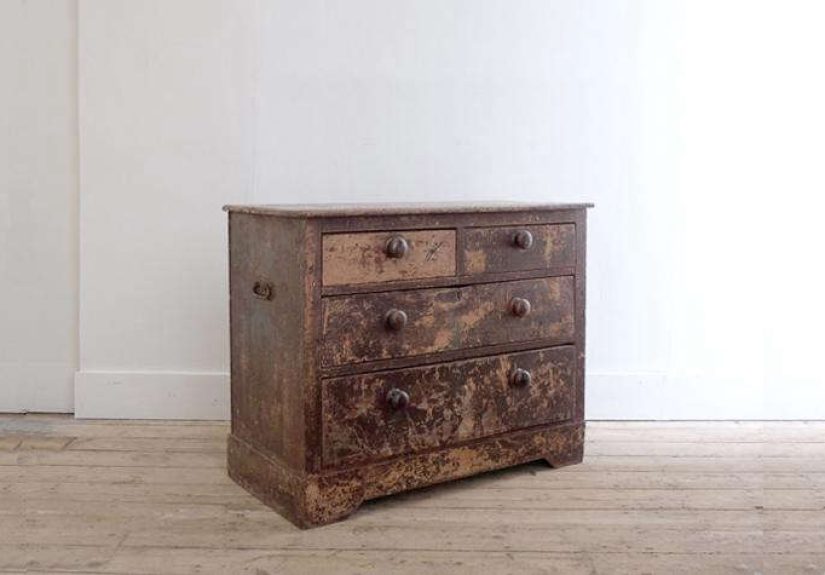
First, look at the silhouette. Is it strongly curved, straight and incised, or bold and architectural? That helps you place it within the larger Victorian family. Next, study the wood and finish. Rich walnut, figured burl, original varnish, age-appropriate crazing, and a well-developed patina can all point to authenticity and character.
Then check the hardware. Original pulls, knobs, escutcheons, locks, and casters matter. Replacing one missing knob is not the end of civilization, but replacing every visible metal detail with shiny modern hardware can erase the period feeling faster than you can say, “Why does this antique now look like a confused hotel nightstand?”
Open the drawers. They should move reasonably well for furniture that may be 130 to 150 years old. Inside, look for stamps, labels, or maker’s marks. On Eastlake and related Victorian pieces, these identifying marks can sometimes be found on undersides, backs, or inside drawers. Also inspect the drawer joints. Clean pin-and-cove construction may support a late Victorian American date, while perfectly uniform modern machine joints can suggest a later reproduction or substantial rebuilding.
Finally, examine condition honestly. A few scratches, minor surface wear, and finish crazing are normal and often desirable. Structural instability, loose veneer, failed joints, warped cases, or heavy refinishing deserve more caution. A Victorian chest should show age, not surrender.
Why Victorian Chests Still Work in Modern Homes
The magic of a Victorian chest of drawers is that it can do several jobs at once. In a bedroom, it adds depth, history, and real storage. In an entryway, it becomes an anchoring statement piece. In a dining room or hallway, it can act as a side chest for linens, candles, serving pieces, or the mysterious household items everyone owns but nobody can confidently identify.
Victorian chests also mix surprisingly well with contemporary interiors when styled with restraint. A carved walnut Eastlake chest looks terrific against plain walls, modern art, and simple lighting. A marble-top Victorian chest can soften a minimal room by adding texture and warmth. Even the grander Rococo Revival forms can work beautifully when allowed to be the star rather than forced to compete with twelve other dramatic objects.
That is the trick. Let the chest be the extrovert. The rest of the room can be emotionally stable.
Buying Tips for Collectors and Decorators
Prioritize originality
Original finish, hardware, marble, and mirrors usually add character and historical value. Conservative restoration is often better than aggressive refinishing.
Check the structure before the sparkle
Loose joints, broken feet, detached marble, damaged veneer, and drawer failures matter more than surface dirt. Ornament is charming, but structure pays the bills.
Measure everything
Victorian furniture can be generously proportioned. That tall, gorgeous chest may fit your aesthetic vision perfectly and your staircase not at all. Bring a tape measure and save yourself a tragic and unnecessary stairwell monologue.
Be skeptical of dramatic attributions
Many sellers want to attach famous maker names to increase price. Labels, stamps, catalogs, and documented comparisons matter more than wishful thinking.
Care and Preservation
Victorian chests survive best when treated less like disposable furniture and more like wooden history with drawers. Always lift a piece rather than drag it, and never move it by decorative elements, top moldings, handles, or original castors. Remove drawers before transport when possible. If the chest has marble, handle the stone carefully and carry it vertically when removed.
Keep the chest away from direct sunlight, radiators, vents, and dramatic swings in humidity. Wood shrinks, swells, splits, and sticks when the environment gets chaotic. Veneer can loosen. Drawers can jam. Mold can form in stagnant, damp conditions. In other words, Victorian furniture likes stability almost as much as it likes attention.
For cleaning, use a soft dry cloth and avoid heavy-handed wet cleaning unless a conservator advises otherwise. Modern silicone-rich spray polishes can damage original finishes over time. Metal fittings should be treated gently, and patina should not be scrubbed away in a fit of enthusiastic “improvement.” When restoration is necessary, preserving original joinery, veneer, hardware, and finish is generally preferable to stripping everything back to a suspiciously cheerful blank slate.
Victorian Chest of Drawers: A Lasting Design Investment
A good Victorian chest of drawers lasts because it combines utility with personality. It stores real things, stands up to real use, and brings visual authority to a room in a way few modern pieces can match. Whether you lean toward the scroll-happy drama of Rococo Revival, the commanding weight of Renaissance Revival, or the crisp carved geometry of Eastlake, there is a version of this furniture form that still feels relevant today.
That relevance comes from more than nostalgia. These chests reflect a moment when furniture was expected to be both durable and expressive. They were not designed to disappear into the background. They were designed to participate in the room. And after well over a century, many of them still do exactly that, with more grace than plenty of things made last Tuesday.
Experience: Living With a Victorian Chest of Drawers
The first time you live with a Victorian chest of drawers, you realize something surprising: it changes the pace of a room. Not in a mystical crystal-shop way. More in a practical, everyday, “why does this space suddenly feel more put together?” kind of way. A modern dresser usually does its job quietly. A Victorian chest does the job and then insists on contributing atmosphere. You walk past it and notice the depth of the wood, the little shadows cast by the carving, the cool certainty of the marble top, and the way even a brass pull seems to have opinions.
There is also a tactile pleasure to it. The drawers tend to feel different from modern ones. Some glide, some resist slightly, some give you that tiny old-wood sound that makes you feel like you should be storing handwritten letters, fountain pens, or at least sweaters with more dignity than the ones you currently own. The piece asks for a little attention. It teaches you to open and close drawers with intention, to notice grain patterns, and to stop treating furniture as invisible background equipment.
Shopping for one can be an experience all by itself. You start by saying, “I just want something with character,” and five minutes later you are crouched on the floor with your phone flashlight inspecting joinery like a detective in a historical crime drama. You begin learning odd but thrilling phrases such as pin-and-cove joints, burl walnut, original patina, spoon carving, and removable marble top. You also learn that every dealer has at least one story involving a chest that was “absolutely impossible to move” and another story involving a customer who measured the room but somehow forgot to measure the front door.
Once the chest comes home, it quickly becomes useful beyond its original purpose. The top holds a lamp, a stack of books, a tray, maybe a bowl for keys, maybe a framed photograph, maybe the candle you swear you only light on special occasions but somehow use every Tuesday. The drawers become home to all the things that float around a house without a stable address. Linens. Winter scarves. Stationery. Spare chargers. The mysterious collection of cords that everyone keeps because surely one of them belongs to something important.
But the best part is emotional, not functional. A Victorian chest of drawers has presence without needing electricity, software updates, or assembly instructions translated from another galaxy. It reminds you that useful objects can also be beautiful, and that craftsmanship leaves a kind of quiet residue in daily life. Even on a rushed morning, the piece offers a small pause. You see the finish catch the light. You run your hand across old wood. You remember that not everything in a home has to be temporary. Some things can be made well, repaired carefully, and kept long enough to gather stories. That is a pretty good lesson for a piece of furniture with six drawers and a dramatic silhouette.
Conclusion
A Victorian chest of drawers is not merely antique storage. It is a snapshot of nineteenth-century design values translated into wood, stone, metal, and craftsmanship. It can be ornate or disciplined, curvy or architectural, lavish or restrained, but the best examples always deliver presence. They bring beauty, function, and historical depth into a home without feeling dusty or irrelevant. Buy carefully, preserve what makes the piece original, and style it with confidence. The result is furniture that still earns its floor space, which is more than can be said for half the junk currently lurking in most closets.





 Close
Close