
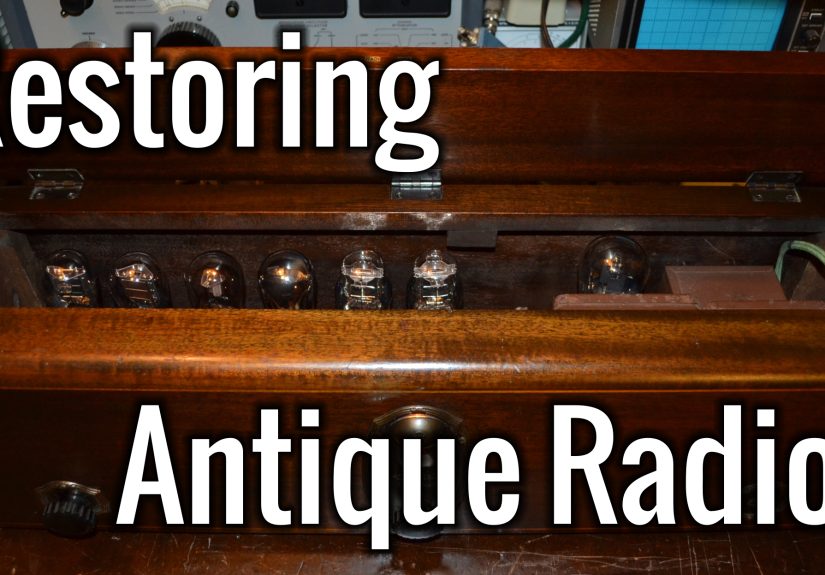
Table of Contents >> Show >> Hide
- Why Antique Radios Still Matter
- The First Rule of Restoration: Nostalgia Is Not a Repair Plan
- What Antique Radio Restoration Actually Involves
- Authenticity vs. Usability
- What Beginners Should Learn Before They Fall in Love With a Console
- The Joy of Hearing One Play Again
- Welcome to the Old School
- Experiences From the Bench: What Restoring Antique Radios Feels Like
Note: This article is for educational and collecting purposes. Antique radios can contain dangerous voltages, fragile finishes, and irreplaceable parts, so any live electrical work should be handled by a trained restorer or a properly supervised expert.
There are hobbies, and then there are time machines with dust on them. Restoring antique radios belongs firmly in the second category. One minute you are staring at a cracked Bakelite cabinet or a walnut console that smells faintly like attic and ambition. The next minute you are learning about lacquer toners, tube lineups, drifted resistors, and why a fifty-cent knob can ruin your entire weekend. It is a wonderfully strange pastime, equal parts history lesson, design appreciation, electronics puzzle, and mild emotional instability.
That is exactly why antique radio restoration still charms collectors, tinkerers, and lovers of old technology. These sets are not just boxes that once played baseball games and big-band music. They are snapshots of American life from the 1920s through the 1950s, when radio moved from novelty to household centerpiece. They sat in living rooms, kitchens, dens, and storefronts. Families gathered around them for news, comedy, concerts, war bulletins, weather reports, and the kind of suspense that now arrives as a push notification.
Restoring one of these radios is not simply about making it play again. It is about deciding what deserves to be preserved, what should be repaired, and what should be left alone. In other words, you are not just reviving an object. You are negotiating with history, with chemistry, with electricity, and occasionally with a screw that has not moved since Franklin Roosevelt was in office.
Why Antique Radios Still Matter
Part of the appeal is visual. Antique radios have personality in a way that modern plastic gadgets rarely do. Cathedral sets look like tiny Gothic churches for jazz-loving ghosts. Tombstone radios have the serious face of old office furniture with secrets. Streamlined postwar table sets resemble little jet-age sculptures. Console radios, meanwhile, are what happens when furniture and engineering decide to co-parent.
Another part of the appeal is craftsmanship. Many early and mid-century radios used veneers, toned lacquer, glass dials, cloth speaker grilles, and elegantly shaped knobs. Even modest models often had more visual intention than many modern appliances. The cabinet was not an afterthought. It was part of the sales pitch. A radio had to sound good, yes, but it also had to look respectable next to the sofa, the lamp, and your aunt who judged everything.
Then there is the emotional hook. Restorers are often drawn in by memory. A grandparent had one. A neighbor displayed one. A flea-market find looked too handsome to leave behind. Antique radios invite rescue. They make you wonder what they played, who owned them, and whether the station preset buttons still remember cities that changed long ago.
The First Rule of Restoration: Nostalgia Is Not a Repair Plan
The biggest beginner mistake is also the most understandable: plugging in an old radio just to “see if it works.” That impulse is common. It is also how enthusiasm can turn into smoke. Antique radios often contain aged capacitors, brittle cords, tired insulation, and other components that do not improve with decades of sitting quietly in basements. Time does not heal electronics. Time turns them into tiny, unreliable historians.
Experienced restorers treat first power-up as a controlled event, not a dare. They inspect before energizing. They consult schematics or service data before replacing anything. They evaluate the cord, the chassis, the tubes, the speaker, and the evidence of prior repairs. A radio may look complete and still be electronically untrustworthy. It may even play briefly and still be unsafe for regular use. That is one of the trickiest truths in the hobby: “it works” and “it is properly restored” are not the same sentence.
That cautious mindset is part of old-school restoration culture. The smart restorer does not begin with bravado. The smart restorer begins with documentation, patience, and a healthy suspicion of any component that was old when Eisenhower was young.
What Antique Radio Restoration Actually Involves
Restoration usually falls into three overlapping categories: electrical, cosmetic, and historical. The electrical side deals with the chassis, wiring, capacitors, resistors, tubes, switches, and alignment. The cosmetic side deals with cabinet finish, veneer, paint, grille cloth, dial covers, knobs, trim, and labels. The historical side deals with authenticity. Should the set be made to look factory-correct, stabilized in honest original condition, or rebuilt as a clean, usable display piece? The answer depends on the radio, its rarity, its condition, and the goals of the owner.
That is why the best restorers are usually part technician, part conservator, and part detective. They look for evidence. Is the finish original? Has the cabinet been stripped before? Were the knobs replaced with near-miss substitutes from another model? Is the grille cloth correct for the brand and year? Has somebody in 1978 committed crimes against lacquer? These questions matter because antique radio restoration is not merely about replacing old parts with new parts. It is about making informed decisions rather than flashy mistakes.
The Chassis: Where the Drama Lives
Inside the cabinet is the real soap opera. Antique radio chassis commonly suffer from dried electrolytic capacitors, failing paper capacitors, drifted resistors, oxidized controls, broken dial cords, weak tubes, damaged power cords, and evidence of long-ago “repairs” that may have been optimistic at best. Some sets also have hot-chassis designs or other safety concerns that demand extra care and proper knowledge.
Because of that, seasoned restorers rely on schematics and service references instead of guessing. They compare part values, verify wiring, and document changes as they go. Alignment, when needed, generally comes later, after the radio is stable and the obvious failures have been addressed. In collector circles, this is a familiar pattern: first make it safe, then make it reliable, then make it sing.
Even tube testing has its own culture. A weak tube does not always mean a dead radio, and a strong tube does not guarantee a healthy circuit. Antique radio troubleshooting rewards systems thinking. One dramatic-looking part may be innocent, while a humble capacitor quietly causes all the trouble. Restorers learn not to chase glamour. In old radios, the plain parts are often the guilty ones.
The Cabinet: Beauty, Restraint, and the Occasional Existential Crisis
If the chassis is the science project, the cabinet is the personality test. This is where restoration can go noble or go terribly wrong. Many wooden radio cabinets were originally finished in lacquer, often with toned sections that created contrast and depth. That matters, because a cabinet refinished with the wrong modern coating may look shiny but historically off. Antique radios were not supposed to resemble bowling lanes.
Wood cabinets often need gentle cleaning before any drastic action is taken. Dirt, wax buildup, paint specks, and nicotine can make a finish look worse than it truly is. Sometimes a radio that appears doomed simply needs careful surface cleaning and minor touch-up. Other times, veneer is lifting, corners are missing, water damage is severe, or the finish has failed beyond rescue. The trick is knowing the difference.
Collectors often repeat a wise principle: restore too little before you restore too much. Original finish, patina, labels, and wear patterns can carry historical value. Over-restoration can erase character. A cabinet does not have to look fresh from a 1938 showroom to be beautiful. Sometimes the most satisfying result is not perfection. It is honesty.
Bakelite and painted sets present their own challenges. Some can be polished back to a natural sheen. Others were painted from the factory and look wrong when stripped or recolored without care. Cracks, chips, and faded finishes may be repairable, but the goal should still be coherence, not cosmetic vanity. The radio should look like itself, not like a custom hot rod that got lost on the way to an auto show.
Authenticity vs. Usability
This is where restoration becomes philosophy with screwdrivers nearby. Some collectors want museum-like authenticity. Others want a handsome radio that plays safely in a living room. Still others focus on preservation, preferring minimal intervention and careful documentation over dramatic transformation.
None of those approaches is automatically wrong. A rare early set with original finish and scarce parts deserves different treatment from a common postwar table radio with severe cabinet damage and a failing chassis. Responsible restoration is situational. It respects rarity, materials, value, and reversibility whenever possible.
That also means being honest about replacement parts and reproduction elements. New grille cloth, repro knobs, reproduction back panels, modern safety additions, and restuffed components can all have a place in restoration when used thoughtfully. The important thing is disclosure and intent. In the antique world, the sin is not replacement. The sin is pretending replacement never happened.
What Beginners Should Learn Before They Fall in Love With a Console
Newcomers often start with whatever they find first, which is romantic but not always wise. Massive consoles look glorious, but they are heavy, space-hungry, and not always beginner-friendly. A common tabletop tube radio in decent cosmetic condition is often a better introduction. It offers enough challenge to teach good habits without requiring a moving crew and a grief counselor.
Beginners also benefit from learning the language of the hobby. Terms like recap, alignment, electrolytic, paper capacitor, dial string, field coil speaker, lacquer toner, hot chassis, and schematic are not just jargon. They are survival tools. Join a radio club, browse reputable collector archives, study model identification guides, and compare examples before buying anything expensive. The more original examples you see, the less likely you are to mistake an enthusiastic repaint for authentic factory finish.
Another beginner lesson is that restoration is not always the only honorable path. Some radios are best preserved as display pieces. Some are parts donors. Some are waiting for a more skilled restorer. And some, frankly, are teaching aids sent by the universe to explain humility.
The Joy of Hearing One Play Again
For all the decisions, caution, and research involved, restoration has a reward that is hard to overstate. When an antique radio comes back to life properly, it feels different from powering on a modern device. A phone wakes up because that is what phones do. An eighty-year-old radio wakes up because someone cared enough to understand it.
The dial glows. The speaker hum settles into station noise. A local AM announcer appears through circuits designed in another century. You hear the slight warmth, the gentle coloration, the unmistakable presence of vacuum tubes doing their old, stubborn work. It is not perfect sound. It is better than perfect sound. It is sound with biography.
That moment explains the whole hobby. Not just the technical triumph, but the emotional one. The radio is no longer an object that survived. It is an object that speaks again.
Welcome to the Old School
Restoring antique radios is ultimately about respect. Respect for design, for material history, for the people who built these sets, and for the listeners who once depended on them. The best restorers are not merely fixing broken things. They are making thoughtful choices about preservation, authenticity, safety, and use.
That is why the hobby endures. It appeals to people who enjoy stories hidden in hardware. It rewards patience over speed, study over guesswork, and restraint over ego. It also offers a rare combination in modern life: something beautiful to look at, something complicated to understand, and something deeply satisfying to save.
So yes, welcome to the old school. Pull up a chair. Admire the veneer. Respect the chassis. Keep one eyebrow raised at every old capacitor you meet. And remember: the goal is not to make history look new. The goal is to help it survive with dignity, style, and maybe just enough static to remind you where it came from.
Experiences From the Bench: What Restoring Antique Radios Feels Like
People who stay in this hobby for years usually talk less about “projects” and more about experiences, because each radio has its own mood. One set arrives looking awful and turns out to be surprisingly cooperative. Another looks gorgeous on the outside and fights you like it has personal grievances. There is always a moment, usually early, when the restorer realizes that the radio is about to reveal its biography. Dust patterns suggest how it was stored. A penciled repair note inside the cabinet hints at a serviceman from decades ago. A station preset card with local call letters turns the set from object into witness.
There is also a strange pleasure in slow progress. Modern devices are sealed, disposable, and generally rude about being understood. Antique radios are the opposite. They reward observation. You remove the chassis and notice how the dial scale was designed to be read from across the room. You clean the knobs and realize someone once touched them every evening. You study the cabinet under better light and see that what looked like plain walnut is actually a clever arrangement of contrasting veneer. The radio stops being “old stuff” and starts becoming evidence of taste, labor, and engineering ambition.
Restorers often describe the emotional swing of the process. There is optimism at the start, confusion in the middle, and delight at the end, with occasional muttering throughout. A dial cord that will not cooperate can make an adult question civilization. A hidden crack in Bakelite can feel like betrayal. But then a cleaned grille cloth suddenly transforms the face of the set, or a tired finish wakes up after careful work, and morale returns like a triumphant radio announcer saying, “We’re back on the air.”
One of the most memorable experiences is learning restraint. Many beginners imagine restoration as a dramatic before-and-after reveal. Veterans know it is often subtler. The best decision may be to preserve original finish instead of stripping it. The right move may be to stabilize veneer rather than replace it. A radio can become more beautiful not because every flaw disappears, but because the remaining flaws make sense. That change in perspective is one of the hobby’s greatest lessons. It teaches that age is not the enemy. Neglect is the enemy. Honest wear can be elegant.
And then there is the first proper listen. Not the reckless “let’s see what happens” moment, but the earned one after careful inspection, research, and restoration. The set warms up. The speaker comes alive. Maybe the reception is modest. Maybe the station drifts a little. Maybe the tone is warm in exactly the way antique radio lovers promise it will be. Whatever the result, the experience feels larger than sound. It feels like contact. The room contains two eras at once, and for a few minutes, they get along beautifully.
That is why collectors keep going back to flea markets, estate sales, attics, swap meets, and online listings. They are not just hunting radios. They are hunting that experience again: the moment when a silent object, handled with care and restored with judgment, becomes part machine, part furniture, part memory, and part miracle. It is old school in the best sense. It asks for patience. It rewards curiosity. And when it goes right, it makes the past feel less like something gone and more like something still willing to talk.






 Close
Close