
Table of Contents >> Show >> Hide
- The Short Meaning of the Jack of Spades
- Why the Jack of Spades Has More Than One Meaning
- Traditional Jack of Spades Meaning in Cartomancy
- Jack of Spades in Tarot: Page of Swords or Knight of Swords?
- Does the Jack of Spades Have a Negative Meaning?
- Common Symbolic Themes of the Jack of Spades
- Experiences Related to the Jack of Spades: How This Card Shows Up in Real Life
- Final Take
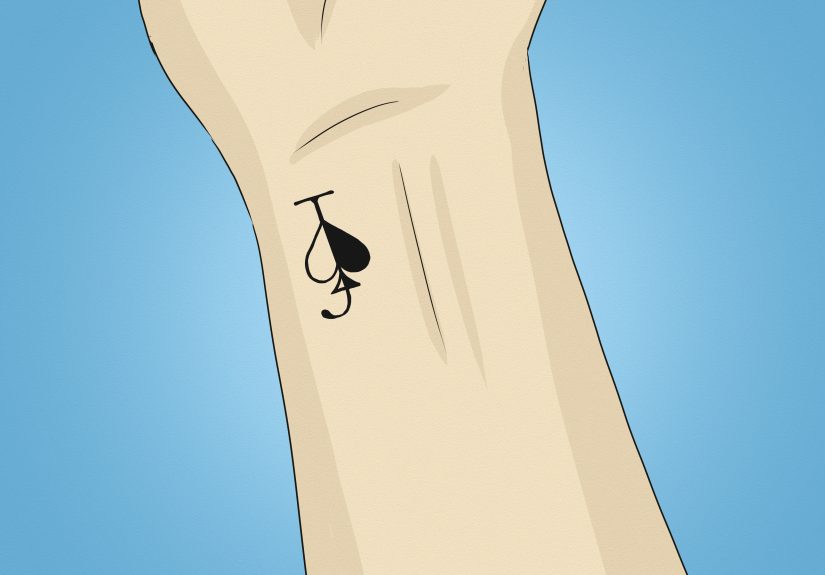
If the Jack of Spades had a movie trailer voice, it would probably say, “In a world full of vague vibes, one card arrives with sharp opinions and zero patience.” That is the charm and the headache of this card. In cartomancy, the Jack of Spades is usually read as clever, watchful, youthful, strategic, and a little hard to relax around. In tarot-style language, it often overlaps with the restless, brainy energy of the Page of Swords. Some modern readers even compare it to the Knight of Swords, which is where things get spicy and confusing fast.
So what does the Jack of Spades really mean? The best answer is this: it points to sharp mental energy. Sometimes that shows up as curiosity, truth-telling, wit, and fast learning. Sometimes it shows up as gossip, immaturity, defensiveness, or a person who is smart enough to help you and sneaky enough to complicate your life before lunch. It is not automatically a “bad” card, but it is rarely a soft and cozy one. This is the card that asks hard questions, notices what everyone else missed, and occasionally starts drama because it got bored.
The Short Meaning of the Jack of Spades
In traditional cartomancy, the Jack of Spades often represents a young person or youthful energy connected with the spade suit: intellect, challenge, conflict, strategy, communication, and change. Older reading traditions sometimes describe this figure in very specific physical terms, but many modern readers treat those old appearance-based descriptions as outdated shorthand and focus instead on temperament. In that more useful modern sense, the card often describes someone clever, observant, skeptical, witty, defensive, sharp-tongued, or hard to fool.
As an event or message, the Jack of Spades can suggest news, mental tension, strategic action, uncomfortable truth, or the need to pay closer attention. It can also signal a situation where facts matter more than feelings, or where somebody is speaking from the head long before the heart has caught up. If you were hoping for a card that says, “Relax, everything is fine, have a cupcake,” this is not that card.
Why the Jack of Spades Has More Than One Meaning
Cartomancy and Tarot Are Related, But Not Identical
Cartomancy is the practice of reading playing cards for divination. Tarot reading is part of that larger card-reading family, but tarot has its own structure, symbols, and court cards. That matters because a standard playing-card deck has three court cards per suit: jack, queen, and king. Traditional tarot has four: page, knight, queen, and king. That extra knight creates a translation problem when people try to match a Jack of Spades directly to tarot.
That is why you will see two different approaches online and in modern card-reading communities. One approach says the Jack of Spades is closest to the Page of Swords because page and jack historically overlap with the older word knave. The other approach says the Jack of Spades can function more like the Knight of Swords in modern readings because the jack in playing cards sometimes absorbs part of the knight’s motion, intensity, or force. Neither view is completely random. They are just built on different systems.
Spades and Swords Are Symbolic Cousins
In modern divinatory correspondences, spades are usually treated as the playing-card cousin of tarot’s swords. That means the Jack of Spades belongs to a suit associated with mind, truth, friction, clarity, communication, power, and conflict. It is the part of the deck that says, “Let’s examine this logically,” even when the room desperately wants a nap instead.
Because of that connection, the Jack of Spades carries an airy, mental, analytical quality. This is the card of quick observations, cutting remarks, strong opinions, and nervous brilliance. When it behaves well, it is insight. When it behaves badly, it is sarcasm wearing a fancy hat.
Traditional Jack of Spades Meaning in Cartomancy
As a Person
The classic cartomancy reading of the Jack of Spades is often a young person who is clever but difficult. Think of someone alert, strategic, mentally quick, and not especially sentimental. This person may be intelligent, skeptical, witty, and good at reading the room. On the shadow side, they can be immature, manipulative, defensive, moody, unreliable, or too eager to test boundaries just to see what happens.
In real-life terms, this could describe the friend who always knows the gossip first, the coworker who asks smart questions with suspiciously perfect timing, the ex who texts like a debate club champion, or the student who is brilliant but deeply allergic to humility. The Jack of Spades often knows more than they say. Whether that makes them useful or exhausting depends on the rest of the reading.
As an Energy
When the card does not represent a person, it often points to a mental atmosphere. Expect strategy, scrutiny, questions, mixed motives, or information that changes the situation. The Jack of Spades may indicate a need to think faster, speak more clearly, or stop taking everything at face value. It can warn against naivety, but it can also reward intelligence, discipline, and good timing.
This is a card that says the truth is in the details. Read the fine print. Listen for what is not being said. Ask one more question. If something feels polished but slightly off, the Jack of Spades is often the card whispering, “Yes, exactly, keep looking.”
In Love Readings
In love, the Jack of Spades is rarely a candlelit violin solo. It is more like a late-night conversation full of mixed signals, nervous wit, and somebody pretending they are not emotionally invested while clearly checking your last-seen status. The card can describe a person who is curious and interested but guarded. Attraction may be present, but so are caution, overthinking, and fear of vulnerability.
At its best, this card can mean honest conversation, intellectual chemistry, learning how each other thinks, and breaking unhealthy patterns through truth. At its worst, it can point to mind games, hot-and-cold messaging, immaturity, spying, gossip, or a connection built more on intrigue than trust. If the question is, “Do they like me?” the Jack of Spades often answers, “Yes, but they are being weird about it.”
In Career and Money Readings
For work and finances, the Jack of Spades can be surprisingly useful. It favors research, learning, analysis, writing, investigation, planning, communication, contracts, interviews, and roles that require mental speed. This card often shows up when someone is entering a new professional phase and needs to learn fast, ask sharper questions, and stop faking confidence long enough to become actually skilled.
Still, the warning label matters. The Jack of Spades can also point to office politics, misleading information, defensiveness, or a coworker who acts like every group project is a chess match. If this card appears in a money question, it may suggest careful review, strategic thinking, and skepticism before signing, spending, investing, or trusting somebody else’s version of “great opportunity.”
As Advice
When the Jack of Spades appears as advice, the message is usually clear: be curious, but not gullible. Stay sharp, but do not become cynical. Learn the facts. Ask the uncomfortable question. Use your mind as a tool, not a weapon. The card respects intelligence, but it does not reward paranoia, arrogance, or constant emotional armor.
Jack of Spades in Tarot: Page of Swords or Knight of Swords?
This is the part that sends a lot of readers into the metaphysical group chat. If you are using a classic symbolic bridge between playing cards and tarot, the Jack of Spades is most often compared to the Page of Swords. That is because pages represent learning, messages, curiosity, and early-stage development, and that matches the Jack’s youthful, mentally active vibe very well.
The Page of Swords energy is alert, restless, observant, and mentally alive. It is beginner energy with a sharp edge. It watches, questions, gathers information, and wants to understand everything yesterday. If your reading feels like a student, messenger, researcher, or truth-seeker entering the scene, the Jack of Spades is behaving very much like the Page of Swords.
But some modern systems map the Jack of Spades to the Knight of Swords instead. Why? Because a standard playing-card deck has no separate knight, so some readers believe the jack inherits some of that charge-forward, outspoken, fast-moving force. In those systems, the Jack of Spades can represent direct action, bold speech, impulsive communication, and a person who charges into the conversation like they were personally hired by urgency itself.
The smartest way to handle this difference is not to panic and throw cards across the room. Instead, read by texture. If the card feels more youthful, observant, curious, and message-oriented, lean toward Page of Swords. If it feels more aggressive, blunt, fast, and confrontational, a Knight of Swords style interpretation may fit better. Systems differ; the core theme does not. The core is sharp mental force.
Does the Jack of Spades Have a Negative Meaning?
Sometimes yes, but not automatically. The suit of spades carries challenge, and the jack is a court card linked to youth, messages, and personality. Put those together and you get a card that often reveals friction in the realm of thought and communication. That can look negative if the energy shows up as pettiness, passive aggression, immaturity, rumor, harsh words, or emotional detachment.
But the exact same card can be valuable when the situation calls for honesty, analysis, skepticism, fast learning, and intellectual courage. The Jack of Spades is like black coffee: not everyone enjoys it, but sometimes it is exactly what the situation needs.
Common Symbolic Themes of the Jack of Spades
Across cartomancy and tarot-style reading traditions, the Jack of Spades often circles around these themes: intelligence, quick thinking, messages, curiosity, observation, truth, strategy, defensiveness, gossip, sarcasm, caution, and mental restlessness. It may represent someone young in age, young in maturity, or simply new to a phase of life. It often shows up when information matters more than appearances.
In practical readings, this means the card may point to learning something important, meeting a clever but challenging person, needing better boundaries around communication, or discovering that what looked simple is actually layered. The Jack of Spades does not always bring comfort, but it often brings clarity. And clarity, while not always cuddly, is still a gift.
Experiences Related to the Jack of Spades: How This Card Shows Up in Real Life
One of the most common experiences people associate with the Jack of Spades is the feeling that someone is watching, analyzing, or trying to figure things out before speaking. Imagine a new coworker who says very little in the first week, notices every process error in the department by Friday, and then asks one question that makes everyone sit up straighter. That is classic Jack of Spades energy. It is not loud at first. It is observant. It studies the pattern before making a move.
Another common experience is the “truth bomb” moment. People often describe this card appearing when they already knew something was off but had not admitted it yet. Then comes the text message, the awkward meeting, the screenshot, the overheard comment, or the sudden mental clarity that ties everything together. The Jack of Spades does not always bring pleasant news, but it does have a talent for cutting through fantasy. It is the card equivalent of finally cleaning your glasses and realizing the red flags were not pink after all.
In relationship readings, readers often connect this card with smart but emotionally guarded people. Someone may be very interested, very curious, and very capable of carrying on a fascinating conversation, yet still avoid vulnerability like it is an extreme sport. The experience here is attraction mixed with uncertainty. You feel mentally engaged, maybe even electrified, but you also wonder whether this person is opening up or just collecting data. That tension is pure Jack of Spades.
Career-wise, the card frequently shows up during learning curves. People pulling this card often describe being thrown into new systems, new expectations, new technology, or new social dynamics at work. The experience is not always comfortable, but it is mentally stimulating. There is often a sense of needing to grow quickly, ask smarter questions, and rely less on charm and more on competence. The Jack of Spades is the intern who becomes indispensable, the researcher who spots the flaw everyone missed, or the writer who finally learns that editing is where the magic lives.
There is also a shadow experience with this card: overthinking. A lot of people read the Jack of Spades and immediately recognize the mental spiral. Too much analysis. Too many tabs open, literally or emotionally. Too much rehearsal, not enough action. In those moments, the card is not insulting you. It is inviting you to sharpen your mind without becoming trapped inside it. Learn, question, prepare, and then move. The lesson of the Jack of Spades is not just “think.” It is “think clearly enough that you can finally do something useful.”
Final Take
If you want one clean definition, here it is: the Jack of Spades represents sharp, youthful, mentally active energy that can help or trouble you depending on how it is expressed. In traditional cartomancy, it often points to a clever but difficult young person or a challenging message. In tarot-style interpretation, it usually overlaps with the Page of Swords and sometimes the Knight of Swords. Either way, the heart of the card stays the same: intellect, scrutiny, movement in thought, and the uncomfortable but necessary power of truth.
So when the Jack of Spades appears, do not assume disaster. Just assume the fluff is over. It is time to observe more carefully, speak more honestly, and stop pretending that confusion is the same thing as mystery. Sometimes the card brings a difficult person. Sometimes it reveals your own defensive habits. Sometimes it simply says, “Use your brain, dear.” Honestly, rude but helpful.




 Close
Close