
Table of Contents >> Show >> Hide
- Road Networks Are Graphs Wearing Reflective Vests
- Dijkstra’s Algorithm: The Grandparent That Still Gets Things Done
- A* Search: Dijkstra With a Sense of Direction
- Why Modern Navigation Needs Speed-Ups Beyond Textbook Search
- The “Best” Route Is Usually Time-Dependent, Not Static
- Map Matching: Because GPS Is Helpful, Not Holy
- Turn Restrictions, Vehicle Profiles, and Other Ways Reality Complicates the Math
- From One Driver to Many: Route Planning Becomes Route Optimization
- ETA Prediction: The Route Is Not the Same as the Arrival Time
- Examples of Route Planning in the Wild
- Conclusion: A Road Is Never Just a Road in an Algorithm
- Experiences From the Real World of Route Planning
- SEO Tags
Open your favorite navigation app, type in a destination, and boom: a blue line appears like it has been waiting all day for your dramatic entrance. It feels effortless. Almost magical. But under that neat little route is a noisy, stubborn, real-world problem powered by graph theory, optimization, probability, traffic modeling, and a healthy disrespect for roads that look short on a map but turn into parking lots at 5:12 p.m.
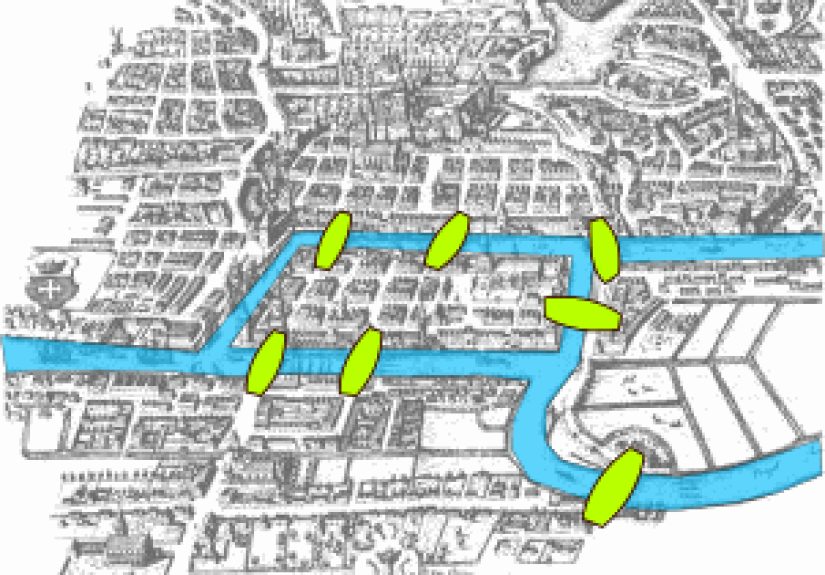
At the heart of route planning is a simple idea with very fancy consequences: a road network can be represented as a graph. Intersections become nodes. Road segments become edges. Each edge gets a cost, such as travel time, distance, toll price, fuel use, turn penalty, or some “please do not send this truck under that bridge” restriction. Once a navigation system turns the physical world into a weighted graph, it can start searching for the best path.
That is where graph theory meets the road, quite literally. In this article, we will unpack the major algorithms behind route planning, explain why the “shortest” route is not always the best one, and show how modern systems go far beyond textbook shortest-path problems. We will also look at traffic-aware routing, multi-stop optimization, map matching, and the lived experience of people who depend on these algorithms every day.
Road Networks Are Graphs Wearing Reflective Vests
Graph theory gives route planning its language. A graph is made of vertices and edges, which is a delightfully academic way of saying “places and connections.” In a road network, vertices often represent intersections, road endpoints, or decision points. Edges represent legal travel segments between those points. Once those edges receive weights, the graph becomes useful.
In the simplest version of the problem, each edge weight might equal distance. That produces the shortest-distance path. But practical navigation systems rarely stop there, because drivers do not live inside geometry textbooks. They live in traffic, weather, construction zones, school pickup chaos, one-way streets, toll networks, and neighborhoods where one left turn can cost your sanity.
That is why route planning engines typically assign more realistic costs. A “cheap” edge might reflect lower travel time. A “costly” edge might reflect congestion, restricted turns, steep grades, vehicle height limits, hazardous-road rules, or expected delays at certain times of day. In other words, the graph is not static. It is a living model of the transportation network, and the weights change as conditions change.
This is the first big truth of route planning: the algorithm is only as good as the graph it searches. If the network model is missing a turn restriction, your app may send a delivery van into a maneuver better suited to a bicycle and a prayer.
Dijkstra’s Algorithm: The Grandparent That Still Gets Things Done
If route planning had a hall of fame, Dijkstra’s algorithm would have its own wing, a bronze bust, and probably a parking spot out front. For graphs with nonnegative edge weights, Dijkstra’s algorithm finds the shortest path from a source node to every other node by repeatedly expanding the closest not-yet-finalized node.
The beauty of Dijkstra is its reliability. It does not guess. It does not gamble. It expands the graph in a disciplined way until it proves the best path. In a small or medium network, that works wonderfully. If your graph is modest, Dijkstra is elegant and exact.
But road networks are not modest. Real navigation systems may need to search across massive metropolitan areas, national road grids, or logistics networks with millions of road segments. Running plain Dijkstra on that scale every time a user says, “Find coffee near me,” would be like hiring a symphony orchestra to play the sound of a microwave beep. Correct, yes. Efficient, not exactly.
Still, Dijkstra remains foundational. Many modern routing methods either build on it, approximate it, or speed it up. It is the algorithmic equivalent of a cast-iron skillet: old, dependable, and still surprisingly useful in skilled hands.
A* Search: Dijkstra With a Sense of Direction
If Dijkstra explores outward with perfect discipline, A* says, “That is great, but maybe let us stop wandering around and head generally toward the destination.” A* improves search efficiency by adding a heuristic estimate of the remaining cost from the current node to the goal.
The classic idea is simple. Instead of prioritizing nodes only by the distance already traveled, A* prioritizes nodes by distance traveled so far + estimated distance remaining. When the heuristic is well designed and admissible, A* still finds an optimal path while often searching far fewer nodes than Dijkstra.
For road networks, geometry helps. If a destination is east of you, a node that heads wildly west is usually not your best bet, no matter how emotionally attached it feels to that detour. Straight-line distance, travel-time lower bounds, and landmark-based estimates can all guide the search.
One influential improvement uses landmarks and the triangle inequality to create stronger lower bounds. That means the algorithm can rule out more bad directions early, making route queries much faster. In plain English: A* stops acting like every side street deserves equal emotional consideration.
Why Modern Navigation Needs Speed-Ups Beyond Textbook Search
In real products, speed matters almost as much as accuracy. Users expect route results in a blink, not after a thoughtful pause long enough to age cheese. That is why industrial route planning systems rely on preprocessing and hierarchy.
One major family of speed-up methods uses the structure of road networks themselves. Not all roads are equal. A residential cul-de-sac is important when you are already nearby, but it is not likely to matter in the middle of a cross-city query. Highways, arterials, and major connectors dominate long-distance travel. Algorithms can exploit that hierarchy.
Contraction hierarchies are a famous example. The routing graph is preprocessed so that many future shortest-path queries can be answered dramatically faster. The trade-off is that preprocessing takes time, and rapidly changing traffic conditions are harder to fold into a rigid preprocessed structure. This is one of the central tensions in route planning: fast queries versus flexible updates.
Hierarchical routing works because road networks are not random graphs. They have shape, scale, and layers. Smart systems use that structure to avoid re-solving the whole universe for each query.
The “Best” Route Is Usually Time-Dependent, Not Static
A static graph assumes that the cost of each road segment stays the same. Real roads laugh at that assumption. A route that is excellent at 10:30 a.m. can become tragic at 4:55 p.m. because road costs depend on time, traffic, incidents, weather, lane closures, and demand surges.
This pushes navigation into time-dependent shortest path territory. Instead of a single travel cost on each edge, the cost may vary by departure time. That makes route planning more realistic and more computationally challenging. You are no longer asking only, “What is the best path?” You are asking, “What is the best path if I enter this road at this specific time, given how downstream conditions may change before I even get there?”
Modern routing platforms also distinguish between historical and real-time traffic. Historical data helps estimate what usually happens on a Tuesday at 8:15 a.m. Real-time data helps capture what is happening today because somebody dropped a ladder on the freeway or a thunderstorm decided to improvise.
This is why your navigation app may suddenly reroute you mid-trip. It is not being indecisive. It is reacting to a graph whose weights have changed enough that the formerly best path is no longer best. In advanced systems, routing is not a one-time answer. It is a continuing negotiation with reality.
Map Matching: Because GPS Is Helpful, Not Holy
Before a routing system can guide you well, it has to know where you actually are. That sounds obvious until you remember that GPS traces are noisy. A smartphone may place a car slightly off the road, in the wrong lane, on a frontage road, or floating over a river like a confused action hero.
Map matching solves this problem by snapping observed GPS points to the most likely path on the road network. This is crucial for navigation, ETA prediction, fleet analytics, and route reconstruction. Without map matching, a platform may misunderstand the user’s current position, which can poison the rest of the route calculation.
Good map matching is not just about the nearest road segment. It uses the sequence of points, road geometry, direction of travel, and the topology of the network to infer the most plausible traveled path. In short, it tries to understand where the vehicle must have been, not merely where one noisy point happened to land.
Turn Restrictions, Vehicle Profiles, and Other Ways Reality Complicates the Math
Route planning is not simply about finding a connected path. It is about finding a legal, feasible, and sensible path. That means routing engines need to account for turn restrictions, one-way streets, U-turn rules, lane logic, vehicle dimensions, hazardous material limits, toll preferences, curb approach requirements, and sometimes even driver shift constraints.
For a passenger car, a tight urban turn may be annoying. For a school bus, box truck, ambulance, or over-height vehicle, it may be impossible or unsafe. So the graph itself often changes depending on the vehicle profile. Two users can share the same origin and destination and still need different routes because their feasible edge sets differ.
This is where route planning stops being a neat classroom problem and becomes a serious operational system. A mathematically shortest route that ignores restrictions is not a solution. It is an expensive mistake with turn-by-turn directions.
From One Driver to Many: Route Planning Becomes Route Optimization
Finding one best path from A to B is only the beginning. In logistics, ride-hailing, field service, school transportation, and delivery networks, the real challenge is assigning many stops across many vehicles under many constraints. Welcome to the vehicle routing problem, where algorithm designers go for coffee and do not come back for a while.
Multi-stop route optimization combines shortest-path information with scheduling and assignment logic. The system must decide which vehicle should serve which stops, in what order, under what time windows, capacity limits, service durations, pickup-and-drop-off rules, and driver availability. That is a much harder problem than ordinary shortest path search.
This is why route matrix services are so important. A matrix gives travel costs between many origins and destinations, allowing a higher-level optimizer to compare assignments quickly. Instead of solving every full route from scratch, planners can use matrices to build smarter dispatch, delivery, and fleet decisions.
For businesses, this is where route planning turns directly into money. Better route optimization reduces fuel use, missed windows, idle time, rework, and customer complaints. In plain business English, fewer wrong turns means fewer angry emails.
ETA Prediction: The Route Is Not the Same as the Arrival Time
Another important distinction: finding a route and predicting when someone will arrive are related, but not identical tasks. A route engine may estimate travel time by summing expected segment costs along the chosen path. But real arrivals are affected by messy residual factors such as pickup friction, parking delays, traffic signal luck, driver behavior, handoff delays, and the strange universal law that the last 200 feet are somehow the hardest.
That is why modern platforms increasingly combine graph-based routing with machine learning. The graph provides a physically grounded path and baseline ETA. Machine learning then predicts the remaining error, adjusting the estimate based on patterns learned from real trips. In effect, route planning answers, “What path should we take?” while ETA modeling asks, “Given how the world behaves, when will we really get there?”
This hybrid approach is especially useful in ride-hailing and delivery, where bad ETAs can damage trust almost as fast as bad routes. Nobody enjoys staring at “arriving in 2 minutes” for seven consecutive minutes.
Examples of Route Planning in the Wild
The Daily Commute
Your app compares multiple feasible paths, weighs current and historical traffic, and may reroute you if the cost of an edge changes enough. The “fastest” path is a moving target, not a static line.
Last-Mile Delivery
A logistics platform builds route matrices, assigns stops to drivers, respects time windows, and optimizes the order of visits. At this scale, shaving a few minutes off one route is nice. Shaving a few minutes off thousands is strategy.
Ride-Hailing Dispatch
The system must identify the nearest feasible driver, estimate pickup and trip ETAs, and do it fast enough that the passenger does not start evaluating their life choices.
Electric Vehicle Navigation
Route planning expands beyond time and distance to include battery state, charging availability, elevation, speed effects, and charging-stop placement. The route is no longer just a path; it is an energy plan with ambition.
Conclusion: A Road Is Never Just a Road in an Algorithm
Route planning starts with graph theory, but it does not end there. The core insight is beautifully simple: represent the transportation network as a graph, assign costs to edges, and search for the best path. From that foundation come Dijkstra’s algorithm, A* search, landmark methods, hierarchical speed-ups, time-dependent routing, map matching, route matrices, and multi-vehicle optimization.
What makes the field fascinating is that it sits at the intersection of clean mathematical structure and gloriously messy real life. The graph wants order. The road network offers construction, rush hour, bad GPS, no-left-turn rules, and a food courier double-parked next to a hydrant. Great routing systems succeed because they respect both worlds.
So the next time your navigation app calmly suggests a faster route, remember what just happened behind the curtain. A graph was built. A search problem was solved. Costs were updated. Constraints were honored. Predictions were made. And an enormous amount of algorithmic machinery quietly worked so you could miss only one exit instead of three.
Experiences From the Real World of Route Planning
One of the most interesting things about route planning is how invisible it becomes when it works well. Most people do not wake up in the morning thinking about graph theory. They think about getting to work on time, finding a customer’s house before the soup gets cold, or making it across town without donating an hour of their life to brake lights. Yet their daily experience is shaped by algorithms almost constantly.
Commuters experience route planning as a mix of trust and suspicion. On one hand, they appreciate a live route that dodges a jammed freeway. On the other hand, they have all had that moment when an app says, “Save 2 minutes,” and the new route leads through fifteen turns, two school zones, and one street so narrow it feels personally offended by your car. That emotional tug-of-war is part of the user experience: route planning is not only about objective efficiency, but also about whether the route feels believable, safe, and low-stress.
Delivery drivers experience route planning more intensely because every minute compounds. A good sequence of stops can make a shift feel smooth and profitable. A bad one can create backtracking, missed windows, hard parking, and a soundtrack of dashboard muttering. Drivers quickly learn that the “best” route on paper is not always the easiest in practice. Tight left turns, confusing apartment complexes, loading-zone scarcity, and building access delays can matter as much as nominal travel time.
Fleet managers experience the topic from yet another angle. They are less interested in one perfect route than in whether the entire operation flows. They care about route balance, on-time performance, fuel consumption, driver hours, customer promises, and exception handling. For them, route planning is not a map feature; it is operations strategy with wheels.
Software teams building navigation products often discover that the hardest part is not coding a shortest-path algorithm. It is integrating everything around it: clean map data, sensible penalties, traffic feeds, GPS correction, fallback behavior, user preferences, and constant updates. In practice, route planning feels less like one algorithm and more like an orchestra in which the shortest-path solver is only the lead violin.
Even travelers on road trips experience the human side of routing. A route that is technically fastest may ignore scenic value, charging comfort, rest-stop quality, or driver fatigue. That is why the future of route planning is not just faster search. It is richer personalization. The best route for a tired parent, a delivery courier, an EV driver, and a commuter in a hurry may be four completely different answers to the same map question. That is what makes this field so compelling: route planning is mathematics in motion, but it is also deeply about human experience.






 Close
Close