
Table of Contents >> Show >> Hide
- What Green Fluid Usually Means
- Why Your Car Is Leaking Green Fluid
- What to Do Right Away If You See Green Fluid
- How to Diagnose the Leak Without Guessing
- How to Fix Green Fluid Leaking From Your Car
- Mistakes That Make the Problem Worse
- Can You Drive With a Green Fluid Leak?
- How to Prevent Green Fluid Leaks in the Future
- Experience-Based Lessons Drivers Learn the Hard Way
- Final Thoughts
- SEO Tags
You walk out to your car, coffee in hand, ready to conquer the day. Then you see it: a suspicious green puddle under the front end. Your first thought is usually something between “That can’t be good” and “Well, there goes my weekend.” Fair enough. Green fluid leaking from a car is one of those problems that looks small, feels dramatic, and can absolutely turn into an expensive mess if you ignore it.
In most cases, green fluid under your car means you have a coolant leak, also called an antifreeze leak. That fluid helps regulate engine temperature, prevent freezing, reduce corrosion, and keep your cooling system working the way it should. When it escapes, your engine loses one of its most important survival tools. Translation: what starts as a tiny drip can end as an overheated engine, a tow truck ride, and a repair bill that makes your wallet wheeze.
The good news is that a green fluid leak is often easier to diagnose than many other car problems. The not-so-fun news is that the source can range from a cheap hose clamp to a much more serious issue like a water pump failure or head gasket trouble. This guide breaks it all down in plain American English, with practical steps, real-world examples, and just enough humor to keep your blood pressure lower than your coolant level.
What Green Fluid Usually Means
If your car is leaking green fluid, the most likely culprit is engine coolant. Many people still call it radiator fluid or antifreeze, and all three terms get tossed around like they’re cousins at a family barbecue. In everyday use, they usually point to the same basic system.
That said, do not rely on color alone. Coolant can be green, yellow, orange, pink, red, blue, or purple depending on the formula and the vehicle. Some washer fluids can also look greenish depending on the brand. So instead of playing detective with color alone, use the full clue set:
- Location: Coolant often appears under the front of the vehicle.
- Texture: It usually feels watery but slightly slippery.
- Smell: Coolant often has a sweet smell.
- Symptoms: You may also notice overheating, steam, low coolant warnings, weak cabin heat, or a sweet odor from under the hood.
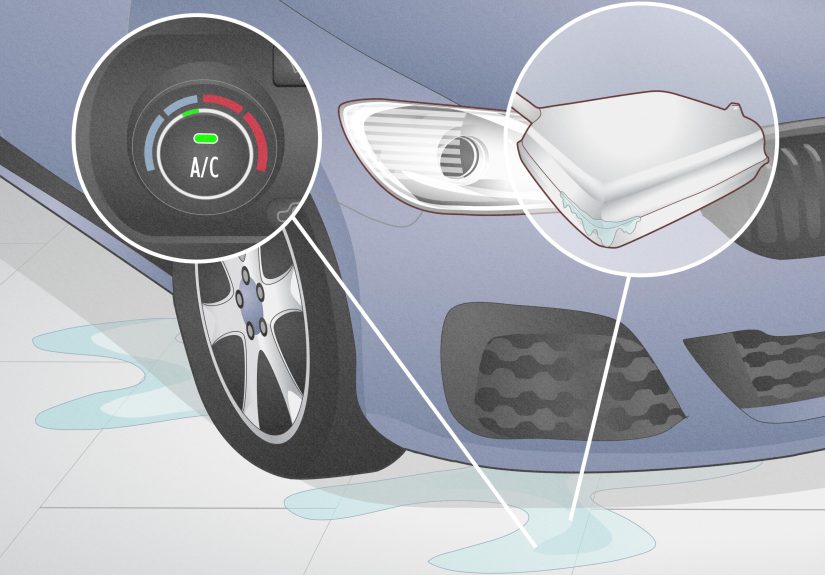
If the puddle is clear and odorless, that may just be normal A/C condensation. If it is green and sweet-smelling, your car is probably not making a harmless little puddle for decoration.
Why Your Car Is Leaking Green Fluid
A coolant leak can come from several places. Some are minor enough to catch early and fix without drama. Others are the automotive equivalent of hearing ominous music before something expensive happens.
1. A Cracked or Brittle Radiator Hose
Rubber hoses age. Heat, vibration, and time eventually make them crack, soften, swell, or split. When that happens, coolant leaks out under pressure. A bad hose is one of the most common and most fixable reasons for green fluid under a car.
Look for wet spots, dried crusty residue around hose connections, or coolant sprayed around nearby components. If the leak gets worse while the engine is running and warm, a hose is high on the suspect list.
2. A Loose Clamp or Fitting
Sometimes the problem is not the hose itself but the hardware holding it in place. A loose clamp can let coolant seep out slowly. This often creates a maddening little leak that seems too small to matter until it suddenly does.
The good part is that this can be an inexpensive fix. The bad part is that people ignore it because “it’s only a little drip,” which is exactly how little drips become big repair invoices.
3. A Damaged Radiator
The radiator lives in a harsh neighborhood: heat, road debris, corrosion, and pressure. Plastic end tanks can crack. Metal cores can corrode. Small holes can form and leak slowly at first, then much faster once the system gets hot.
A radiator leak may leave green fluid near the front center of the vehicle. You might also see stained fins, crusty residue, or damp spots around the radiator body.
4. A Failing Water Pump
The water pump keeps coolant moving through the engine and radiator. When it starts failing, it may leak from the weep hole or around the gasket. You might also hear squeaking, whining, or grinding noises. That combination of noise plus green puddle is your car’s version of waving a red flag while wearing a neon shirt.
A water pump leak is not something to ignore. Once that pump gives up completely, overheating can happen fast.
5. A Bad Thermostat Housing or Gasket
The thermostat regulates coolant flow. If the housing cracks or the gasket fails, coolant can seep out around that area. This type of leak may be hard to spot at first because it can drip down onto other components before hitting the ground.
If your engine is running hot and you also notice leakage around the thermostat housing, this is a strong possibility.
6. A Leaking Coolant Reservoir or Reservoir Cap
The coolant reservoir is not just a random plastic jug hanging out under the hood. It is part of the system. If the tank cracks or the cap stops holding pressure correctly, coolant can escape. You may notice wetness around the reservoir, overflow streaks, or a mystery puddle that appears after driving but not always while parked overnight.
7. A Heater Core Leak
This one is sneaky. The heater core is tucked inside the dash, and when it leaks, the clues may show up inside the cabin instead of clearly under the car. Common signs include foggy windows, a sweet smell inside the vehicle, damp carpet near the front passenger footwell, or weak cabin heat.
If your car smells like a candy factory with trust issues and your windows keep fogging up, do not rule out the heater core.
8. A Head Gasket Problem
This is the heavy hitter. If you are losing coolant but cannot find an obvious external leak, the coolant may be leaking internally. A failing head gasket can allow coolant into the combustion chamber or oil passages. Warning signs may include white exhaust smoke, overheating, bubbling in the coolant reservoir, milky oil, or repeated coolant loss with no visible puddle.
This is not a “watch it for a few weeks” situation. This is a “book a repair appointment before your engine stages a financial rebellion” situation.
What to Do Right Away If You See Green Fluid
First: do not panic. Second: do not remove the radiator cap on a hot engine like you are starring in your own bad decision documentary.
Here is the smart move:
- Park the car on a level surface.
- Turn the engine off if it is overheating or steaming.
- Let it cool completely before checking anything under the hood.
- Look for the source of the leak with a flashlight.
- Check the coolant reservoir level after the engine has cooled.
- Keep pets and children away from spilled coolant, because antifreeze can be highly toxic if swallowed.
If the temperature gauge is climbing, steam is coming from under the hood, or the warning light is on, do not keep driving just to “see if it makes it.” That is how a manageable coolant leak graduates into serious engine damage.
How to Diagnose the Leak Without Guessing
Finding the source matters because “green fluid leak” is a symptom, not a repair. Topping off coolant without finding the actual problem is like putting a bucket under a leaky roof and calling it architecture.
Check the Ground Pattern
Where the puddle forms can help. A leak near the very front may point to the radiator, lower hose, or water pump area. Fluid farther back could be dripping after running down splash shields or other components. Use cardboard under the car overnight if needed so you can see where fresh drips land.
Look for Dried Residue
Coolant often leaves a chalky, crusty, or stained residue once it dries. Follow those greenish or whitish tracks under the hood. They often point right to the source.
Watch for Operating Symptoms
A leak that causes overheating, poor heater performance, or bubbling in the reservoir is telling you more than “something is wet.” It is telling you how serious the problem may be.
Pressure Testing Helps
If the leak is tiny or only happens under pressure, a cooling system pressure test is often the quickest way to identify it. Many shops perform this routinely. It is especially useful when the leak disappears the moment you start looking for it, which is a trick cars seem to enjoy.
How to Fix Green Fluid Leaking From Your Car
The correct fix depends on the source. Here is the practical version.
Fixing a Hose or Clamp
If a hose is cracked, swollen, mushy, or brittle, replace it. If the clamp is loose or damaged, replace or tighten it as needed. This is often one of the least expensive coolant leak repairs, and catching it early can save the rest of the cooling system from extra stress.
Fixing a Radiator Leak
If the radiator is cracked or corroded, replacement is often the real fix. Some people use stop-leak products as a temporary measure, but those are best viewed as an emergency bandage, not a long-term health plan for your car. If you need reliability, a damaged radiator should be repaired properly.
Fixing a Water Pump Leak
A leaking water pump usually means replacement. Because the pump is critical to coolant circulation, this repair should not be delayed. On some vehicles, it is straightforward. On others, it is tied to timing components and gets more labor-intensive fast.
Fixing a Reservoir, Cap, or Thermostat Housing
Cracked plastic tanks, failing caps, and leaking thermostat housings are usually replaced, not patched. These parts are not wildly glamorous, but when they fail, they can absolutely cause repeated coolant loss and overheating.
Fixing a Heater Core Leak
This is usually a professional repair because the heater core is buried behind dashboard components. If you have sweet-smelling foggy windows and damp carpet, this is one leak worth taking seriously. Besides coolant loss, it can make the cabin miserable.
Fixing a Head Gasket Problem
If the head gasket is leaking, the repair is major. There is no fun spin to put on that. If coolant is mixing with oil, burning in the engine, or creating repeated overheating, get the vehicle diagnosed before more damage piles on.
Mistakes That Make the Problem Worse
- Ignoring the leak: Small leaks rarely become cheaper with time.
- Opening the cap while hot: Hot coolant systems are pressurized and can cause serious burns.
- Adding the wrong coolant: Always use the type specified for your vehicle.
- Mixing random coolants: Not every formula plays nicely with others.
- Assuming it is “just water”: If it is green and sweet-smelling, it deserves attention.
- Driving while overheating: This is where repair costs start doing backflips.
Can You Drive With a Green Fluid Leak?
Maybe for a very short distance in a minor situation, but it is risky. A coolant leak can go from “small puddle” to “engine overheat” faster than many drivers expect, especially in traffic, hot weather, or when the A/C is running. If the temperature gauge rises, the car steams, the heater stops working correctly, or the reservoir keeps going empty, do not gamble with it.
Think of it this way: coolant is your engine’s temperature manager. When the manager walks off the job, chaos shows up immediately.
How to Prevent Green Fluid Leaks in the Future
You cannot prevent every leak forever, because cars age and parts wear out. But you can make leaks less likely and catch them earlier.
- Check coolant level regularly when the engine is cold.
- Inspect hoses for cracking, swelling, or softness.
- Look for dried coolant residue around connections.
- Pay attention to sweet smells, foggy windows, or weak heat.
- Replace old coolant on schedule.
- Use the correct coolant type for your vehicle.
- Investigate any new puddle immediately.
Monthly visual checks take only a few minutes, and they are a lot cheaper than a warped cylinder head.
Experience-Based Lessons Drivers Learn the Hard Way
Real-world coolant leaks rarely announce themselves with a polite memo. They usually begin with something subtle: a faint sweet smell after parking, a tiny green dot on the driveway, or a temperature needle that starts behaving like it had too much espresso. Many drivers remember the exact moment they realized the puddle under the car was not harmless condensation. It is often after several small clues finally line up and say, “Surprise, you have a cooling system problem.”
One common experience goes like this: the driver notices a small green drip near the front bumper and assumes it can wait until next week. The car still runs, the heater still works, and life is busy. Then a few days later, traffic gets heavy, the A/C is on, and the temperature gauge begins creeping up. Suddenly that “tiny leak” has become a full-blown overheating event. The lesson is painfully simple: coolant leaks are often quiet at first, but they do not stay polite forever.
Another very typical experience is the mystery disappearing coolant situation. The reservoir keeps dropping, yet there is no obvious puddle under the car. This confuses people because they expect leaks to leave dramatic evidence. In reality, a leak can evaporate on hot engine parts, escape only while the system is pressurized, or hide inside the cabin if the heater core is involved. Drivers in this situation often spend days topping off coolant before discovering foggy windows, a sweet smell through the vents, or damp carpet in the passenger footwell. That is usually the moment when the heater core enters the chat, uninvited.
Then there is the classic hose failure story. An aging upper or lower radiator hose may look “mostly fine” until it doesn’t. Many people have experienced a hose splitting after a long drive, a hot afternoon, or a cold morning when the rubber was already weak. What makes this memorable is how fast things escalate. One minute the car is normal. The next minute there is steam, a warning light, and a strong desire to pretend the dashboard is being dramatic. It usually is not.
Water pump leaks create their own special category of annoyance. Drivers often notice a squeak or whining sound before they understand what is happening. Some assume it is just a belt. Later, they find coolant dripping near the pump area and realize the noise was a warning, not background music. That experience teaches a valuable rule: when a new sound and a new fluid leak appear around the same time, they are probably related.
One of the most expensive experiences happens when people keep driving an overheating car because they are “almost home.” That phrase has emptied many bank accounts. A manageable leak from a hose, cap, or thermostat housing can turn into severe engine damage if the engine gets too hot for too long. Drivers who have learned this the hard way usually become fierce evangelists for pulling over early. They may not become monks, but they absolutely become believers.
The best experience-based takeaway is this: trust the clues. Sweet smell, colorful puddle, dropping coolant level, weak cabin heat, rising temperature gauge, or steam under the hood are not random quirks. They are early warning signs. When drivers act on them quickly, the repair is often smaller, cheaper, and far less dramatic. When they ignore them, the car writes a much longer story, and it charges by the paragraph.
Final Thoughts
If your car is leaking green fluid, the smartest assumption is that you are dealing with a coolant leak until proven otherwise. Start with the simple checks: look at the puddle, inspect hoses and connections, check the reservoir once the engine is cool, and pay attention to overheating symptoms. Minor leaks can often be repaired before they become engine-threatening disasters. Larger leaks, hidden leaks, and internal leaks need professional diagnosis quickly.
Your car’s cooling system does not ask for much. It just wants the coolant to stay inside the vehicle instead of exploring your driveway. Help it achieve that modest dream, and your engine will thank you by not cooking itself.





 Close
Close