
Table of Contents >> Show >> Hide
- 1. Build the Concept Around a Real Story
- 2. Put Abundance on Display
- 3. Use Color from the Kitchen, Not a Trend Forecast
- 4. Let Curves Soften the Space
- 5. Mix Restaurant, Market, and Home
- 6. Make Communal Seating Feel Intentional
- 7. Preserve What Has Character
- 8. Design for the Dinner Party Feeling
- Why Nabila's Works as a Brooklyn Restaurant
- How to Bring the Nabila's Mood Home
- Extra Experience: A Night Inspired by Nabila's
- Conclusion
Some restaurants feed you dinner. Others hand you a mood board, a family story, a design lesson, and a plate of hummus so smooth it could negotiate world peace. Nabila’s, the Lebanese restaurant in Brooklyn’s Cobble Hill neighborhood, does all four. Located at 248 Court Street, this mother-son project from Nabila Farah and Michael Farah has earned attention for something refreshingly old-fashioned: real Lebanese home cooking served in a space that feels personal, colorful, generous, and quietly sophisticated.
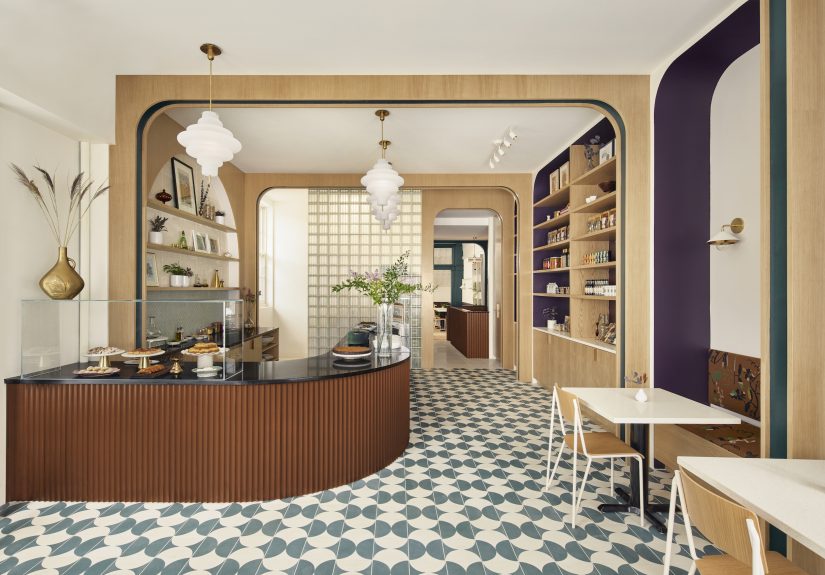
The phrase “new Lebanese spot in Brooklyn” might make you expect another trendy restaurant with a neon sign, small plates, and a menu item involving unnecessary foam. Nabila’s is not that. It is rooted in memory, family recipes, dinner-party abundance, and a design language that nods to Lebanon without turning the dining room into a theme park. Think arched details, saturated greens and purples, communal seating, a market-like counter, and plates that look as if someone’s brilliant aunt insisted you were too thin and needed one more bite.
Below are eight ideas to borrow from Nabila’s, whether you are designing a restaurant, refreshing your home dining room, planning a dinner party, or simply trying to make Tuesday night feel less like reheated leftovers under fluorescent lighting.
1. Build the Concept Around a Real Story
The strongest idea at Nabila’s is not a paint color, a chair, or even the knafeh. It is the story. Michael Farah left a finance career to open a restaurant with his mother, Nabila, whose cooking had long been loved through catering, family gatherings, and the kind of parties where the food keeps coming long after everyone claims to be full.
That personal foundation gives the restaurant something many new spaces spend fortunes trying to fake: soul. Nabila’s is not “Lebanese-inspired” in the vague, mood-board sense. It is built around specific dishes, specific memories, and a very specific woman whose cooking became the restaurant’s center of gravity.
What to borrow
If you are creating a food business, blog, home kitchen, or event concept, start with a true story. Not every space needs a dramatic origin tale, but every memorable space benefits from a reason to exist. Maybe your dinner party is inspired by your grandmother’s pantry. Maybe your kitchen renovation begins with the way your family gathers on Sundays. Maybe your restaurant concept comes from one dish people always begged you to bring.
Design follows meaning. When the story is real, the details do not have to shout.
2. Put Abundance on Display
At Nabila’s, the counter matters. The restaurant experience begins with the visual pleasure of seeing food ready to be shared: dips, small bites, stews, vegetables, pastries, and desserts. It creates a sense of plenty before the first order is placed. This is smart hospitality. People eat first with their eyes, then with their forks, then with the tiny voice in their head saying, “Maybe I do need dessert.”
Lebanese food is naturally suited to this kind of generous presentation. Hummus, mouhamara, labne, fatayer, kibbeh, sambousik, harak osbao, fattoush, loubieh, rice hashwi with chicken, sheesh barak, and knafeh all have textures and colors that invite browsing. The menu is not just a list; it is a landscape.
What to borrow
At home, serve food in layers. Put dips in shallow bowls with olive oil, zaatar, herbs, or pomegranate molasses. Use platters instead of individual plates for the first round. Let guests see what is coming. A visible spread creates instant warmth and removes the stiffness that can make dinner feel like a performance review with napkins.
For restaurants, bakeries, and cafés, the lesson is even clearer: display abundance with intention. A counter filled with beautiful food can become the best salesperson in the room.
3. Use Color from the Kitchen, Not a Trend Forecast
One of the most charming design ideas at Nabila’s is the palette. The space uses deep vegetable-inspired colors, including eggplant purple and dark leafy green. That choice feels natural because it comes from the food itself. Instead of chasing whatever shade is currently being worshipped on social media, the design pulls from ingredients that already belong to the cuisine.
This is why the colors feel rich but not random. Lebanese cooking gives you endless inspiration: sumac red, mint green, tahini beige, olive oil gold, pomegranate ruby, chickpea cream, charred eggplant black, and parsley so green it practically has a gym membership.
What to borrow
When choosing colors for a kitchen, dining room, café, or content brand, look at the food first. A bakery might pull from toasted sugar, butter, and berry jam. A seafood restaurant might use oyster shell, seaweed, and lemon. A Lebanese dinner party could borrow from pistachios, eggplant, lentils, and rosewater syrup.
This approach makes color feel rooted. It also helps avoid the dreaded “I copied this from a hotel lobby” effect.
4. Let Curves Soften the Space
Nabila’s makes beautiful use of curves and arches. The restaurant’s design includes arched forms, curved counters, and architectural details that soften the room. Curves are important because hospitality is not only about service; it is also about how a space physically makes people feel. Sharp corners can look sleek, but curves invite movement, lingering, and comfort.
Arches also carry cultural resonance. In Nabila’s, they nod to Middle Eastern architectural language without becoming overly literal. The result is subtle, modern, and warm.
What to borrow
You do not need to remodel your entire home to use this idea. Add curved-back dining chairs, an arched mirror, round trays, scalloped bowls, a circular pendant light, or a rounded banquette. Even a round table can change the mood of a room by making conversation easier and reducing the “board meeting with salad” energy.
In restaurant design, curves can guide guests intuitively. A curved counter says, “Come closer.” An arch says, “There is another experience beyond this point.” A rounded booth says, “Stay for one more glass.”
5. Mix Restaurant, Market, and Home
Part of Nabila’s appeal is that it does not feel like only one thing. It has the brightness of a café, the bounty of a market, the intimacy of a family dining room, and the polish of a professionally designed restaurant. This hybrid feeling makes the space approachable. You can imagine stopping in for a casual meal, ordering for a group, or lingering over a dinner that becomes a small celebration.
The menu supports this layered identity. There are dips and small bites for grazing, substantial entrées for dinner, desserts for the sweet-toothed, and catering options that extend the restaurant’s spirit beyond its walls.
What to borrow
For home entertaining, avoid making everything too formal. A sideboard can become a mezze station. A kitchen island can act like a market counter. A living room coffee table can hold small plates before the main meal. Give people permission to move, point, choose, and snack.
For hospitality brands, the takeaway is powerful: modern diners enjoy flexibility. A restaurant that can feel like a neighborhood dinner spot, a takeaway counter, and a special-occasion table has more ways to become part of people’s routines.
6. Make Communal Seating Feel Intentional
Nabila’s includes communal design gestures, including seating that encourages people to gather rather than isolate. This makes sense for Lebanese dining, where the table often functions as a social event, not just a place to park your elbows. Shared plates need shared space. Conversation needs room to travel.
The best communal seating does not feel like a cafeteria. It feels generous, grounded, and comfortable. It tells guests that the meal is meant to unfold, not simply be consumed.
What to borrow
At home, consider a bench on one side of the dining table. It can make seating more flexible and relaxed, especially when friends bring “just one more person” and that person brings a plus-one named Tyler. Add pillows, a washable cushion, or a long runner to soften the setup.
For restaurants, communal seating works best when it is balanced with smaller tables. Not everyone wants to hear a stranger explain cryptocurrency over lentils. Give guests options, but let the room communicate that gathering is part of the concept.
7. Preserve What Has Character
One of the design lessons from Nabila’s is restraint. Instead of stripping the space of every old detail, the design team preserved and reworked elements with character, including an existing brass chandelier. This matters because renovation does not have to mean erasure. Sometimes the most memorable feature is already there, waiting for someone to stop calling it “dated” and start calling it “potential.”
This choice gives the restaurant depth. New materials feel warmer when paired with old pieces. Modern design becomes more human when it has a few wrinkles.
What to borrow
If you are renovating, pause before throwing everything away. Old wood, vintage lighting, worn metal, existing tile, and inherited furniture can become anchors. The trick is to edit, restore, and reframe. Pair an antique piece with cleaner modern lines. Use fresh paint to make an old fixture feel deliberate. Let one imperfect object keep the room from looking like a catalog page where no one has ever spilled sauce.
8. Design for the Dinner Party Feeling
The biggest idea to borrow from Nabila’s is also the simplest: make the meal feel like a dinner party. Not a stiff dinner party where everyone whispers about the salad fork. A real one. The kind where plates overlap, people reach across the table, someone tells a story too loudly, and dessert appears even though everyone said they were done.
Nabila’s succeeds because the food and design point in the same direction. The menu is built around Lebanese home cooking rather than predictable restaurant staples. The space uses color, curves, wallpaper, arches, and communal touches to support that feeling. The story of Nabila and Michael Farah gives the restaurant emotional texture. Nothing feels accidental.
What to borrow
When planning a gathering, think beyond recipes. Ask what feeling you want the meal to create. Cozy? Celebratory? Nostalgic? Loud and joyful? Then design everything around that feeling: lighting, seating, serving style, music, and menu. If the goal is abundance, do not plate tiny towers of food. If the goal is comfort, do not make guests decode seven utensils. If the goal is Lebanese-inspired hospitality, bring out the mezze, warm the pita, pour the tea, and let the table do what tables do best: bring people closer.
Why Nabila’s Works as a Brooklyn Restaurant
Brooklyn has no shortage of restaurants with good lighting and better PR. What makes Nabila’s stand out is the way it balances authenticity, accessibility, and design intelligence. It is rooted in Lebanese culinary traditions, but it does not feel frozen in nostalgia. It is stylish, but not cold. It is personal, but not amateur. It is casual, but still special enough to make dinner feel like an event.
The menu also helps broaden the way diners understand Lebanese food. Instead of leaning only on the better-known staples many Americans associate with Middle Eastern restaurants, Nabila’s highlights home-style dishes such as sheesh barak, loubieh, kousa, yakhnet sabanegh, harak osbao, and rice hashwi with chicken. These dishes are deeply comforting, often slow-cooked, and full of layered seasoning rather than flashy gimmicks.
That is a valuable lesson for any food brand: do not underestimate diners. People are curious. They want stories. They want dishes with roots. They want food that tastes like someone cared before the garnish happened.
How to Bring the Nabila’s Mood Home
You can borrow the spirit of Nabila’s without opening a restaurant or learning how to fold perfect dumplings in yogurt sauce. Start with a generous table. Choose three dips, one bright salad, one warm dish, and one dessert. Use bowls of different heights. Add herbs right before serving. Put olive oil on the table. Offer extra pita. Light candles, but not so many that your guests feel like they are eating inside a séance.
For décor, use saturated color in small but confident ways. Try a deep green tablecloth, eggplant napkins, patterned wallpaper in a nook, or an arched shelf. Mix old and new pieces: a vintage platter with modern glasses, a family serving spoon with clean white plates, a brass lamp near a simple wood table. The goal is not to copy Nabila’s exactly. The goal is to create a room where food, memory, and welcome all speak the same language.
Extra Experience: A Night Inspired by Nabila’s
Imagine arriving at a corner restaurant in Brooklyn just as the evening begins to soften. Court Street is still moving, but inside Nabila’s the pace changes. The room glows. The counter catches your attention first because it promises choices. Not the stressful kind of choices, like choosing a health insurance plan, but the delicious kind: hummus or labne, fatayer or kibbeh, loubieh or chicken hashwi, knafeh now or knafeh later. The correct answer, spiritually, is yes.
The experience feels different from a typical restaurant because it begins with looking. You see food before you commit to it. That small act makes dinner more physical and more emotional. You point, ask, change your mind, and suddenly the meal feels participatory. It is closer to visiting a home kitchen than reading a menu under pressure while a server hovers with Olympic-level patience.
At the table, the best strategy is sharing. Lebanese food rewards curiosity. A spoonful of mouhamara brings sweetness, smoke, walnut richness, and pomegranate tang. Labne cools everything down. Fatayer adds lemony greens wrapped in pastry. Harak osbao brings lentils, crisp onions, herbs, and texture. If someone orders sheesh barak, the yogurt sauce has a way of making conversation pause for a second. That is usually a good sign. People do not go silent for mediocre dumplings.
The design deepens the experience. Curves make the room feel gentle. Green and purple tones echo the ingredients. Wallpaper adds pattern without chaos. The communal touches remind you that this food is not meant to be admired from a distance. It is meant to be passed, scooped, discussed, and occasionally defended from the friend who said they only wanted “a taste” and is now approaching your plate with suspicious enthusiasm.
What stays with you after a meal like this is not only flavor. It is the sense of being hosted. That is the rare thing Nabila’s offers and the reason its ideas translate so well beyond Brooklyn. A great dining experience does not have to be formal. It does not have to be expensive. It does not need a 14-course tasting menu explained with tweezers and poetry. Sometimes it needs a mother’s recipe, a son’s devotion, a bright room, warm bread, and food that arrives with confidence.
Borrowing from Nabila’s, then, is not about copying a restaurant’s look piece by piece. It is about understanding the philosophy underneath it: feed people generously, design with memory, use color honestly, preserve character, and make the table feel alive. Whether you are styling a small apartment dinner, opening a café, writing about restaurant design, or simply trying to make your next meal more memorable, that philosophy travels beautifully.
Conclusion
Nabila’s in Brooklyn offers more than Lebanese food; it offers a masterclass in meaningful hospitality. Its best ideas are practical and poetic at the same time: build from a personal story, display abundance, draw colors from ingredients, soften spaces with curves, blend market energy with home comfort, make seating communal, preserve character, and design every detail around the feeling of a dinner party.
That is why Nabila’s feels so relevant. In a dining world often obsessed with novelty, it reminds us that the most powerful ideas are often old ones done with care. Feed people well. Welcome them warmly. Let the room have a soul. And never underestimate the persuasive power of excellent knafeh.







 Close
Close