
Table of Contents >> Show >> Hide
- The Review That Turned a Makeup Product Into Internet Lore
- Why People Thought It Was So Funny
- Why This Review Felt More Convincing Than an Ad
- The Eyeliner Behind the Viral Fame
- Beauty Reviews Have Become a Form of Modern Folklore
- Where the Story Gets More Interesting
- Why the Story Still Works Years Later
- Related Experiences People Instantly Recognize
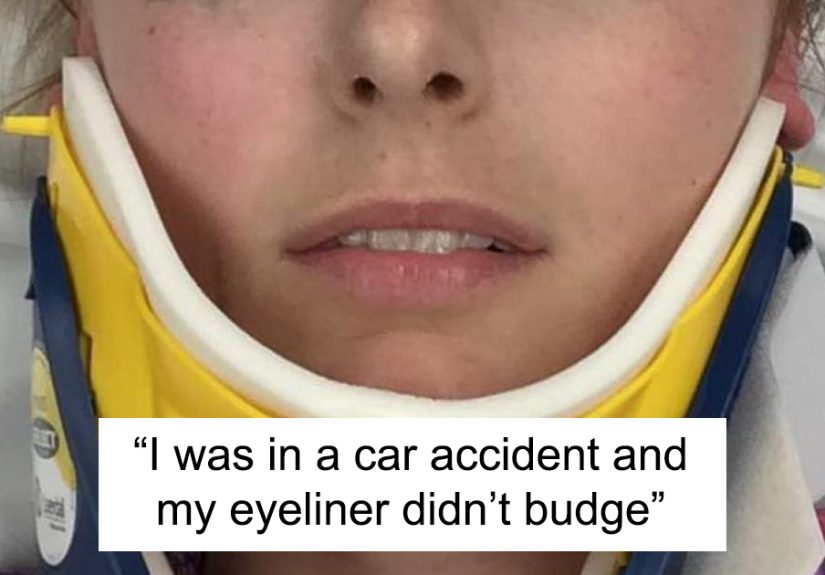
Every once in a while, the internet produces a review so oddly specific, so wildly persuasive, and so unintentionally funny that it makes traditional advertising look like a sad little flyer taped to a coffee shop window. That is exactly what happened when a woman’s review of an eyeliner that allegedly stayed perfectly intact through a terrifying car accident exploded online. It was not a glossy brand campaign, a celebrity endorsement, or some suspiciously over-lit “get ready with me” clip. It was a real-world testimonial, delivered from a hospital bed, with a neck brace, a smudged face, and one very committed cat eye still hanging in there like it had rent due.
The story took off because it hit that rare sweet spot where the internet lives: part shocking, part ridiculous, part genuinely useful. People were obviously relieved that the reviewer was okay. But they were also completely floored by the idea that while chaos unfolded everywhere else, the eyeliner apparently remained locked in with the confidence of a Broadway understudy finally getting her big moment. It was funny not because the accident itself was amusing, but because the review read like the most dramatic and convincing beauty endorsement ever written by accident.
And that is why this story still circulates years later. On the surface, it is about makeup. Underneath, it is about trust, virality, consumer culture, and the fact that people will believe one gloriously specific review faster than they will believe an entire marketing department. Let’s break down why this eyeliner review became internet legend, why readers found it hilarious, and what it says about the strange power of beauty products in the age of screenshots and shared disbelief.
The Review That Turned a Makeup Product Into Internet Lore
The now-famous review centered on Tattoo Liner, the liquid eyeliner originally sold under Kat Von D Beauty and now associated with KVD Beauty. The reviewer explained that after a frightening roadside crash and a long trip through emergency-room chaos, most of her makeup had given up and gone to meet its maker. Mascara had run. Other products had disappeared. But the eyeliner, according to her review, did not budge. That line alone would have been memorable. The accompanying hospital photo made it unforgettable.
Once screenshots of the review hit social media, the internet responded with the exact energy you would expect from a crowd that is equal parts skeptical shopper and chaos-loving comedian. People were stunned by the eyeliner’s staying power, but they were also mesmerized by the review’s dead-serious sincerity. It was not trying to be a joke. That was the joke. The best viral moments often work this way. Nobody sat down and tried to write “the funniest makeup review of the year.” Instead, a brutally honest, oddly practical product testimonial collided with the internet’s appetite for dramatic proof.
The review became even more compelling because it did what great user-generated content always does: it answered the question everyone actually wants answered. Not “Is this product nice?” Not “Does the packaging feel luxe?” Not “Did an influencer with ring lights and perfect skin enjoy it?” The question was much simpler: Will this stay on when real life gets ugly? In the strange and specific world of liquid eyeliner, that is basically the final exam.
Why People Thought It Was So Funny
The humor came from contrast. A car accident is frightening. A makeup review is mundane. Put them together, and the absurdity practically writes itself. The image of a person enduring a deeply stressful ordeal while her eyeliner remains mysteriously unbothered feels like the kind of detail a comedy writer would invent and then get told to tone down because it seemed unrealistic. Yet there it was, sitting online in all its accidental comic glory.
There is also something inherently funny about beauty standards meeting disaster reality. Eyeliner is one of those products with a dramatic reputation. It smudges when you are late, transfers when you blink too hard, and disappears the second humidity gets a little ambitious. So the idea that this one particular liner chose violence against physics and stayed crisp through tears, transport, and panic felt almost mythological. It turned an ordinary product review into a mini epic.
But the story stuck because it never stopped feeling human. The reviewer was not trying to “go viral.” She was doing what many people do after a strange, emotional event: talking about the one weird detail that would not leave her brain. People recognized that instinct immediately. Sometimes the brain does not process a difficult moment by delivering a neat life lesson. Sometimes it says, “Okay, but how is my eyeliner still perfect?” That tiny detail felt both surreal and relatable, which is exactly the kind of thing the internet loves to adopt and repeat.
Why This Review Felt More Convincing Than an Ad
Brands spend fortunes trying to sound authentic, and then a customer with a screenshot and no media training walks in and steals the entire campaign. That is the real lesson here. Consumers are deeply trained to ignore polished claims. “Long-wear.” “Waterproof.” “Transfer-resistant.” Those phrases show up on everything from mascara to patio furniture. But when a review includes a bizarrely specific, emotionally charged situation and a photo that looks absolutely impossible to fake for marketing polish, people pay attention.
Specificity is persuasive. The best reviews are memorable because they are rooted in lived experience, not catalog language. This one did not say the eyeliner “lasted all day.” It basically said, “This product survived a day that should have ruined absolutely everything.” That is the kind of line shoppers remember in the middle of a Sephora aisle while questioning every life choice that led them to compare twelve black liquid liners under fluorescent lighting.
There is also the delicious irony that this was the kind of endorsement no beauty brand could reasonably request. No marketing team wants to say, “Please tell us how our eyeliner held up during a traumatic emergency.” But because the story arrived organically, it carried more weight than a polished campaign ever could. It felt like truth with messed-up hair and excellent wing tips.
The Eyeliner Behind the Viral Fame
Part of the story’s staying power is that the product already had a reputation. Tattoo Liner had long been known among makeup fans as one of those “holy grail” items that shows up in recommendation threads, beauty roundups, and whispered dressing-room conversations between people who take their winged liner personally. The formula built a following because it promised the things eyeliner shoppers obsess over: strong pigment, precision, sharp application, and serious staying power.
That existing reputation mattered. Viral stories fade fast when the product at the center turns out to be all hype and no performance. But this eyeliner already had cult-favorite status, so the review felt like an outrageous extension of an established narrative rather than a random internet fluke. In other words, the public response was not just “What on earth?” It was also “Honestly, that tracks.”
Over time, the product’s identity continued evolving as the brand itself changed. What many consumers first knew as Kat Von D Beauty later moved through a rebrand and is now sold under KVD Beauty. Yet the liner’s image has remained remarkably steady: tattoo-inspired, high-performance, waterproof, precise, and built for people who want their eyeliner to behave like it signed a legal contract. Viral review or not, that consistency helped keep the product relevant long after the original screenshot made the rounds.
Beauty Reviews Have Become a Form of Modern Folklore
One reason this story still gets traction is that it belongs to a very internet-specific genre: the accidental legend of extreme product testing. These stories spread because they feel bigger than the product itself. They become folklore for online shoppers. The facts are simple, but the retelling gets grander every time. Suddenly, an eyeliner is not just “good.” It is “the eyeliner that survived the apocalypse.” A setting spray is not just effective. It is “basically shellac with a spray nozzle.”
That kind of hyperbole is funny, but it also reflects a real cultural shift. People do not just buy products anymore; they collect stories about them. A product with a memorable anecdote gains a life that goes far beyond performance specs. It becomes shorthand. A recommendation. A punchline. A piece of digital campfire storytelling. When people shared this eyeliner review, they were not only sharing shopping advice. They were sharing a tale with a built-in reaction.
And unlike many viral stories, this one had a strangely wholesome center. There was no takedown, no messy feud, no manufactured controversy. Just one woman, one impossible-looking cat eye, and a global audience collectively deciding that maybe this was the strongest case for eyeliner ever entered into evidence.
Where the Story Gets More Interesting
The most revealing part of the whole episode is that the eyeliner became a symbol of composure in the middle of disorder. That may sound dramatic for a tube of black liquid, but beauty products often carry emotional meaning way beyond their practical use. They are tied to routine, identity, confidence, and control. When life is messy, a tiny thing that stays put can feel weirdly reassuring. That is part of why so many readers responded so strongly.
The viral review also worked because it balanced sincerity with absurdity. The reviewer sounded genuinely impressed, and the internet responded with genuine laughter and genuine curiosity. That combination is powerful. People were not only entertained. Many were persuaded. Plenty of them walked away thinking some version of: “I am glad she is okay, and also I need to know where this eyeliner is sold.”
That is the magic of a viral consumer story done right. It makes you laugh, but it also sneaks into your shopping brain and sets up camp there for years. Even people who never bought the product probably remember the premise. That alone is a marketing victory most brands would sell their boardroom fern for.
Why the Story Still Works Years Later
Trends come and go, but durability is evergreen. People will always want makeup that survives heat, tears, long workdays, weddings, breakups, concerts, delayed flights, bad dates, and every other plot twist the calendar throws at them. That is why this story remains sticky. It dramatized a universal desire in the most unexpected way possible.
It also survives because it feels like a snapshot of internet culture at its best: funny, weird, communal, and deeply invested in trivial details that somehow become iconic. Nobody needed this story. Everybody enjoyed it. And tucked beneath the laughter was a genuinely effective demonstration of what consumers care about most: performance under pressure.
So yes, the review was hilarious. But it was also weirdly brilliant. It turned eyeliner into a headline, a screenshot into social currency, and one woman’s surreal post-accident observation into a beauty-world legend. Not bad for a product designed to draw a line and mind its business.
Related Experiences People Instantly Recognize
What makes the viral eyeliner review resonate so strongly is that almost everyone has a scaled-down version of this experience in their own life. No, not the car accident part. The part where one tiny beauty product becomes the only thing holding itself together while the rest of the day goes completely off the rails. Maybe it is the eyeliner that somehow survives a humid summer commute while your hair decides to become abstract art. Maybe it is the lipstick that hangs on through two coffees, a rushed lunch, and an awkward meeting that should have been an email. Maybe it is the concealer that stays loyal through crying in a parking lot, because apparently life enjoys dramatic staging.
Readers understand this story because beauty routines are full of small betrayals and rare miracles. Most people who wear makeup know the disappointment of checking a mirror at 3 p.m. and discovering that the carefully crafted face from 8 a.m. has quietly clocked out. Winged liner turns into a charcoal suggestion. Mascara migrates south with no forwarding address. Foundation separates like it is trying to avoid eye contact. So when a product doesn’t fail, it can feel borderline supernatural.
That is also why stories like this travel so far online. They awaken a deep consumer fantasy: not perfection, exactly, but reliability. People are not necessarily asking makeup to make them look airbrushed 24 hours a day. They are asking for a little cooperation. They want a liner that does not evaporate in humidity, a brow pencil that does not disappear by lunchtime, or a setting spray that can survive a wedding dance floor, an ugly cry, and a long ride home with the windows down. In that context, the viral eyeliner review becomes less of an outlier and more of an exaggerated symbol of what shoppers always want.
There is also a social aspect to these experiences. People love swapping “this product saved me” stories because they feel more intimate than formal reviews. A friend telling you, “This mascara lasted through my cousin’s outdoor August wedding,” is instantly more memorable than a generic “great formula” comment. A stranger saying, “This eyeliner survived a twelve-hour shift, two panic sweats, and an airport delay,” feels like useful field research. Beauty recommendations become a kind of practical folklore, passed around by people who have tested products not in laboratories but in real life, where things are messy, emotional, sweaty, and usually late.
That is why the funniest beauty stories often come from ordinary chaos. A first date in pouring rain. A breakup dinner where the eyeliner outlasted the relationship. A graduation ceremony under blazing sun. A concert where everyone leaves looking like raccoons except one mysterious person whose liquid liner still looks editorial. These are the moments people remember because they collapse the distance between product promise and actual experience. The review at the center of this viral story simply pushed that idea to the absolute extreme, which is why the internet grabbed it with both hands.
In the end, the most relatable part of the story is not the shock value. It is the tiny, deeply human impulse underneath it: when life feels chaotic, we notice the detail that stayed put. Sometimes that detail is funny. Sometimes it is comforting. And sometimes, apparently, it is eyeliner with the work ethic of a Victorian governess.







 Close
Close