
Table of Contents >> Show >> Hide
- 1. S-21: The High School Turned Torture Factory (Cambodia)
- 2. Vietnam’s Reeducation Camps: “Short Seminars” That Lasted Years
- 3. The Xinjiang “Reeducation” Network (China)
- 4. “Farewell to the World”: Ethiopia’s Red Terror Prison
- 5. Lenin’s Gulags: The Prototype of a System
- 6. Belene Labor Camp: Bulgaria’s Island of Fear
- 7. Castro’s UMAP Camps in Cuba
- 8. Laogai: China’s “Reform Through Labor” System
- 9. Stalin’s Gulags: An Archipelago of Suffering
- 10. The Pitesti Experiment (Romania)
- Beyond the Horror: Why These Stories Still Matter
- Experiences and Reflections Related to Communist Prisons and Camps
- Conclusion
When most of us think of “camp,” we picture bonfires, s’mores, and bug spray.
Under communist dictatorships, though, “camp” often meant something entirely different:
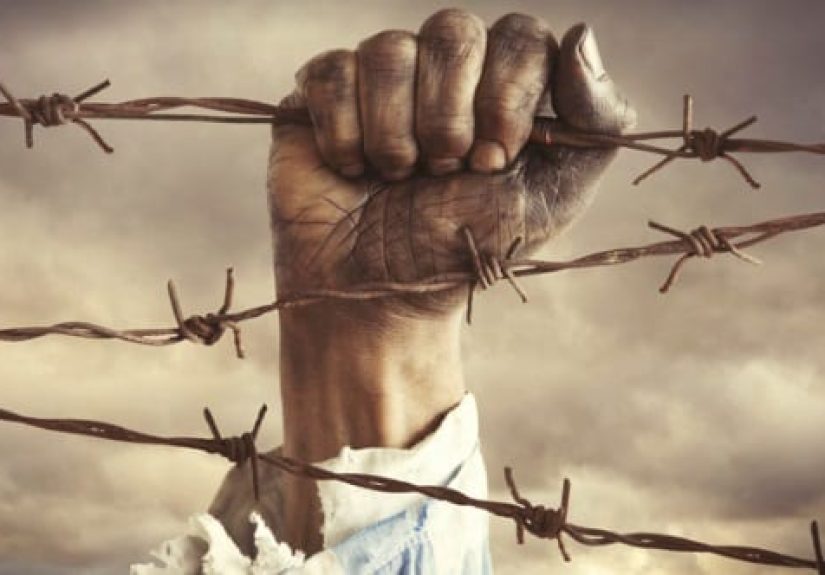
barbed wire, forced labor, and a very real chance you would never come home.
Across the 20th century (and in some places, into the 21st), communist regimes
built vast networks of prisons and labor camps designed to crush dissent,
reengineer society, and squeeze cheap labor out of terrified people.
These weren’t just grim jails. They were entire hidden worlds with their own rules,
hierarchies, and horrors. From the killing fields of Cambodia to the frozen forests
of Siberia, prisoners were starved, tortured, brainwashed, and worked to death in
the name of “reeducation” and “building a better society.” Survivors’ memoirs and
human rights reports still read like something out of a nightmare.
Below are ten of the most horrifying stories from communist prisons and labor camps.
They span different countries and decades, but together they show how similar the
machinery of repression can look once ideology, unchecked power, and cruelty all
move into the same cell block.
1. S-21: The High School Turned Torture Factory (Cambodia)
“Reeducation” under the Khmer Rouge
In the mid-1970s, the Khmer Rouge took over Cambodia with a plan to build a radical
agrarian utopia. Instead, they created one of the most lethal regimes of the 20th century.
In the capital, Phnom Penh, a former high schoolTuol Svay Preywas turned into
Security Prison 21, better known as S-21. Classrooms became torture chambers;
blackboards were replaced with shackles and interrogation tools.
Around 30,000 people passed through S-21. They were accused of being enemies of the state:
teachers, doctors, monks, students, even children. Almost none survived. Prisoners were
beaten with sticks, shocked with electricity, suffocated with plastic bags, and
subjected to a crude form of waterboarding. Women were especially vulnerable to
rape and sexual assault. Torture wasn’t just about extracting confessions;
some guards later admitted it became a twisted form of entertainment.
Today, S-21 is a museum. The photographs of prisoners taken on arrival stare back from the walls
terrified, confused, often still in everyday clothes. It’s a chilling reminder that
the distance between “ordinary life” and “state terror” can be as short as the walk
from a classroom door to a concrete cell.
2. Vietnam’s Reeducation Camps: “Short Seminars” That Lasted Years
From promise of quick lectures to endless hard labor
After the fall of Saigon in 1975, the new communist government promised
“short reeducation seminars” for soldiers, officials, religious leaders, and anyone tied
to the old South Vietnamese state. Many people packed for a few days or weeks.
Instead, hundreds of thousands were sent to remote reeducation camps for months,
years, or indefinitely.
Authorities divided the camp system into levels. At the lowest levels, people were
supposed to attend political study sessions and go home at night. At higher levels,
inmates disappeared into jungle camps where they were forced to clear forests,
build roads, or farm in primitive conditions. Food was scarce, disease was rampant,
and “confession” sessions ran on repeat. Former officers and intellectuals were
pressured to denounce their past, their beliefs, and often their friends.
Estimates suggest that between 1975 and 1990, up to 165,000 people died in these
camps from starvation, overwork, or illnesssome researchers believe the true number
is far higher. Survivors often describe leaving the camps as old men in the bodies
of the young: teeth lost, bones weakened, trust shattered.
3. The Xinjiang “Reeducation” Network (China)
High-tech surveillance meets old-school repression
In the far-western Xinjiang region of China, the communist state has built a
sprawling system of “vocational education” and “reeducation” centers aimed mainly
at Uyghur Muslims and other ethnic minorities. Behind the bland official
language are allegations of mass internment, forced labor, and intense
ideological control. Human rights groups estimate that since the late 2010s,
up to a million people have been detained in some form of camp or center.
Former detainees describe being forced to renounce their religion, memorize
Communist Party slogans, sing patriotic songs for hours, and speak only Mandarin.
Some say they were punished for praying, wearing religious clothing, or
simply having relatives abroad. Accounts include stories of overcrowded
dormitories, constant surveillance, and physical abuse during interrogations.
Unlike older labor systems, Xinjiang’s network is backed by high-tech tools
facial recognition cameras, cellphone monitoring, and huge databases of
personal information. The goal, critics argue, isn’t just to punish individuals
but to reshape an entire culture from the inside out.
4. “Farewell to the World”: Ethiopia’s Red Terror Prison
A communist junta’s house of death
In the 1970s and 1980s, Ethiopia’s communist military junta, the Derg, unleashed
a brutal campaign known as the Red Terror. People suspected of being
“counterrevolutionaries” were arrested, tortured, and dumped into prisons like
Alem Bekagnliterally “Farewell to the World.”
Inside Alem Bekagn, teenagers, intellectuals, and former officials were crammed into
filthy cells. Many were executed in groups; others died of disease and neglect.
Forensic investigations later uncovered mass graves around the site. One notorious event,
the “Massacre of the Sixty,” saw more than 60 former members of Emperor Haile Selassie’s
government executed in a single sweep.
Survivors recount living with constant uncertainty: you could be called out
for “questioning” at any moment and never return. Families often didn’t know
where their relatives were buried, if at all. The name “Farewell to the World”
turned out to be less a nickname and more an accurate description of what it meant
to pass through its gates.
5. Lenin’s Gulags: The Prototype of a System
The camp network before Stalin
When people hear “gulag,” they usually picture Stalin’s era. But the basic system of
Soviet labor camps began under Vladimir Lenin. After the Bolshevik Revolution,
the new communist government inherited old Tsarist exile sites in Siberia and quickly
expanded them into a network of “corrective labor” camps. By the early 1920s,
there were already dozens of camps with tens of thousands of inmates.
Lenin’s secret police, the Cheka, sent political opponents, suspected “class enemies,”
and petty criminals into these camps. Conditions were primitive and deadly:
poor shelter, minimal clothing, brutal winters, and near-starvation rations.
Prisoners were forced to build roads, railways, and early industrial projects
with hand tools and little rest. Disease swept through overcrowded barracks;
execution squads took care of the rest.
The idea was simple and terrifying: the camp would “reeducate” you through labor
while also turning you into a disposable construction worker. Stalin would later
inflate this system into a vast “gulag archipelago,” but the blueprintpolitical
repression plus forced laborwas already firmly in place.
6. Belene Labor Camp: Bulgaria’s Island of Fear
An island that swallowed dissidents
On a small island in the Danube River, communist Bulgaria built its most infamous
camp: Belene. Officially, it was a place for “dangerous” political prisoners and
criminals. In practice, it became a dumping ground for priests, writers, ethnic
and religious minorities, and anyone who didn’t fit the ideological mold.
Prisoners labored in fields, cut timber, and did heavy agricultural work with almost
no food, little shelter, and constant fear. Guards reportedly encouraged hardened
criminals to terrorize political inmates, turning daily life into a mixture of
state punishment and criminal violence. People who broke rules could be used as
target practice or abandoned to freeze near the river.
Even after the camp was officially “closed” in 1959, authorities revived it in later
decades to hold ethnic Turks and Muslims who resisted forced assimilation policies.
For many Bulgarians, Belene remains a symbol of a time when the state controlled
not only your future but your vocabulary for fear.
7. Castro’s UMAP Camps in Cuba
“Military Units to Help Production” that broke people instead
In 1960s Cuba, the communist government created the UMAP system
Unidades Militares de Ayuda a la Producción, or Military Units to Help Production.
On paper, they were work units. In reality, they functioned as concentration camps
for religious believers, political nonconformists, men with long hair,
rock music fans, and above all, gay men.
Camp slogans promised to “make men out of you,” but conditions were humiliating and brutal.
Inmates were forced to cut sugarcane for long hours, sleep in crowded barracks,
and attend relentless “reeducation” sessions. Reports from former prisoners describe
beatings, sexual abuse, and suicides by people who saw no way out.
The official line painted UMAP as patriotic service. For many inmates, it meant losing
years of their lives simply for who they were or what they believed. The trauma
still lingers in Cuban exile communities today.
8. Laogai: China’s “Reform Through Labor” System
Millions pressed into hidden factories and fields
The word laogai is short for “reform through labor,” the backbone of China’s
communist penal system after 1949. Modeled in part on the Soviet gulags, these camps
combined prisons, farms, and factories into one tightly controlled world.
Political dissidents, religious believers, and ordinary criminals could all end up
in laogai units scattered across the country.
Former prisoner and activist Harry Wu spent 19 years in this system and later
described conditions that would make any modern HR department’s head explode:
12- to 16-hour workdays, dangerous equipment, almost no safety protections,
and food so scarce that inmates stole from one another to survive. Guards used
torture tools like the “tiger bench,” strapping prisoners into excruciating positions
for hours or days.
The laogai system also became an economic engine. Prisoners produced everything
from textiles and agricultural goods to components for export-oriented industries.
The official justification was that labor would transform “bad elements” into
useful citizens. In reality, it created an enormous pool of coerced workers with
no bargaining power and no exit.
9. Stalin’s Gulags: An Archipelago of Suffering
Frozen ground, forced confessions, and endless work
Under Joseph Stalin, the Soviet gulag system exploded in size and brutality.
Millions of peoplereal critics, imagined enemies, and random bystanderswere
swept up in purges, show trials, and waves of paranoia. They ended up in
camps scattered across Siberia and the far north, where permafrost and
ideological obsession met in the worst possible way.
Prisoners cut timber, mined coal and gold, and built railways and canals in
temperatures that could drop far below freezing. Workdays often stretched
14 hours or more. Food rations were tied to quotas: if your work group didn’t
hit its target, you might go half-hungry or fully starving. Disease and injuries
were constant companions, and brutality from guardsand criminal inmates
favored by those guardswas routine.
Some survivors, like Aleksandr Solzhenitsyn and Varlam Shalamov, later described
the gulag as a place where normal morality dissolved. People stole, betrayed,
and sometimes killed just to live one more day. Their memoirs and testimonies
remain some of the clearest windows into how an entire state can turn
prisons into a central pillar of its economic and political system.
10. The Pitesti Experiment (Romania)
The “reeducation” that shocked even other communists
Of all communist prison horrors, the Pitesti Experiment in Romania (1949–1951)
might be the most twisted. Inside Pitesti Prison, a group of party-approved
“reeducators” set out to break prisoners not just physically but psychologically
and spiritually. Even some Soviet officials reportedly found it excessive.
Guards forced prisoners to torture each other. Religious inmates were mocked
and desecrated in ways carefully designed to attack their faithforced to take
“communion” with excrement, endure fake “baptisms” using buckets of sewage,
or reenact religious rituals in obscene fashion. People were beaten, kept
awake for days, and dumped into solitary confinement until they confessed to
endless lists of “crimes.”
The goal wasn’t just forced confession; it was personality demolition.
Inmates were pressured to denounce friends, beliefs, and even their own sense of self.
Many survivors later said the hardest scars to heal were not from the blows
but from being turned against their fellow prisonersand sometimes against
their deepest convictions.
Beyond the Horror: Why These Stories Still Matter
It’s tempting to think of these places as distant nightmares in far-off countries,
locked safely in the past. But many of these camps operated well into living
memoryand some systems of mass detention and forced labor still exist today.
The patterns are eerily familiar: broad, vague crimes like “anti-state activity,”
secret trials or no trials at all, families kept in the dark, and a constant insistence
that everything is done “for the people.”
Learning about these stories isn’t just morbid curiosity. It’s a reminder that
when a government demands total controland treats dissent less like disagreement
and more like a diseasethe prison walls can rise surprisingly fast.
The names change. The ideology changes. The slogans change. The barbed wire
almost always looks the same.
Experiences and Reflections Related to Communist Prisons and Camps
What survivors, visitors, and historians tell us
Reading about these camps is one thing; listening to survivors is another.
Their experiences don’t line up neatly like bullet points in a history textbook.
They come in fragmentssnatches of sound, smell, and emotion that still haunt them
decades later. Many describe the same sensory details: the crunch of frost under
thin shoes in Siberia, the smell of damp concrete in interrogation rooms,
the ache of hunger that makes you dream of bread almost every night.
Former inmates of the Soviet gulag system often talk about the moment they realized
they had become part of a different universe. Sometimes it was the train ride,
jammed into cattle cars, windows covered, days without proper food.
Sometimes it was the first time a guard casually referred to them as “vermin”
or “waste.” That shiftfrom citizen to disposable objectwas the real beginning
of camp life, even before the first roll call in the snow.
Survivors from Chinese laogai camps and North Korean political prisons describe
a similar pattern. The physical abuse is terrible, but the psychological games
are just as damaging. Prisoners are pushed to confess not only to real offenses
but to imaginary ones, pressured to reinvent their memories and denounce loved ones.
People are given tiny rewardsan extra ladle of soup, a less miserable work assignment
for informing on others. The system turns survival into a moral minefield.
There’s also the strange experience of visiting these places after they become museums.
At Tuol Sleng (S-21) in Phnom Penh, tourists now walk through the same classrooms
that once held shackled prisoners. Rusted bed frames and shackles are still there.
Black-and-white photographs of victims line the walls. The building is quiet,
except for the sound of footsteps and the buzz of distant traffic. It feels surreal
to step back out into the bright Cambodian sun and see tuk-tuks, street vendors,
and kids on bikes just a few blocks away.
In Romania, former prisons like Pitesti and Sighet now host memorials and conferences.
For younger generations, these spaces are sometimes their first concrete encounter
with what “communism” meant in practicenot abstract debates about economic systems,
but the very real terror of midnight arrests and “reeducation” cells.
Teachers and families bring students to these sites to make sure the stories
don’t fade into a vague “bad time” label.
Many survivors face another quiet prison after release: life on the outside.
Years in a camp can mean missing out on education, careers, and relationships.
Former prisoners often struggle with PTSD, survivor’s guilt, and insomnia.
Some cope by writing memoirs; others join human rights groups, testifying at tribunals
and speaking to journalists. Their motivation is rarely revenge.
It’s usually a simple, powerful request: “Please, at least, don’t let anyone say
this never happened.”
For readers and researchers, engaging with these testimonies is a responsibility.
It means accepting messy truths: sometimes the victims were former officials or people
with complicated pasts; sometimes the perpetrators were young, frightened,
or themselves products of fear and propaganda. None of that excuses the system.
If anything, it shows how easily ordinary people can be pulled into extraordinary cruelty
once a regime decides that ideology and “purity” matter more than human beings.
Ultimately, the experiences from communist prisons and labor camps warn us about
the dangers of any projectleft, right, or otherwisethat demands blind loyalty
and treats dissent as a crime against the state. When you hear phrases like
“enemies of the people,” “counterrevolutionaries,” or “reeducation,”
it’s worth remembering the barbed wire, forced marches, and mass graves
just beyond those words. History doesn’t repeat perfectly, but it does
leave some very loud echoes.
Conclusion
Communist prisons and labor camps were not accidents or side effects;
they were built into the political architecture of several regimes.
From S-21 in Cambodia to the Pitesti Experiment in Romania, each story reflects
a system that saw human beings as raw material to be reshaped, exploited, or discarded.
The details change from place to place, but the core idea remains chillingly consistent:
power with no limits will eventually build walls, watchtowers, and punishment cells.
Remembering these ten horrifying stories isn’t about scoring ideological points.
It’s about honoring victims, listening to survivors, and sharpening our sensitivity
to the warning signs of state abusewherever they appear. The past can’t be undone,
but it can be recorded, studied, and used as a barrier against the next set of
barbed-wire “solutions” to political problems.
sapo: From Cambodia’s S-21 torture center and Vietnam’s reeducation camps to Stalin’s frozen gulag archipelago and Romania’s pitiless Pitesti Experiment, communist prisons and labor camps turned ideology into chains, hunger, and fear. This in-depth article explores ten of the most horrifying examples, using survivor testimonies and historical research to show how these hidden worlds operatedand why their lessons still matter in an era when mass detention and “reeducation” haven’t completely disappeared.







 Close
Close