
Table of Contents >> Show >> Hide
- Why choose holiday houseplants other than poinsettias?
- How to make holiday houseplants last longer indoors
- 11 holiday houseplants that rival poinsettias
- How to decorate with holiday houseplants
- Which holiday houseplants are best for beginners?
- Final thoughts
- Experience: living with holiday houseplants beyond December
Let’s be honest: poinsettias have had a very long run as the unofficial prom queen of holiday houseplants. They’re bright, dramatic, and practically born ready for the December spotlight. But they’re not the only plants that can make your home feel festive, cozy, and just a little more magical. If you’re craving something different this year, there are plenty of holiday houseplants that rival poinsettias in color, charm, texture, and wow factor.
Some bloom like they’re trying to steal the whole party. Others bring sculptural greenery that doubles as living decor. A few even smell like the holidays themselves. Better yet, many of these plants can keep going well past the season, which means your living room doesn’t have to look emotionally abandoned by January 2.
Below, you’ll find 11 beautiful holiday houseplants that deserve a place in your decorating lineup. For each one, we’ll cover what makes it special, why it works so well for the holidays, and how to keep it looking fabulous without turning your home into a full-time greenhouse experiment.
Why choose holiday houseplants other than poinsettias?
There’s nothing wrong with poinsettias, of course. They’re classics for a reason. But branching out gives you more options for color, form, fragrance, and longevity. Some holiday houseplants bloom in rich reds, pinks, and whites just like poinsettias, while others bring glossy leaves, architectural stems, or miniature tree shapes that feel equally seasonal.
They also let you match your plant choices to your style. Love modern decor? An anthurium or bromeliad looks sleek and polished. Prefer cottage charm? Cyclamen and florist azaleas fit right in. Want something that whispers “holiday” instead of shouting it through a megaphone? A rosemary topiary or Norfolk Island pine is ready for the assignment.
How to make holiday houseplants last longer indoors
Before we meet the contenders, a quick reality check: most holiday houseplants hate the same things you do during family gatheringsdry air, sudden temperature swings, and being shoved too close to a heat vent. In general, these plants do best in bright light, away from drafts, radiators, and fireplaces. Watering should be thoughtful, not emotional. That means keeping the potting mix appropriately moist for the species, but not drowning roots in the name of holiday generosity.
If your home gets very dry in winter, grouping plants together can help with humidity. So can pebble trays or placing them in naturally humid rooms with good light. And yes, the decorative foil pot wrap should come off or be drained after watering. A cute outfit is not worth soggy roots.
11 holiday houseplants that rival poinsettias
1. Christmas cactus
If poinsettias are the extroverts of the season, Christmas cactus is the cool friend who doesn’t need to try that hard. This plant has arching segmented stems and colorful blooms that seem to float at the tips like tiny lanterns. It’s festive without being fussy, and it often becomes a family heirloom because it can live for many years with decent care.
Christmas cactus is especially appealing because it flowers when days are short and temperatures are cooler. Place it in bright, indirect light and water when the top layer of soil starts to dry. Unlike desert cacti, it likes a bit more consistent moisture. Once buds form, try not to move it around too much. This plant is a drama queen about sudden change and may drop buds if annoyed.
2. Cyclamen
Cyclamen looks like it dressed up specifically for the holidays. Its upswept flowers resemble butterflies in motion, and its silver-patterned leaves are so pretty they practically count as wrapping paper. Red, white, pink, and magenta varieties make it one of the best poinsettia alternatives for winter decorating.
Cyclamen prefers cooler rooms, which is unusual for a flowering houseplant and incredibly useful during winter. Give it bright light and keep the soil lightly moist, but avoid soaking the crown. Bottom watering often works well. When it’s happy, cyclamen brings elegant color to side tables, mantels, and dining areas without taking over the whole room.
3. Amaryllis
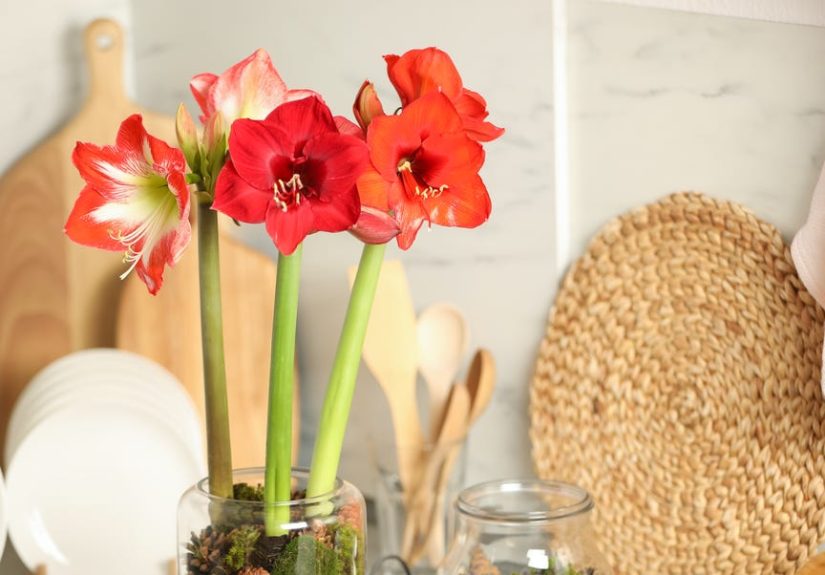
Amaryllis does not believe in subtlety, and frankly, good for it. This bulb sends up thick stems topped with huge trumpet-shaped blooms that can stop guests mid-sentence. Red and white amaryllis are obvious holiday favorites, but pink, salmon, and striped types are also stunning.
Because amaryllis is commonly forced to bloom indoors in winter, it feels made for the season. It works beautifully as a centerpiece or entryway statement. Set the bulb in a pot with good drainage, place it in bright light, and keep the soil slightly moist. Turn the pot occasionally so the stem grows straighter. When it blooms, move it to a slightly cooler location to extend the show.
4. Paperwhite narcissus
If you want holiday houseplants with fragrance, paperwhites are ready to enter the chat. These slender stems topped with clusters of white flowers add elegance and a fresh, clean look to holiday decor. They’re especially good for minimalist homes, winter tablescapes, and anyone who loves a little perfume in the air.
Paperwhites are famously easy to force indoors, often grown in shallow bowls with pebbles and water. Their simple setup makes them feel a little magical, like a science experiment that somehow became classy. They bloom fast, so they’re ideal if you need a last-minute plant that still feels thoughtful and seasonal.
5. Kalanchoe
Kalanchoe is the overachiever of the group: compact, colorful, and easier to care for than many flowering houseplants. Its clusters of small blooms come in red, orange, yellow, pink, and white, which makes it easy to coordinate with holiday palettes from classic Christmas to modern neutral decor.
This succulent-like plant likes bright light and prefers its soil to dry slightly between waterings. That alone makes it appealing during the busy season, when remembering everyone’s gift exchange schedule is already enough mental labor. Kalanchoe fits perfectly on windowsills, shelves, and gift tables, and it often keeps blooming long after the ornaments come down.
6. Phalaenopsis orchid
If your holiday style leans more “winter dinner party” than “Santa exploded in here,” a moth orchid is a smart pick. Phalaenopsis orchids have long-lasting blooms and a polished, graceful look that instantly elevates a room. White orchids are especially popular during the holidays, but pink and purple blooms work beautifully too.
Despite their fancy reputation, these orchids are more approachable than many people think. They like bright, indirect light and careful watering, usually when the potting mix is nearly dry. Their blooms can last for weeks or even months, which means they offer serious decorative value. They’re basically the quiet luxury of holiday plants.
7. Anthurium
Anthurium brings glossy heart-shaped leaves and waxy red, pink, or white spathes that look polished enough to have their own publicist. It’s one of the best holiday houseplants if you want bold color without the traditional poinsettia look.
Because it prefers bright, indirect light and appreciates humidity, anthurium does well in bright indoor spaces where many other plants sulk. The blooms are long-lasting, and the foliage stays handsome even when the plant is between flowering cycles. If poinsettias are holiday fireworks, anthuriums are holiday lacquersleek, rich, and undeniably chic.
8. Florist azalea
Florist azaleas are lush, blooming beauties that feel like winter’s answer to spring. Their flowers can be white, pink, red, or bicolor, and when they’re in full bloom, they look almost absurdly generous. This is a great choice if you want a plant that feels romantic, classic, and a little old-fashioned in the best possible way.
Azaleas do best in bright light and cooler indoor conditions. The key is consistent moisture without waterlogging the roots. Let them dry out too much, and they tend to protest with dropped buds and leaves. Treat them well, though, and they can be absolutely spectacular during the holiday season.
9. Guzmania bromeliad
Guzmania bromeliads look like nature decided to design a modern centerpiece. Their vivid bracts in red, orange, yellow, or pink rise from a rosette of green leaves, giving them a sculptural, tropical feel that still works surprisingly well in holiday decor. Red guzmanias, especially, can rival poinsettias for color intensity.
These plants prefer bright, filtered light and a warm indoor spot. They’re often watered a bit differently than standard houseplants, with moisture maintained in the central cup as well as around the root zone depending on conditions. Their color lasts a long time, making them great for anyone who wants a festive plant that doesn’t collapse after one dramatic week.
10. Norfolk Island pine
Need a living mini Christmas tree? Norfolk Island pine is your answer. Its soft, layered branches create the look of a tiny evergreen, but it’s actually a tropical houseplant, not a true pine. That makes it both charming and slightly deceptive, which is honestly very holiday-coded.
Norfolk Island pine is perfect for small spaces, apartments, offices, and tabletops. You can decorate it lightly with small ornaments or ribbon, but avoid weighing it down. It likes bright light, moderate watering, and decent humidity. When the season ends, it keeps right on serving as a graceful green houseplant instead of becoming curbside sadness.
11. Rosemary topiary
Rosemary topiaries often show up during the holidays trimmed into little tree shapes, and they’re almost too clever. You get festive form, lovely fragrance, and an herb you can actually use in the kitchen. That’s decor with range.
Rosemary needs a bright, sunny window and careful watering. It doesn’t want to stay soggy, but it also hates being ignored until it turns into a crunchy memory. If you can give it strong light and decent air circulation, it can stay attractive well past the holiday season. Snipping a few sprigs for roasted potatoes or bread is just a bonus. Suddenly your centerpiece is contributing to dinner.
How to decorate with holiday houseplants
One of the best things about holiday houseplants is how versatile they are. Group several together on a console table for a layered display with different heights and textures. Pair flowering plants like cyclamen, amaryllis, and kalanchoe with greenery such as Norfolk Island pine or rosemary topiary. Use metallic cachepots for a glamorous look, woven baskets for something more rustic, or simple ceramic containers if you want the plants to do all the talking.
You can also match plants to rooms. Fragrant paperwhites are lovely in dining spaces, orchids suit bedrooms and entryways, and bromeliads or anthuriums add punch to living rooms and home offices. Mini Norfolk Island pines make adorable desk plants, especially if you’re trying to trick yourself into enjoying holiday email season.
Which holiday houseplants are best for beginners?
If you’re new to indoor gardening, start with Christmas cactus, kalanchoe, amaryllis, or paperwhites. These tend to be more forgiving and don’t require expert-level humidity management or constant fussing. If you have strong natural light, rosemary and orchids can also work well. Cyclamen and florist azaleas are gorgeous, but they’re a bit pickier about moisture and temperature, so they may test your commitment.
Final thoughts
Poinsettias may be the traditional stars of holiday decorating, but they’re far from the only option. From the sculptural beauty of amaryllis to the delicate charm of cyclamen, the fragrance of paperwhites, and the year-round appeal of Norfolk Island pine, there’s a whole world of holiday houseplants waiting to steal the season.
The trick is choosing plants that fit both your style and your indoor conditions. When you do, your holiday decor feels more personal, more layered, and frankly, more interesting. And once you realize your festive plant can still look good in January, February, and beyond, poinsettias may have some real competition.
Experience: living with holiday houseplants beyond December
One of the most enjoyable things about decorating with holiday houseplants is that they change the feel of a home in a way store-bought decor can’t quite match. Ornaments are lovely, candles are cozy, and a string of warm lights can make almost anything look charming, but living plants bring a kind of energy that feels more personal. They make a room look cared for. They make a kitchen windowsill feel intentional. They make a cold morning coffee feel slightly more cinematic than it has any right to be.
Many people discover this by accident. Maybe they buy an amaryllis because it looks impressive and easy. Maybe a rosemary topiary ends up in the cart because it smells fantastic. Maybe someone gives them a Christmas cactus, and suddenly it becomes the one decoration that survives the season and keeps going. Over time, those plants often become part of the rhythm of the holidays. You remember where the cyclamen sat last year. You look for paperwhites as soon as the weather turns cold. You start thinking, “Maybe the tiny Norfolk Island pine should go on the entry table again,” and just like that, you have traditions.
There’s also something satisfying about the slower pace of plants during a season that can otherwise feel like a sprint in nice clothes. Holiday houseplants don’t care about shopping deadlines or whether you remembered to buy enough tape. They ask for light, water, and a bit of attention. In return, they offer blooms, color, fragrance, and structure. That exchange feels refreshingly fair.
Another underrated pleasure is how these plants can evolve with your decorating style. If one year you love classic red-and-white decor, anthuriums, cyclamen, and amaryllis fit right in. The next year, maybe you want something quieter and more natural, and suddenly rosemary, white orchids, paperwhites, and a Norfolk Island pine become the stars. The plants are flexible enough to work with your mood, your space, and the amount of effort you’re realistically willing to give during a busy month.
And then there’s Januarythe month when many decorations feel tired, but a good houseplant still looks alive and relevant. That may be the biggest advantage of all. Holiday houseplants bridge the gap between seasonal decor and everyday living. They don’t just celebrate the season; they soften the landing afterward. When the garlands come down and the sparkle fades, a kalanchoe can still be blooming on the sill, an orchid can still be elegant in the bedroom, and that Christmas cactus can keep its place like it always belonged there. In a season full of quick moments, that kind of staying power feels pretty special.





 Close
Close