
Table of Contents >> Show >> Hide
- 1. The USPS Is Older Than the United States Itself
- 2. The Modern USPS Officially Began in 1971
- 3. Universal Service Is the Whole Point
- 4. The Scale of USPS Is Wild
- 5. USPS Generally Does Not Fund Operations With Tax Dollars
- 6. ZIP Codes Changed Everything
- 7. Forever Stamps Really Mean Forever
- 8. USPS Is More Digital Than Its Reputation Suggests
- 9. USPS Both Competes With and Helps Private Carriers
- 10. Mail Security Is a Bigger Deal Than Most People Realize
- 11. USPS Is Essential, but Its Finances Are Still Rough
- 12. USPS Is Still Deeply Human
- Real-Life Experiences With USPS: Why This Service Still Matters
- Conclusion
- SEO Tags
The United States Postal Service is one of those institutions most people think they understand until they actually need it. Then suddenly it becomes a mystery machine involving Forever stamps, tracking numbers, ZIP Codes, redelivery requests, and that one package that seems to vacation in Ohio for emotional growth. Still, the USPS is far more than a place to buy stamps and ask polite questions through bulletproof glass. It is a giant, weirdly fascinating, deeply American network that connects cities, farms, military bases, apartment buildings, small businesses, and grandparents who still send birthday cards with actual cash inside.
If you want the quick version, here it is: the USPS is old, enormous, essential, self-funding for operations, and under more pressure than most people realize. It is also more digital, more regulated, and more culturally important than its “just the mail” reputation suggests. Here are 12 things worth knowing about the United States Postal Service, whether you are a casual mail sender, an online seller, or someone who still gets a little thrill when they hear the mailbox slam shut.
1. The USPS Is Older Than the United States Itself
Long before America had streaming services, branded water bottles, or group texts that somehow involve 47 people, it had a postal system. The roots of the USPS go back to 1775, when the Continental Congress named Benjamin Franklin the first American Postmaster General. That means the mail system predates the Constitution and has been part of the country’s basic communication infrastructure since the Revolutionary era.
This matters because the Postal Service was never just about envelopes. From the beginning, it helped move news, political debate, public information, and commerce across a growing nation. In plain English: America built a mail network because a democracy without communication is basically chaos with paperwork.
2. The Modern USPS Officially Began in 1971
Yes, the postal system is old. But the USPS as we know it today officially began operations on July 1, 1971, when the old Post Office Department became the United States Postal Service. That change was more than a name swap. It marked a major structural shift designed to modernize the national mail system and make it operate more like an independent public service organization.
So when people say, “The Post Office has been around forever,” they are sort of right. But the modern USPS is the result of a later reinvention. Think of it as a historic institution that got a serious government rebrand before rebranding was cool.
3. Universal Service Is the Whole Point
One of the most important things to understand about the USPS is its universal service mission. Everyone in the United States and its territories is supposed to have access to postal products and services, and customers pay the same price for a First-Class Mail stamp regardless of where they live. That sounds simple, but it is a huge deal.
Serving a dense Manhattan neighborhood is one thing. Serving a remote rural road, an island community, or a small town where the nearest big-box store is a road trip is another. Yet the USPS still goes there. That “same stamp, same nation” idea is one reason the Postal Service is treated as a basic and fundamental public service rather than just another shipping company chasing the most profitable routes.
4. The Scale of USPS Is Wild
If you think the Postal Service is small because your local branch has one squeaky pen chained to the counter, think bigger. Much bigger. USPS delivers to about 168.6 million delivery points nationwide and operates roughly 33,780 retail offices, including more than 31,000 postal-managed locations. It also reported annual operating revenue of $79.5 billion, processed 112.5 billion pieces of mail, and employed about 533,000 career workers.
That is not a side hustle. That is a massive national logistics system. In fact, the USPS regularly points out that it has the largest retail network in the country. So yes, the Postal Service is still part post office, part delivery fleet, part giant invisible machine that somehow keeps birthdays, ballots, bills, prescriptions, and online orders moving.
5. USPS Generally Does Not Fund Operations With Tax Dollars
This is one of the most misunderstood facts about the Postal Service. USPS generally receives no tax dollars for operating expenses and instead relies on the sale of postage, products, and services to fund its operations. That means the organization is expected to support itself while also maintaining a universal public service obligation. Easy, right? Absolutely not.
That balancing act is why USPS debates are always so tense. People want affordable postage, reliable delivery, a post office nearby, and regular service to every address. At the same time, the agency has to cover massive infrastructure, transportation, labor, and technology costs. In other words, USPS is expected to behave like a business while serving like a public utility. That is a recipe for permanent stress and very long budget meetings.
6. ZIP Codes Changed Everything
The ZIP Code may look like a boring row of numbers at the end of an address, but it was one of the biggest postal breakthroughs in modern American life. Introduced in 1963, the ZIP Code system helped the Post Office speed up and mechanize mail sorting at a time when mail volume was exploding. It was not just a neat filing trick. It was the key to getting mail through the system faster and more accurately.
The now-famous mascot Mr. ZIP helped sell the idea to the public, because apparently Americans in the 1960s needed reassurance that numbers on envelopes were not the end of civilization. Today, ZIP Codes feel as normal as street names, but they were once a major operational innovation. Without them, mail sorting would be slower, messier, and much more dependent on human eyeballs and caffeine.
7. Forever Stamps Really Mean Forever
The name sounds like marketing poetry, but Forever stamps are actually one of the most practical inventions in everyday mailing. A Forever stamp is valid for mailing a future one-ounce single-piece First-Class Mail letter no matter what the current rate is when you use it. That means if postage goes up, your old Forever stamps do not become sad little paper antiques.
As of now, a First-Class Mail Forever stamp costs $0.78 for a standard one-ounce letter. If your mailpiece is heavier, oddly shaped, or extra fancy in a way the machines do not appreciate, you may need additional postage. But the core idea holds: buy them now, use them later, and avoid the annual ritual of hunting for one-cent make-up stamps like a confused time traveler.
8. USPS Is More Digital Than Its Reputation Suggests
People tend to picture the Postal Service as trucks, trays, and paper cuts, but USPS has become a lot more digital. One of the best examples is Informed Delivery, a free service that lets eligible customers preview incoming letter-sized mail and track packages online before they arrive. In a very modern twist, the old-fashioned mailbox now comes with a digital trailer.
This is especially useful for people waiting on important documents, checks, legal notices, replacement cards, or that mystery package they definitely ordered late at night and definitely do not remember buying. USPS may be rooted in physical delivery, but it increasingly uses digital tools to manage expectations, improve visibility, and reduce the “where is my stuff?” panic spiral.
9. USPS Both Competes With and Helps Private Carriers
Many people think of USPS, UPS, and FedEx as rivals in a three-way shipping cage match. In reality, the relationship is more complicated. The Postal Service both competes and collaborates with the private sector. USPS has said that UPS and FedEx pay the Postal Service to deliver some ground packages, while USPS pays those carriers for air transportation.
That means the mailing and shipping ecosystem is less like a duel and more like a messy group project where everyone complains but still shares files. USPS remains especially important for the “last mile,” the final leg of delivery that can be expensive and difficult, especially in rural or lower-density areas. When other carriers need broad reach, the Postal Service becomes a very useful friend.
10. Mail Security Is a Bigger Deal Than Most People Realize
The U.S. Mail is protected by more than 200 federal laws, which should tell you immediately that the government takes this stuff seriously. Mail theft, fraud, and attacks on postal infrastructure are not minor annoyances. They are federal matters. The Postal Inspection Service, one of the nation’s oldest law enforcement agencies, plays a major role here.
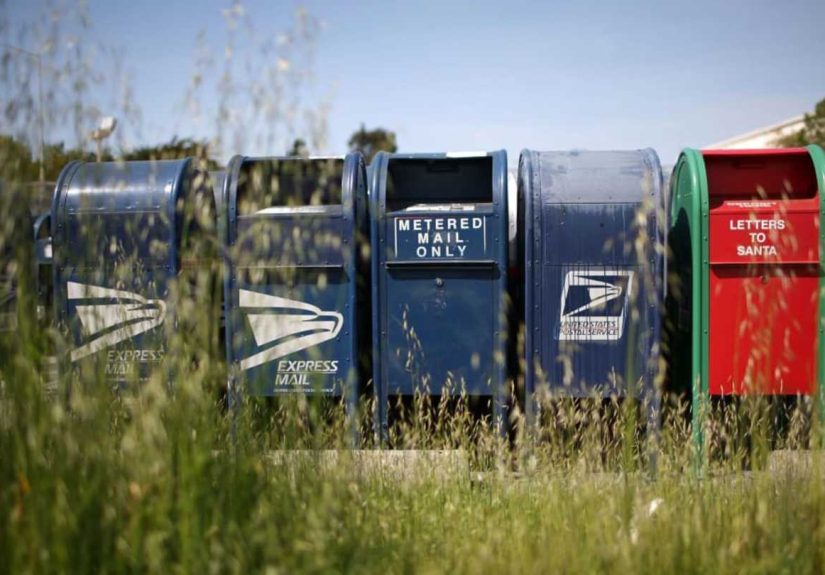
At the same time, security challenges are real. Recent oversight work from the USPS Office of Inspector General found that the Postal Service has been deploying more secure collection boxes and trying to improve protection around “arrow keys,” the universal keys used in some postal operations. But the same report also said implementation gaps remain. Translation: the blue mailbox is iconic, but it is not magic. Customers still need to mail carefully, track sensitive items, and avoid treating the outgoing box like a vault with a patriotic paint job.
11. USPS Is Essential, but Its Finances Are Still Rough
The Postal Service remains indispensable, but financially it has had a hard road. According to the Government Accountability Office, USPS has lost money every year but one since 2007 and has accumulated $118 billion in net losses over that period. Meanwhile, regulators at the Postal Regulatory Commission have continued to scrutinize service performance, delivery standards, and overall compliance.
This is where USPS stops being a nostalgic institution and starts looking like a major policy puzzle. Americans want dependable service. Businesses want predictable pricing. Rural communities want access preserved. Lawmakers want stability. Regulators want accountability. USPS leadership wants modernization. All of those goals can coexist, but not without friction. So when you hear debates about stamp prices, delivery times, sorting networks, or post office closures, you are hearing the sound of a public service trying to survive in a very expensive century.
12. USPS Is Still Deeply Human
For all its machinery, metrics, and logistics jargon, the Postal Service remains one of the most human institutions in American life. Carriers learn neighborhoods. Clerks calm stressed-out customers mailing important documents at 4:57 p.m. Postal workers notice when something seems off. USPS also highlights community-facing programs and often points to employees who step in to help elderly or disabled customers through efforts like the Carrier Alert Program.
The service also reflects American culture in a way few institutions do. Stamps celebrate artists, astronauts, athletes, scientists, musicians, holidays, landscapes, and history. The agency employs a large number of veterans. It supports civic life, family rituals, small business commerce, and those annual December moments when everyone collectively remembers that shipping deadlines are not a suggestion. In short, USPS is not just infrastructure. It is part of the country’s emotional wiring.
Real-Life Experiences With USPS: Why This Service Still Matters
Ask people about the United States Postal Service and you will get more than opinions. You will get stories. The USPS is woven into ordinary life so tightly that most Americans do not notice it until a moment becomes important. Then suddenly the mail is not abstract at all. It is personal.
One of the clearest examples is moving. Almost everyone who has changed apartments, switched cities, or started over in a new neighborhood has had a brief USPS phase where life feels held together by labels, forms, and a prayer. Forwarding mail sounds simple until you realize how much of adulthood arrives in envelopes: bank documents, tax notices, insurance letters, replacement cards, subscription renewals, legal paperwork, random healthcare forms that seem designed to create panic. In those moments, USPS is not just delivering paper. It is helping a person stitch together continuity during a messy transition.
Then there is the holiday season, when the Postal Service transforms from background utility into emotional support system. Cards start flying. Packages multiply. Grandparents mail cookies with the confidence of engineers and the cushioning strategy of gamblers. Small business owners print labels at midnight. Everyone suddenly knows the difference between “shipped” and “out for delivery,” and nobody is emotionally prepared for either phrase. The holidays reveal something important: the USPS carries tradition as much as it carries boxes.
College admissions, legal notifications, passports, medication refills, care packages, handwritten sympathy notes, and birthday cards from relatives who still include cash folded in notebook paper all create another layer of meaning. These are not just deliveries. They are moments with stakes. When a letter matters, it really matters. A tracking number can feel like a heartbeat monitor.
Small business owners often understand this better than anyone. For many online sellers, craft makers, vintage resellers, book dealers, and home-based entrepreneurs, USPS is the bridge between a kitchen table and a customer in another state. Flat-rate boxes, package pickup, broad address coverage, and familiar pricing structure make the service especially useful for people who do not have warehouse budgets or venture capital. To a small seller, the local post office is sometimes less a branch and more a survival tool with fluorescent lighting.
And in rural communities, the experience can be even more meaningful. The Postal Service is often one of the few institutions that reaches everyone with regularity. For some households, the carrier is not just the person who brings mail. They are a familiar presence, a routine point of contact, and sometimes the most consistent public-service face in daily life. That kind of trust is hard to measure on a spreadsheet, but it is part of the reason USPS still occupies such a powerful place in the American imagination.
Maybe that is the strange genius of the whole system. The USPS is at once gigantic and intimate. It moves billions of pieces of mail, yet people remember it through one envelope, one package, one check, one postcard, one letter from home. It is bureaucracy and emotion sharing the same truck. It is a national network with neighborhood consequences. And somehow, despite all the jokes, delays, lines, labels, and rate changes, Americans keep returning to the mailbox with the same tiny hope: maybe something important is there today.
Conclusion
The United States Postal Service is easy to underestimate because it feels so familiar. But that familiarity hides an enormous amount of complexity. USPS is a historic institution, a modern logistics network, a universal public service, a self-funded operation, a regulated national system, and a surprisingly emotional part of everyday life. It connects the country in ways that are practical, cultural, and sometimes deeply personal.
So the next time you buy a book of Forever stamps, check an Informed Delivery email, or wonder why a package took the scenic route, remember this: the Postal Service is not just moving stuff around. It is keeping one of the oldest promises in American public life alive, one address at a time.
SEO Tags
Note: This is body-only HTML, ready for direct copy and web publishing.





 Close
Close