
Table of Contents >> Show >> Hide
- Why Props Mattered So Much in 2000s Comedy
- 15 Props That Defined the Funniest Movies of the Decade
- 1. The Burn Book in Mean Girls (2004)
- 2. McLovin’s Fake ID in Superbad (2007)
- 3. The Jazz Flute in Anchorman: The Legend of Ron Burgundy (2004)
- 4. The Tater Tots in Napoleon Dynamite (2004)
- 5. The Tiny Cell Phone in Zoolander (2001)
- 6. Elle Woods’ Pink Resume in Legally Blonde (2001)
- 7. The White Castle Craving in Harold & Kumar Go to White Castle (2004)
- 8. Dewey Finn’s Guitar in School of Rock (2003)
- 9. The Razzles in 13 Going on 30 (2004)
- 10. Alan’s Satchel in The Hangover (2009)
- 11. The Trident in Anchorman (2004)
- 12. The Dodgeballs in DodgeBall: A True Underdog Story (2004)
- 13. The Brick Cell Phone in Juno (2007)
- 14. The Trophy Crown in Miss Congeniality (2000)
- 15. The Drum Set in Step Brothers (2008)
- What These Props Tell Us About 2000s Comedy
- The Experience of Living With These Props in Pop Culture
- Conclusion
The 2000s were a glorious decade for comedy. It was the age of mall culture, DVD sleepovers, chaotic high school parties, aggressively low-rise jeans, and characters who treated every minor inconvenience like a Shakespearean betrayal. But while the stars got the posters and the punchlines got quoted to death, another force quietly did some of the heaviest lifting: the props.
Not just background stuff, either. We are talking about the objects that became instant shorthand for a movie’s entire personality. One glance at a certain notebook, fake ID, flute, or box of burgers and your brain immediately starts playing a greatest-hits montage. These props did more than decorate scenes. They fueled jokes, defined characters, and helped turn already funny movies into full-blown pop culture institutions.
Here are 15 iconic props that 2000s comedies absolutely, positively, hilariously could not do without.
Why Props Mattered So Much in 2000s Comedy
Comedy in the 2000s loved visual shortcuts. A single object could reveal status, delusion, insecurity, ambition, or total social collapse in under three seconds. That made props perfect for the era’s fast, quotable style. They helped jokes land harder and linger longer. In many cases, the prop became the joke. In others, it became the symbol of the movie itself.
15 Props That Defined the Funniest Movies of the Decade
1. The Burn Book in Mean Girls (2004)
If the 2000s had to elect a single comedy prop as class president, the Burn Book would win by a landslide. This messy pink scrapbook was not just a notebook full of insults. It was social warfare with stickers. The movie used it as the perfect physical expression of gossip culture, cruelty, and teenage image management. More importantly, it turned private pettiness into a portable object, which made the chaos feel even funnier. Without the Burn Book, Mean Girls would still be smart and sharp. With it, the movie became mythic.
2. McLovin’s Fake ID in Superbad (2007)
Few props have ever done more with less information than a fake Hawaii ID bearing one name: McLovin. No first name. No last name. Just one absurdly confident choice. That tiny laminated card captured everything Superbad understood about teenage logic: if you act like this makes sense, maybe reality will surrender. The prop is funny on sight, but it also works as a character summary. Fogell wants adulthood, coolness, and criminal sophistication, and he is reaching for all three with the confidence of someone who has never once spoken to a nightclub bouncer.
3. The Jazz Flute in Anchorman: The Legend of Ron Burgundy (2004)
Ron Burgundy already had the hair, the mustache, and the ego of a man who introduces himself like applause is legally required. But the jazz flute is what pushed him into another comic dimension. It is ridiculous, weirdly elegant, and completely unnecessary, which is exactly why it works. The gag lands because the movie treats Burgundy’s flute-playing as a genuine display of masculine seduction. That contrast is comedy gold. The flute is not just a prop. It is an instrument of delusion, and that makes it perfect for one of the decade’s most gloriously self-important idiots.
4. The Tater Tots in Napoleon Dynamite (2004)
Napoleon Dynamite is packed with odd details, but the tater tots are one of its purest comic signatures. They are not flashy, and that is the point. Stashing tots in a pocket is exactly the kind of specific, awkward behavior that made the movie feel like it arrived from its own strange planet. The prop helps establish Napoleon as a kid operating on a frequency nobody else can quite access. The tots also symbolize the movie’s bigger comic trick: making the tiny, uncool, and awkward feel unforgettable.
5. The Tiny Cell Phone in Zoolander (2001)
The “tiny phone” gag in Zoolander remains one of the funniest visual jokes of the decade because it is so beautifully stupid. The scene takes fashion-world absurdity and shrinks it into something literally unusable. That is the joke: style has become so extreme it can no longer perform its basic function. The prop works because it is elegant nonsense. Derek and his fellow models treat it like cutting-edge innovation, which only makes the disaster funnier. It is satire you can hold in your hand, assuming your hand is not too big.
6. Elle Woods’ Pink Resume in Legally Blonde (2001)
Elle Woods did not kick down the door to Harvard Law by pretending to be less herself. She arrived in full color. Her pink, scented resume is an ideal comedy prop because it functions as a punchline, a challenge, and a thesis statement all at once. Everybody in the movie underestimates her because of what the prop represents on the surface: glamour, femininity, frivolity. But that same prop also announces the movie’s deeper joke, which is that everyone else is embarrassingly bad at reading intelligence when it wears lip gloss.
7. The White Castle Craving in Harold & Kumar Go to White Castle (2004)
Technically, this movie’s most iconic prop is a destination wrapped in paper and steam. The burgers, the bag, the brand itself: all of it matters. White Castle is not just product placement here. It is the sacred object of the quest. The movie turns late-night fast food into an epic pursuit, and that is what makes the premise so funny and so weirdly relatable. By anchoring the madness to one humble craving, the film gives all of its outrageous detours a clear comic mission. Heroes want many things. Stoners want sliders.
8. Dewey Finn’s Guitar in School of Rock (2003)
The guitar in School of Rock is not merely a musical instrument. It is Dewey Finn’s emotional support system, personal identity, and last surviving shred of self-respect. Jack Black’s performance gives the prop real energy, turning it into an extension of his body and his delusional confidence. But the guitar also helps the movie pivot from chaos to genuine sweetness. It begins as a symbol of failure and arrested development, then gradually becomes a tool for mentorship, connection, and collective joy. That is a lot of heavy lifting for six strings and a bad attitude.
9. The Razzles in 13 Going on 30 (2004)
Plenty of rom-coms have a nostalgia object, but 13 Going on 30 found one that was chewy, colorful, and just a little ridiculous. Razzles matter because they represent the movie’s central fantasy: adulthood without losing your younger self entirely. Jenna’s entire journey depends on reconnecting with sincerity, playfulness, and emotional honesty, and the candy works like a tiny edible time machine. It is sweet without being too precious. Also, it reminds everyone who watched the movie that adulthood can still make room for delight, even if your apartment says otherwise.
10. Alan’s Satchel in The Hangover (2009)
“It’s not a purse, it’s a satchel” may be one of the decade’s finest acts of deeply committed nonsense. Alan’s bag is funny because it is both ordinary and wildly revealing. He carries it with the confidence of a man who is completely uninterested in your opinion, which makes the prop feel like a psychological profile. It tells you he is childlike, theatrical, socially off-center, and somehow impossible to ignore. In a movie filled with tigers, missing teeth, and blackout disasters, the satchel still stands out. That is range.
11. The Trident in Anchorman (2004)
Yes, Anchorman gets two entries, because once a movie gifts culture both a jazz flute and a newsroom battle trident, you do not argue with destiny. The trident matters because it turns a macho media rivalry into a medieval fever dream. The object itself is absurd, but it is the sincerity with which the film deploys it that makes the joke sing. It is the kind of prop that announces, “We are not interested in realism anymore, and frankly, realism had a good run.”
12. The Dodgeballs in DodgeBall: A True Underdog Story (2004)
Sometimes the obvious prop is the right prop. The bright red dodgeballs in DodgeBall are not memorable because they are unusual. They are memorable because the movie elevates them into instruments of destiny, humiliation, and sports-movie parody. Every hit matters. Every throw feels personal. The prop works because the film treats dodgeball with the self-serious energy of a heavyweight title fight, and those foam balls become the perfect comic contrast to all that dramatic nonsense. They are silly, painful, and weirdly noble.
13. The Brick Cell Phone in Juno (2007)
Juno is often remembered for dialogue, soundtrack choices, and sharply curated coolness, but the hamburger phone gets the attention while the brick-like mobile phone deserves more love. It is an excellent 2000s comedy prop because it grounds the film in a very specific moment when technology was personal but still clunky enough to have personality. The phone helps underline Juno’s mix of old-soul wit and teenage awkwardness. It is not sleek. It is not aspirational. It just exists, like real adolescence, slightly bulky and always ringing at the wrong time.
14. The Trophy Crown in Miss Congeniality (2000)
Pageant movies live and die by their symbols, and the crown in Miss Congeniality is pure comic payoff. The whole film sets up a contrast between toughness and polish, cynicism and performance, FBI competence and hairspray diplomacy. The crown becomes the object that ties all of it together. It represents the world Gracie Hart initially mocks, then slowly learns to understand without losing herself. In a lesser comedy, that could feel corny. Here, it feels earned, sparkly, and just self-aware enough to get away with it.
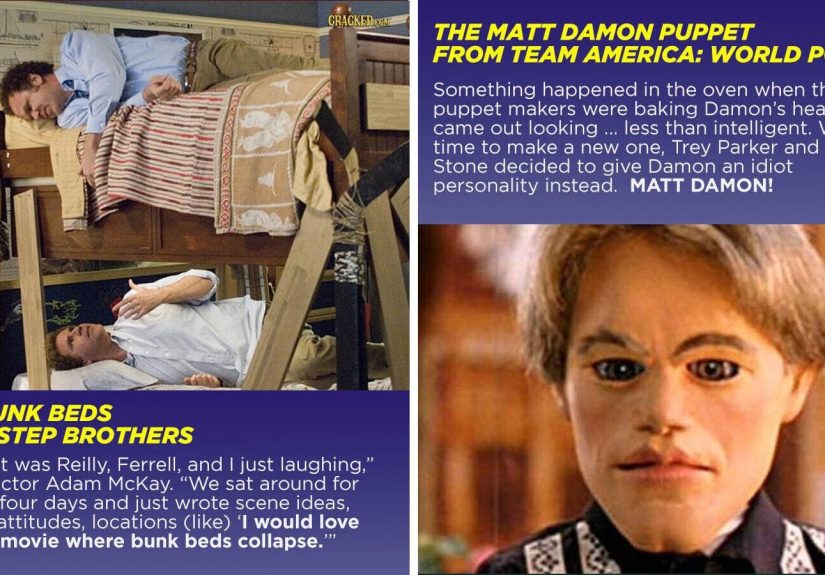
15. The Drum Set in Step Brothers (2008)
Step Brothers thrives on arrested development, and no prop captures that better than the drum set. It is the object that turns Brennan’s man-child identity into something loud, territorial, and hysterically fragile. The setup is simple: the drums are sacred, and therefore they must be destroyed. The moment works because the prop is treated with operatic seriousness by people who are emotionally twelve years old. It is a perfect 2000s comedy move: take a normal household object, inflate the emotional stakes to cartoon levels, and let immaturity do the rest.
What These Props Tell Us About 2000s Comedy
The best comedy props from the 2000s were rarely random. They were compact storytelling devices. They turned character flaws into physical objects. They made scenes easier to remember, jokes easier to repeat, and entire movies easier to summarize in one image. Say “Burn Book,” “McLovin ID,” or “jazz flute,” and people do not just remember the object. They remember the tone, the rhythm, and the exact flavor of the movie around it.
That is why these props still matter. They survived long after release dates, DVD menus, and MySpace profiles vanished into the digital graveyard. They became comedy relics from a decade that loved big personalities, quotable scripts, and visual absurdity. In other words, they are still doing their job.
The Experience of Living With These Props in Pop Culture
Part of what makes these iconic 2000s comedy props so unforgettable is that people did not just watch them in movies. They lived with them afterward. The Burn Book was not confined to Mean Girls; it became a social reference for every petty group chat, yearbook drama, and public feud that felt way too organized for comfort. The McLovin ID left the screen and entered dorm rooms, Halloween costumes, novelty wallets, and countless jokes between friends who absolutely should have been studying. These props became conversational shortcuts, and that is a rare kind of movie magic.
They also belonged to a very specific media era. This was the peak age of rewatches on cable, unrated DVD editions, quote-heavy sleepovers, and college apartments where somebody always had one comedy playing in the background. You did not need a think piece to understand the joke. You just needed to spot the object. The tiny phone from Zoolander, the jazz flute from Anchorman, or the tater tots from Napoleon Dynamite could trigger an entire scene in your head before anyone even said a line. That kind of recognition made these movies feel communal.
There was also something deeply satisfying about how tactile these props were. Modern comedies often lean on text bubbles, apps, and digital interfaces, which can be funny but do not always feel memorable in the same way. The 2000s loved objects you could carry, wave around, throw, hide in a pocket, or dramatically hold up in front of a horrified audience. That physicality made the humor land harder. A fake ID is funnier when someone has to hand it over with trembling confidence. A satchel is funnier when Alan wears it like it belongs in a high-fashion campaign. A drum set is funnier when it becomes the emotional center of a grown man’s existence.
These props also helped define who people thought they were. Entire personalities were built around quoting Elle Woods, defending Ron Burgundy, or insisting that tater tots were a legitimate food group. Fans did not only love these objects because they were funny. They loved them because the objects represented a vibe. The Burn Book was savage confidence. The White Castle bag was chaotic loyalty. The guitar in School of Rock was messy passion. The crown in Miss Congeniality was transformation with a touch of glitter.
And maybe that is the biggest reason these 2000s comedy props still matter: they remind us of a time when studio comedies were bold, visual, and unafraid to build an entire joke around one beautifully dumb item. They were not trying to go viral. They just happened to create objects that people wanted to remember, repeat, and carry into real life. Years later, that still feels pretty fetch, even if we were specifically told to stop trying to make fetch happen.
Conclusion
The funniest 2000s comedies did not rely on dialogue alone. They knew the power of a perfectly chosen object. These props made jokes more visual, characters more memorable, and scenes more quotable. They helped build worlds where one notebook could destroy a hierarchy, one fake ID could become immortal, and one flute could somehow count as seduction. That is not just good prop design. That is comedy history.





 Close
Close