
Table of Contents >> Show >> Hide
- When the Trailer Spoils Its Own Movie
- Marketing That Collides with Real-World Tragedy
- Offensive Jokes, Identity Politics, and Representation Backlash
- Brand Confusion, Lawsuits, and Corporate Headaches
- Too Intense for the Intended Audience
- What These Controversial Movie Trailers Have in Common
- Personal Takeaways: How to Watch (and Cut) Trailers Smarter
Movie trailers are supposed to sell the film, not start a public-relations fire.
Yet every few years, a teaser or TV spot crosses a line – spoiling a twist,
rubbing salt in a fresh wound, or accidentally igniting an international incident.
The result: angry headlines, think pieces, lawsuits, bans, and that dreaded phrase
every studio fears – “ too soon.”
This guide breaks down 18 controversial movie trailers – many of them collected from
fan voting lists and industry coverage – and explains what went wrong in each case.
From horror jump scares banned on YouTube to a pink blockbuster clashing with
geopolitics, these controversial movie trailers show just how thin the line is
between clever marketing and complete meltdown.
When the Trailer Spoils Its Own Movie
1. Terminator Genisys (2015)
Sometimes a controversial movie trailer doesn’t offend anyone – it just offends
basic storytelling. The second trailer for Terminator Genisys did the
unthinkable: it gave away the movie’s biggest twist, revealing John Connor’s
fate and a third-act plot turn that the director had intended as a huge surprise.
The studio reportedly wanted a “game-changing” hook to convince skeptical fans
this wasn’t just another lazy reboot, but audiences and critics blasted the trailer
for spoiling its own movie. Even the director later said he’d staged those scenes
assuming nobody would see them until opening night.
2. Yesterday (2019)
On paper, Yesterday has a harmless high-concept premise: a struggling
musician wakes up in a world where only he remembers the Beatles. The trailer
leaned into romantic comedy territory and prominently featured Ana de Armas as a
charming love interest in a talk-show sequence. Then the movie came out… and her
entire character had been cut. Two fans who rented the film specifically to see her
sued Universal for false advertising, arguing the trailer misled them. A federal
judge agreed that movie trailers can be considered commercial advertising, putting
Hollywood on notice that misleading trailers can have real legal consequences.
3. Tulip Fever (2017)
Tulip Fever didn’t just push the envelope – it mailed it to late-night cable.
The U.S. TV spot for this period drama crammed in steamy sex scenes, nudity, and
highly suggestive imagery. Broadcasters balked, and the trailer was deemed too racy
for television. It was effectively banned from standard TV rotations and relegated
to age-restricted online platforms instead. The controversy probably generated more
buzz than the movie’s box office ever did, but it also reminded marketers that an
R-rating for the film doesn’t mean your 30-second promo can play between family
sitcoms.
Marketing That Collides with Real-World Tragedy
4. United 93 (2006)
The trailer for United 93, a dramatization of one of the flights hijacked on
9/11, was always going to be sensitive. But in the mid-2000s, for many audiences the
pain was still raw. The trailer showed panicked passengers and hijackers in action,
and some viewers suffered panic attacks or broke down in tears when it played
unannounced before other movies. A Manhattan theater pulled the trailer entirely
after multiple complaints, and critics debated whether the marketing was an honest
preview of a serious film or an exploitative ambush for unsuspecting moviegoers.
5. Gangster Squad (2013)
The original Gangster Squad trailer ended with a shocking sequence: armed
gangsters stand behind a movie screen and open fire into a crowded theater. Then,
in July 2012, a gunman murdered and injured dozens of people in a real movie theater
during a screening of The Dark Knight Rises. Suddenly, the fictional
scene looked horrifyingly similar to real-life tragedy. Warner Bros. pulled the
trailer, scrubbed it from circulation as best they could, and re-edited the film to
remove the sequence. Here, the controversial trailer wasn’t malicious – just terribly
unlucky and painfully ill-timed.
6. The Watch (2012)
Ben Stiller’s alien-invasion comedy started life as Neighborhood Watch.
The teaser poster and trailer leaned heavily on neighborhood-watch imagery: a street
sign riddled with bullet holes, a tough-guy suburban patrol vibe. Then the killing
of Trayvon Martin by a self-appointed neighborhood watchman became a national flash
point. Suddenly, the marketing campaign felt grotesquely out of step. The studio
pulled posters and teaser trailers from Florida theaters, rebranded the movie as
The Watch, and tried to convince the public that this was, in fact, just a
broad sci-fi comedy and not a tone-deaf riff on a fresh real-world tragedy.
Offensive Jokes, Identity Politics, and Representation Backlash
7. The Dilemma (2011)
The Dilemma might be remembered less for its plot than for 30 seconds of its
first trailer. Vince Vaughn’s character pitches a car idea by calling electric cars
“gay” – then doubles down with a clumsy clarification that he doesn’t mean
“homosexual gay,” just “lame.” That was enough to trigger cable-news segments,
condemnation from LGBTQ+ advocates, and public pushback from journalists. The studio
eventually recut the trailer to remove the slur, but not before the controversy
bogged down the film’s release in debates over lazy, punch-down humor.
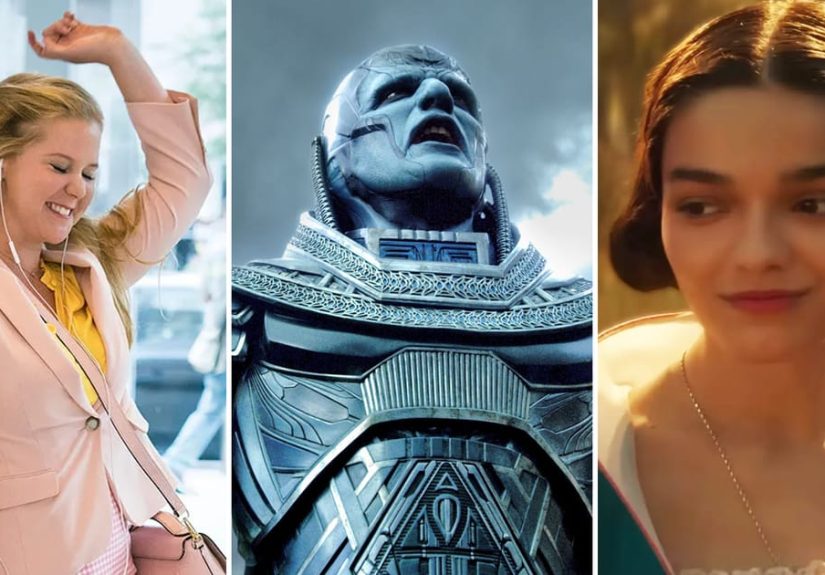
8. I Feel Pretty (2018)
The trailer for Amy Schumer’s I Feel Pretty was meant to sell a body-positive
comedy: a woman hits her head and suddenly sees herself as beautiful, gaining
confidence and going after the life she wants. Many viewers, however, read the
trailer as suggesting women can only feel empowered if they look a certain
way. Critics, therapists, and body-positivity advocates accused the trailer of
reinforcing harmful beauty standards rather than subverting them. The filmmakers and
Schumer later argued that the full movie’s message is more nuanced, but the initial
trailer sparked weeks of online think pieces and social-media pile-ons.
9. X-Men: Apocalypse (2016)
In the trailer for X-Men: Apocalypse, the villain calmly boasts that he’s
been worshipped as various gods throughout history – including the Hindu deity
Krishna. That throwaway line caused genuine offense to Hindu groups, who argued that
casually associating a revered religious figure with a genocidal supervillain was
disrespectful. Representatives formally asked the studio to remove the reference.
Fox ultimately cut the Krishna line from the final film, but the trailer had already
done its job of stirring controversy around religious representation in superhero
blockbusters.
10. The Great Wall (2017)
When the trailer for The Great Wall dropped, it leaned hard on Matt Damon as
the face and voice of the movie, despite the story being set in ancient China with a
mostly Chinese cast. Many viewers saw the marketing and immediately cried
“whitewashing,” arguing that the trailer framed Damon as a white savior in a
narrative that didn’t need him at the center. The director later pushed back,
explaining that Damon’s character was one of several heroes and not replacing a
Chinese lead, but the damage was done – the trailer became Exhibit A in ongoing
debates about Hollywood’s representation problem.
11. Barbie (2023)
You wouldn’t expect a pastel-pink comedy about dolls to get banned over maritime
borders, but here we are. A shot in the marketing for Barbie shows a
hand-drawn world map with a dashed line in the South China Sea area. Vietnamese
authorities argued that the map resembled China’s controversial “nine-dash line”
territorial claim and banned the film. The studio responded that the doodle was just
a child-like crayon scribble charting Barbie’s journey, not a serious geopolitical
statement. Regardless of intent, that tiny background detail turned a fun trailer
into a flashpoint in international politics.
12. Snow White (2025)
Disney’s live-action Snow White had controversy baked in long before its
release. The trailer showcasing Rachel Zegler in the title role triggered backlash
from some fans who insisted the character should literally have “skin white as snow.”
Others focused on updated dwarfs, CGI choices, or Zegler’s past comments about the
original 1937 film. The trailer’s YouTube debut was hammered with dislikes and
spawned weeks of angry videos, boycotts, and culture-war debates about “wokeness,”
race, and respect for classic IP. By the time the movie came out, its marketing
campaign felt less like a fairy tale and more like a stress test of modern fandom.
Brand Confusion, Lawsuits, and Corporate Headaches
13. The Happytime Murders (2018)
The red-band trailer for The Happytime Murders proudly flashed the tagline
“No Sesame. All Street.” – a wink at the fact that this extremely R-rated puppet
noir was created by Jim Henson’s son. Sesame Workshop was not amused. Fearing that
parents might think the film was officially connected to Sesame Street, the
company sued the producers, arguing that the tagline tarnished their family-friendly
brand. A judge disagreed and ruled against Sesame Workshop, but the lawsuit ensured
that the trailer – with its foul-mouthed, drug-using puppets – got far more coverage
than a modest raunchy comedy normally would.
14. The Tigger Movie (2000)
This one is proof that even G-rated marketing can cause a stir. A trailer for
Disney’s The Tigger Movie used the upbeat chorus of Third Eye Blind’s
“Semi-Charmed Life” over footage of bouncing cartoon animals. Unfortunately, the
full song’s lyrics are very much not G-rated – they reference crystal meth and
explicit sexual content. Once people pointed out what the track was actually about,
Disney had to answer awkward questions about how that song got cleared in the first
place. The trailer only used the harmless “doot-doot-doot” hook, but the juxtaposition
was controversial enough to become a minor PR headache.
15. Megalopolis (2024)
Francis Ford Coppola’s long-gestating epic Megalopolis already arrived with
baggage, but its trailer added a brand-new scandal. In an attempt to position the
film as a misunderstood masterpiece, the trailer splashed glowing review quotes
across the screen – except many of those quotes were completely fake, paired with the
names of real critics and outlets. When journalists noticed, the distributor pulled
the trailer and issued an apology, admitting they had “screwed up.” It later emerged
that some of the bogus blurbs were AI-generated, making the trailer a case study in
how not to use AI in movie marketing.
16. The Creator (2023)
In the sci-fi film The Creator, artificial intelligence drops a nuclear bomb
on Los Angeles. The trailer shows the blast – but instead of CGI, it used real
footage of the 2020 Beirut explosion, which killed hundreds of people and devastated
Lebanon’s capital. Once viewers recognized the real-world imagery, the backlash was
swift. Critics accused the marketing team of repurposing real tragedy as sci-fi
spectacle. The director later said the footage was originally used as temporary
visual-effects reference and was never intended to appear in the finished movie, but
somehow remained in the trailer cut. Regardless of the internal mishap, audiences
were understandably furious that actual disaster footage had been dropped into a
fictional war montage.
Too Intense for the Intended Audience
17. The Nun (2018)
The Nun embraced viral marketing with a six-second YouTube ad that became
infamous. The teaser faked a volume icon on screen, encouraging viewers to turn their
sound up – then abruptly slammed them with a deafening jump scare as the demonic nun
lunged at the camera. It was brutally effective and phenomenally annoying. After
complaints that the ad was too frightening and violated YouTube’s “shocking content”
policy, the platform banned the teaser. The controversy actually helped sell the
movie, but it also cemented the idea that there is such a thing as going too
far with unskippable jump-scare ads.
18. The Mechanic (2011)
Jason Statham’s The Mechanic is exactly what you’d expect: lots of guns, lots
of explosions, lots of stoic glaring. The trailer highlighted all of that – and then
someone programmed it to air during an episode of Glee. Parents were not
thrilled to have their musical-loving kids ambushed with graphic violence in the
ad break. In the UK, the Advertising Standards Authority received complaints and
concluded that the violent trailer was inappropriate for a timeslot where many
children were watching. The spot was banned from airing in that context, turning a
standard action trailer into a minor morality tale about scheduling and audience
expectations.
What These Controversial Movie Trailers Have in Common
Looking across these 18 controversial movie trailers, a few patterns emerge:
-
Context matters more than content. The same footage can feel
“fun” or “offensive” depending on when and where it appears.
Gangster Squad and The Watch became controversial not because
audiences suddenly discovered violence or guns existed, but because their imagery
collided with fresh, real-world tragedies. -
Authenticity is non-negotiable. Trailers that spoil endings,
misrepresent the tone, or feature actors who were cut (Terminator Genisys,
Yesterday) erode trust. Once audiences feel tricked, they don’t just
complain – they sue, boycott, and drag your brand online. -
Identity and representation are under a microscope. From casting
choices in Snow White and The Great Wall to religious and
cultural references in X-Men: Apocalypse and Barbie, audiences
are hyper-aware of how people and cultures are portrayed. A single line or map
doodle can carry huge symbolic weight. -
Shock has a shelf life. The jump-scare ingenuity of
The Nun and the raunch of Tulip Fever got people talking, but
platforms, regulators, and broadcasters pushed back. “Viral at any cost” might
deliver short-term attention, but it can easily cross into “banned for being
obnoxious.”
In short, the most controversial movie trailers usually aren’t the ones with the
biggest explosions – they’re the ones that collide with ethics, trauma, identity, or
audience expectations in a way the marketers didn’t fully think through.
Personal Takeaways: How to Watch (and Cut) Trailers Smarter
If you’ve been going to the movies for a while, chances are you’ve had at least one
“I did not sign up for this” trailer moment. Maybe you took your kid to a family
comedy and suddenly found yourself elbow-deep in horror imagery. Maybe you watched a
rom-com trailer, bought tickets, and realized in the theater that half the scenes
you loved in the ad weren’t even in the movie. Controversial movie trailers don’t
just exist in headlines – they show up in your evening plans, too.
As a viewer, one useful habit is to pay attention to how a trailer makes you feel
after the initial rush. If you walk away thinking, “Wow, that gave away way
too much,” you’re probably right. Spoiler-heavy promos like Terminator Genisys
can temporarily boost awareness, but they often rob you of the main reason you go to
the theater: discovery. When you sense a trailer is oversharing, it can be healthy to
hit pause on watching subsequent trailers for that movie and go in as blind as
possible.
It’s also worth noticing which trailers seem out of sync with the room you’re in.
A violent action spot dropped into a block of family programming, or a hyper-graphic
horror teaser before a gentle PG movie, can leave the audience more annoyed than
excited. That mismatch is exactly what got The Mechanic and
The Nun in trouble: the marketing wasn’t just intense – it was intense in
front of the wrong people. If you’re a parent, that might mean being ready to distract
your kid, use the classic “let’s grab popcorn now” move during trailers, or stick to
specific chains and showtimes that tend to be more cautious.
For anyone working in marketing or content creation, these 18 controversial movie
trailers feel like a crash course in what not to do. It’s tempting to think
“controversy equals free publicity,” but most of the examples above created the wrong
kind of noise. Using real disaster footage like The Creator did, or faking
critic quotes like Megalopolis, may look edgy on a mood board, but they
erode the basic trust your audience needs to even consider buying a ticket. Once
people decide you’re manipulative, they’ll judge everything you release through that
lens.
On the flip side, these misfires can inspire better practices. Ethical trailer
editors now think harder about what’s “fair game” to show and how it might land in
different countries and cultures. Is that joke punching down at a vulnerable group?
Is that background map or line of dialogue going to drag your movie into a geopolitical
dispute? Is that clever jump scare going to traumatize someone watching on a small
phone at midnight? Running a trailer past a diverse group of early viewers – and
genuinely listening – is no longer optional.
As audiences, we’re also getting savvier. People know when a trailer is heavily
leaning on nostalgia, when it’s hiding the real tone of the film, or when it’s
baiting them with controversy. Viewers can and do talk back now – through social
media, petitions, and, increasingly, through lawsuits. The message to studios is
pretty simple: respect your audience, respect real-world events, and respect the
difference between bold marketing and emotional ambush. When those lines are
honored, trailers can go back to what they do best – making us whisper, “Okay, now
that I have to see.”




 Close
Close