
Table of Contents >> Show >> Hide
- Table of Contents
- How to Choose the Right Heart-Leaf Plant (Without Breaking Up Later)
- Quick Care Basics for Plants With Heart-Shaped Leaves
- 20 Plants With Heart-Shaped Leaves You Can Grow
- 1) Heartleaf Philodendron (Philodendron hederaceum)
- 2) Golden Pothos (Epipremnum aureum)
- 3) Sweetheart Hoya (Hoya kerrii)
- 4) String of Hearts (Ceropegia woodii)
- 5) Flamingo Flower (Anthurium andraeanum)
- 6) Florist Cyclamen (Cyclamen persicum)
- 7) Caladium (Caladium hybrids)
- 8) Elephant Ear (Colocasia and relatives)
- 9) Arrowhead Vine (Syngonium podophyllum)
- 10) Ornamental Sweet Potato Vine (Ipomoea batatas)
- 11) Foamflower (Tiarella cordifolia)
- 12) Siberian Bugloss (Brunnera macrophylla)
- 13) Heartleaf Bergenia (Bergenia cordifolia / B. crassifolia)
- 14) Wild Ginger (Asarum canadense)
- 15) Spotted Deadnettle (Lamium maculatum)
- 16) Common Blue Violet (Viola sororia)
- 17) Eastern Redbud (Cercis canadensis)
- 18) Katsura Tree (Cercidiphyllum japonicum)
- 19) Northern Catalpa (Catalpa speciosa)
- 20) American Basswood / American Linden (Tilia americana)
- Common Mistakes (And How to Fix Them Fast)
- Growing Experiences: What People Learn the Hard Way (About 500+ Words)
- Conclusion
Some people collect vinyl records. Others collect mugs. Plant people? We collect leaves shaped like tiny green hearts and then pretend we’re “just decorating.”
If you’re hunting for plants with heart-shaped leaves (a.k.a. heartleaf plants, cordate foliage, botanical valentines), you’re in the right place.
This guide rounds up 20 growersfrom easy houseplants to backyard treesplus practical care tips so your leafy love story doesn’t end in a dramatic wilt.
How to Choose the Right Heart-Leaf Plant (Without Breaking Up Later)
Before you bring home a plant and name it “Cupid,” match the plant to your actual life. Not your fantasy life where you mist daily and rotate pots like a museum curator.
Ask yourself:
- Light: Do you have bright, indirect light… or “I can read a text here” light?
- Watering style: Are you an over-lover (watering too often) or a forgetful romantic (watering once a month)?
- Pets & kids: Many aroids are irritating/toxic if chewed. If you have curious nibblers, pick wisely or place plants out of reach.
- Indoor vs. outdoor: Some heart-shaped leaf plants are perfect outdoors in summer but need to overwinter indoors in colder zones.
- Mess tolerance: Trees drop leaves. Vines drop leaves. Some plants drop your confidence. Choose your chaos level.
Quick Care Basics for Plants With Heart-Shaped Leaves
Heart-shaped foliage shows up across totally different plant families, so there’s no single magic routine. But these rules cover most of the popular picks:
- Most houseplant “hearts” want bright, indirect light (near a window, not baking in it).
- Drainage is non-negotiable: a pot with holes + airy mix prevents the #1 killer: soggy roots.
- Water by feel: check the top inch or two of soil. Water when it’s dry-ish, not when you “feel like nurturing.”
- Humidity helps for tropical types, but don’t panicmany adapt to average indoor air if watering and light are right.
- Prune to shape: trailing plants get leggy. Trim, propagate, repeat. Free plants are the best plants.
20 Plants With Heart-Shaped Leaves You Can Grow
Here are the stars of the heart-leaf worldmixing indoor favorites, shade groundcovers, and statement trees. Each one is genuinely growable (not just “pretty on the internet”).
1) Heartleaf Philodendron (Philodendron hederaceum)
If houseplants had an “employee of the month,” this one would win a lot. Heartleaf philodendron is a trailing classic with glossy green hearts that tolerate real-life conditions.
Hang it, trail it, or train it up a moss pole if you want a more vertical look.
- Light: Medium to bright indirect; low light slows growth.
- Water: Let the top inch dry, then water thoroughly.
- Pro tip: Pinch vines to encourage branchingthink “haircut,” not “tragedy.”
2) Golden Pothos (Epipremnum aureum)
Pothos is the plant equivalent of that friend who thrives despite questionable decisions. Juvenile leaves often look heart-shaped, and the vine grows fastgreat for shelves, hanging baskets, and beginners.
One important note: in warm, frost-free climates it can escape cultivation, so keep it indoors or dispose of cuttings responsibly.
- Light: Bright indirect is best; tolerates lower light.
- Water: When the pot feels lighter and the top soil is dry.
- Pro tip: More light = more variegation (usually). Low light = greener leaves.
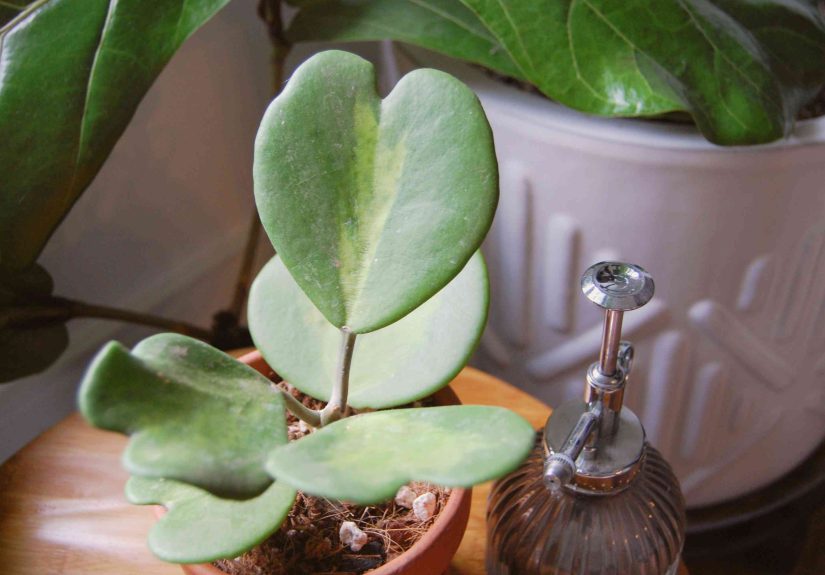
3) Sweetheart Hoya (Hoya kerrii)
The famous “single heart in a pot” is cute, but the full plant is even better: a slow-growing, succulent-ish vine with thick, waxy heart leaves. It’s the low-water option for commitment-phobes.
Give it time. This is not a fast relationship.
- Light: Bright, indirect light; some gentle sun is fine.
- Water: Let soil dry more between waterings than most tropicals.
- Pro tip: Use a chunky, well-draining mix to avoid root rot.
4) String of Hearts (Ceropegia woodii)
Tiny silver-green hearts tumble down in long strandsperfect for a high shelf where it can “waterfall.” It’s a succulent vine, so it prefers drying out between waterings.
Overwatering is the quickest way to turn those hearts into heartbreak.
- Light: Bright light; some direct sun helps keep it full.
- Water: Water only when dry; excellent drainage is critical.
- Pro tip: If it gets leggy, trim and root cuttings back into the pot for a fuller look.
5) Flamingo Flower (Anthurium andraeanum)
Anthurium is known for glossy, long-lasting blooms (technically spathes), but its foliage can also be beautifully heart-shaped. It likes a more “orchid-like” approach: airy media, humidity, and steady care.
- Light: Bright indirect light (too dark = fewer flowers).
- Water: Keep slightly moist, never swampy.
- Pro tip: Coarse, well-draining media (bark/perlite blends) keeps roots happy.
6) Florist Cyclamen (Cyclamen persicum)
Cyclamen brings heart-shaped leaves with silver patterning plus blooms that look like little butterflies doing jazz hands. The trick is temperature: cyclamen prefers cool conditions,
making it a winter hero rather than a summer beach plant.
- Light: Bright light; avoid hot afternoon sun through glass.
- Water: Keep soil lightly moist; avoid soaking the crown.
- Pro tip: Cooler rooms help it bloom longerthink “sweater weather,” not “sauna.”
7) Caladium (Caladium hybrids)
Caladium leaves are basically living stained glassoften heart-shaped and wildly colored. Grow them as houseplants or seasonal outdoor stars.
They’re warm-weather performers and may go dormant when light or temps drop.
- Light: Bright shade to filtered sun (variety dependent).
- Water: Even moisture while growing; reduce when dormant.
- Pro tip: Don’t rush them outsidewait for warm nights so they actually grow instead of sulking.
8) Elephant Ear (Colocasia and relatives)
Big, bold, heart-like leaves that scream “tropical vacation.” Many elephant ears have leaves that read as heart-shaped/sagittate,
and they love warmth, moisture, and rich soil. They’re dramatic, but in a good way.
- Light: Full sun to part shade (check variety).
- Water: Consistently moist; they’re not “let it dry out” plants.
- Pro tip: Give them spacesmall plants nearby may end up living in the shade of a leaf the size of a serving tray.
9) Arrowhead Vine (Syngonium podophyllum)
Syngonium starts with arrow/heart-ish juvenile leaves and matures into more divided forms. It’s a flexible houseplant:
trail it, climb it, or keep it bushy with pruning. In warm regions it can spread outdoorsbest kept contained.
- Light: Medium to bright indirect.
- Water: Water when the top portion of soil dries.
- Pro tip: Regular pinching keeps it compact instead of “one long vine seeking meaning.”
10) Ornamental Sweet Potato Vine (Ipomoea batatas)
For fast, colorful heart-shaped foliage outdoors, sweet potato vine is a champion. Cultivars range from chartreuse to near-black,
and they spill beautifully from containers or spread as groundcover. It’s typically grown as an annual in cooler climates.
- Light: Sun to part shade (more sun usually = stronger color).
- Water: Regular water; don’t let containers bake dry.
- Pro tip: One plant can fill a pot quicklyplan for “sprawl.”
11) Foamflower (Tiarella cordifolia)
A shade-garden favorite with heart-shaped leaves and airy spring flowers. Foamflower looks delicate, but it’s tough when planted in the right spot:
humus-rich soil and consistent moisture.
- Where: Outdoor perennial (often USDA Zones 3–8, depending on selection).
- Light: Dappled shade to full shade.
- Pro tip: Trim winter-damaged foliage in early spring for a fresh flush of leaves.
12) Siberian Bugloss (Brunnera macrophylla)
Brunnera’s big, heart-shaped leavesespecially silvery cultivarslight up shady beds like someone turned on a soft lamp.
Blue spring flowers add bonus charm without demanding constant attention.
- Where: Outdoor perennial (commonly Zones 3–8).
- Light: Part shade; more shade in hot climates.
- Pro tip: Keep soil evenly moist for the prettiest foliage (crispy edges are usually a moisture issue).
13) Heartleaf Bergenia (Bergenia cordifolia / B. crassifolia)
Bergenia is the “evergreen bouncer” of the shade borderthick, leathery heart-shaped leaves that shrug off a lot.
In cool weather, foliage can bronze or redden, adding winter interest.
- Where: Outdoor perennial (often Zones 3–8).
- Light: Sun to shade (best color often with some sun in cooler regions).
- Pro tip: It tolerates a lot, but hates sitting in soggy soil all winter.
14) Wild Ginger (Asarum canadense)
Not culinary ginger, but a woodland groundcover with velvety, heart-to-kidney-shaped leaves that form a lush carpet.
It’s a native-plant choice that looks fancy without acting fancy.
- Where: Outdoor perennial (commonly Zones 3–7).
- Light: Shade to part shade.
- Pro tip: Pair it with spring bulbs or ferns for a layered woodland look.
15) Spotted Deadnettle (Lamium maculatum)
Lamium is a shade groundcover workhorse: heart-shaped leaves (often silver-variegated) and small flowers that keep things interesting.
It spreads, but in the “helpful rug” waygreat for filling bare spots under trees.
- Where: Outdoor perennial in many regions (often Zones 3–8).
- Light: Part shade to shade (morning sun is usually okay).
- Pro tip: If it gets too enthusiastic, shear it backLamium forgives quickly.
16) Common Blue Violet (Viola sororia)
A native violet with glossy heart-shaped leaves and cheerful purple blooms. Some gardeners call it a weed; others call it “free groundcover.”
Both groups are, technically, correct.
- Where: Outdoor perennial across much of the U.S. (often Zones 3–9).
- Light: Sun to shade (best in part shade with moisture).
- Pro tip: Let it naturalize in a “wild corner” if you want charm without lawn arguments.
17) Eastern Redbud (Cercis canadensis)
Redbud earns its reputation: spring flowers followed by heart-shaped leaves that make the canopy look like it’s been punched with a heart-shaped paper craft tool.
It’s a fantastic small tree for landscapes.
- Where: Outdoor tree (commonly Zones 4–9, depending on variety).
- Light: Full sun to part shade; more sun typically means better flowering.
- Pro tip: Young trees benefit from thoughtful pruning to develop strong structure.
18) Katsura Tree (Cercidiphyllum japonicum)
Katsura has rounded, heart-shaped leaves and famously fragrant fall foliagepeople describe the scent as cinnamon or burnt sugar.
Plant one and you may get seasonal “Who’s baking?” comments from neighbors. (You can take credit. We won’t tell.)
- Where: Outdoor tree (often Zones 4–8).
- Light: Full sun to part shade; appreciates consistent moisture.
- Pro tip: Mulch the root zone to buffer summer heat and keep moisture steady.
19) Northern Catalpa (Catalpa speciosa)
Big heart-shaped leaves, showy white flowers, and long bean-like podscatalpa has a lot going on, and it’s not shy about it.
It’s also tough, making it a good option where you need a shade tree that can handle less-than-perfect conditions.
- Where: Outdoor tree (often Zones 4–8).
- Light: Full sun to part shade.
- Pro tip: Expect some mess (pods, leaves). If you crave spotless patios, maybe don’t plant it over the patio.
20) American Basswood / American Linden (Tilia americana)
Basswood is a classic North American shade tree with heart-shaped leaves and a calm, stately presence.
It can get big, so it’s best for yards with room to let it mature without arguing with power lines.
- Where: Outdoor tree (commonly Zones 3–8).
- Light: Full sun to part shade.
- Pro tip: Give it space and consistent watering while young; established trees are more resilient.
Common Mistakes (And How to Fix Them Fast)
Leggy vines with tiny leaves
This is usually a light problem, not a “your plant hates you” problem. Move the plant closer to bright, indirect light and prune back long runners.
For pothos and philodendron, rooting cuttings in water and planting them back into the pot makes the plant look instantly fuller.
Yellow leaves
Yellowing often means too much water or soil staying wet too long. Check drainage, empty saucers, and let the pot dry a bit more between waterings.
For cyclamen, yellow leaves can also happen if the plant is too warm or too drycooler air is the secret sauce.
Brown, crispy edges
Frequently caused by inconsistent moisture, low humidity, or hot drafts. Keep plants away from heating vents, water more evenly,
and consider a pebble tray for humidity-loving bloomers like cyclamen and anthurium.
Outdoor “hearts” that disappear in winter
Caladium and elephant ears may go dormant. That’s normal. Reduce watering, store bulbs/tubers if needed, and bring them back when warmth returns.
Think of it as the plant taking a seasonal napnot ghosting you.
Growing Experiences: What People Learn the Hard Way (About 500+ Words)
Heart-shaped leaves are charming, but the real romance is learning what each plant is trying to tell youusually by doing the opposite of what you hoped.
A common beginner story starts with a pothos placed in the dimmest corner of the house because “it’s low light tolerant.”
It is tolerant. It’s also quietly negotiating a smaller-leaf lifestyle. When moved closer to a window, the same plant often responds with bigger leaves,
faster growth, and that satisfying moment where you realize “tolerant” is not the same as “thriving.”
Then there’s the overwatering sagaespecially with string of hearts and sweetheart hoya. These are plants with thick leaves designed to store moisture,
which means they’re emotionally prepared for you to forget a watering or two. They are not prepared for constantly damp soil.
Many growers only truly learn “excellent drainage” after seeing a once-perfect vine drop leaves like it’s unfollowing you in real time.
The fix is rarely complicated: smaller pots, chunkier mixes, and the courage to let soil dry before watering again.
Blooming heart-leaf plants come with their own plot twists. Cyclamen is famous for looking incredible in winter and then frightening people in spring,
when leaves yellow and the plant slows down. The lesson: not every plant follows a straight line of “grow forever.”
Some plants are seasonal performers. Cyclamen often wants cool temperatures and careful watering around the crown; when it’s warm,
it may sulk, rest, or pause. People who keep it cool and avoid heat vents tend to see longer bloom cycles and healthier leaves.
Outdoor heart-shaped foliage teaches patience in a different way. Caladium and elephant ears can be late to start, especially if nights are cool.
Planting too early can lead to weeks of nothing happening, which is a special kind of gardening suspense.
Waiting for warm soil and warm nights often turns a slow start into a strong seasonbigger leaves, better color, and fewer complaints from the tubers.
Sweet potato vine is the opposite: it can explode with growth, spill out of containers, and conquer neighboring plants like it pays rent.
The experience here is learning to prune without guilt. Cutting it back doesn’t “hurt” it; it often makes the plant branch more and look better.
Trees bring the long-game heart-leaf story. A young redbud might look like a twig with ambition for a year or two, then suddenly behave like a real tree.
Gardeners often learn to focus on good planting practicescorrect depth, proper watering while establishing, and light structural pruningrather than expecting instant shade.
Katsura adds a sensory reward: when fall arrives, the leaf scent can surprise people who didn’t know trees could smell like dessert.
Catalpa teaches the reality of “showy” trees: big leaves and long pods can mean more cleanup. The happy ending is choosing the right locationaway from patios,
over driveways, or anywhere you’d prefer not to sweep like you’re training for a broom Olympics.
The biggest lesson across all heart-shaped leaf plants is simple: match the plant to the place, not the place to the plant.
When light, water, and temperature align with what the plant evolved for, care gets dramatically easier. And when it doesn’t?
Wellat least you’ll have a good story, a few cuttings, and the wisdom to read the next leaf’s “love letter” more accurately.
Conclusion
The best heart-shaped leaf plants are the ones you’ll actually enjoy growingnot just admiring for five minutes before realizing they need a rainforest.
Start with forgiving indoor classics (heartleaf philodendron, pothos, string of hearts), add seasonal drama (caladium, cyclamen),
then graduate to landscape hearts (redbud, katsura, catalpa, basswood) if you’ve got the space. Your future self will thank youand your home will look like it’s
quietly cheering you on with leafy little hearts.







 Close
Close