
Table of Contents >> Show >> Hide
- What “basic art skills” actually are (and why sketching works)
- Before you start: a tiny toolkit that won’t scare your wallet
- 20+ sketching ideas for beginners (each builds a core skill)
- Line confidence and control
- Seeing shapes, edges, and proportion
- Value, light, and form (the stuff that makes drawings look 3D)
- Perspective and space (yes, it can be friendly)
- People and movement (without starting with “draw a perfect face”)
- Everyday sketchbook prompts (easy, real-life, highly drawable)
- A beginner-friendly practice plan (15 minutes a day)
- Common beginner problems (and fixes that don’t involve crying)
- How to tell you’re improving (even when it doesn’t feel like it)
- Conclusion: build skills by collecting small wins
- Beginner sketching experiences (500+ words of real-life “this is how it actually feels”)
Starting a sketching habit can feel a little like joining a gym where every machine has exactly zero instructions.
The good news: you don’t need a fancy studio, “natural talent,” or a pencil blessed by the art gods. You need
a handful of repeatable sketching ideas for beginnerssmall exercises that quietly train your eye and hand until
your drawings start looking like what you meant (instead of what your pencil panicked into doing).
This guide gives you 20+ beginner sketching prompts and drawing exercises that build the real foundations:
line confidence, observation, proportion, value (light and dark), perspective, and visual storytelling. You’ll
get specific examples, quick “how-to” steps, and a few sanity-saving remindersbecause yes, your first page might
look like a confused giraffe. That’s normal. Welcome to art.
What “basic art skills” actually are (and why sketching works)
“Basic art skills” aren’t one magical skillthey’re a bundle of smaller skills that stack:
seeing accurately (observation), placing things correctly (proportion),
drawing clear shapes (construction), making confident marks (line control),
and showing form (value and shading). Sketching is the perfect training ground because it’s fast,
forgiving, and repeatable. You can do ten tiny studies in the time it takes to overthink one “perfect” drawing.
Think of sketching like cooking rice: you don’t “become a chef” overnightyou just make rice often enough that
you stop burning it. (And then you learn spices. And then you make a whole meal. And then your family suddenly
requests your “famous” stir-fry. Art is the same.)
Before you start: a tiny toolkit that won’t scare your wallet
You can do everything here with simple supplies. If you want a minimalist setup, try:
- One HB pencil (or a standard #2) for general sketching
- One softer pencil (like 2B–4B) for darker shading and bolder lines
- Any sketchbook you’ll actually carry (even cheap paper is fine for practice)
- White vinyl eraser (for clean lifting) or a kneaded eraser (for gentle lightening)
- Sharpener (sharp pencils = easier control)
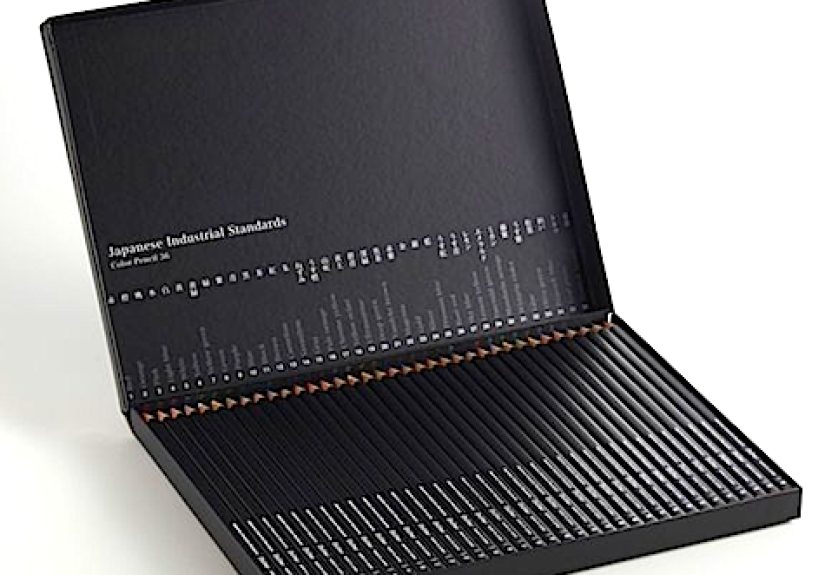
Pencil grading can sound like secret agent code, but it’s basically: H = harder/lighter,
B = softer/darker, with HB in the middle. If you only own one pencil,
HB can carry you surprisingly far.
20+ sketching ideas for beginners (each builds a core skill)
Below are beginner drawing exercises and sketchbook prompts you can rotate through. Don’t do them all in one day
unless you enjoy wrist cramps as a personality trait. Pick 2–4 per session.
Line confidence and control
-
Ghosted lines warm-up
Skill: smoother, more confident strokes.
Try this: Hover your pencil over the page and “air-draw” the line a few times, then commit. Aim for
confident motion, not slow perfection. -
Superimposed lines
Skill: consistent direction and pressure control.
Try this: Draw a straight line, then redraw it repeatedly on top without correcting mid-stroke.
Your line will wobble less over time. -
Line weight ladder
Skill: clarity and depth with simple outlines.
Try this: Draw 6 parallel lines, each slightly darker/thicker than the last. Then outline a simple
object (mug, leaf) using thicker weight on the shadow side. -
Hatching gradients
Skill: controlled shading without smudging everything into a gray fog.
Try this: Fill a rectangle from light to dark using only parallel hatch marks. Darken by adding layers,
not by pressing like you’re signing a mortgage. -
Continuous line drawings
Skill: observation and flow.
Try this: Draw your hand or a shoe without lifting the pencil. No “fixing.” It trains your brain to
keep moving instead of freezing.
Seeing shapes, edges, and proportion
-
Blind contour (a.k.a. “trust fall” drawing)
Skill: looking more than guessing.
Try this: Stare at your subject (your hand is perfect), and draw its edges without looking at the paper.
The results will be hilariousand that’s the point. You’re training attention, not creating a masterpiece. -
Pure contour (slow contour)
Skill: careful edge observation and patience.
Try this: Look at your subject for 80% of the time and draw very slowly. You’re building accuracy
through calm, not speed. -
Negative space drawing
Skill: better proportions by drawing the “spaces around” the object.
Try this: Draw the empty shapes between chair legs, between fingers, or inside a bicycle frame.
Beginners often improve instantly because it bypasses symbol-drawing (“chair = chair shape”). -
Envelope sketch (big shape first)
Skill: overall proportion before details.
Try this: Lightly “wrap” your subject in a simple outer shape (like a polygon). Then carve inward.
This prevents the classic beginner move: perfect eyelashes on a face that doesn’t fit on the head. -
Unit measuring with a pencil
Skill: relative size comparison (proportion).
Try this: Hold your pencil at arm’s length, pick one “unit” (like the mug’s width), and compare other
parts to that unit (height, handle size, rim angle). -
Upside-down reference sketch
Skill: seeing shapes instead of labels.
Try this: Turn a simple photo upside down and copy it. Your brain stops shouting “EYE! NOSE!”
and starts noticing angles and curves.
Value, light, and form (the stuff that makes drawings look 3D)
-
Six-step value scale
Skill: controlling light-to-dark transitions.
Try this: Make 6 boxes from white paper to darkest dark. Practice smooth transitions by layering
graphite instead of smashing it into the paper. -
Egg or sphere shading study
Skill: turning form with value.
Try this: Place an egg under a lamp. Identify highlight, midtone, core shadow, reflected light,
and cast shadow. Shade slowly, keeping edges softer on the form, sharper on the cast shadow. -
Two-value and three-value thumbnails
Skill: simplifying complex scenes.
Try this: Pick a photo and reduce it to only 2 values (light/dark), then 3 values (light/mid/dark).
It’s like learning the song before adding guitar solos. -
Texture swatches
Skill: suggesting materials (wood, metal, fabric) with marks.
Try this: Make small squares: one for denim, one for glass, one for tree bark, one for hair. Focus on
mark patterns, not tiny details. -
Fold study: crumpled paper or cloth
Skill: reading planes and shadow shapes.
Try this: Crumple a paper towel, shine a light, and draw the big shadow shapes first. Details come last.
Perspective and space (yes, it can be friendly)
-
Boxes in one-point perspective
Skill: depth with simple forms.
Try this: Draw a horizon line and one vanishing point. Sketch boxes facing you, sending depth lines
back to the vanishing point. -
“Corner of a room” sketch
Skill: basic interior perspective and straight lines.
Try this: Sit facing a room corner. Draw the big angles first: ceiling lines, floor lines, wall edges.
Add a chair after the room reads correctly. -
Ellipses: cups, bowls, and wheels
Skill: drawing circles in perspective (a lifelong quest).
Try this: Fill a page with ellipses of different sizes and “tilts.” Then sketch a mug and make the rim
ellipse match the mug’s angle. -
Cylinders from boxes
Skill: construction thinking (forms built from simple shapes).
Try this: Draw a box, then inscribe an ellipse on its top plane and extend down to form a cylinder.
Great for bottles, arms, tree trunks, and rockets (if that’s your vibe). -
Staircase thumbnails
Skill: repeating forms in space.
Try this: Sketch 5 small staircases in perspective. Don’t chase perfectionaim for “reads as stairs.”
Your brain learns patterns through repetition.
People and movement (without starting with “draw a perfect face”)
-
30–60 second gesture drawings
Skill: capturing motion and energy quickly.
Try this: Use a timer. Draw a simple line of action first, then add big shapes for ribcage and pelvis.
The goal is movement, not anatomy trivia. -
Hands: “mitten” method studies
Skill: simplifying complex forms.
Try this: Start with a mitten shape, then carve finger groups. Do 10 quick hand sketches, not one
hand sketch you hate for an hour. -
Facial feature tiles
Skill: repetition without overwhelm.
Try this: Fill a page with small boxes. In each box, draw only one thing: noses from the side, mouths,
eyebrows, eyes. Your brain builds a “visual library.” -
Clothing folds on a hanging shirt
Skill: understanding gravity and tension points.
Try this: Hang a shirt on a chair. Identify where fabric pulls (shoulders, elbows, waistband) and let
folds radiate from those areas.
Everyday sketchbook prompts (easy, real-life, highly drawable)
-
Your morning mug (five ways)
Skill: observation + ellipses + shading.
Try this: Draw it as: contour only, gesture/quick scribble, negative space, value study, and “line weight” version. -
Shoes (because they’re basically little architecture)
Skill: perspective and believable form.
Try this: Start with a simple box for the toe, then wrap the shoe with curves. -
Houseplant portraits
Skill: rhythm and repeating shapes.
Try this: Don’t draw every leaf. Draw the big flow first, then suggest clusters. -
Kitchen still life “triangle” setup
Skill: composition basics.
Try this: Arrange three objects in a triangle (apple, spoon, jar). Sketch the big shapes, then refine. -
“Five-minute memory sketch”
Skill: visual recall and simplification.
Try this: Look at a scene for 30 seconds, then turn away and sketch from memory. Check, adjust, repeat.
It’s like flashcards for your eyes.
A beginner-friendly practice plan (15 minutes a day)
Consistency beats heroic weekend marathons. Here’s a simple rotation that builds skills without burning you out:
- 3 minutes: lines/ellipses warm-up (ghosted lines, hatching, or ellipses)
- 7 minutes: one main study (negative space chair, egg value study, or room corner)
- 5 minutes: quick prompts (hands, mug, plant) or 2–3 gesture drawings
Weekly upgrade: pick one day for a slightly longer session (30–45 minutes) where you revisit an old sketch and
redraw it using the same reference. You’ll see progress faster than you “feel” it.
Common beginner problems (and fixes that don’t involve crying)
“My lines are shaky.”
Draw faster, not slower. Use your arm more than your fingers for longer strokes. Warm up with simple lines and
commit to each mark. Shaky lines usually come from hesitation.
“My proportions are off.”
Start bigger, measure relationships (height vs. width), and use negative space. Also, stop detailing early.
If the big shapes are wrong, perfect eyelashes won’t save the drawing. (They tried. They really tried.)
“My shading looks dirty.”
Build values in layers, keep a clean scrap paper under your hand, and practice a value scale regularly. Many
beginners press too hard, too earlygraphite gets shiny and stubborn, like a cat that decided it lives on your keyboard now.
“Everything looks flat.”
Check your value range (do you have real darks?), add cast shadows, and vary edges: softer transitions on round
forms, sharper edges on cast shadows.
How to tell you’re improving (even when it doesn’t feel like it)
- Your warm-ups look cleaner in fewer strokes.
- You can place big shapes faster and with less erasing.
- You notice angles and negative shapes before you start drawing.
- Your values separate more clearly (lights look lighter, darks look darker).
- You finish more sketchesquantity is a real skill.
Conclusion: build skills by collecting small wins
If you want better drawings, the secret is not a secret: do small, targeted sketches often. Rotate exercises that
train line control, observation, proportion, value, and perspective. Keep your sessions short enough that you’ll
come back tomorrow. A sketchbook isn’t a galleryit’s a gym. And you’re allowed to be sweaty in the gym.
Beginner sketching experiences (500+ words of real-life “this is how it actually feels”)
Here’s the part most beginner drawing guides politely skip: learning to sketch is an emotional sport. In week one,
your brain has extremely high standards and extremely low coordination. It’s like having the taste of a pro chef
and the cooking skills of a distracted raccoon. You know what you want the drawing to look likeand your pencil
delivers something else entirely.
The first “experience milestone” usually happens when you stop trying to draw what you think things are
and start drawing what you see. Blind contour drawings are famous for this. They’re awkward, wobbly, and
oddly liberating. When you finally accept that the point isn’t “pretty,” your attention sharpens. You notice that
your thumb has two big angles, not one smooth curve. You notice the negative space between fingers looks like a
weird triangle. And suddenly, you’re learningeven if the result looks like a cartoon hand that’s had a long day.
Around week two, most beginners discover the magic of “big shapes first.” This is the era when you sketch a mug
and realize you’ve been drawing the handle like it’s a separate creature. When you slow down to block in the mug’s
overall height-to-width ratio, then the rim ellipse, then the handle placement, the drawing becomes calmer. Not
perfectcalmer. And that matters. Calm drawings give you room to improve because you aren’t spending the whole time
fighting fires you accidentally started with a tiny, over-detailed beginning.
Week three is usually when value enters the chat, and value is… humbling. You make a value scale and realize your
“dark” is actually medium gray. You shade a sphere and wonder why it looks like a bruised ping-pong ball. Then you
move a lamp, and everything clicks: the cast shadow is sharper than you thought. The core shadow is darker than
the rest of the form shadow. Reflected light exists, and it’s not an Instagram filterit’s physics. This is often
the first time beginners feel real control, because value is measurable. You can literally compare light to dark.
That feedback loop is addictive in the best way.
Somewhere in the first month, you also learn a quiet truth: the sketchbook you carry improves your art more than
the sketchbook you protect. When you bring it to the kitchen table and draw a spoon, you get practice in reflections
and edges. When you draw your shoes by the door, you get perspective practice for free. When you sketch a plant,
you train rhythm and repetition. These everyday subjects are “beginner-friendly” not because they’re simple, but
because they’re available. Availability beats ambition.
And then there’s the weirdest experience of all: you’ll flip back a few weeks later and notice improvement you
didn’t feel at the time. Your lines are cleaner. Your proportions are less chaotic. Your shading has an actual
light source instead of “random gray decisions.” That’s when sketching becomes less like homework and more like a
superpower you’re quietly building. Not overnight. Not magically. Just one small, honest drawing at a time.





 Close
Close