
Table of Contents >> Show >> Hide
- Before You Buy Another Bin: 4 Rules That Make Storage Work
- 26 Kids' Storage Ideas to Control Clutter
- 1. The Mudroom “Landing Zone” for Shoes, Bags, and Coats
- 2. A Mini Command Center for School Papers
- 3. Cube Shelving + Bins (The Classic for a Reason)
- 4. Picture Labels for Pre-Readers
- 5. Open “Drop Bins” for Fast Cleanup
- 6. A Stuffed Animal Bean Bag Cover
- 7. Under-Bed Rolling Bins for “Big, Light” Items
- 8. Over-the-Door Pocket Organizers for Small Toys
- 9. Low Book Ledges to Display Covers
- 10. A “Library Basket” in Every Hangout Room
- 11. Clear Drawer Units for Tiny Sets
- 12. Zip Pouches for Board Game Pieces
- 13. A Rolling Cart for Art Supplies
- 14. Mason Jars (or Clear Cups) for Craft Tools
- 15. A Clipboard Wall for Rotating Artwork
- 16. The “One In, One Out” Toy Rule
- 17. A Toy Rotation System (Less Out = Less Mess)
- 18. A “Failsafe Box” for the Maybe Pile
- 19. A Dress-Up Closet with Hooks and a Single Bin
- 20. Drawer Dividers for Socks, Undies, and “Mystery Accessories”
- 21. Closet Rod Extenders (Double the Hanging Space)
- 22. Shoe Storage That Matches Your Reality
- 23. Use the Back of Doors for “Hidden” Storage
- 24. Built-Ins or a Storage Wall (Big Impact, Big Calm)
- 25. A Storage Ottoman or Bench for “Living Room Toys”
- 26. Modular Bin Systems That Grow with Your Kid
- Maintenance: The 10-Minute “Reset” That Keeps You Sane
- Real-World Experiences: What Actually Happens After You Organize (and Why That’s a Good Thing)
- Final Thoughts
Kids come with a lot of stuff. Tiny socks. Tiny shoes. Tiny action-figure shoes (why do they even have shoes?!). And yet somehow, all those small things can create a mess so big you’d swear your living room is auditioning for a reality show called “Hoarders: The Lego Edition.”
The good news: you don’t need a custom-built playroom or a magic wand. You need a storage system that matches how kids actually live: fast, messy, creative, and occasionally sticky. Below are 26 kids’ storage ideas that work in real homesbedrooms, playrooms, corners of living rooms, and “that one hallway that somehow became a backpack habitat.”
Before You Buy Another Bin: 4 Rules That Make Storage Work
Rule 1: Put storage where the mess happens
If crayons live upstairs but coloring happens at the kitchen counter, you’ve created a daily scavenger huntminus the fun prize. Store items where they’re used, even if that means “art supplies” get a drawer in the dining room.
Rule 2: Make it kid-reachable
The “best” storage is the one your child can use without asking you to open a lid, find a key, or solve a puzzle box. Low shelves, open bins, and simple labels are your cleanup dream team.
Rule 3: Fewer categories = more success
Kids are not librarians. If you create 19 micro-categories (“Dinosaurs: Cretaceous” vs. “Dinosaurs: Jurassic”), everything will end up in one bin titled “Other.” Keep categories broad: Blocks, Dolls, Cars, Art.
Rule 4: Storage should be easy to reset in 10 minutes
If cleanup requires adult-level patience and a spreadsheet, it won’t stick. Build a system you can “reset” quickly at the end of the day.
26 Kids’ Storage Ideas to Control Clutter
1. The Mudroom “Landing Zone” for Shoes, Bags, and Coats
Add hooks at kid height, a bench, and one basket per child underneath. Shoes go in the basket. Backpacks go on the hook. The goal is to stop the “shoe trail” from migrating through your entire house like an adventurous species.
2. A Mini Command Center for School Papers
Use a slim pocket organizer (or two) inside a closet door or near the entry. Assign one pocket per child: IN (new papers), OUT (things to return/sign), DONE (keep or file).
3. Cube Shelving + Bins (The Classic for a Reason)
A cube shelf with fabric bins is the “I can clean up in 90 seconds” solution. It’s flexible, easy to label, and adapts as interests change. One cube can be trains this year and science kits next year.
4. Picture Labels for Pre-Readers
If your child can’t read yet, use picture labels (or a simple icon + word). Kids clean up faster when they don’t have to guess. Bonus: it reduces the “Where does this go?” questions by approximately 9,000%.
5. Open “Drop Bins” for Fast Cleanup
Lidded bins look tidy, but lids slow kids down. Use open bins for high-traffic categories like stuffed animals, dress-up, and blocks. You can still keep it pretty with matching bins or baskets.
6. A Stuffed Animal Bean Bag Cover
This is storage that doubles as seatingand it’s oddly satisfying to zip up a mountain of plushies and call it furniture. Great for bedrooms and reading corners.
7. Under-Bed Rolling Bins for “Big, Light” Items
Think dress-up clothes, extra blankets, bulky toys, or seasonal items. Pick bins with wheels (or low-profile sliders) so kids can pull them out. Tip: keep it to 1–2 bins per bed so it doesn’t become an under-bed landfill.
8. Over-the-Door Pocket Organizers for Small Toys
Use clear pockets for tiny action figures, dolls, cars, slime accessories (yes, it has accessories), and craft supplies. It’s also a lifesaver for keeping items visible but contained.
9. Low Book Ledges to Display Covers
Kids choose books more often when they can see covers. Install a few slim picture ledges low on the wall and rotate what’s displayed. It turns books into decorand makes bedtime reading easier to sell.
10. A “Library Basket” in Every Hangout Room
Put a small basket of books where your family already gathers (living room, playroom, even the car area by the door). When books have a home, they stop living face-down under the couch.
11. Clear Drawer Units for Tiny Sets
Small pieces are chaos magnets. Use clear drawers for Lego minifig accessories, doll shoes, craft beads, and game parts. Assign one set per drawer and label the front.
12. Zip Pouches for Board Game Pieces
Before you stack board games back on the shelf, put the small pieces in a labeled zip pouch. It prevents the “Monopoly money everywhere” phenomenon and makes game night actually possible.
13. A Rolling Cart for Art Supplies
A 3-tier rolling cart can hold crayons, markers, paper, glue, and stickers. Roll it to the table for projects, then roll it away. Choose containers that can be wiped clean, because kids treat art supplies like a sport.
14. Mason Jars (or Clear Cups) for Craft Tools
Store brushes, colored pencils, scissors, and paint pens upright so kids can see what they have. Put them on a tray so the whole set can move together without “marker rain.”
15. A Clipboard Wall for Rotating Artwork
Instead of paper stacks on every surface, hang a row of clipboards (or frames/corkboards) and rotate art weekly. Kids feel proud, and you avoid building a paper mountain.
16. The “One In, One Out” Toy Rule
When a new toy comes in, an old toy leaves (donate, recycle, or store for younger siblings). This simple rule is the difference between “organized” and “organized for two days.”
17. A Toy Rotation System (Less Out = Less Mess)
Store some toys out of sight and rotate every few weeks. Kids play more deeply when there are fewer choices, and your floors will stop looking like a toy store exploded.
18. A “Failsafe Box” for the Maybe Pile
Unsure if your child will miss a toy? Put it in a sealed box, date it, and store it for 4–8 weeks. If no one asks for it, you’ve got your answerwithout the drama.
19. A Dress-Up Closet with Hooks and a Single Bin
Install hooks for capes, costumes, and bags. Add one open bin for hats and accessories. Keep it simple: dress-up is supposed to be fun, not a wardrobe department.
20. Drawer Dividers for Socks, Undies, and “Mystery Accessories”
Kids’ clothing gets messy fast because drawers become catch-alls. Add simple dividers: socks here, underwear there, hair ties and belts in a small section. Morning routines get smoother immediately.
21. Closet Rod Extenders (Double the Hanging Space)
For shorter kids’ clothes, add a second lower rod so they can reach items themselves. It’s especially helpful for shared closets and makes “get dressed” less of a full-contact sport.
22. Shoe Storage That Matches Your Reality
If shoes always end up near the door, put shoe storage near the door. Try a low rack or small bins. If you want a strict “no shoes past this point” policy, the storage has to be right thereno exceptions.
23. Use the Back of Doors for “Hidden” Storage
Closet doors and bedroom doors are prime real estate. Add hooks, slim racks, or pocket organizers for sports gear, swim goggles, small toys, and extra hats.
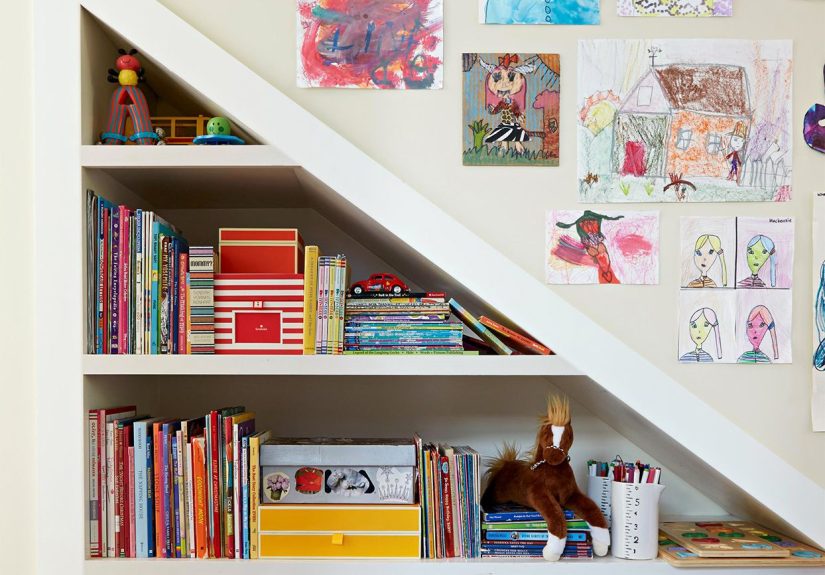
24. Built-Ins or a Storage Wall (Big Impact, Big Calm)
If you can do it, built-in cabinets or a full storage wall gives everything a dedicated home. Mix open shelves (for daily items) with closed cabinets (for visual calm). It’s the fastest way to make a room feel “done.”
25. A Storage Ottoman or Bench for “Living Room Toys”
If toys show up in your main living space (they will), use a storage ottoman or bench so you can hide clutter in seconds. It doubles as seating, which makes it feel less like you’re running a daycare out of your sofa area.
26. Modular Bin Systems That Grow with Your Kid
Modular storage (frames + removable bins) is ideal for kids because it’s flexible and easy to reconfigure. Use shallow bins for small toys, deep bins for big toys, and keep the most-used items at the bottom for easy access.
Maintenance: The 10-Minute “Reset” That Keeps You Sane
The secret to controlling clutter isn’t “perfect organization.” It’s a short daily routine. Try a 10-minute reset at the same time every day (before dinner or right before bedtime works well).
- Set a timer: short, predictable, and non-negotiable.
- Start with the floor: quick win, instant visual calm.
- Use broad categories: blocks in the block bin, dolls in the doll bindone.
- Do a nightly “launch pad” check: backpacks, shoes, and school stuff ready for tomorrow.
If your child resists, make cleanup easier, not louder: fewer categories, fewer lids, and storage at kid height. You’re not trying to raise a tiny professional organizeryou’re building habits that work in a busy home.
Real-World Experiences: What Actually Happens After You Organize (and Why That’s a Good Thing)
In real homes, organizing kids’ stuff is rarely a one-and-done project. It’s more like brushing teeth: you do it because it works, and then you do it again because life happened while you were asleep. Parents often start with big expectations“This weekend, we’ll organize everything forever!”and quickly learn that the most successful systems are simple, flexible, and a little forgiving.
One common experience: the first setup feels amazing… until a week later when you realize the “perfect” labels are too specific. The bin that said “Construction Vehicles” now contains dinosaurs, puzzle pieces, and one suspiciously sticky yo-yo. That’s not failure it’s feedback. When families switch to broader categories (“Vehicles” instead of “Construction Vehicles”), cleanup gets faster and kids stop needing an adult to decode the system. The goal isn’t museum-level sorting; it’s getting toys off the floor without tears.
Another lesson families report again and again: lids are optimism. Lidded bins look great in photos, but for many kids, lids add just enough friction to derail cleanup. The moment you swap to open bins (or keep lids only for overflow/seasonal items), the room resets faster. A lot of parents also find that clear containers reduce the “I can’t find it” spiral, especially for small parts like mini figures, doll accessories, and craft supplies.
Toy rotation is the other “why didn’t we do this sooner?” moment. When only a portion of toys are out, kids play longer and complain less about being bored (counterintuitive, but true in many households). Rotations also help parents notice what’s actually loved versus what’s just taking up space. Many families end up with a “favorites stay out” rulelike Legos or a train setwhile rotating everything else. The house gets calmer, and kids get excited when “old” toys come back like they’re brand-new.
Finally, real-life organizing always bumps into real-life schedules. That’s why the 10-minute reset wins: it fits into a normal day. Parents often say that once the reset becomes routine, they spend less time nagging and more time enjoying the space. It’s not that the mess disappearskids still play hardbut the mess becomes easier to manage, easier to clean, and less likely to spill into every room. And honestly? That’s the kind of “organized” most families actually need.
Final Thoughts
The best kids’ storage ideas aren’t the fanciestthey’re the ones your child can use on a Tuesday when everyone’s tired. Start small: one drop zone, one cube shelf, one labeled bin category. Build from there. Your future self (the one not stepping on Legos) will be extremely grateful.




 Close
Close