
Table of Contents >> Show >> Hide
- Before You Start: Identify the Interior Surface
- Way 1: Absorb Fresh Grease With Baking Soda or Cornstarch
- Way 2: Use a Mild Degreasing Solution on Fabric and Carpet
- Way 3: Clean Leather, Vinyl, and Plastic With Surface-Safe Products
- Way 4: Deep Clean Stubborn Oil Stains With an Extractor or Steam Cleaner
- How to Remove Specific Grease and Oil Stains From Car Interiors
- Drying Matters More Than People Think
- Prevention: Keep Grease From Coming Back
- Extra Experience: Real-World Lessons From Cleaning Grease and Oil Out of Car Interiors
- Conclusion
Grease and oil stains inside a car are like uninvited passengers: they show up suddenly, refuse to leave politely, and somehow make the whole cabin feel ten years older. Whether the culprit is fast-food fries, a mechanic’s sleeve, sunscreen, body oil, spilled dressing, or a mysterious dark smudge that “definitely wasn’t there yesterday,” the good news is that most interior stains can be handled at home with the right method.
The trick is not to attack the stain like you are scrubbing a grill grate. Car interiors are made from different materialscloth upholstery, carpet, vinyl, plastic trim, leather, synthetic leather, rubber mats, and headlinersand each surface has its own personality. Some are forgiving. Some are dramatic. Leather, for example, does not enjoy being drowned in dish soap. Cloth seats do not appreciate being rubbed until the fibers fuzz up like a nervous cat. And carpet padding can hold moisture long after the top looks dry, which may lead to odors if you overdo the water.
This guide breaks down 4 ways to remove grease and oil from a car’s interior using safe, practical techniques based on common automotive detailing and fabric-care principles. You will learn how to absorb fresh oil, lift grease from fabric, clean leather or vinyl correctly, and use a deep-cleaning approach for stubborn stains without turning your driver’s seat into a science experiment.
Before You Start: Identify the Interior Surface
Before reaching for cleaners, figure out what you are cleaning. Grease on a cloth seat is different from grease on leather, vinyl, plastic trim, or carpet. A method that works beautifully on floor mats may be too harsh for delicate upholstery. Always test any cleaner on a hidden spot first, such as under a seat edge, behind a seatback, or in a low-visibility carpet corner.
Also, remember the golden rule of grease stain removal: blot first, scrub later. Rubbing fresh oil pushes it deeper into fibers and spreads the stain outward. That is how a quarter-sized stain becomes a modern art piece called “Regret in Beige.”
Basic Supplies You May Need
- Clean white microfiber towels or plain white cloths
- Baking soda, cornstarch, or talcum powder
- Soft-bristle detailing brush or upholstery brush
- Automotive interior cleaner or upholstery-safe stain remover
- Mild dish soap for fabric or carpet only, used in small amounts
- Leather cleaner and conditioner for leather seats
- Wet/dry vacuum or portable upholstery extractor for deep cleaning
- Distilled water or clean warm water
Way 1: Absorb Fresh Grease With Baking Soda or Cornstarch
If the grease or oil stain is fresh, start with absorption. This is the calm, sensible methodthe cleaning equivalent of taking a deep breath before sending a spicy text. Absorbent powders such as baking soda, cornstarch, or talcum powder can pull excess oil from fabric, carpet, and some leather surfaces before it settles in.
Best For
Fresh grease on cloth seats, carpet, floor mats, and small oily marks on leather or vinyl. This method is especially useful for food grease, body oil, fresh motor-oil smudges, and oily residue from bags, tools, or takeout containers.
How to Do It
- Use a clean cloth to blot the stain gently. Do not rub.
- Sprinkle a generous layer of baking soda or cornstarch over the greasy area.
- Let it sit for at least 15 to 30 minutes. For heavier stains, leave it for a few hours.
- Use a soft brush to loosen the powder from the surface.
- Vacuum the area thoroughly.
- Repeat if the powder becomes oily or clumpy after the first round.
Why It Works
Grease resists plain water because oil and water do not naturally mix. Absorbent powder gives the oil somewhere else to go before you introduce liquid cleaners. This reduces the chance of spreading the stain, creating a ring, or pushing grease deeper into the seat foam or carpet backing.
Pro Tip
Use white or light-colored powder only. Avoid colored powders, scented carpet powders, or anything with dyes. Your goal is to remove a stain, not give your car seat a lavender-flavored tattoo.
Way 2: Use a Mild Degreasing Solution on Fabric and Carpet
Once excess oil has been absorbed, a mild degreasing solution can help break down what remains. For cloth upholstery and carpet, a small amount of dish soap mixed with warm water can work because dish soap contains surfactants that help loosen oily residue. The key phrase here is small amount. More soap does not mean more clean; it often means more residue, more rinsing, and more muttering under your breath.
Best For
Grease stains on cloth seats, fabric door inserts, carpet, and removable fabric floor mats. This method works well on food oil, makeup residue, greasy fingerprints, and light automotive grease.
How to Make the Solution
Mix one cup of warm water with two or three drops of mild dish soap. For larger areas, use a quart of warm water with about one teaspoon of soap. You want a gentle cleaning solution, not a bubble bath for your back seat.
How to Clean the Stain
- Vacuum the area first to remove dry dirt and grit.
- Dip a microfiber towel into the solution and wring it out so it is damp, not dripping.
- Blot the stain from the outside toward the center to prevent spreading.
- Use a soft-bristle brush lightly if the stain is embedded in fabric fibers.
- Blot with a clean damp towel to remove soap residue.
- Finish by pressing a dry towel onto the area to pull out moisture.
- Let the area air-dry completely with doors open or windows cracked if weather allows.
Common Mistakes to Avoid
Do not soak the seat. Too much water can carry grease deeper into the cushion and may leave water marks. Do not use harsh household degreasers unless the label clearly says they are safe for automotive interiors. Strong cleaners can discolor fabric, damage plastics, or leave sticky residue that attracts dirt later. Also avoid using dish soap on leather car seats, because it can strip oils and dry the surface.
When to Use an Automotive Upholstery Cleaner Instead
If the stain is larger than a few inches, has been sitting for weeks, or includes both oil and dirt, an automotive carpet and upholstery cleaner is usually a better choice. These products are designed for vehicle fabrics and often foam or lift soil so it can be blotted away. Follow label directions carefully, give the cleaner time to dwell, and avoid over-applying.
Way 3: Clean Leather, Vinyl, and Plastic With Surface-Safe Products
Leather, vinyl, and plastic need a different approach from cloth. These surfaces are less absorbent, but grease can still cling to texture, stitching, seams, grain patterns, and tiny cracks. The safest route is to use a dedicated automotive interior cleaner for vinyl and plastic, and a leather cleaner followed by conditioner for leather seats.
Best For
Greasy fingerprints on dashboards, oily armrests, leather seats, vinyl trim, steering wheels, center consoles, door panels, and plastic interior surfaces.
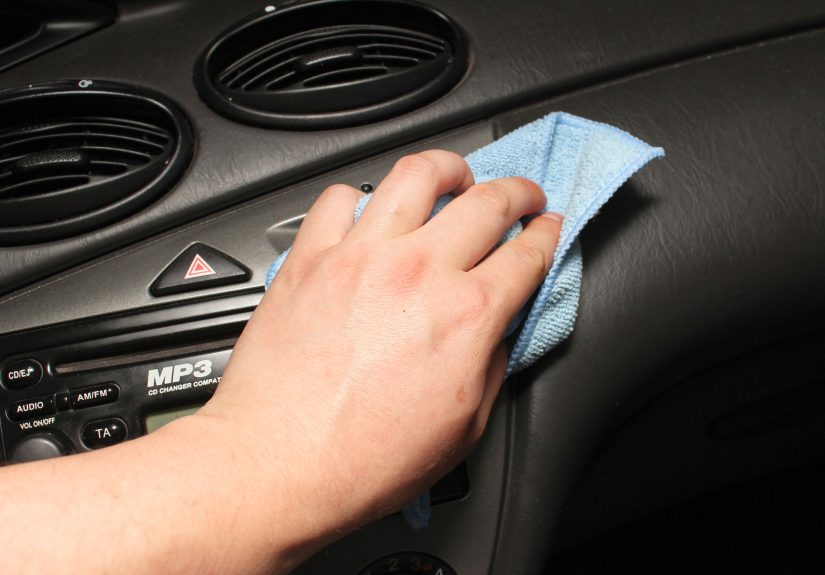
How to Clean Vinyl and Plastic
- Wipe the surface with a dry microfiber towel to remove loose dust.
- Spray automotive interior cleaner onto the towel, not directly onto buttons or screens.
- Wipe the greasy area gently, working in small sections.
- Use a soft detailing brush around seams, texture, and cup holders.
- Buff dry with a clean microfiber towel.
How to Clean Leather Seats
- Vacuum seams and seat creases first.
- Apply leather cleaner to a microfiber towel or soft brush, depending on product instructions.
- Gently clean the stained area using light circular motions.
- Wipe away loosened grime with a clean towel.
- Use a barely damp towel to remove remaining cleaner if needed.
- Dry the seat and apply leather conditioner if recommended by the cleaner manufacturer.
Why Leather Needs Special Care
Leather may look tough, but it can dry, crack, discolor, or become shiny from the wrong cleaning habits. Grease from hands, hair products, sunscreen, and clothing can slowly build up on leather surfaces, especially on bolsters and armrests. A proper leather cleaner removes grime without stripping the finish, while conditioner helps maintain flexibility and a natural look.
What Not to Use on Leather
Avoid bleach, ammonia, undiluted alcohol, abrasive pads, strong degreasers, and heavy soap mixtures. These can damage leather finishes or leave the seat looking uneven. If the stain is severe, old, or on premium leather, it is smarter to call a professional detailer than to experiment like a garage chemist with Wi-Fi.
Way 4: Deep Clean Stubborn Oil Stains With an Extractor or Steam Cleaner
Some grease stains laugh at quick spot cleaning. Maybe the stain is old. Maybe it has mixed with dirt. Maybe someone dropped a loaded breakfast sandwich and then sat on the evidence. For stubborn oil stains in carpet and cloth upholstery, deep cleaning with a portable extractor, wet/dry vacuum, or upholstery cleaning machine can make a big difference.
Best For
Set-in grease on car carpets, cloth seats, cargo mats, fabric floor mats, and high-traffic interior areas. This method is useful when spot cleaning improves the stain but does not fully remove it.
How to Deep Clean Greasy Fabric or Carpet
- Vacuum thoroughly to remove dry debris.
- Pre-treat the grease stain with an automotive upholstery cleaner or fabric-safe stain remover.
- Let the cleaner sit for the recommended dwell time, usually a few minutes.
- Agitate gently with a soft upholstery brush.
- Use the extractor with warm water and the recommended cleaning formula.
- Make multiple dry passes to pull out as much moisture as possible.
- Blot with towels and allow the area to dry fully.
Should You Use Steam?
Steam can help loosen grime, but it should be used carefully inside a car. Too much heat or moisture can affect adhesives, electronics, foam, and delicate materials. Never steam dashboards, touchscreens, instrument panels, or leather without knowing the material can handle it. For cloth seats and carpet, controlled steam followed by extraction may help, but the goal is to lift the stainnot create a rainforest under your seat.
When to Call a Professional Detailer
Call a professional if the grease stain is large, smells strongly of petroleum, sits near wiring, affects perforated leather, or keeps returning after cleaning. Returning stains often mean residue remains below the surface and is wicking back up as the material dries. Professional detailers have stronger extraction tools, specialty cleaners, and the experience to avoid damaging expensive interior materials.
How to Remove Specific Grease and Oil Stains From Car Interiors
Food Grease
French fry oil, burger grease, salad dressing, and pizza drips are common car interior offenders. Start with baking soda or cornstarch, then follow with a mild fabric-cleaning solution or upholstery cleaner. Food grease usually responds well if treated quickly.
Motor Oil or Automotive Grease
Motor oil is darker and more stubborn than food oil. Blot immediately, use absorbent powder, then apply an automotive upholstery cleaner. Avoid spreading the stain with too much water. If the stain is on carpet, extraction may be needed.
Sunscreen and Body Oil
Sunscreen can leave greasy, cloudy marks on leather, vinyl, plastic, and fabric. Use a surface-safe interior cleaner on hard surfaces and a gentle upholstery cleaner on fabric. For leather, use leather cleaner and follow with conditioner if appropriate.
Greasy Steering Wheel or Armrest
Steering wheels and armrests collect hand oils faster than almost any other interior surface. Clean them regularly with an interior-safe cleaner and microfiber towel. Avoid glossy dressings on steering wheels, pedals, or controls because slippery surfaces are not just annoyingthey can be unsafe.
Drying Matters More Than People Think
After removing grease and oil from a car interior, proper drying is essential. Damp seats and carpets can develop odors, especially in warm weather. Leave doors open in a safe place, use fans if available, or park in a dry, shaded area with windows slightly open. Do not use high heat directly on leather or plastic surfaces.
If you cleaned a seat, press a dry towel into the fabric several times. If the towel keeps picking up moisture, keep blotting. For carpet, a wet/dry vacuum or extractor dry pass helps remove water from the fibers and backing. Your nose will thank you later.
Prevention: Keep Grease From Coming Back
The easiest grease stain to remove is the one that never happens. Of course, telling people not to eat in the car is like telling the moon not to show off at night. Life happens. Snacks happen. Emergency tacos happen. Still, a few habits can protect your interior.
Smart Prevention Tips
- Keep microfiber towels in the glove box for quick blotting.
- Use washable seat covers if you often transport tools, pets, kids, or sports gear.
- Place greasy takeout bags on a tray, mat, or plastic bin instead of directly on seats.
- Clean steering wheels and armrests weekly to prevent body oil buildup.
- Use all-weather mats if your shoes often carry oil, mud, or garage grime.
- Avoid greasy interior dressings that leave surfaces shiny and slippery.
Extra Experience: Real-World Lessons From Cleaning Grease and Oil Out of Car Interiors
After dealing with greasy car interiors, one lesson becomes obvious: speed matters. A fresh stain is usually a small project. An old stain is a negotiation. The longer grease sits, the more it bonds with dust, fabric fibers, leather grain, and carpet backing. That is why the first move should always be blotting and absorbing. Even if you do not have a full cleaning kit nearby, a napkin, clean towel, or a sprinkle of baking soda at home can reduce the damage before a proper cleaning session.
Another practical experience is that car seats often look clean while still holding residue. This is especially true with dark upholstery. Black cloth seats hide stains like a magician hides cards, but your hands can still feel the greasy patch. If a cleaned area feels tacky after drying, there is probably leftover soap or oil. Go back with a damp microfiber towel, blot carefully, and dry again. Residue attracts dirt, so skipping the rinse step is like rolling out a welcome mat for future grime.
Leather and vinyl teach a different lesson: less pressure is better. Many people scrub too hard because they expect grease to surrender through force. On leather, heavy scrubbing can create shiny spots, remove finish, or push grime into stitching. A soft brush, proper leather cleaner, and patience usually work better than aggressive rubbing. If the leather is perforated, be extra careful with liquid. Cleaner trapped in tiny holes can be difficult to remove and may affect the foam underneath.
Floor mats are usually the easiest place to practice your technique. If the grease is on a removable mat, take it out of the car before cleaning. That gives you better lighting, easier access, and less risk of soaking the vehicle carpet. Rubber mats can often be cleaned with an appropriate all-purpose cleaner and rinsed outside, while carpeted mats may need powder absorption, upholstery cleaner, brushing, and extraction. Always dry mats completely before putting them back in the vehicle.
One overlooked experience is the importance of lighting. Grease stains can disappear when wet, then reappear after drying like they have a dramatic entrance planned. Inspect the area in natural light if possible. Look from different angles. Run a clean cloth over the spot. If the towel picks up residue, the stain is not finished. Repeat the process gently rather than dumping more product on it.
Finally, keep expectations realistic. Some stains can be improved dramatically but not erased completely, especially on older, sun-faded, or delicate materials. The goal is to remove oil, reduce discoloration, restore a clean feel, and prevent the stain from spreading or attracting dirt. When a stain is severe, professional detailing is not admitting defeatit is protecting your car from enthusiastic DIY chaos. Your interior deserves care, not a wrestling match.
Conclusion
Removing grease and oil from a car’s interior is all about matching the method to the material. Start by absorbing fresh oil with baking soda or cornstarch. Use a mild degreasing solution or upholstery cleaner for cloth and carpet. Treat leather, vinyl, and plastic with surface-safe products. For deep, stubborn stains, use extraction carefully or call a professional.
The best results come from patience, light pressure, proper drying, and avoiding harsh cleaners. In other words, do not panic-clean. Your car interior is not a frying pan, and the stain is not a villain in a movie finale. Work slowly, blot often, test first, and give each surface the treatment it deserves. With the right approach, that greasy spot can go from “crime scene” to “what stain?” faster than you think.






 Close
Close